YONATAN HOPP
“CODE&CRAFT”
2025
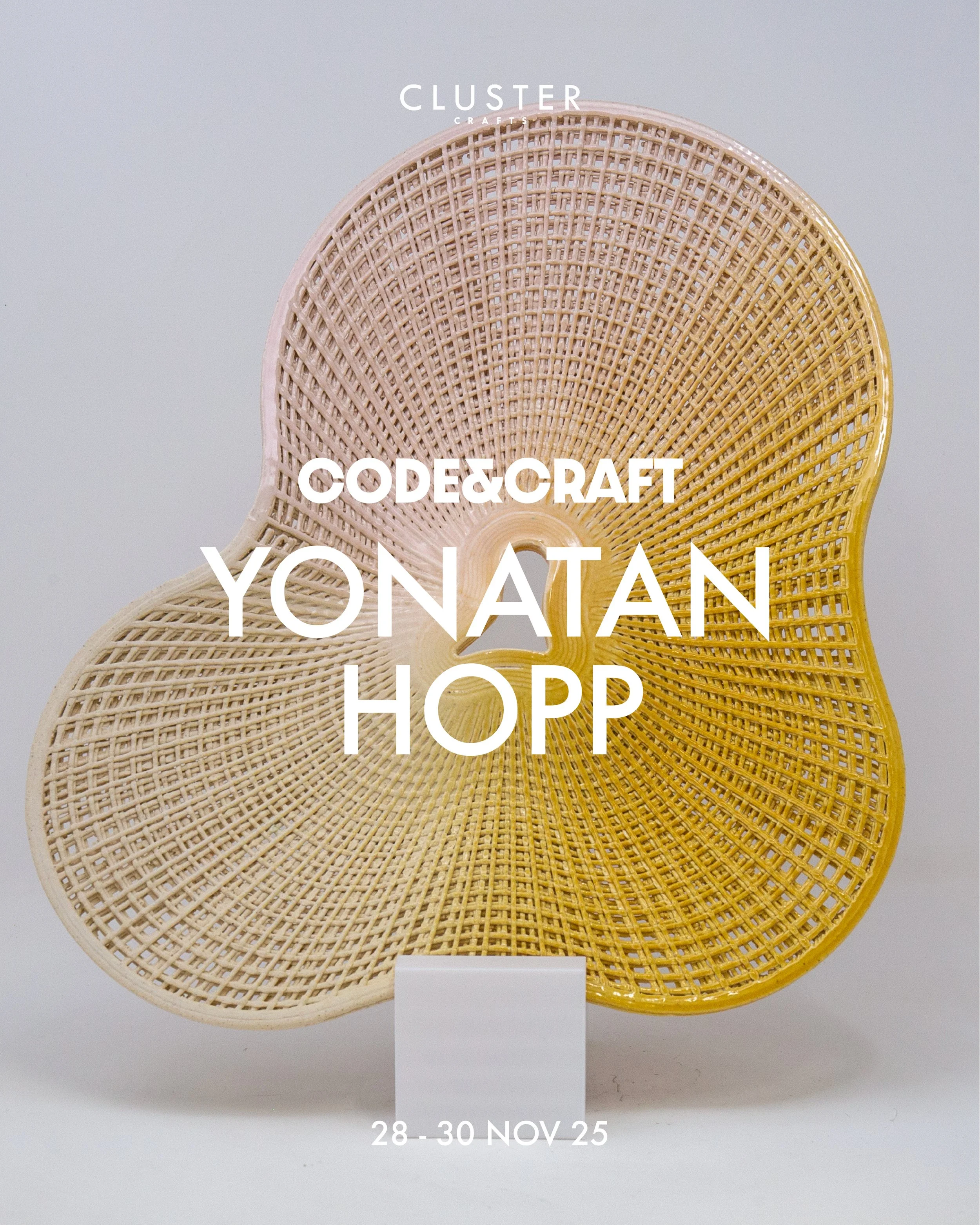
Yonatan Hopp is an object designer who works predominantly in ceramics, with a hands-on research-through- making approach. His practice brings together design, digital fabrication and craft to imagine new objects, ways of production and original material languages. The 2024/25 Artist-in-Residence at Harvard Ceramics, and 2022 recipient of a New York Foundation for the Arts Fellowship in the category of Design and Architecture. Yonatan has exhibited his work in venues such as the Israel Museum (Jerusalem), the Gardiner Museum (Toronto), the Museum of Art and Design (NYC) and the Yingge Museum (Taipei).
His work resides in public and private collections such as the Israel Museum (Jerusalem), the Museum of Art and Design (NYC), the Israeli parliament collection (Jerusalem) and the Jewish Museum (NYC). Yonatan received his Masters degree from the Bezalel Academy of Art and Design and a Bachelors from the Rhode Island School of Design. He currently hold the position of Associate Professor at the Industrial Design department at RISD.
“Digital production tools are blurring the boundaries between the serially-produced and the unique. They are enabling the development of new, original object languages, free of known traditions, archetypical forms or endlessly paraphrased references.”
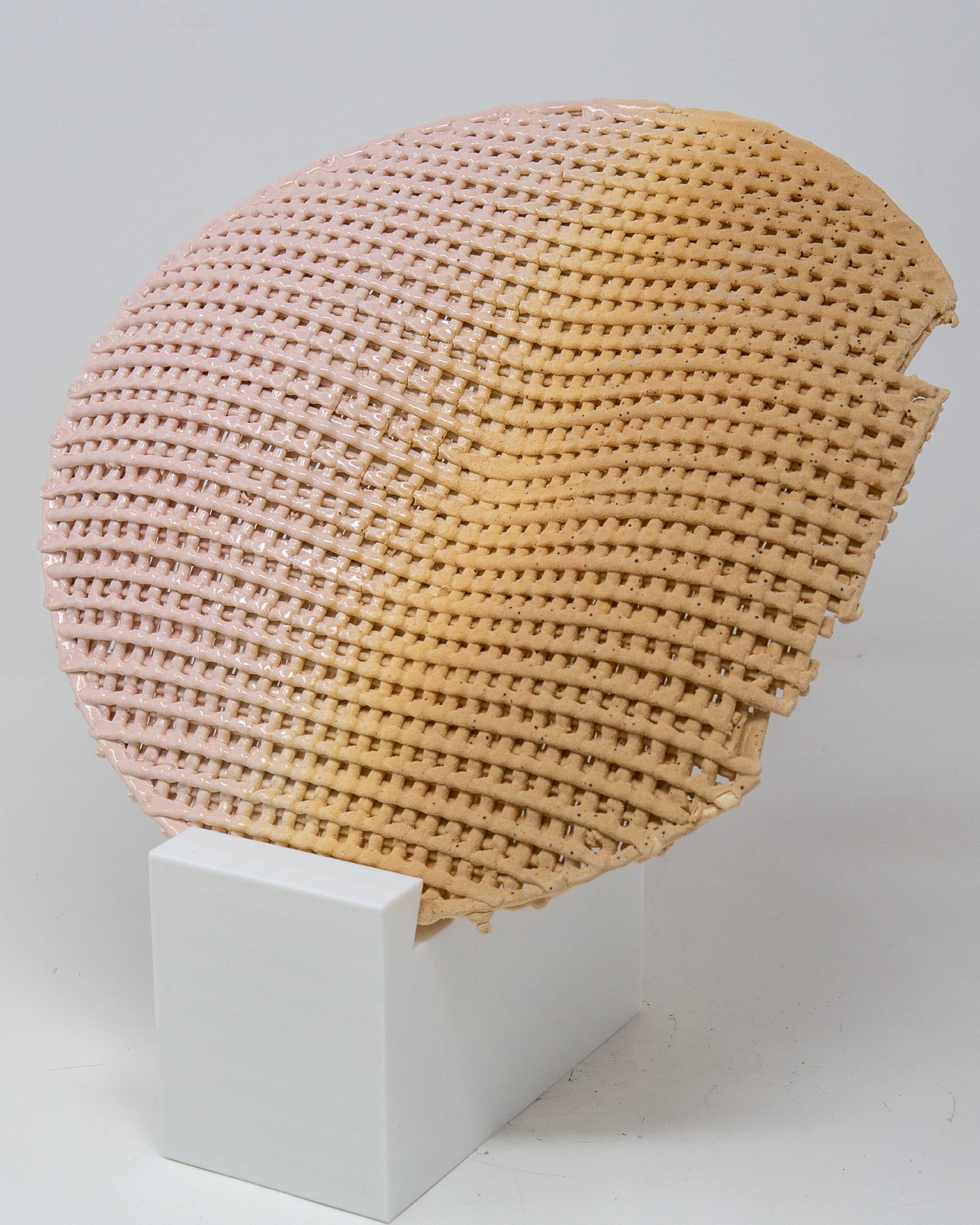
The power of serial production lies in its repetition and duplication. Industrial objects seep into daily life and collective experiences, silently setting expectations of the known physical world. They are at times pushing these expectations, like in the case of a paper-thin, perfectly curved porcelain plate, but more commonly they resemble the endless parade of clumsy, uninspired round-white-heavy-plates. They’re duplicated and popularized then copied and duplicated again, each time losing a bit of their grace, further cementing the limited idea of what a plate is, and leaving one hungry for wilder objects, more evocative, complex, less obvious.
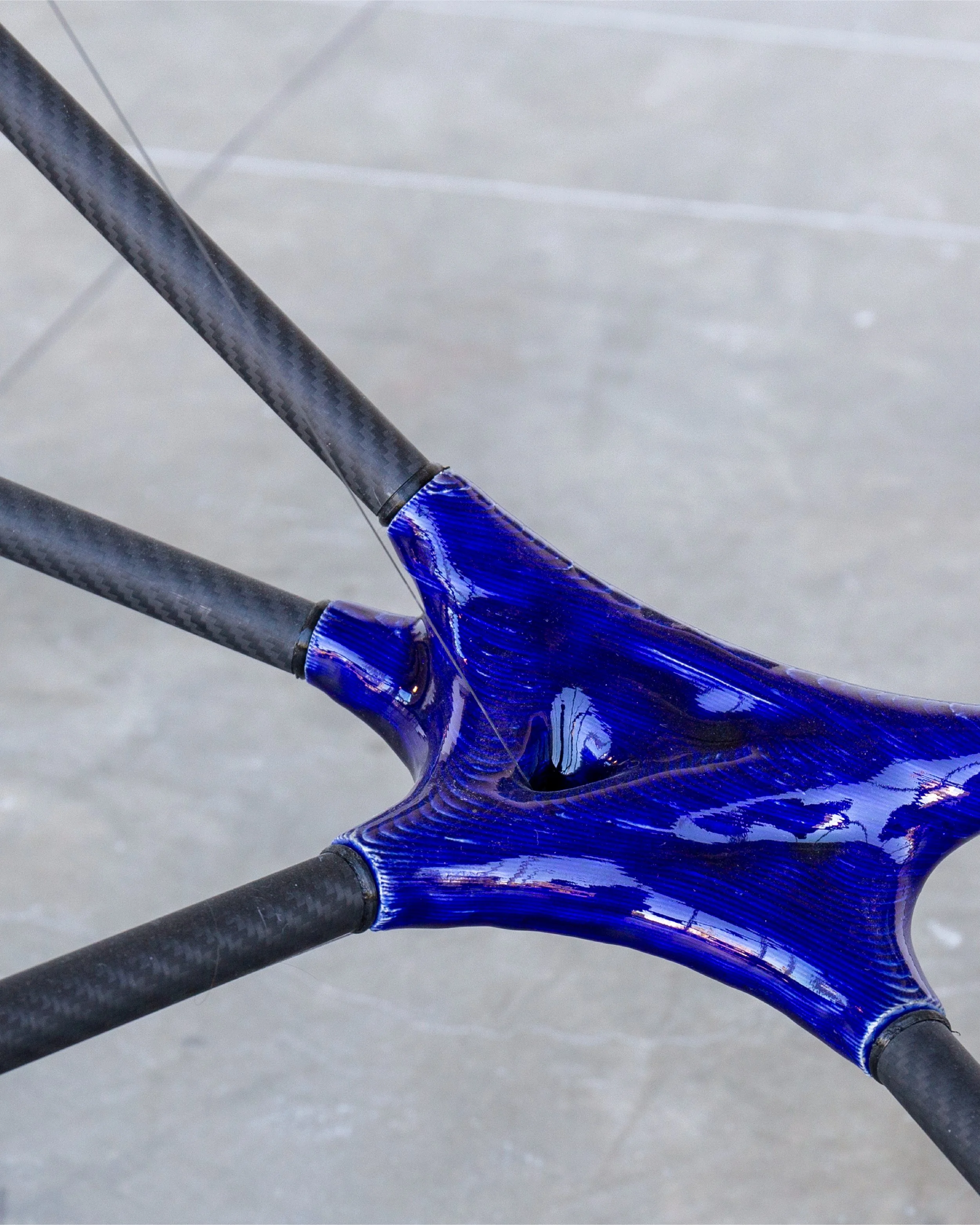
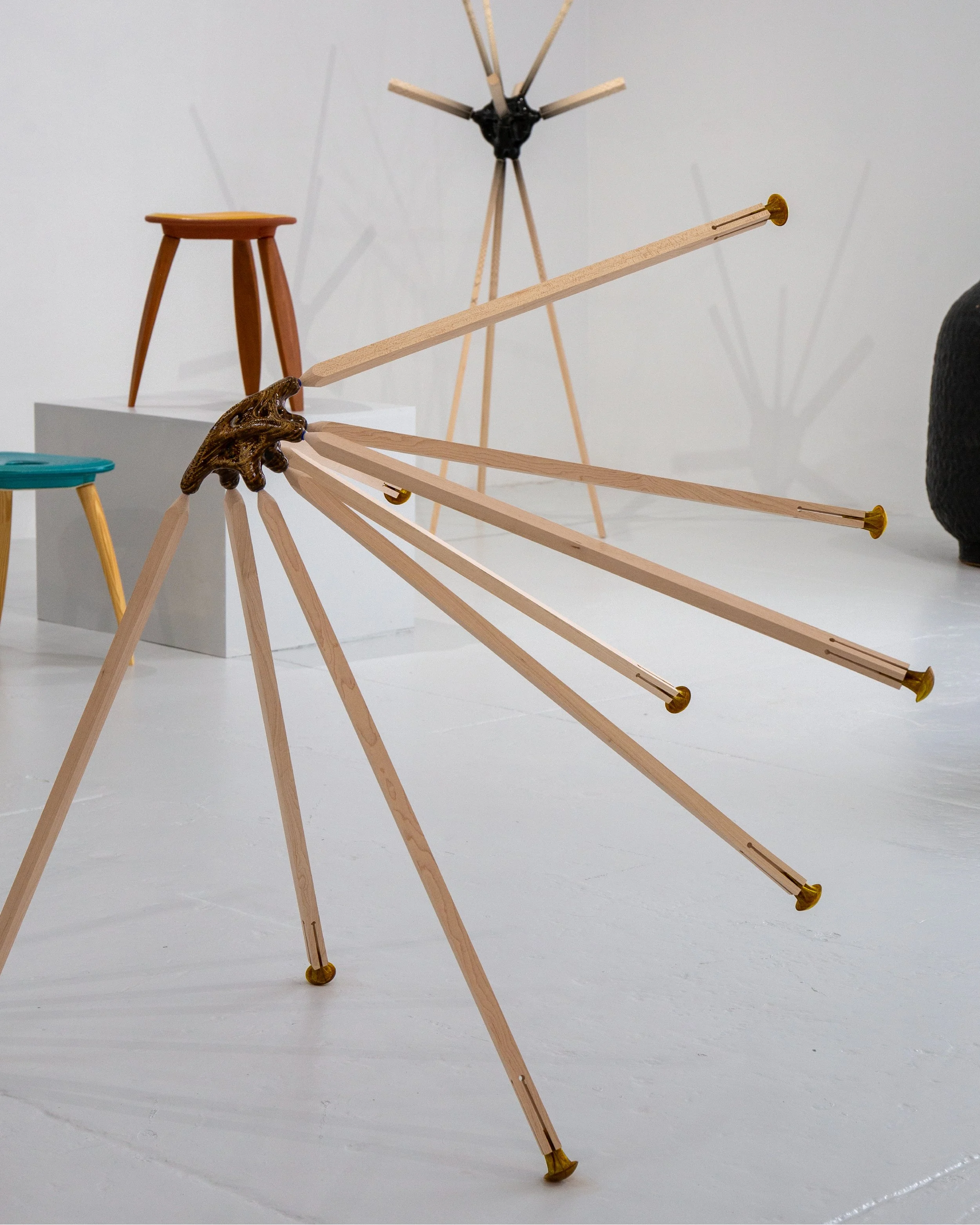
I make objects that challenge what I know about the world of man-made utilitarian objects. Rather than changing the form of the object directly, I attempt to reinvent part of the processes that make the object. In this way, the logic that produces the object becomes the focus of the work, and by following this logic it’s possible to achieve ideas and forms I am incapable of pre-conceptualizing.
The resulting objects are usually well developed from a formal-structural perspective, while their utility remains emergent. They are just developed enough to fulfil a kind of generalized, ideal function, such as “containing” or “connecting”, yet not quite fully resolved. In this state, if you squint your mental-eye you may be able to see how they might become more specific utilitarian object such as “plate”, “coatrack” or “side-table”.
Digital production tools are blurring the boundaries between the serially-produced and the unique. They allow us to make the sort of controlled objects possible in industry, while also allowing a responsive what-if?-lets-try-it-now process one longs for as a maker. But their greatest quality is their new-ness which demands the imagination of original object languages. They are free of known traditions, archetypical forms or endlessly paraphrased references. At this particular moment, they are offering the possibility of tremendous expansion of our notions of what the human-made material world can be.