THOMAS SCHMIDT
“CODE&CRAFT”
2025
Thomas Schmidt (b. November 21, 1980, Louisville, KY) is an artist and designer based in Charlotte, North Carolina, USA. He earned a BA from Loyola University Chicago (2004), a Post-Baccalaureate Certificate from the School of the Art Institute of Chicago (2006), and an MFA from the New York State College of Ceramics at Alfred University (2009). Before graduate school, Schmidt worked for three years as a studio assistant to Ruth Duckworth. Following his studies, he spent four years teaching in the Alfred/CAFA Ceramic Design for Industry program at the China Central Academy of Fine Arts in Beijing.
Schmidt’s work explores the intersection of 3D modeling, digital fabrication, and traditional ceramics. In 2017, he received a North Carolina Arts Council Fellowship, which supported the development of a body of work integrating digital and ceramic processes. This work was later exhibited at the Cameron Museum of Art in Wilmington, NC. In 2021, his Notebook Series, a collection of cast porcelain pieces that reimagine notebook pages, earned him the Bronze Prize at the International Ceramics Competition in Mino, Japan.
In 2023, Schmidt completed his largest commission to date, Connected, a 75-foot-long porcelain and mirror installation for Duke Energy’s corporate headquarters. His work is also held in numerous public collections, including the Daum Museum of Contemporary Art (Missouri), the International Museum of Ceramics (Faenza, Italy), and the Victoria and Albert Museum (London).
Schmidt is currently an Associate Professor and Area Coordinator of 3D Interdisciplinary Studios at the University of North Carolina at Charlotte, where he helped establish the department’s digital fabrication lab and develop courses that integrate digital tools with traditional media.

Thomas Schmidt – Artist Statement
My studio practice explores the evolving relationship between craft, materiality, and digital technology in the post-digital age. By integrating digital fabrication with traditional techniques, I challenge the binaries between the handmade and the digital, the natural and the artificial, and the physical and the virtual. My work examines how materiality can bridge the gap between virtual experience and tactile reality.
A central focus of my practice is Post-Digital Craft, which reframes craft as a site of technological innovation rather than a static preservation of analog processes. Through 3D scanning and printing, mold-making, casting, and image transfer, I investigate how ceramics can mimic, distort, and reinterpret material surfaces, questioning how digital processes shape our perception of the physical world.
Grounded in material culture theory and drawing from thinkers like Walter Benjamin, my research considers the shifting “aura” of objects in an era of digital reproduction. My work highlights the interconnection between craft and technology, inviting viewers to reconsider their relationship with materiality, space, and technological mediation.
Thomas Schmidt – Code & Craft Exhibition Statement
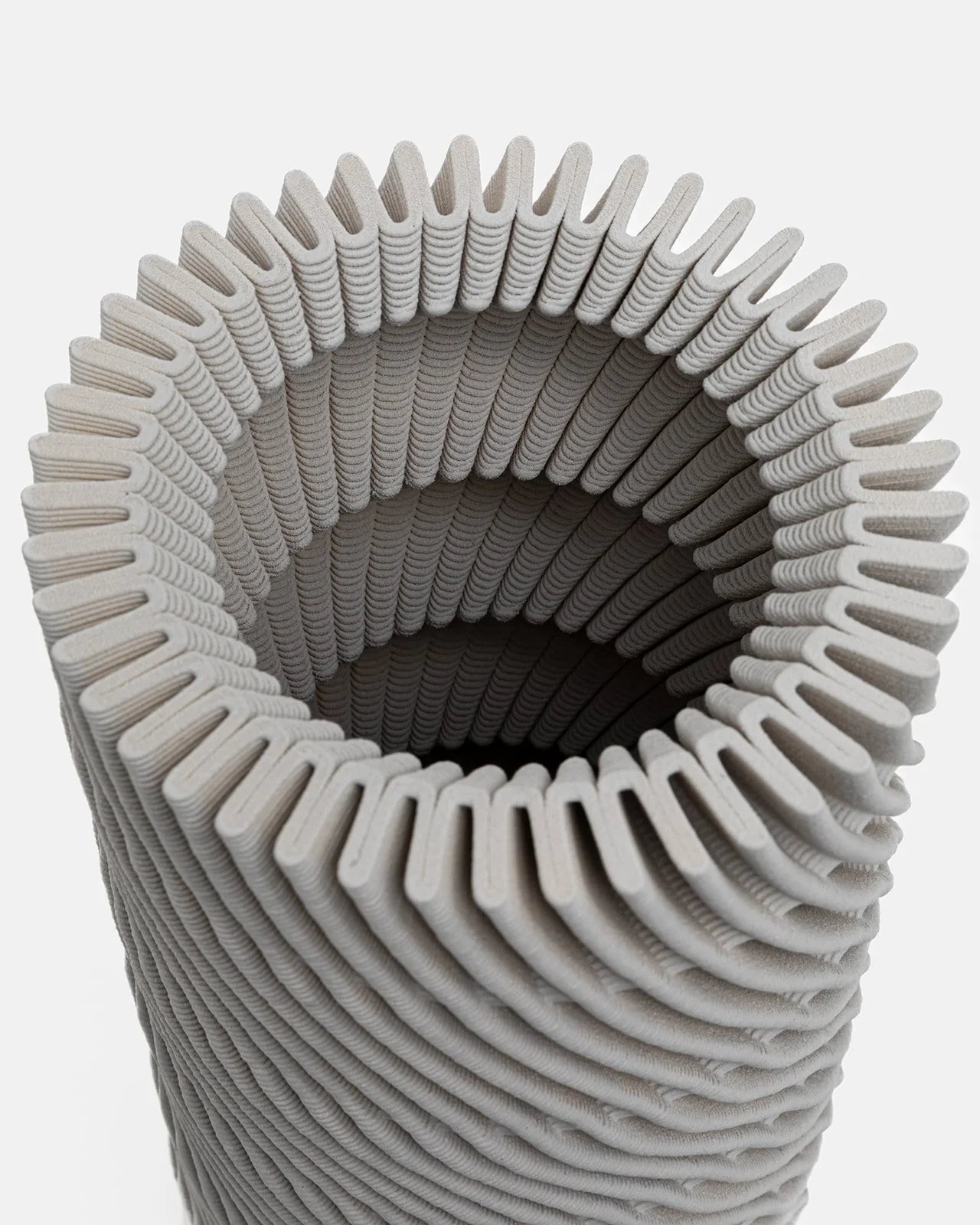
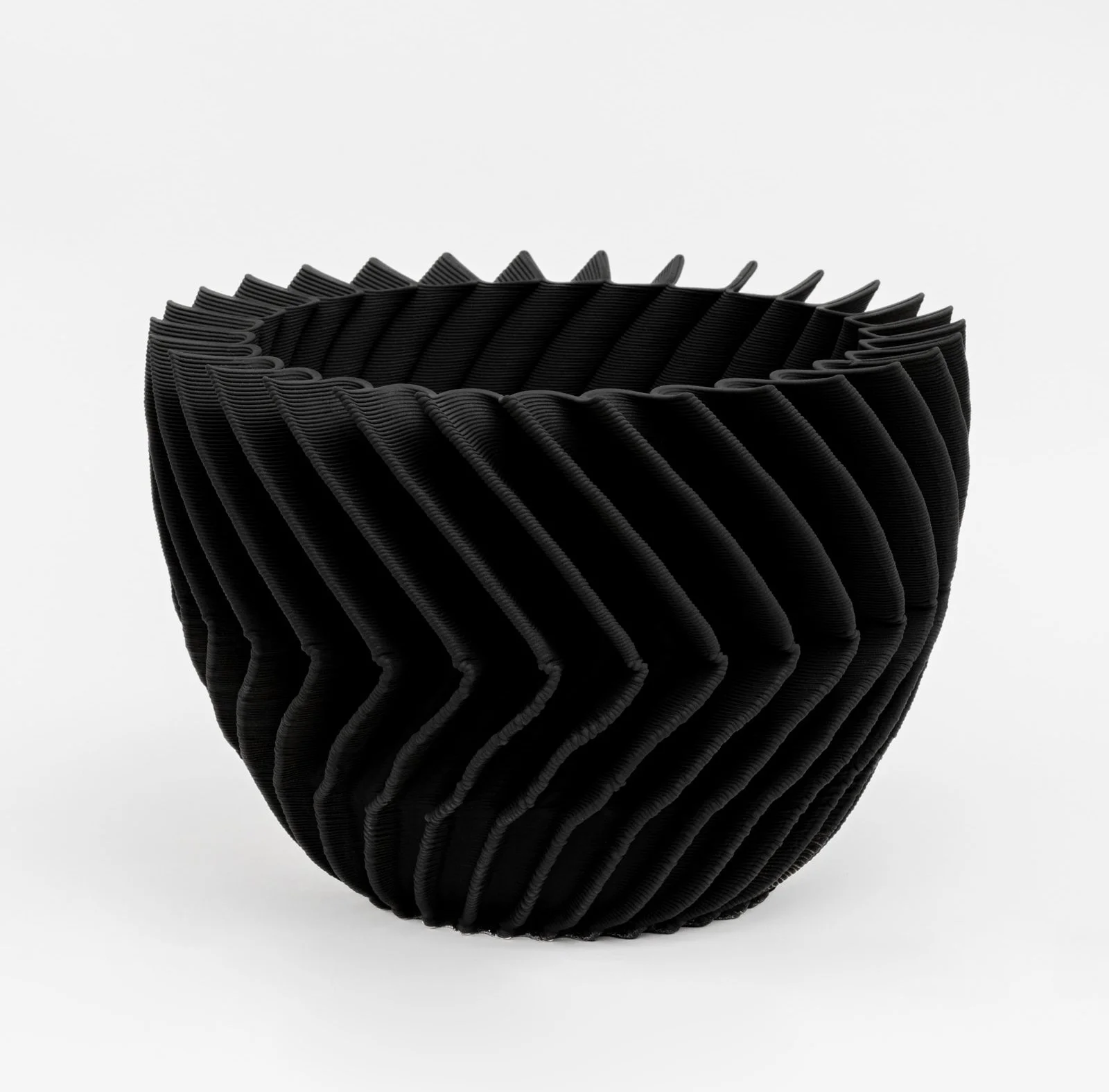
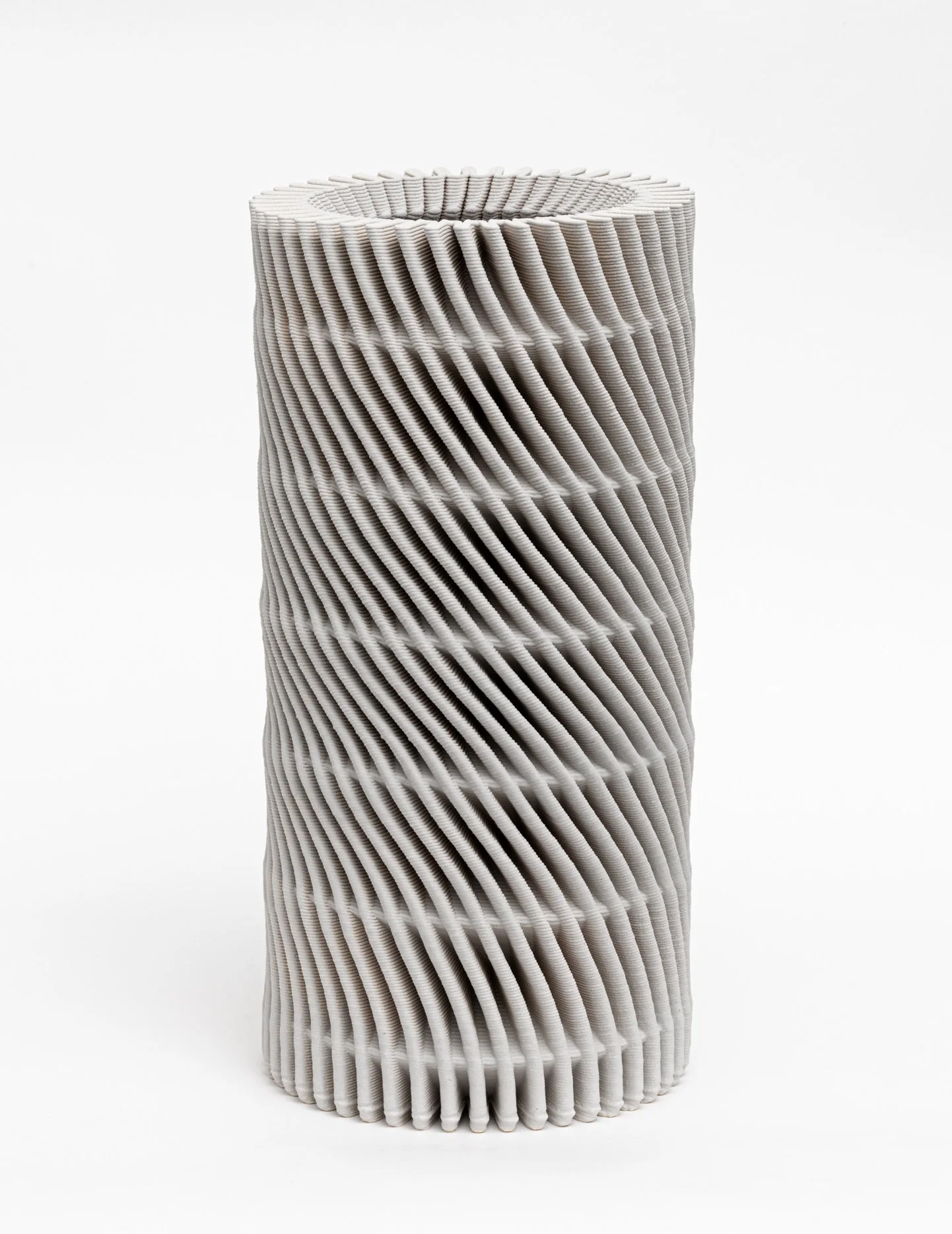
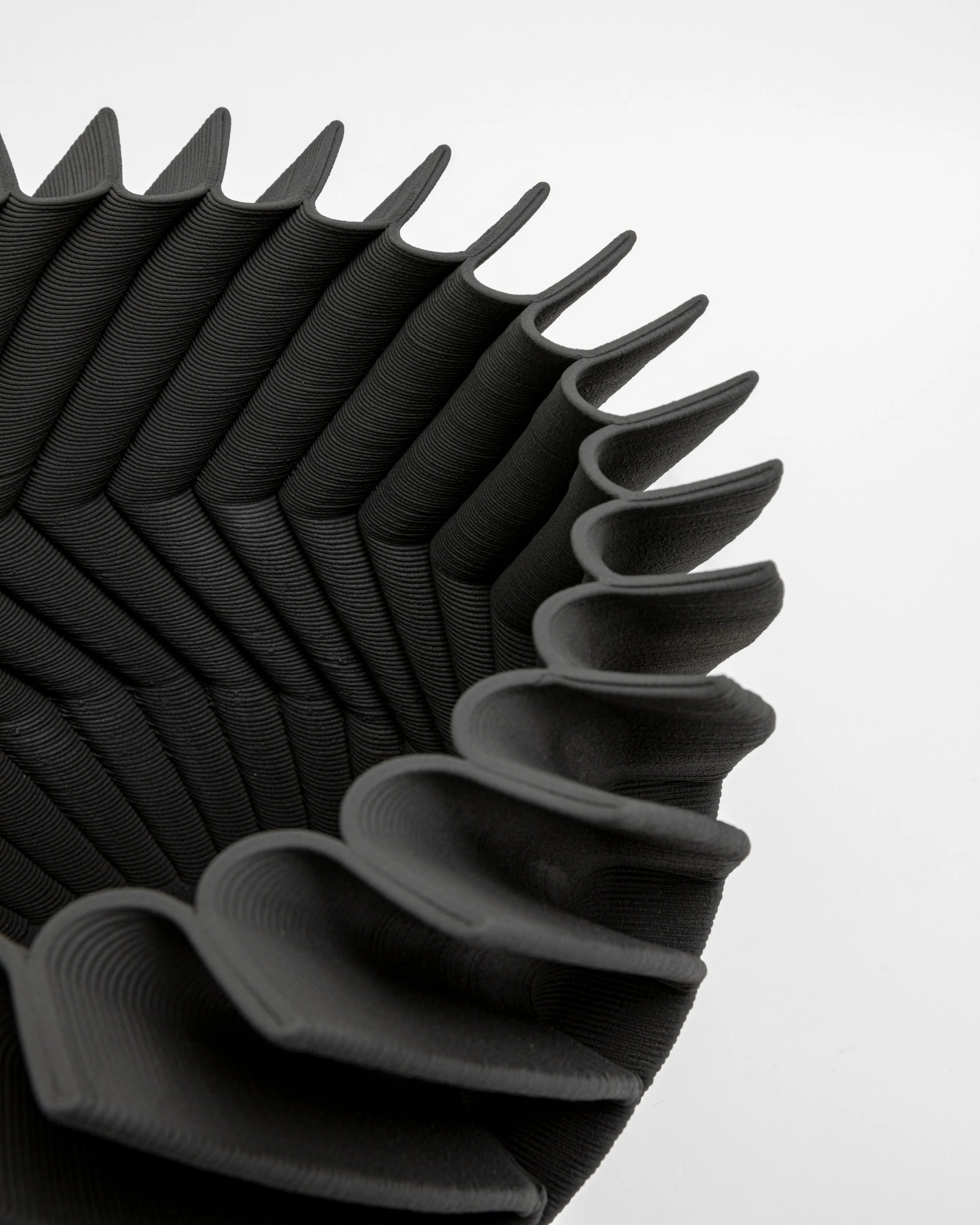
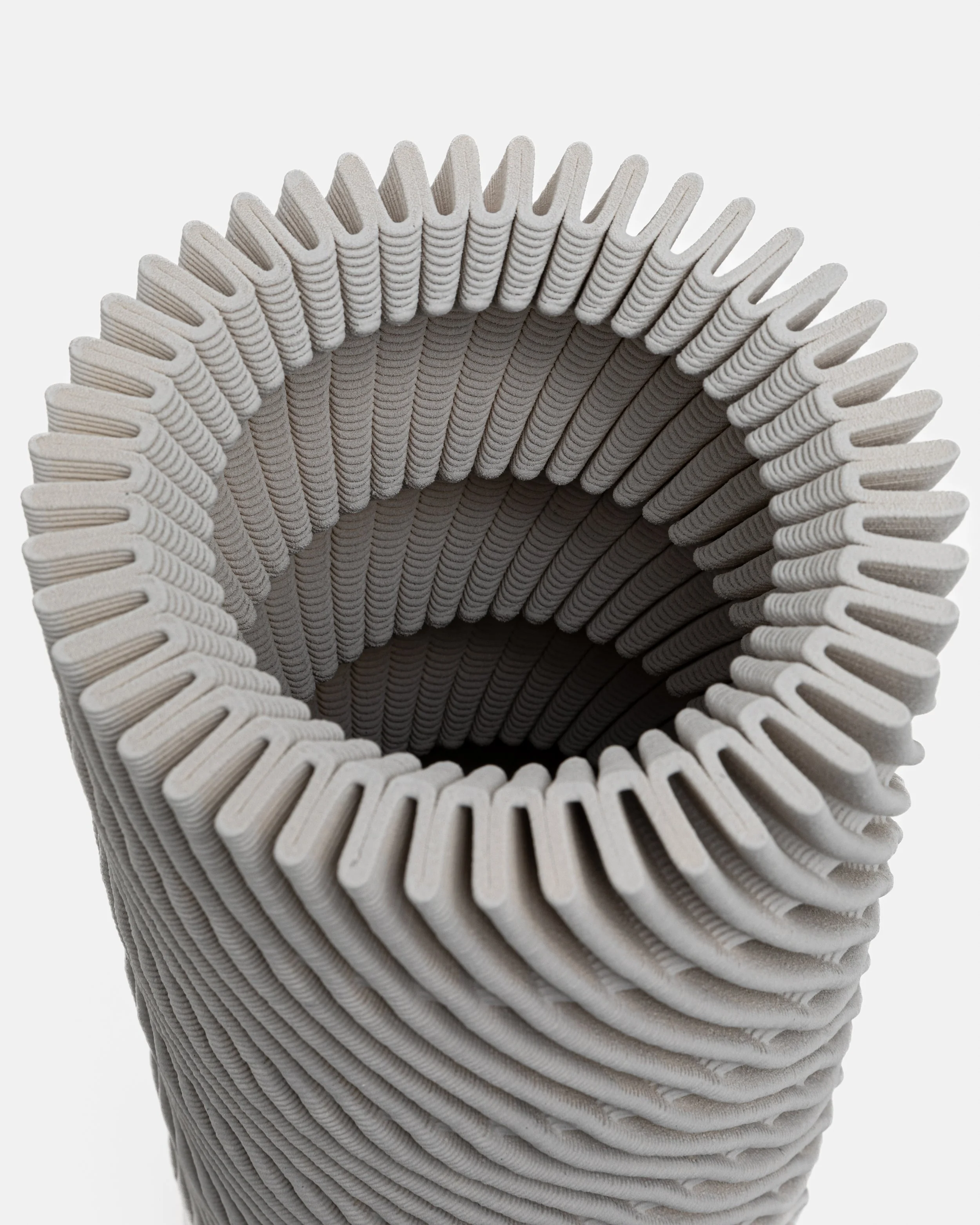
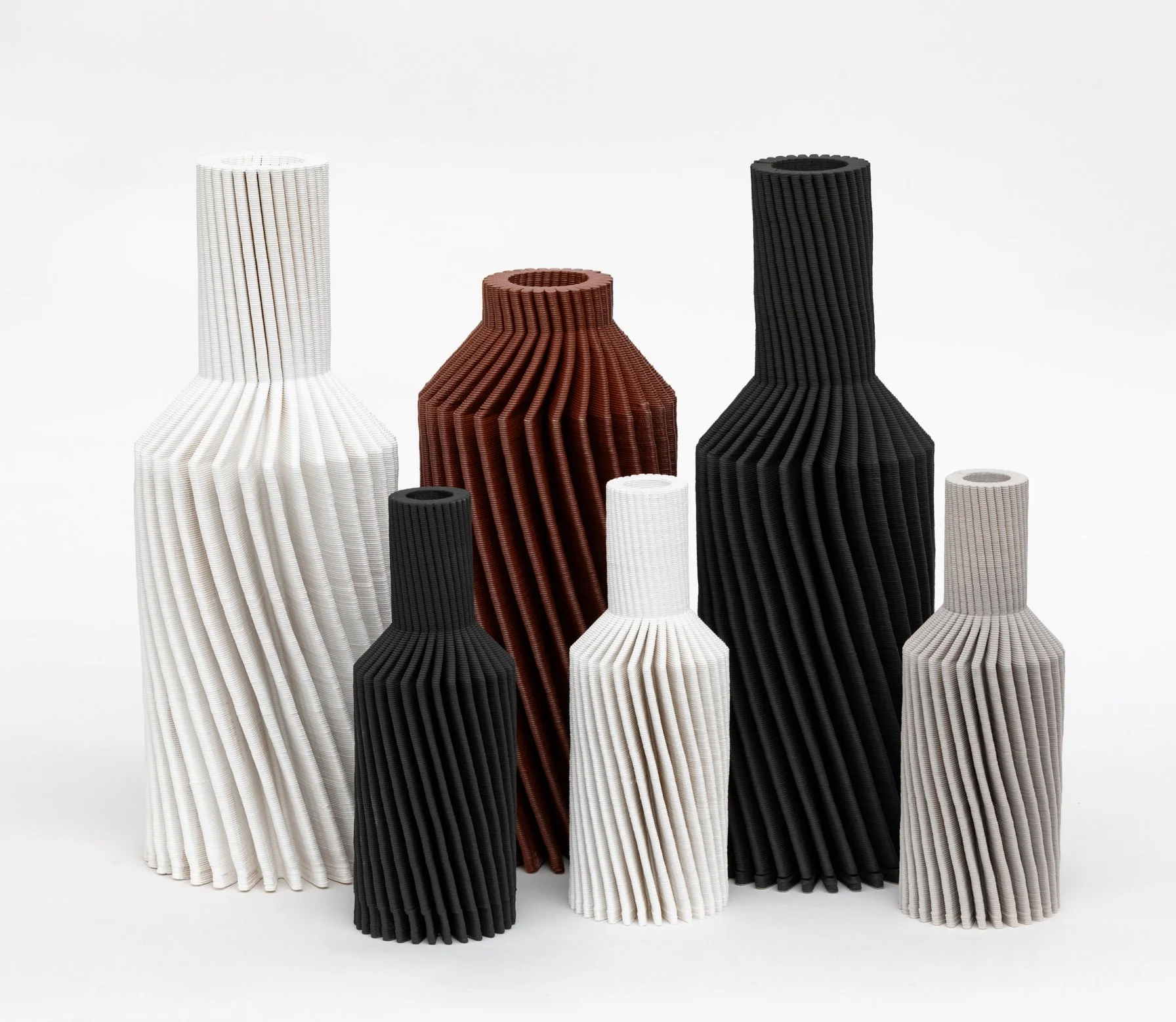
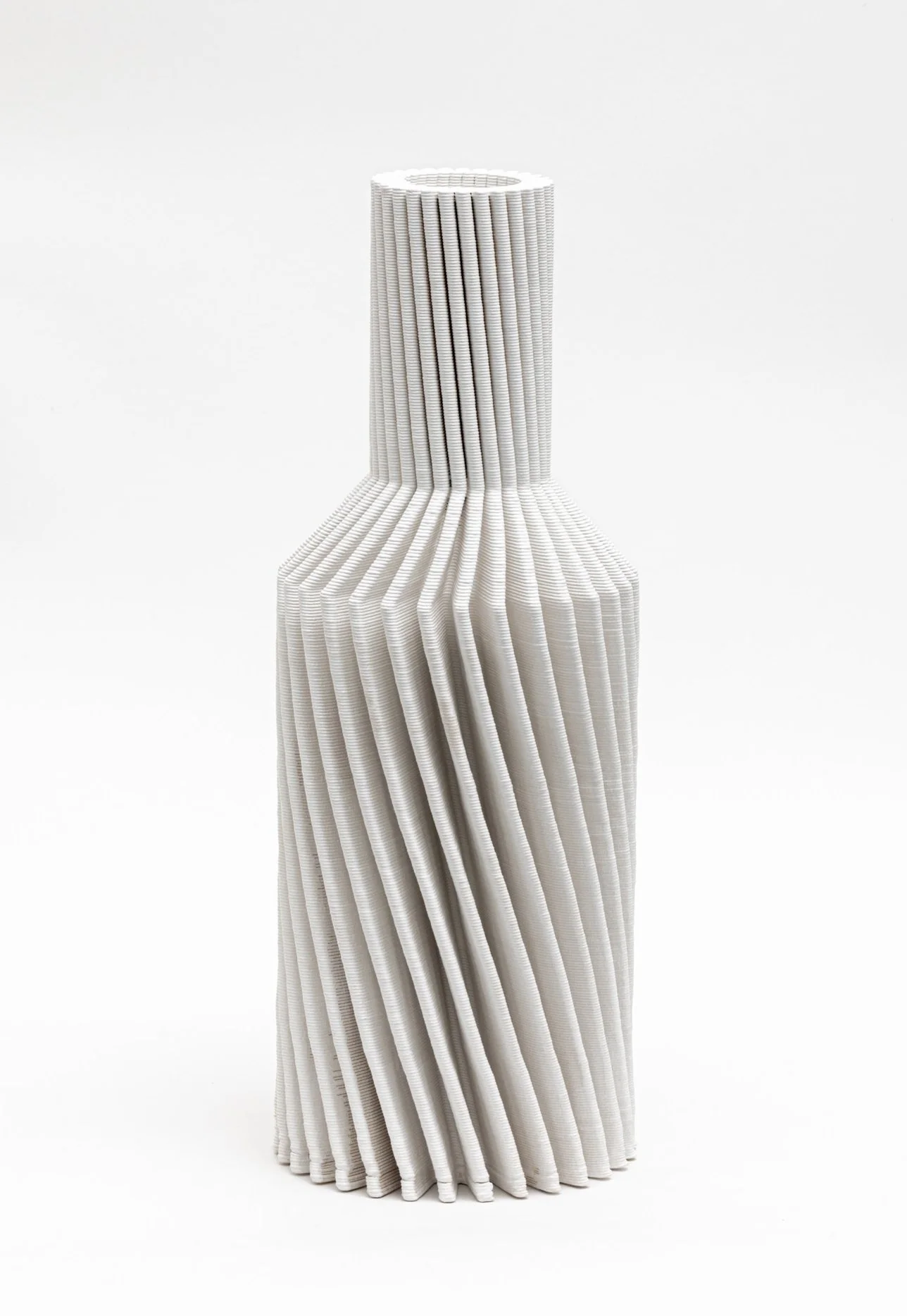
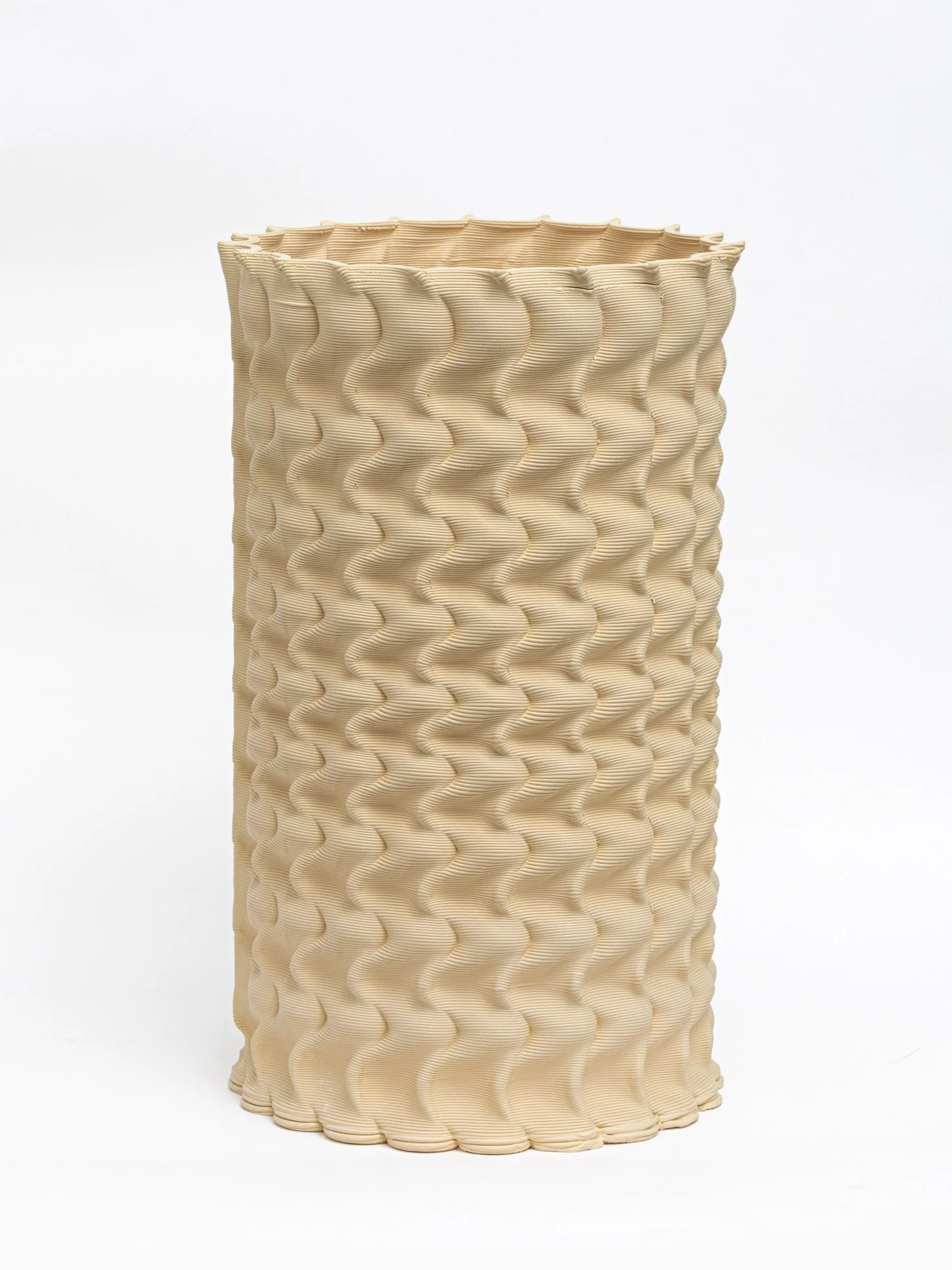
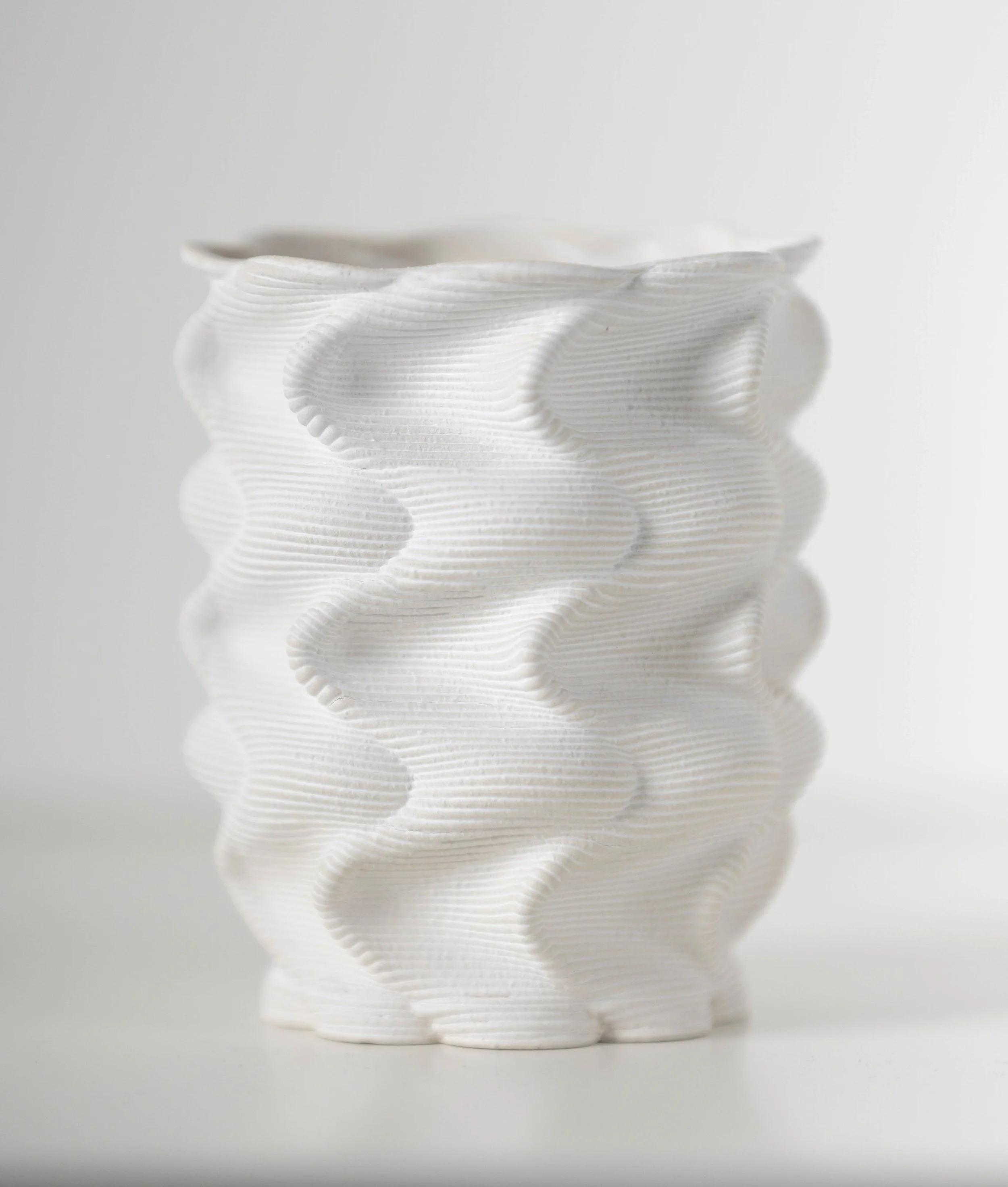
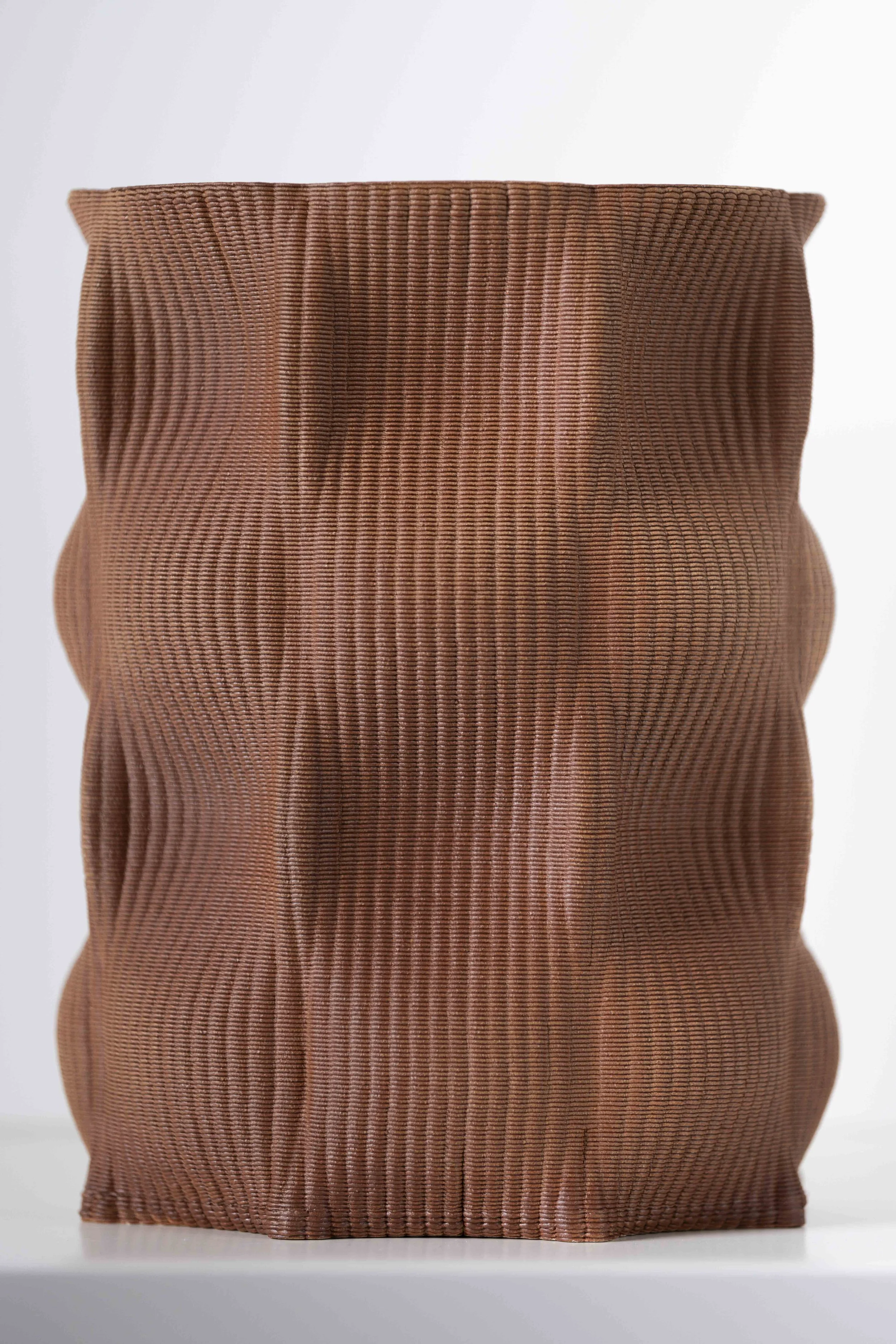
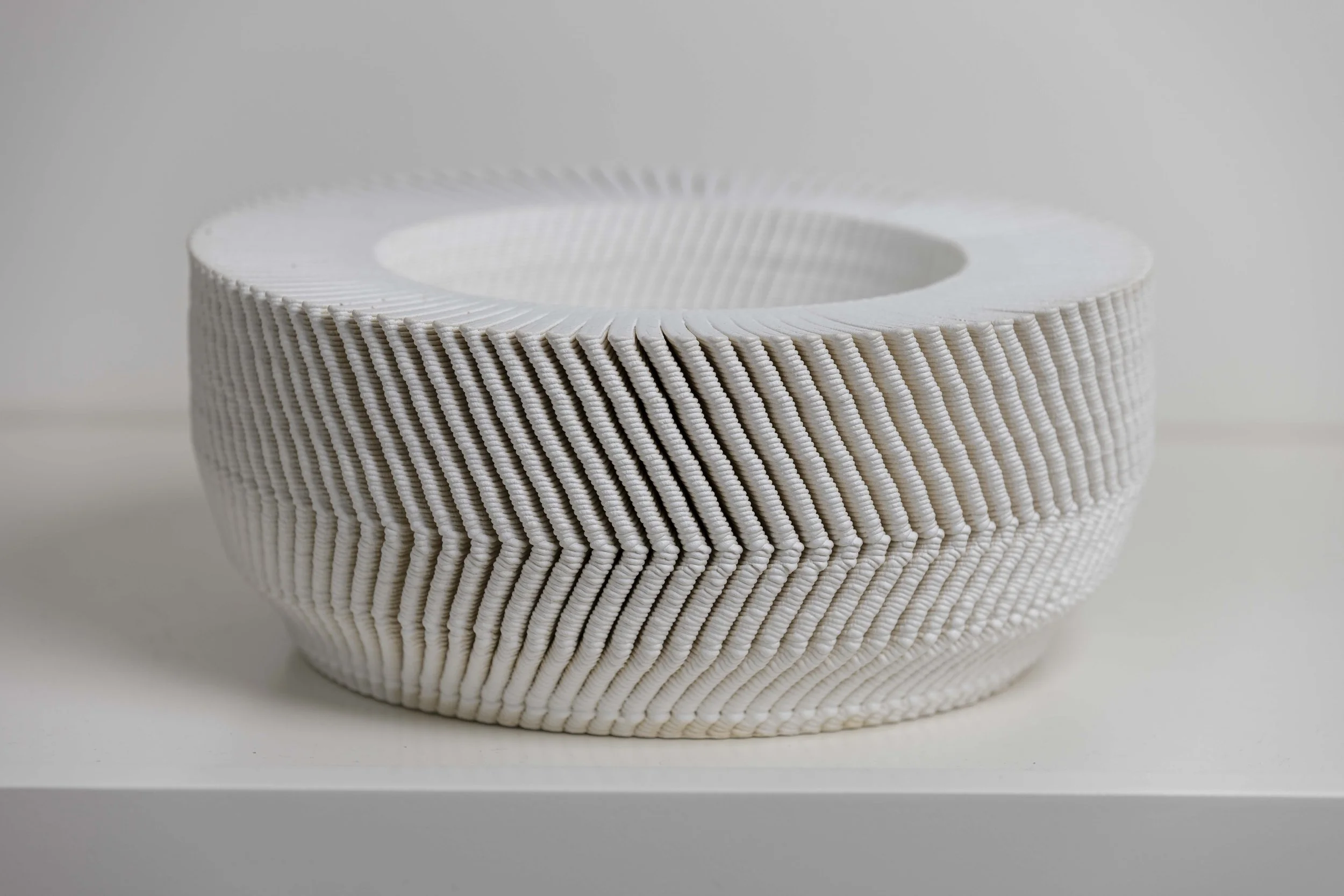
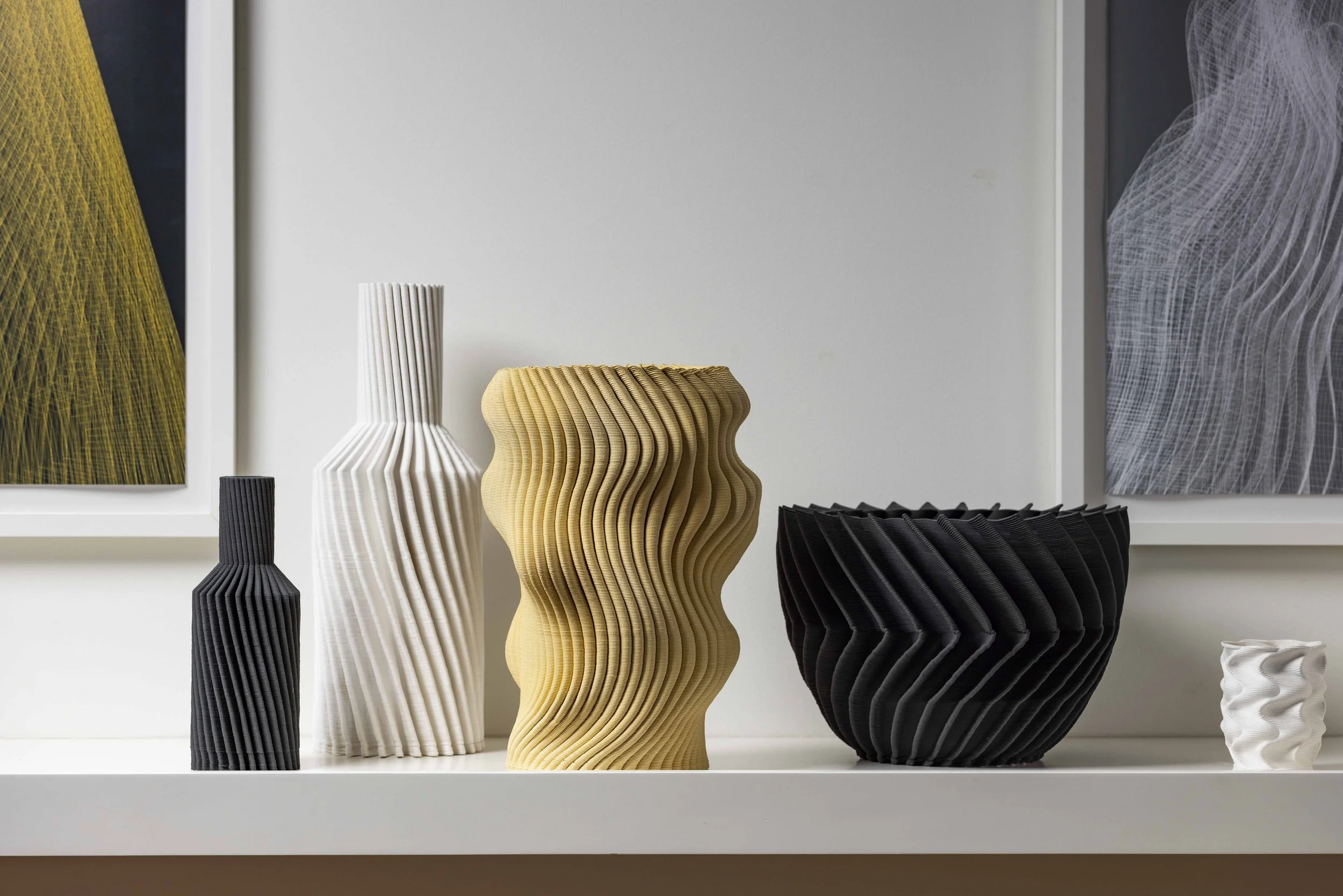
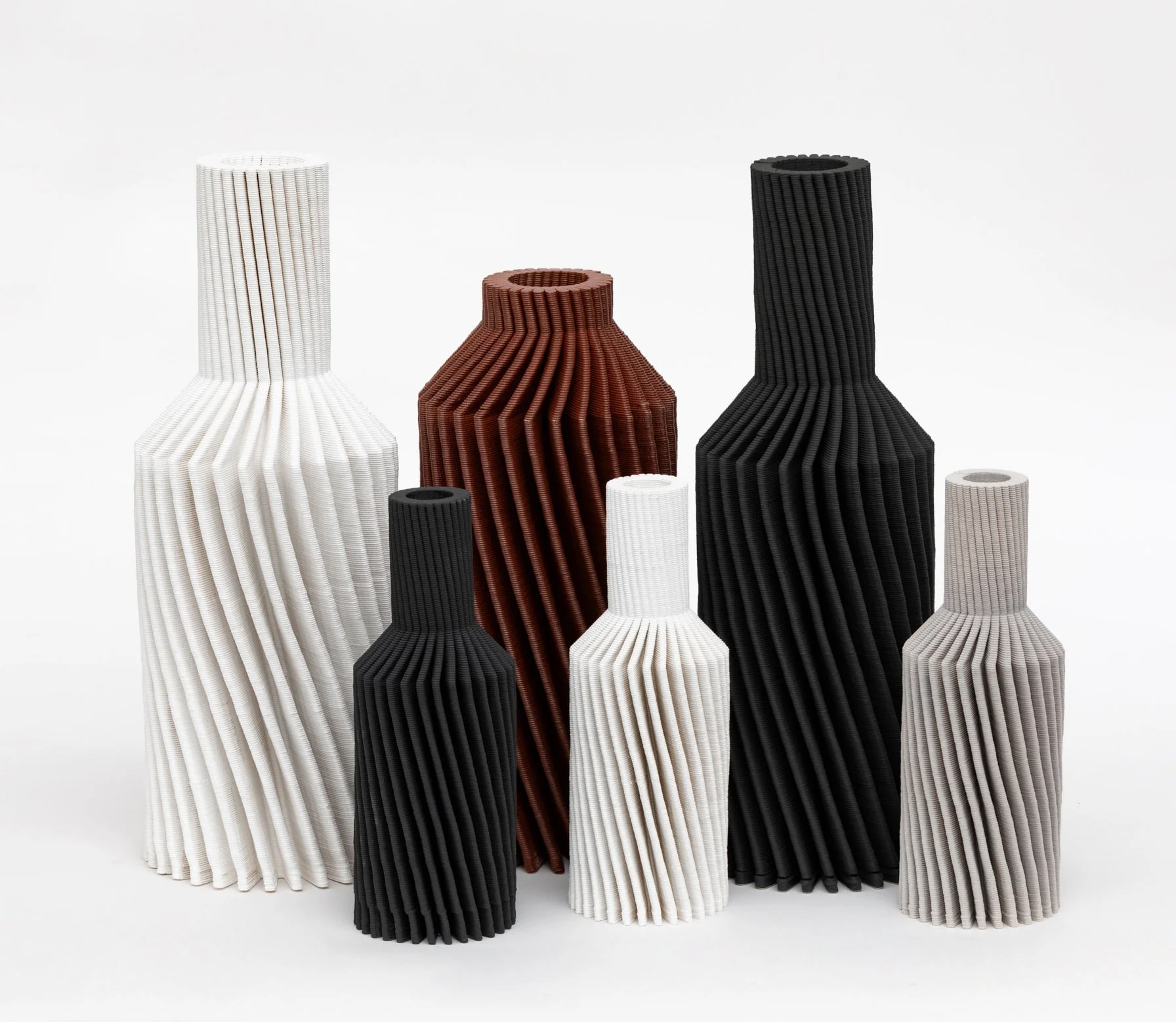
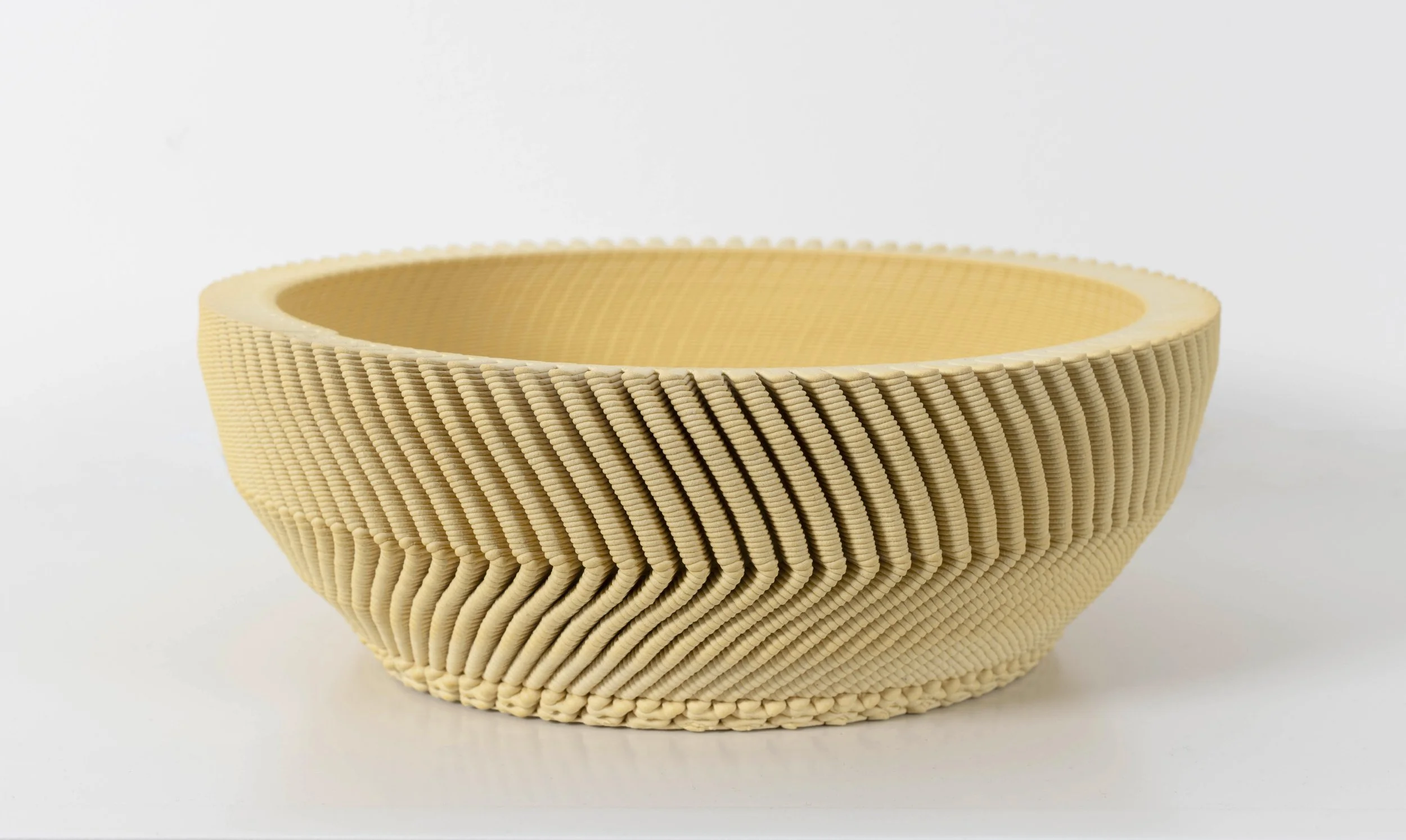
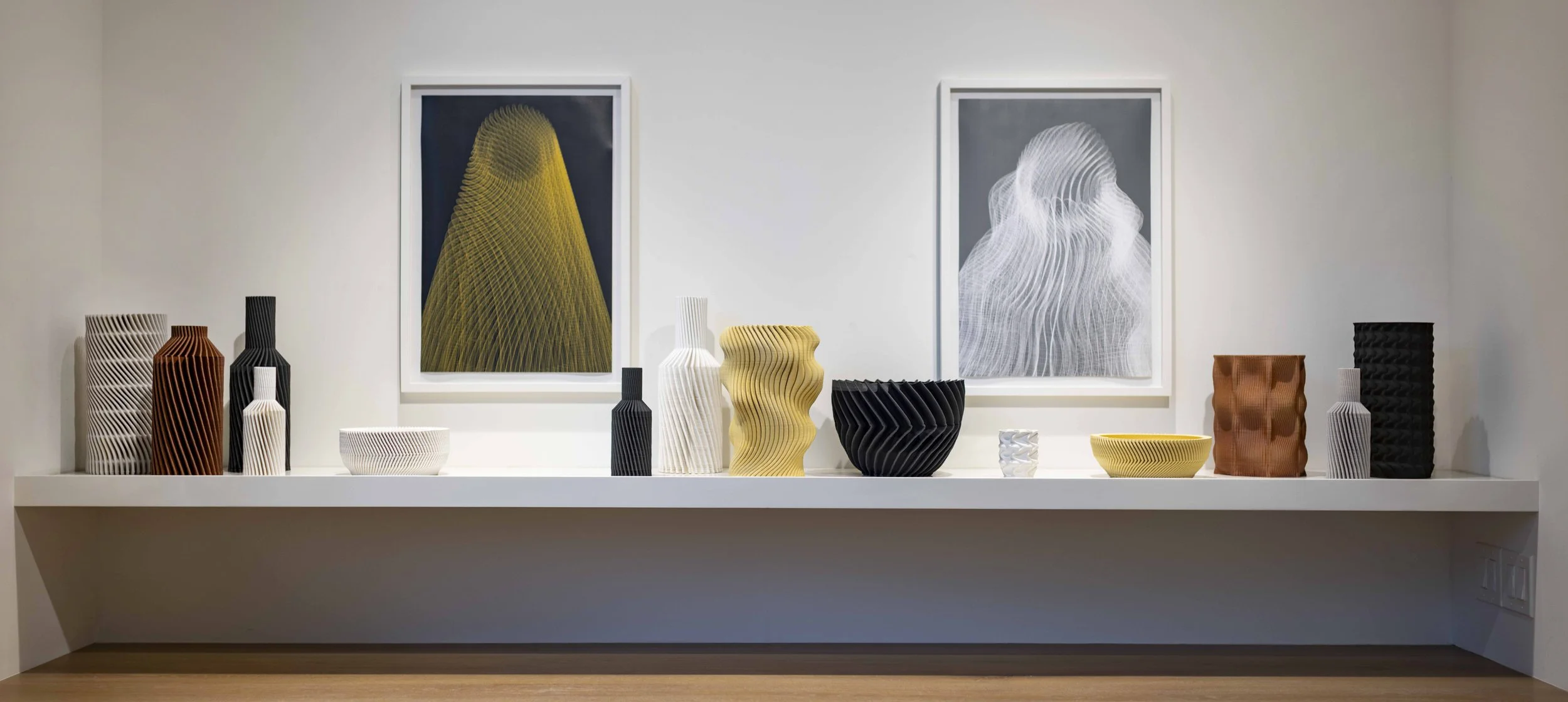
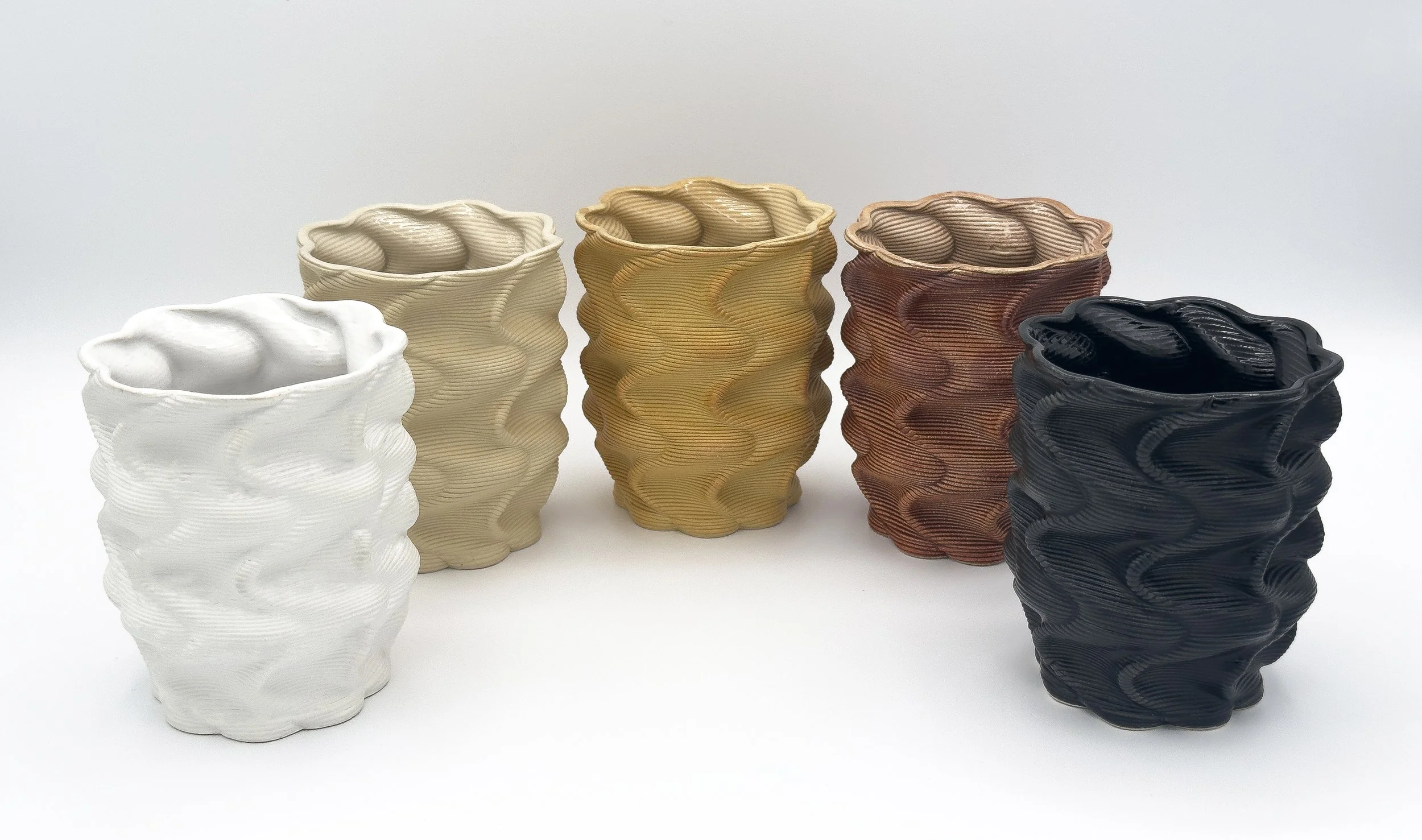
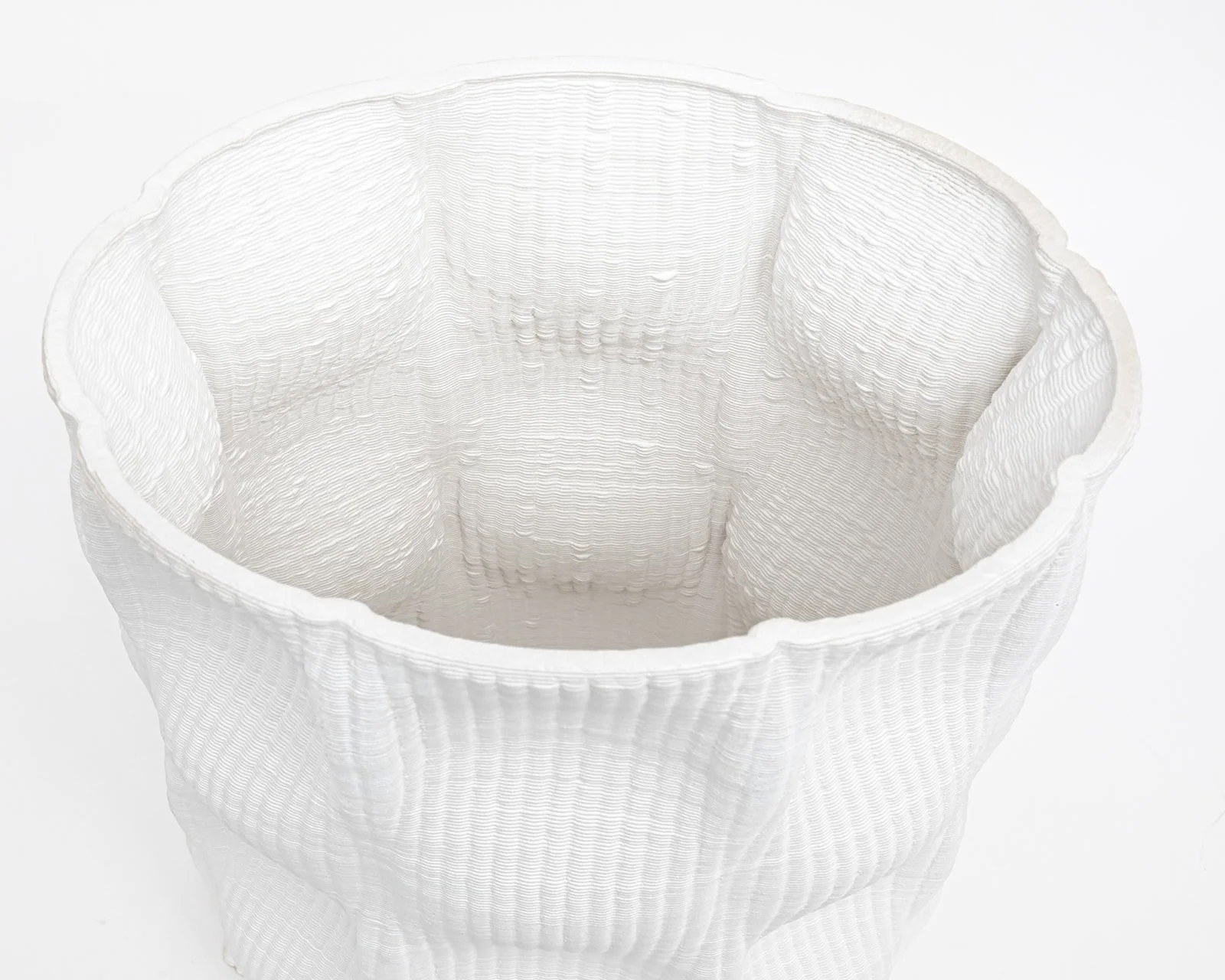
The Morphology Series explores the intersection of digital design and traditional craft through 3D-printed ceramic vessels and wall-mounted sculptures. Using 3D modeling software as a kind of digital sketchbook, Schmidt develops forms that are translated into clay, where the physical process introduces new textures and possibilities.
A defining feature of this work is the layered surface created by 3D printing. Schmidt responds to these horizontal lines with contrasting vertical patterns that evoke woven textiles and create optical effects, as seen in pieces like Woven Vase, Fade Vase, and the Heat Sink Bottles. While these vessels suggest containment, their focus shifts toward visual rhythm and perceptual experience.
This dialogue between digital and physical also shapes Facets, a modular wall piece that changes color as viewers move around it. Designed to adapt to different spaces, it highlights how digital tools and traditional materials can combine to produce new forms of expression.