SLOW CONSTRUCT
“CODE&CRAFT”
2025


Slow Construct is a collective of architect-makers exploring the intersection of architecture, craftsmanship, and art. Founded as a platform for cross-disciplinary collaboration, it brings together practitioners who build across materials, methods, and meanings. Through exhibitions, events, and exploratory projects, Slow Construct investigates how the art of making becomes a language of care, dialogue, and imagination.
Urban Stratigraphy
Metropolitan cities such as Paris, Rome, and London are built in layers. Beneath their surfaces lie historic artefacts from multiple eras, uncovered piece by piece—often by accident. Urban Stratigraphy is a collective response to this condition: four artists interpreting the temporal and material strata of the city through their own lens.
Each artist contributes a vessel or object representing a distinct moment in urban time:
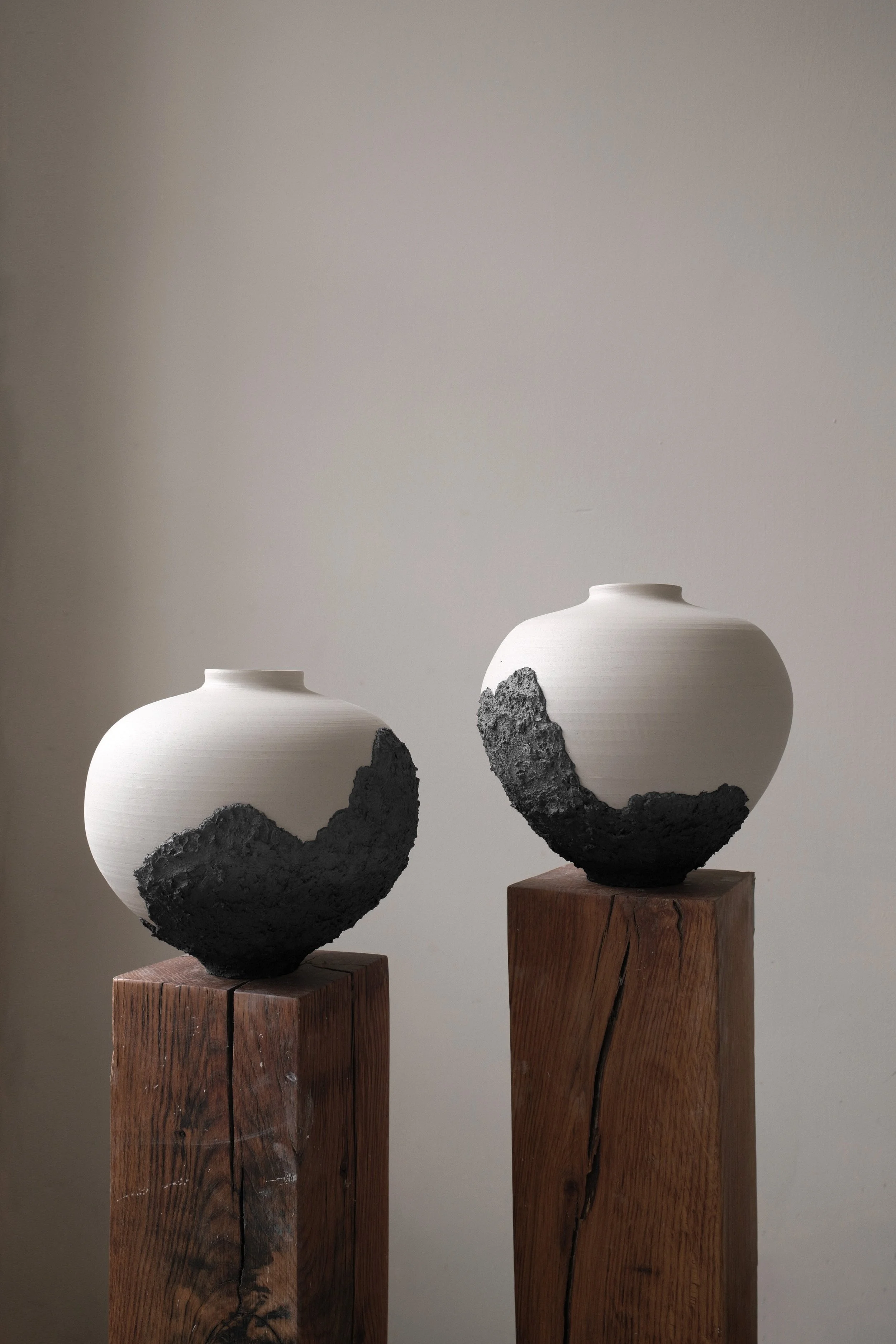
Nick Lee — Historical Layer (past remnants)
Chien-Hua Huang — Medieval Layer (material fragments)
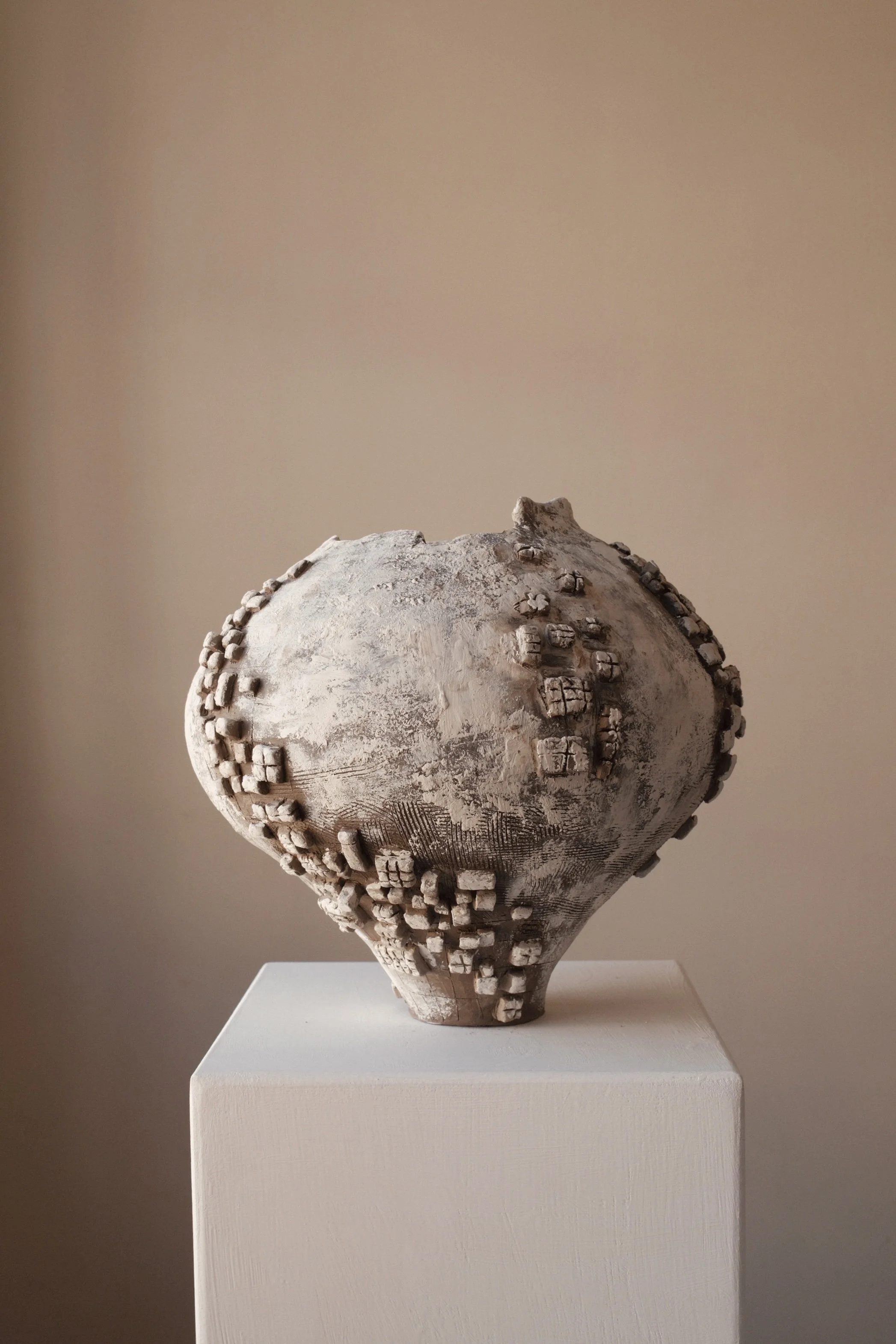
Natcha Kucita — Present Layer (urban planning / density)
Klinton Lau — Future Layer (digital fabrication / construction)
Together, these works layer time, matter, and interpretation to construct an alternative urban archive—one that is tactile, incomplete, and investigative. Rather than presenting a single narrative, the project embraces the city’s memory, disruption, and renewal, revealing how its many strata continue to shape the present and imagine the future.
CHIEN-HUA HUANG
Chien-hua Huang (@chienh_h) is an architectural and technical artist, computational designer. He is also a co-founder at Turn-Motion where he develops AI-driven structural optimization for advanced fiber composites. He holds a Master's degree with distinction from the Greg Lynn Studio at the University of Applied Arts in Vienna. His research explores reinforcement learning in design-build processes, material-aware generative design, and participatory approaches in tectonics. His work has been exhibited at MAK Museum Vienna, Saatchi Gallery, and Venice Architectural Biennale 2014. He has taught at the China Academy of Art, focusing on phygital culture in digital fabrication. His practice operates between algorithmic precision and material emergence, where computational tools serve as collaborative partners in dialogue with physical reality. His projects investigate how code becomes a medium for negotiating unpredictable material behaviors, creating systems that respond to feedback while maintaining design intentionality.
ARTIST STATEMENT
Craft begins with human touch as the foundation of shared identity and purpose. What we create together, whether in code or by hand, carries our presence forward because the essence of making lives in what we shape together.
ARWORK STATEMENT
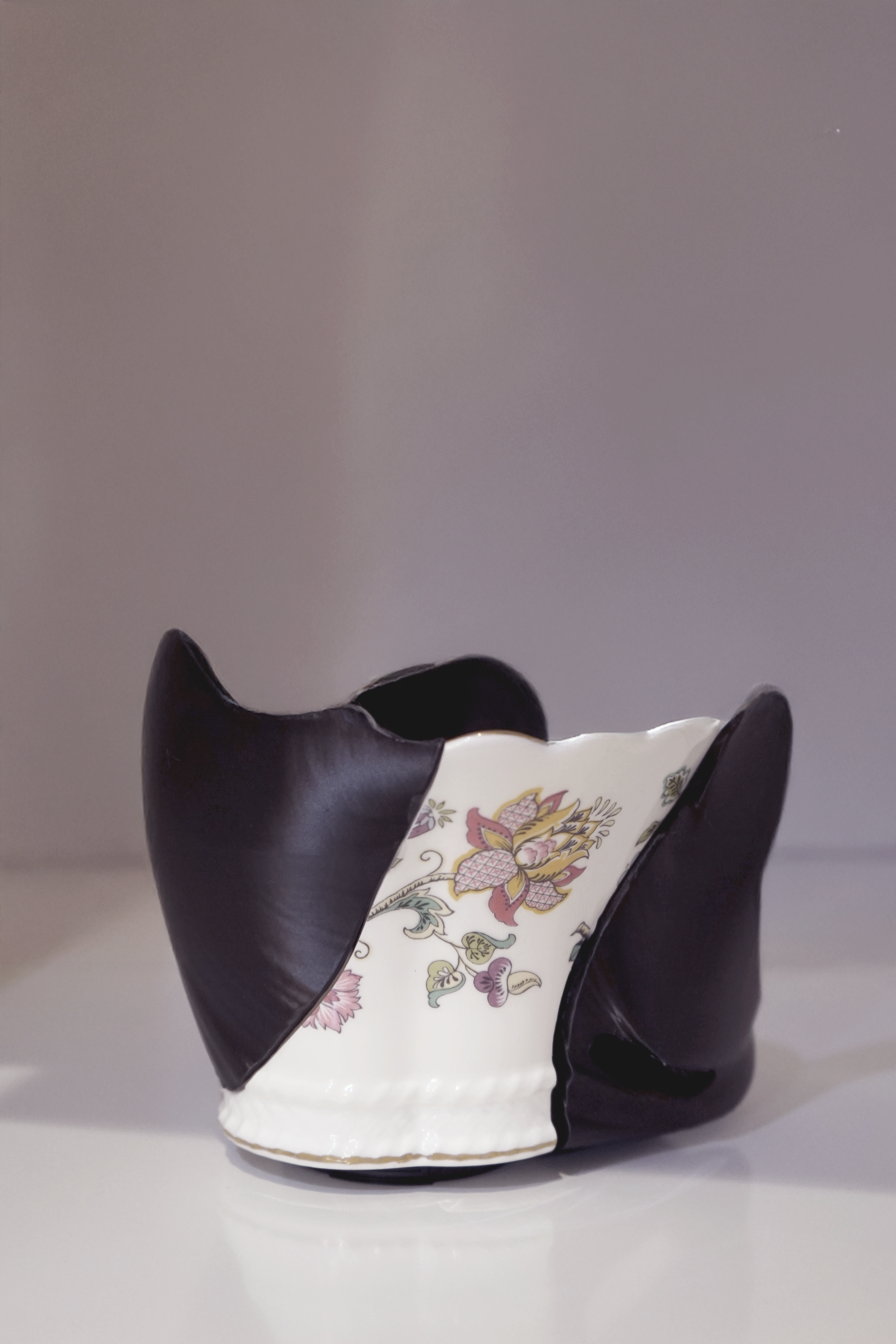
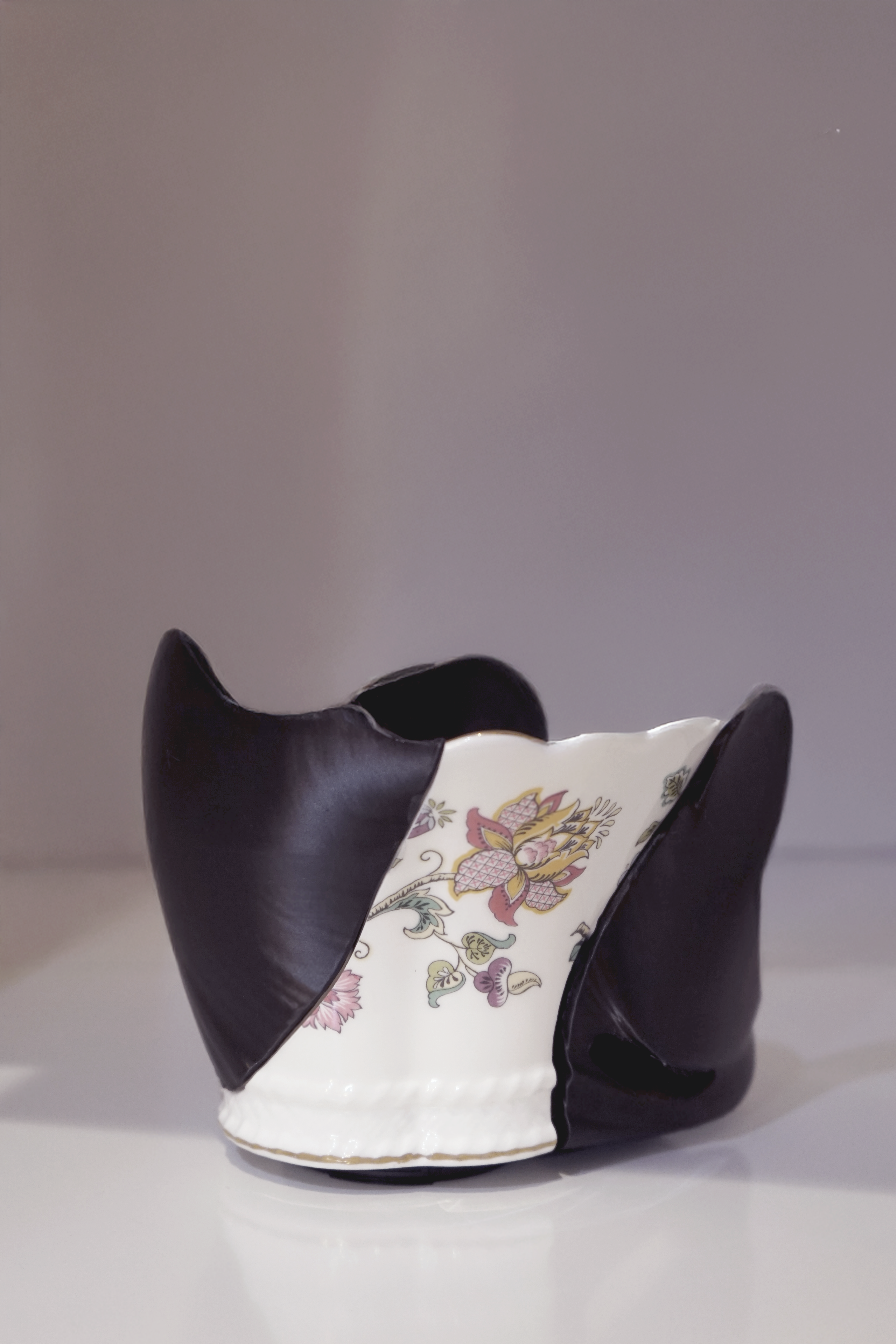
Medieval Layer — Urban Stratigraphy Series
My work seeks out urban fragments as small-scale artefacts in the form of ceramics. These objects, once purposeful, are now unearthed and contextless. There is something compelling about these broken pieces, each carrying physical traces of past lives and silent stories of the city’s evolution as well as an individual’s memory. I collect, repair, and recompose them using 3D-printed Kintsugi. The joints transform into a visible record of change and augmentation of the layered community. The interventions are not only about restoration, but also about reimagining alternatives for the recovered artefacts. I am fascinated by how collective memory can be embedded in material, and how the act of repair transforms loss into continuity. These methods allow the city’s history to be felt in the present—each object both archive and invention. By layering memory, function, and new forms, I aim to make visible the cycles of regeneration that shape the city underneath our feet.

KLINTON LAU
Klinton Lau is a London-based innovative potter, interior designer and furniture maker whose work explores the intersection of sustainability, traditional craftsmanship, and modern design. Throughout his studies and practice, named Yanade (@yanade_studio, Klinton has focused on translating cultural memory into contemporary form, while promoting sustainability in households. His vision is deeply rooted in the belief that design can reconnect us, and future generations, to our cultural roots while raising global awareness. Currently, Klinton is immersed in the world of metal, wood and ceramics, crafting pieces that draw inspiration from traditional techniques while thoughtfully adapting with modern innovations such as digital fabrication to enhance precision and possibilities. By merging both worlds, Klinton creates new furniture that not only reflects modern movements but also honors cultural identities from both the past and present. His work is a testament to the power of design in sustaining cultural heritage while embracing the future.
ARTIST STATEMENT
Digital fabrication can coexist with craft—not by replacing the hand, but by extending it. I’m interested in the precision of machines as a new form of touch, one that interprets human gestures rather than replicating them. By embracing both worlds, objects can feel simultaneously ancient and speculative, grounded in the logic of making, yet reaching toward the future of fabrication and craftsmanship.
ARTWORK STATEMENT
Future Layer — Urban Stratigraphy Series
This work imagines the city’s future as a dialogue between structure and softness. Formed through digital modeling and cast in concrete, the vessel anchors the base of an emerging architecture. Rising from it, translucent volumes suggest growth—fluid, adaptive, and alive. The piece questions how the built environment might evolve beyond rigidity, embracing motion and material hybridity as a new form of construction.
NATCHA KUCITA
Natcha Kucita is a Thai-born, London-based BIM Engineer and Ceramicist. She founded Vessel of Light (@thevesseloflight), a studio dedicated to slow, ritual-centered ceramics inspired by everyday gestures of care. Her work bridges architectural precision and the intimacy of the handmade, using traditional firing techniques such as raku, saggar and reduction firing using gas and wood-fired kiln to create unique objects that merge utility, poetry, and quiet endurance. Her work has been exhibited in various popups in both London and Thailand. Currently, Natcha can be found making small batch ceramics and offering intimate workshops in her creative studio space in Dalston.
ARTIST STATEMENT
My practice begins with the vessel as a form of both function and reflection. I see clay as a material for memory and release; the repetition of daily gestures, the flow of time, the tension between control and surrender. Each piece is built around balance—between structure and spontaneity, weight and air, permanence and fragility. Through this, I hope to make visible the quiet rituals that shape our surroundings, our identities, and our sense of belonging.
ARTWORK STATEMENT
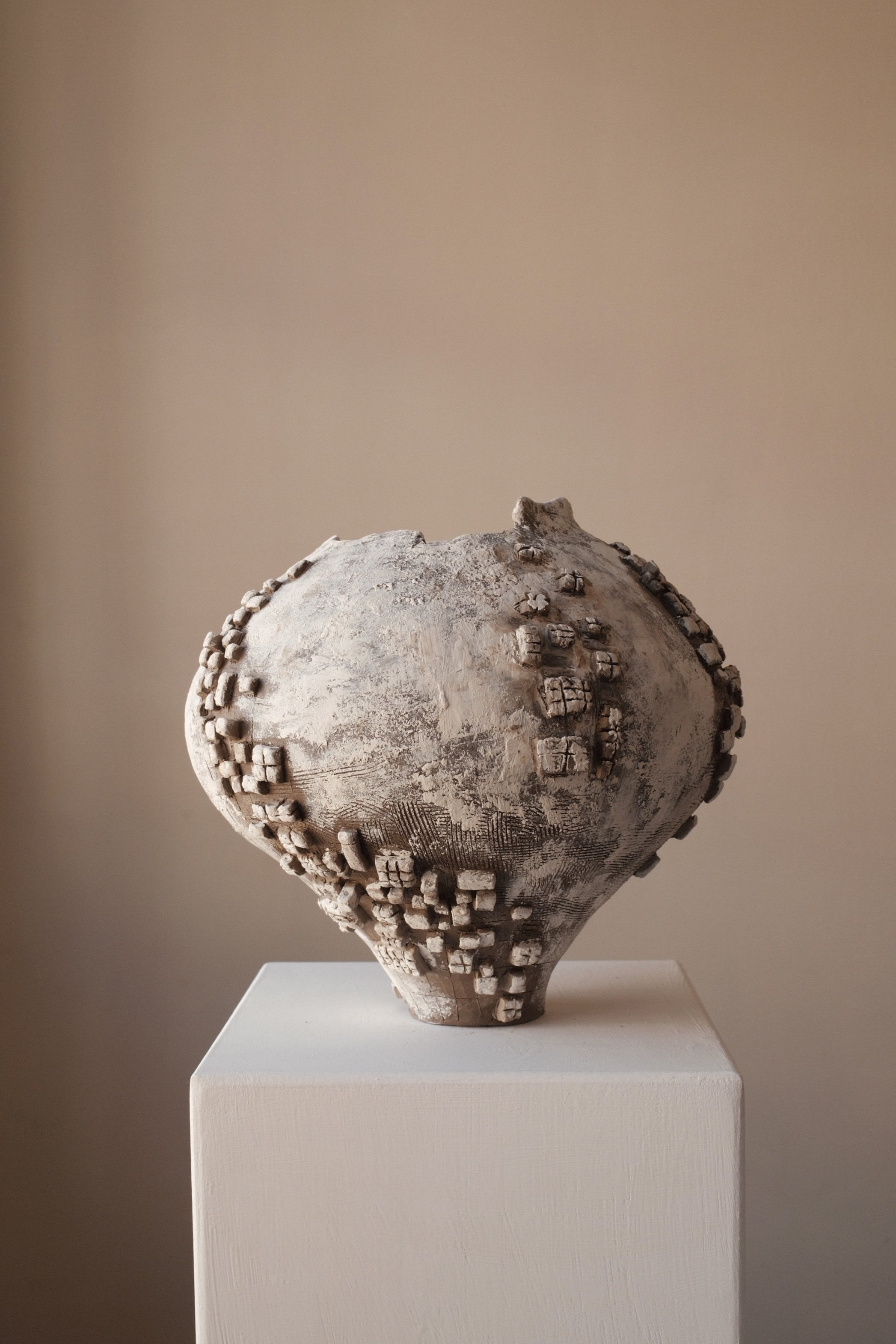
Present Layer — Urban Stratigraphy Series
My vessel captures an urban landscape in flux. The work embodies city growth, with cubic architectural forms crawling across its surface like an infection—chaotic, dense, and unstable. Inspired by digital blueprints of the urban environment, the form is shaped entirely by hand, translating simulation into clay. By merging an organic process with a grid-based visual language, the work bridges the digital and the tactile. It reflects the tension between growth and erosion, order and rupture — a portrait of urbanism in transformation.
NICK LEE
Slow Throw (@slowthrow.ceramics) by Nick Lee is a small batch ceramic practice in East London. Nick creates vessels that explore contrast, combining the smoothes of glazes with raw, textured stoneware. The work is deeply process driven, shaped as much by fire and atmosphere as by hand, and his exposure from various ceramic masters in East Asia. Slow Throw blends these influences, balancing experimental surfaces with functional form. From large sculptural pieces to everyday tableware, the studio keeps a quiet rhythm of shaping, testing, and firing. The resulting works are tactile landscapes of earth and fire. Each piece carries a story of process, texture, and time.
ARTIST STATEMENT
My practice centers on a dialogue between organic and inorganic forms. Working primarily in clay, I explore how these forms interact with contrasting textures and shapes. Each vessel holds a harmonious tension between control and accident, behaving like a landscape that shifts and re-forms.
ARTWORK STATEMENT
Historical Layer — Urban Stratigraphy Series
As part of Urban Stratigraphy, this vessel embodies the historical stratum of the city. Its precisely thrown form is interrupted by a rough, earthen mass—a material echo of what lies beneath the urban surface, like an artefact from an imagined site, both whole and incomplete. This vessel positions craft as a negotiation between precision and disruption. The vessel’s smooth curve reflects the algorithmic impulse of making, while the textured layer introduces variation, unpredictability, and the passage of time. In bridging past and present, it reminds us that history, like code, is never erased—only layered.