
PHILIPPE BIETENHOLZ X GEORGIOS GOUDELIS
“CODE&CRAFT” & “Forms of Reverence"
2025 - 2026
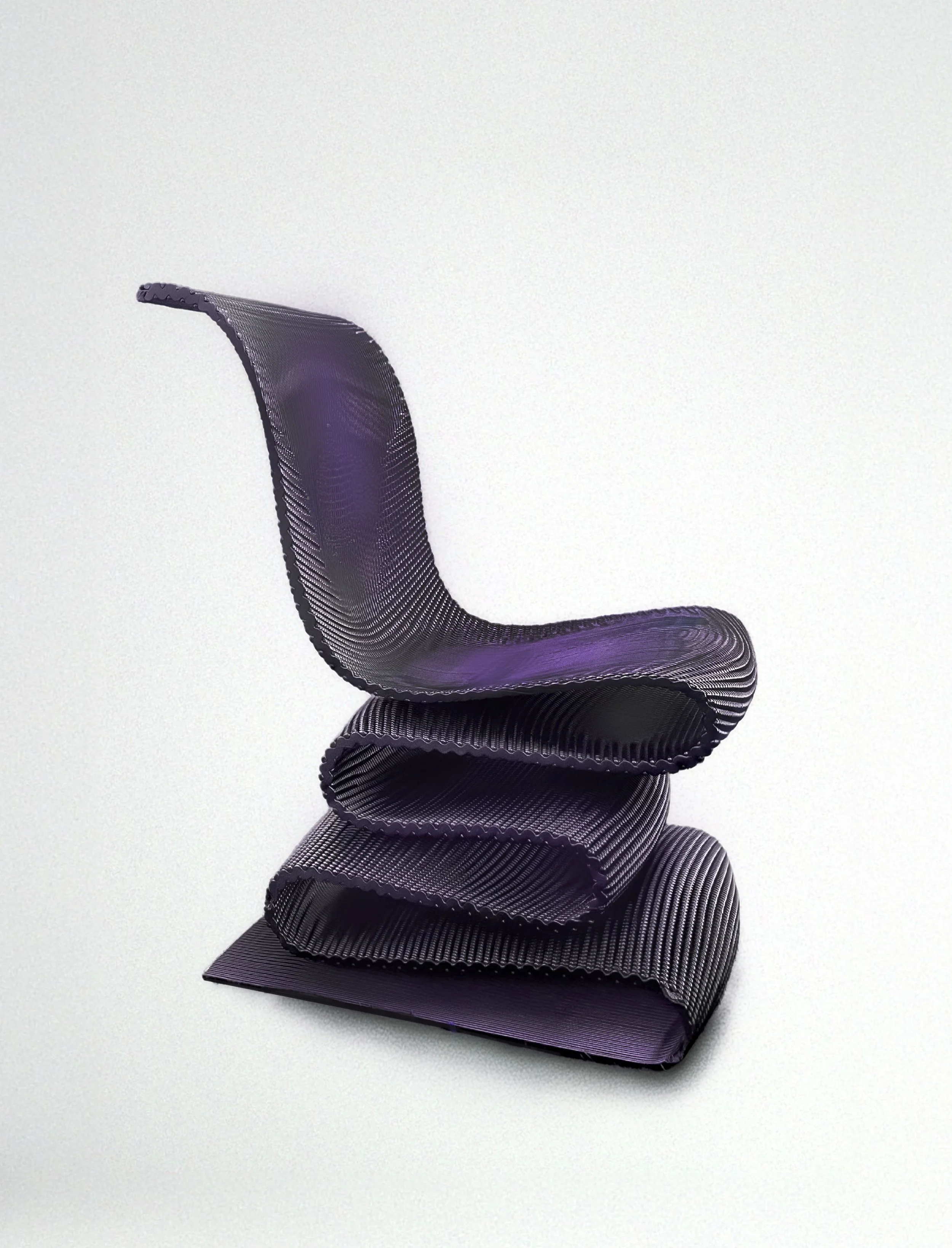
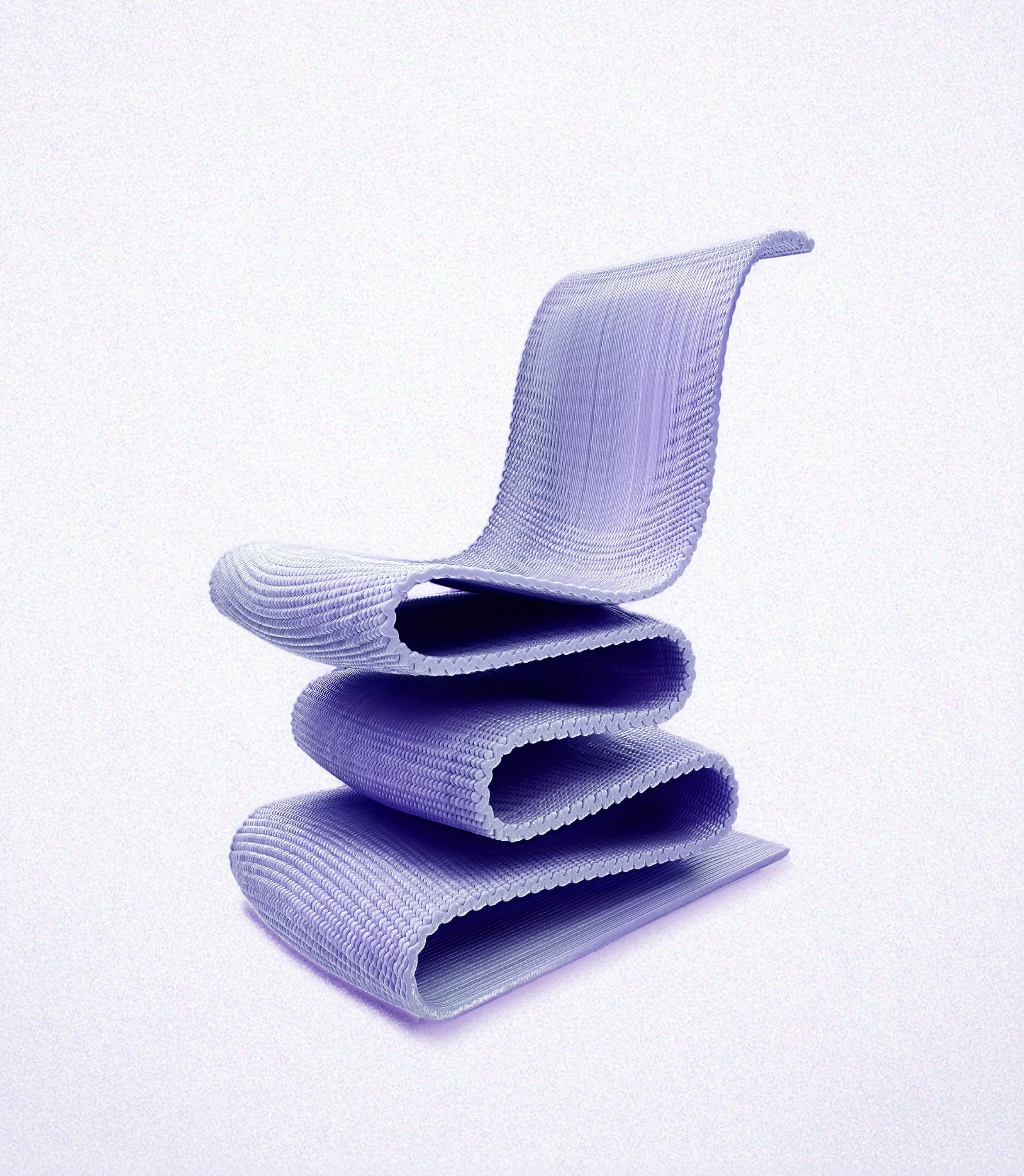

“Encoded Bounce chair”
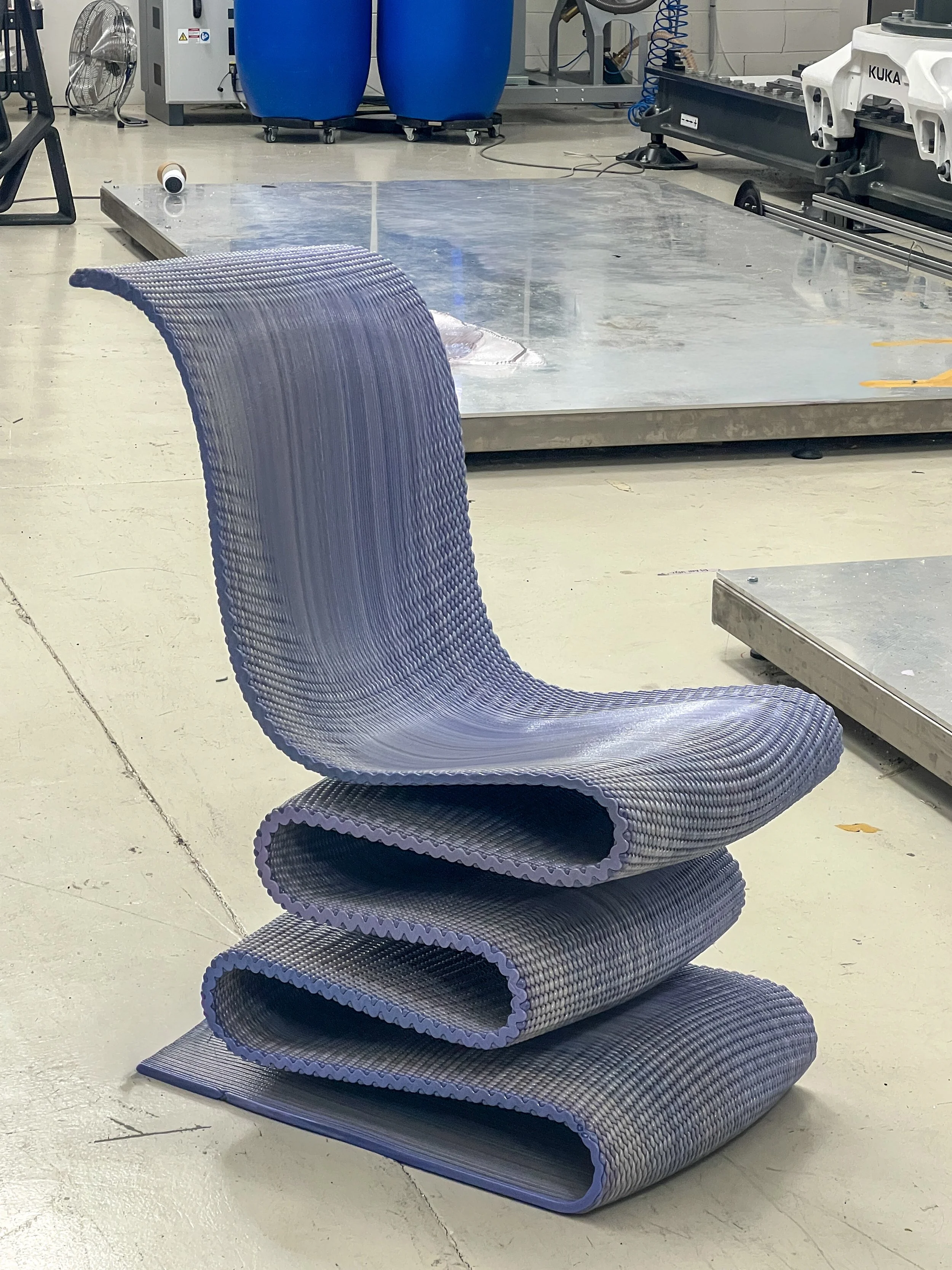
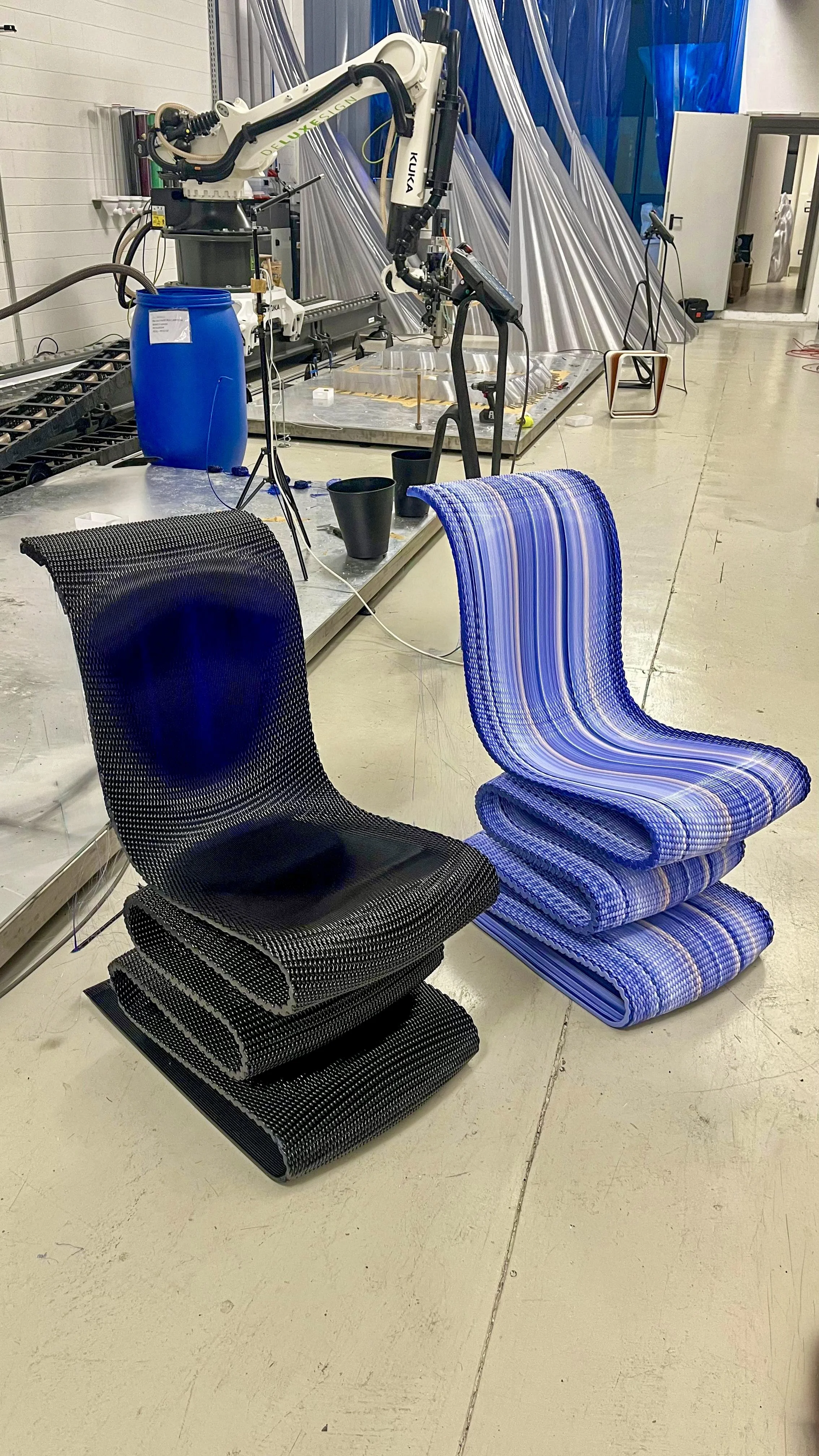
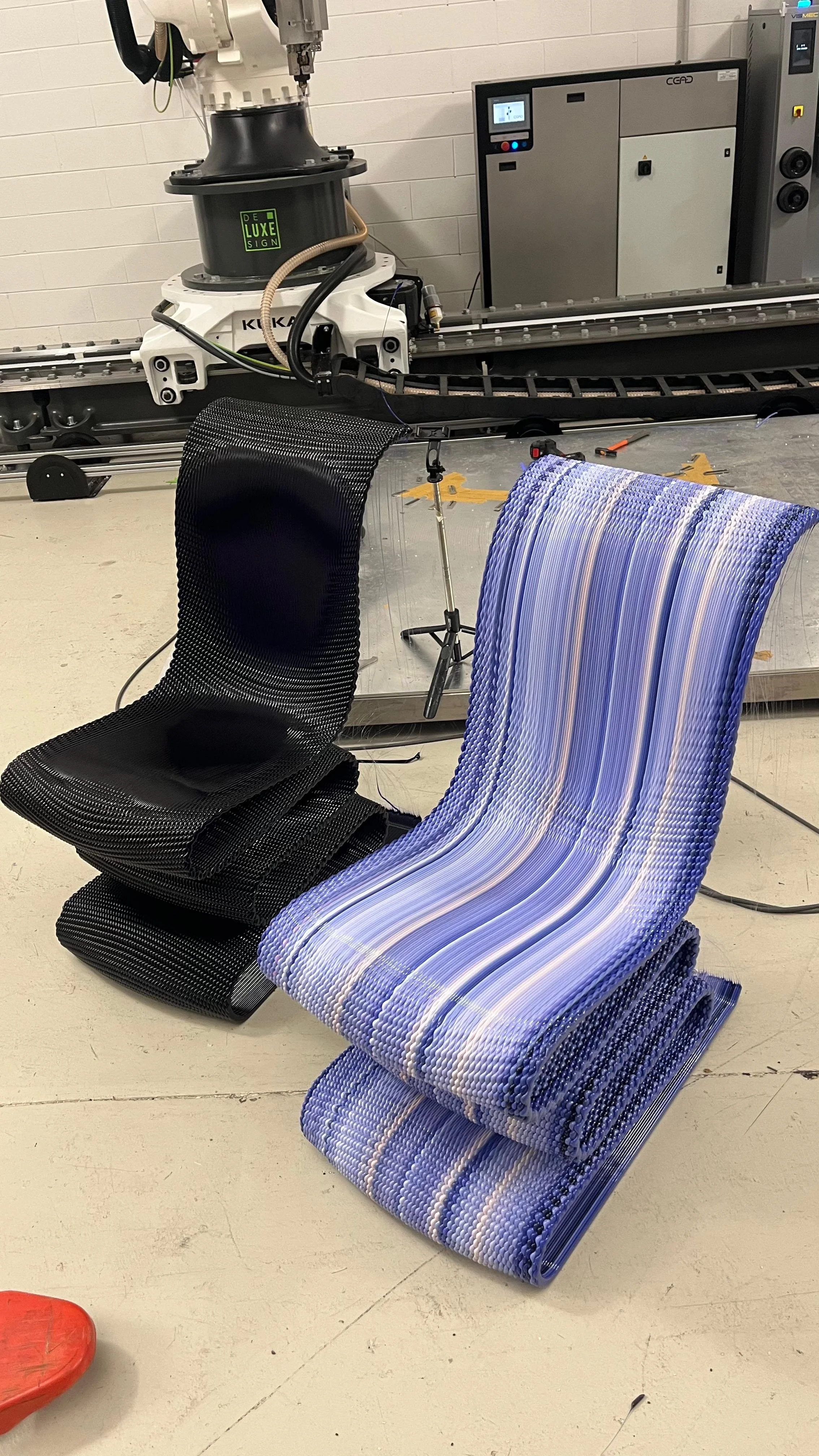
The Encoded Bounce Chair is an exclusive collaboration between Philippe Bietenholz and Georgios Goudelis made for the Code & Craft exhibition. Philippe’s signature Bounce Chair has been interpreted through Georgios’s computational design approach with the goal of intensifying the object’s visual language. The added layer of textural complexity, made possible only through large-scale 3D printing, aims to capture and accentuate the Bounce Chair’s philosophy of blending form with function and narrative.
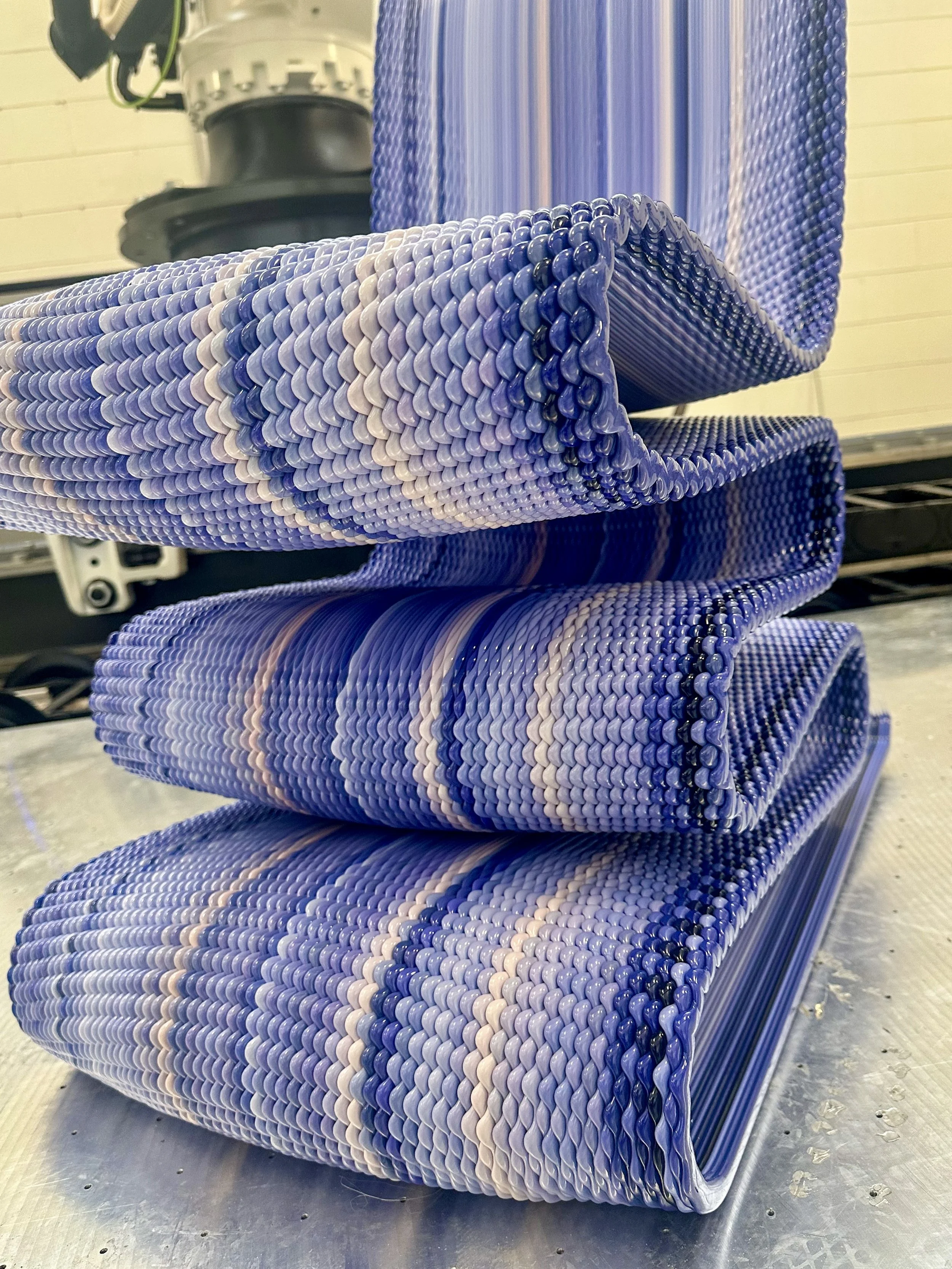
Generated algorithmically, the weave-like pattern has been mapped onto the topology of the object using real pressure data, that were collected from studies of chair ergonomics. This digital information corresponds to the object’s physical contact with the human body, but in this case also its contact with the ground and itself. All this data has been translated into a dynamic surface texture, forming different visual and haptic cues that further communicate the object’s functionality. Moreover, this additional textural dimension also aims to reinforce the chair’s curves in expressing a playful, kinetic and interactive visual language.
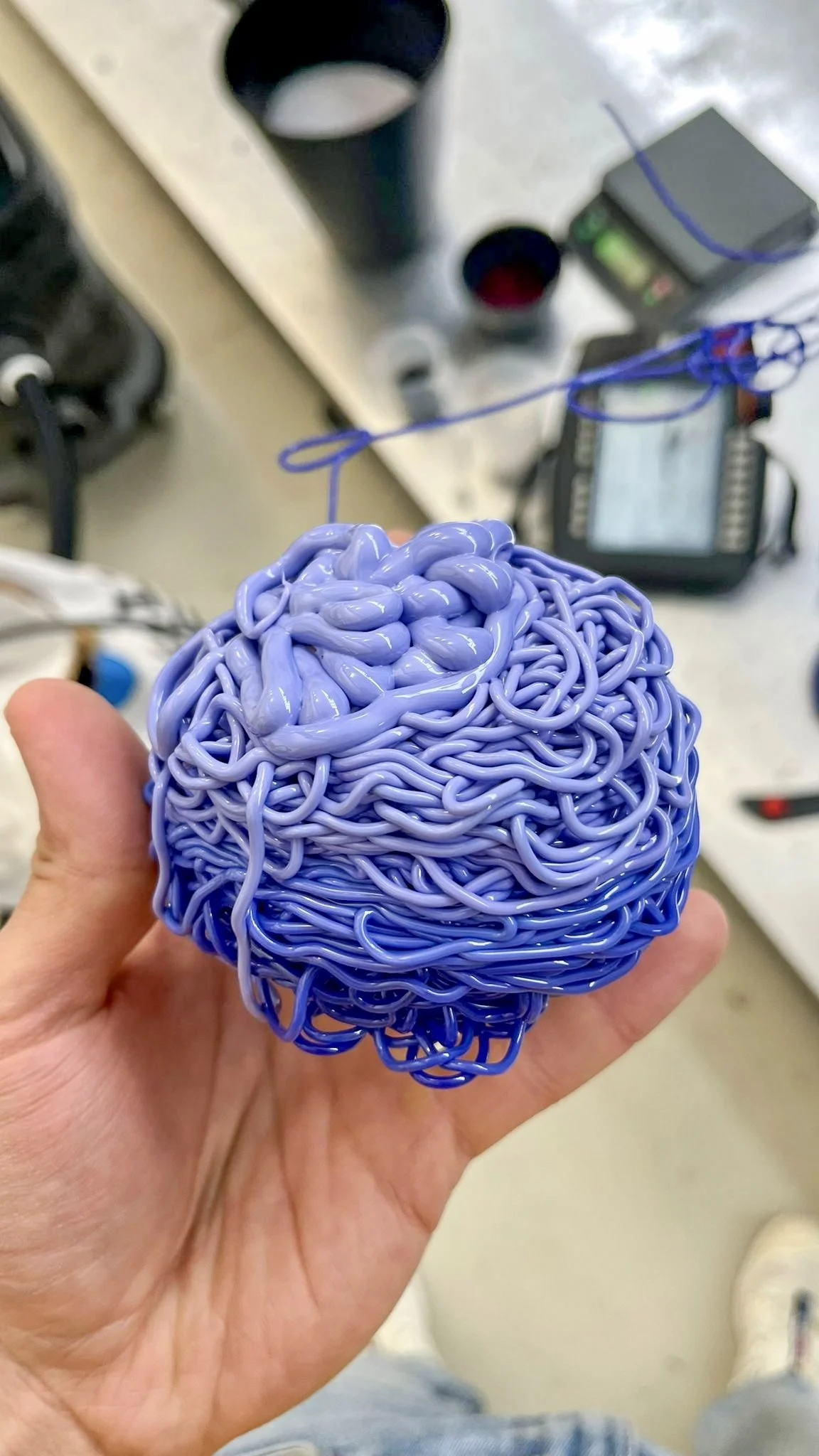
Digitally fabricated via a robotic arm, this unique version of the Bounce chair also leverages the improved stiffness of the interweaving layers to offer a bouncier and smoother sitting sensation. Being able to program the robot’s toolpath and having precise control over the extrusion properties makes it possible to deposit material based on the specific structural performance desired. The chair presented is as an excellent example of digital fabrication’s potential to push both functional and creative boundaries, as well as provide customised results that are shaped from a specific context.




Philippe’s aesthetic blends vibrant, joyful forms with smooth, futuristic lines, reflecting both his personal perspective and the integration of cutting-edge technology. By infusing objects with character, he aims to create lasting emotional connections, transforming furniture into playful companions that spark joy and self-expression. “I firmly believe that adaptive production methods like 3D printing will continue to make significant technological leaps in the future. This will be especially relevant in the furniture industry over the coming years, not only because of the versatility it offers but also due to its potential for decentralized production.
Philippe Bietenholz, born in 1995 to a Peruvian mother and Swiss father, grew up in Berlin, where cultural diversity shaped his artistic identity. Influenced by hip-hop and 3D graffiti, he pursued industrial design, mastering 3D modeling and augmented reality (AR) to create emotionally resonant objects. Viewing design as a bridge between individuality and global connectivity, he embraces digital culture and cross-cultural inspiration, crafting work that adapts to and influences the evolving relationship between physical and digital spaces.