
PETER JAMES NASIELSKI
“CODE&CRAFT”
2025
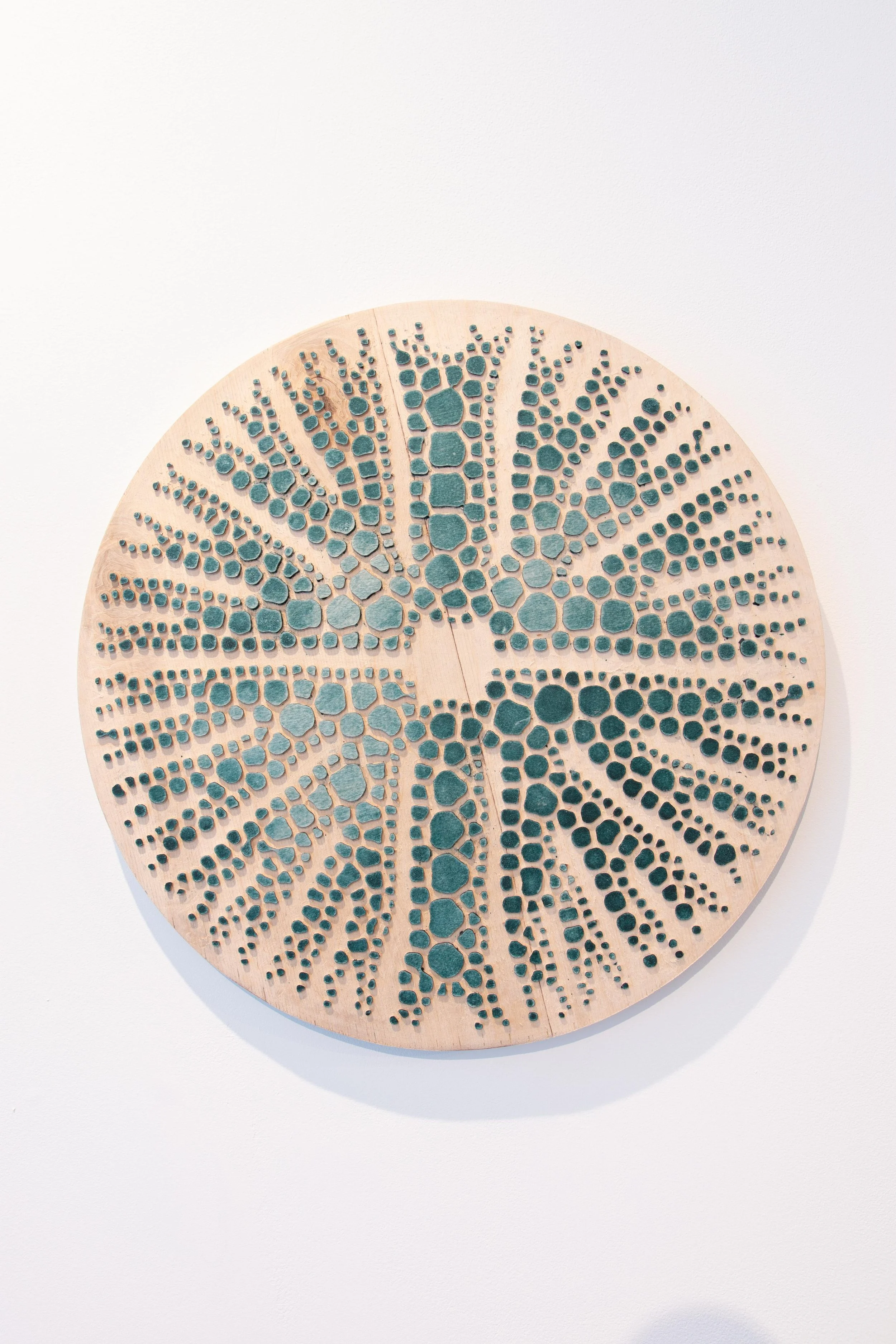

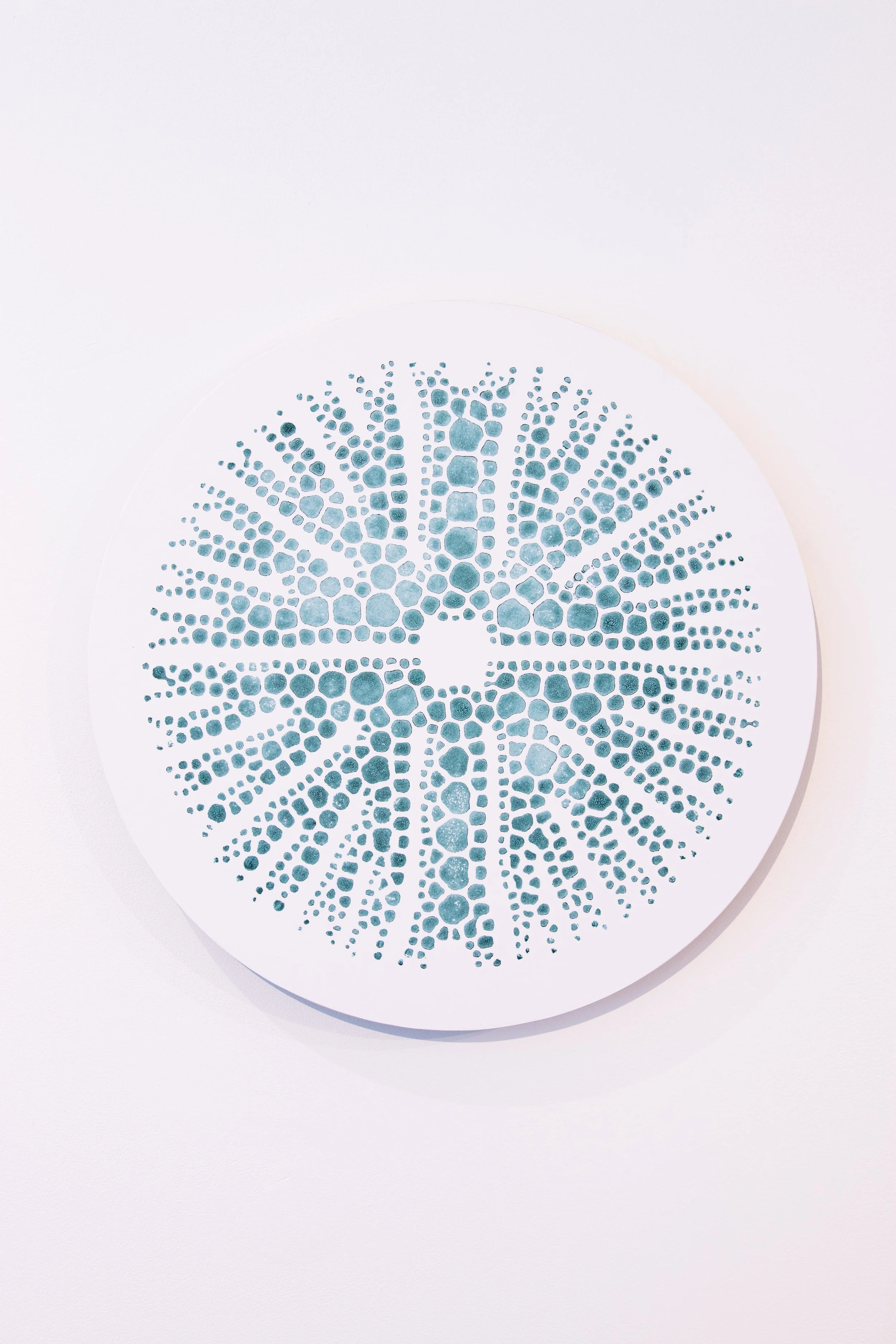
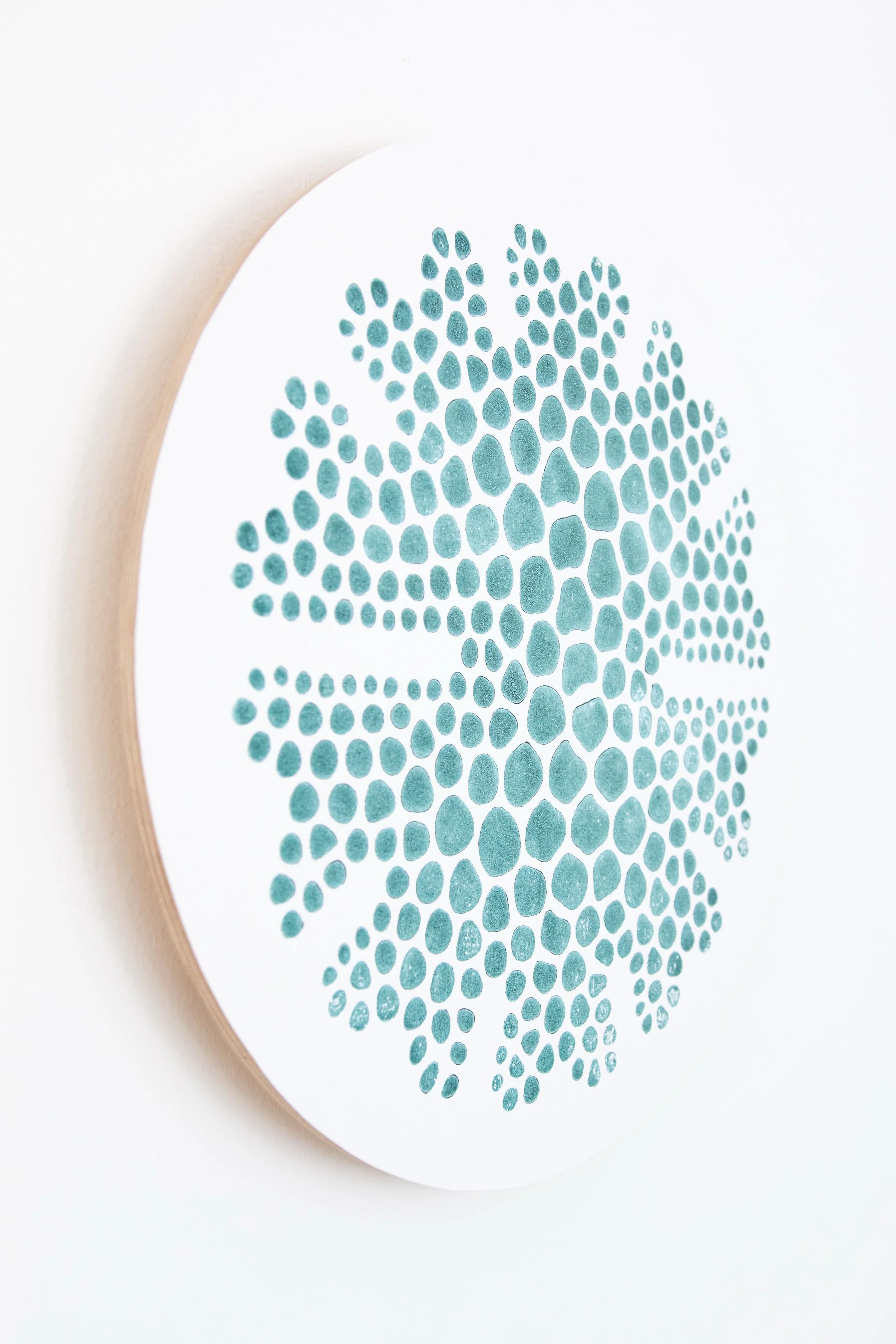
Peter Nasielski is an interdisciplinary artist working at the convergence of ecology, inter-species collaboration, and speculative design. Nasielski's practice explores symbiosis between humans and other lifeforms as a means to expand ecological awareness and to support the mutual flourishing of all life. Nasielski’s work integrates living materials with code based generative design tools to create living artworks that simultaneously critique the linear economy while demonstrating a regenerative alternative vision informed by evolution.
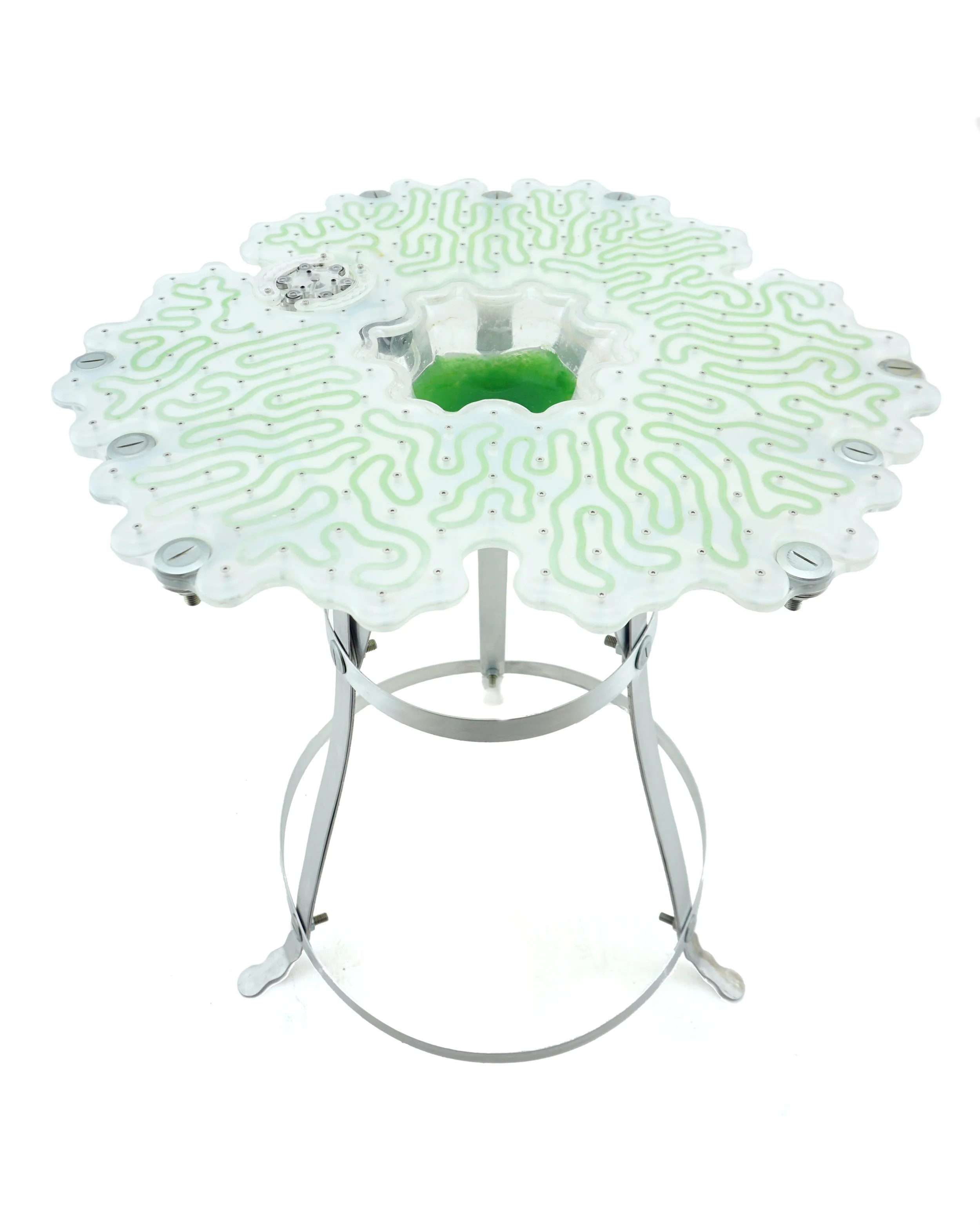
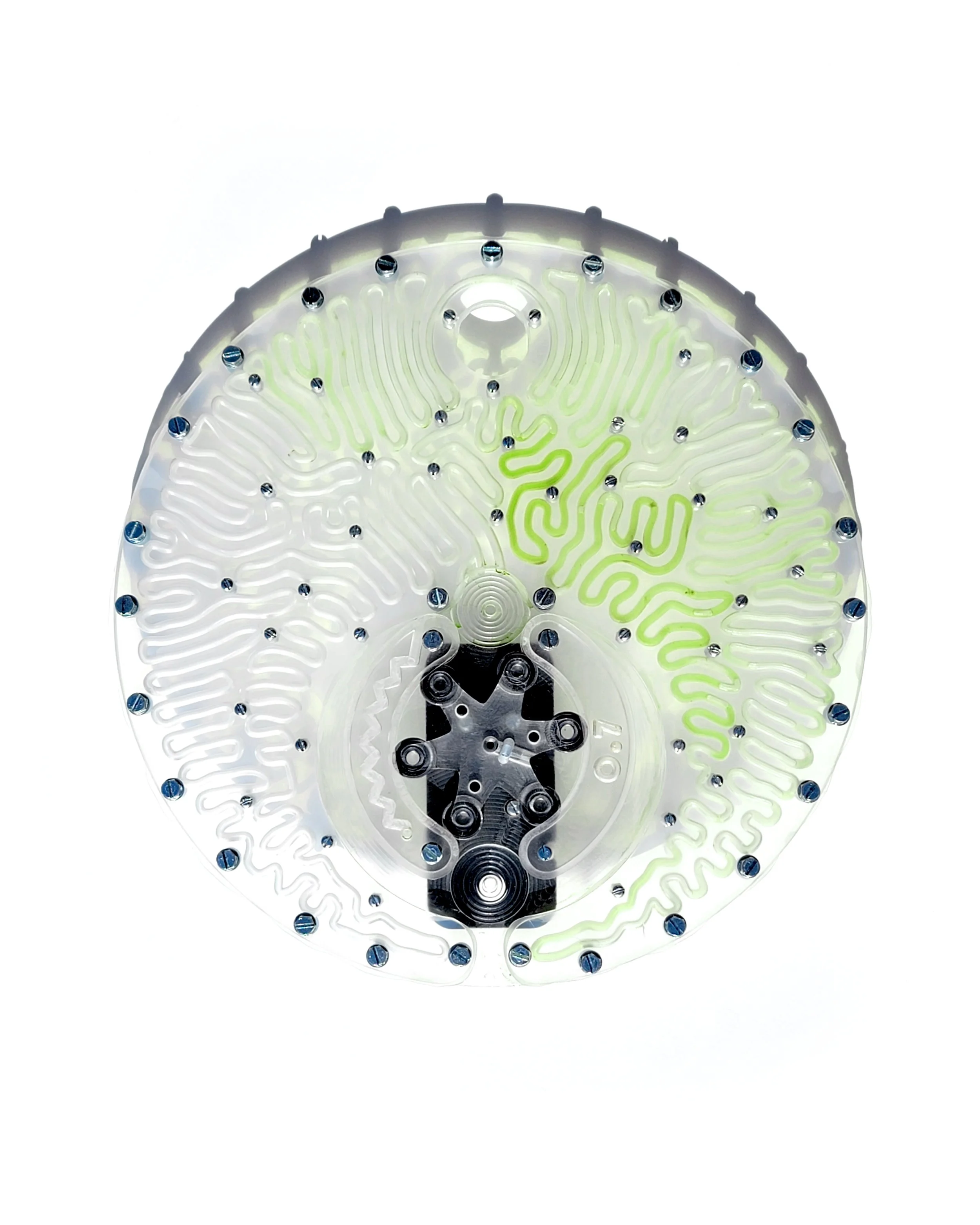
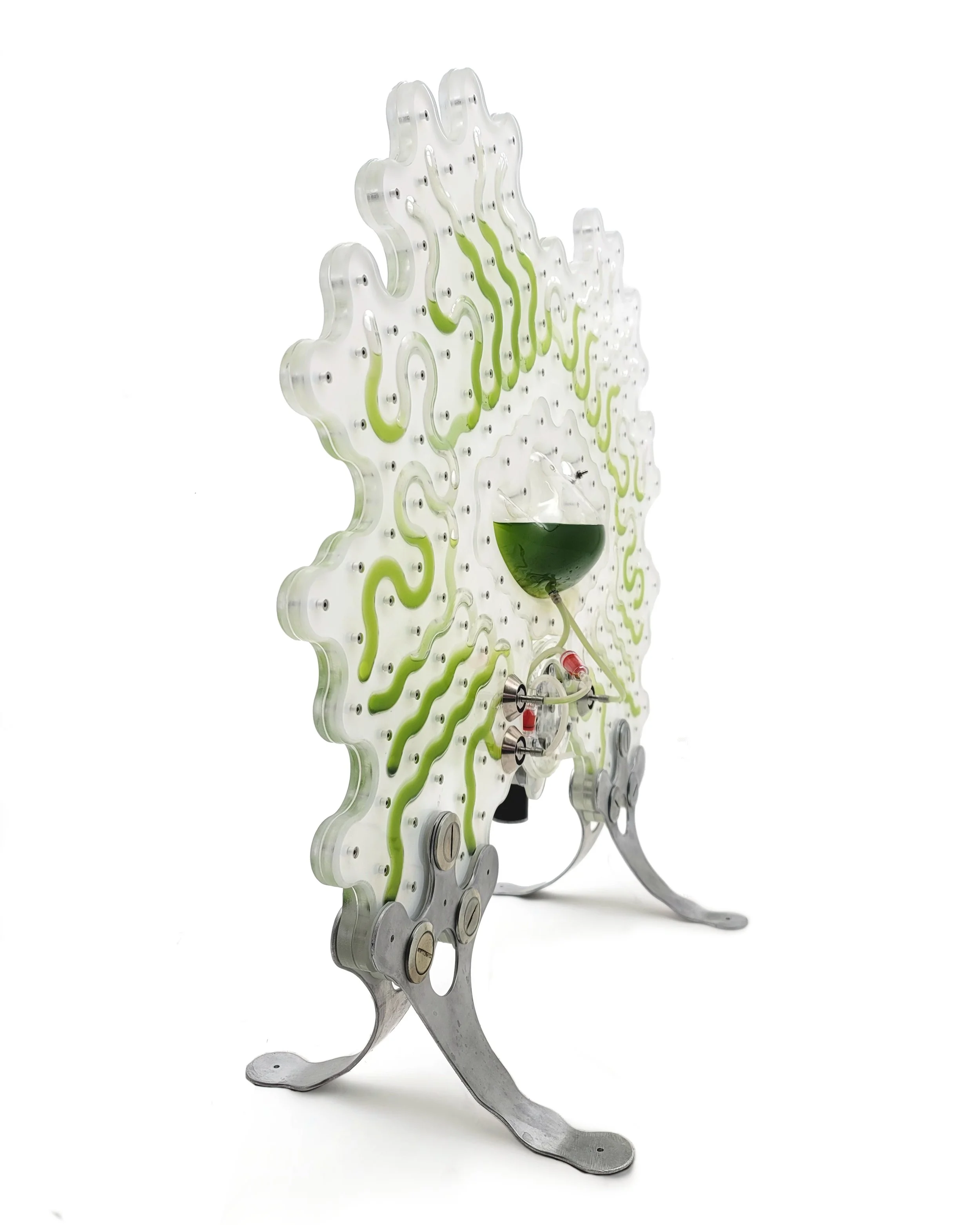
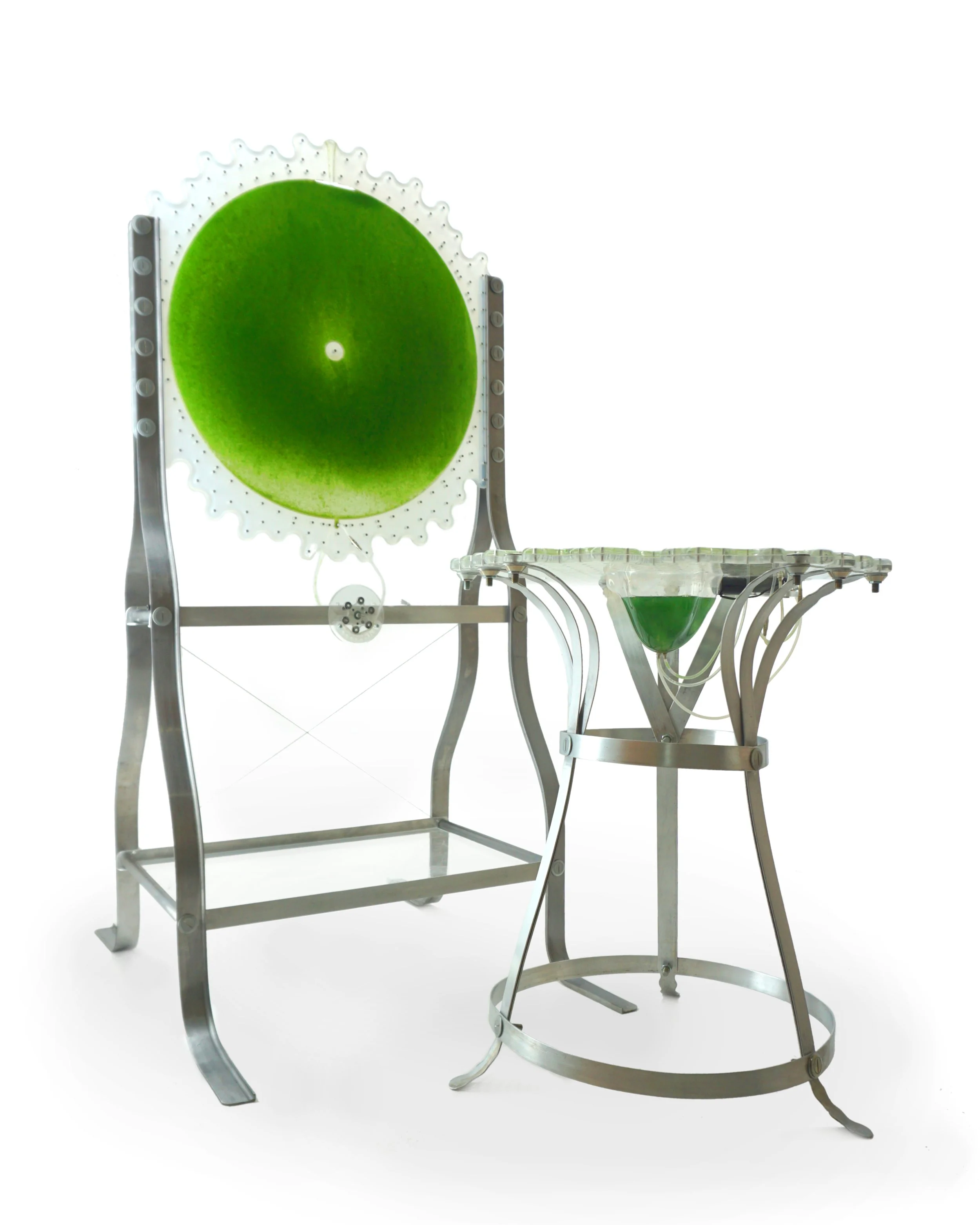
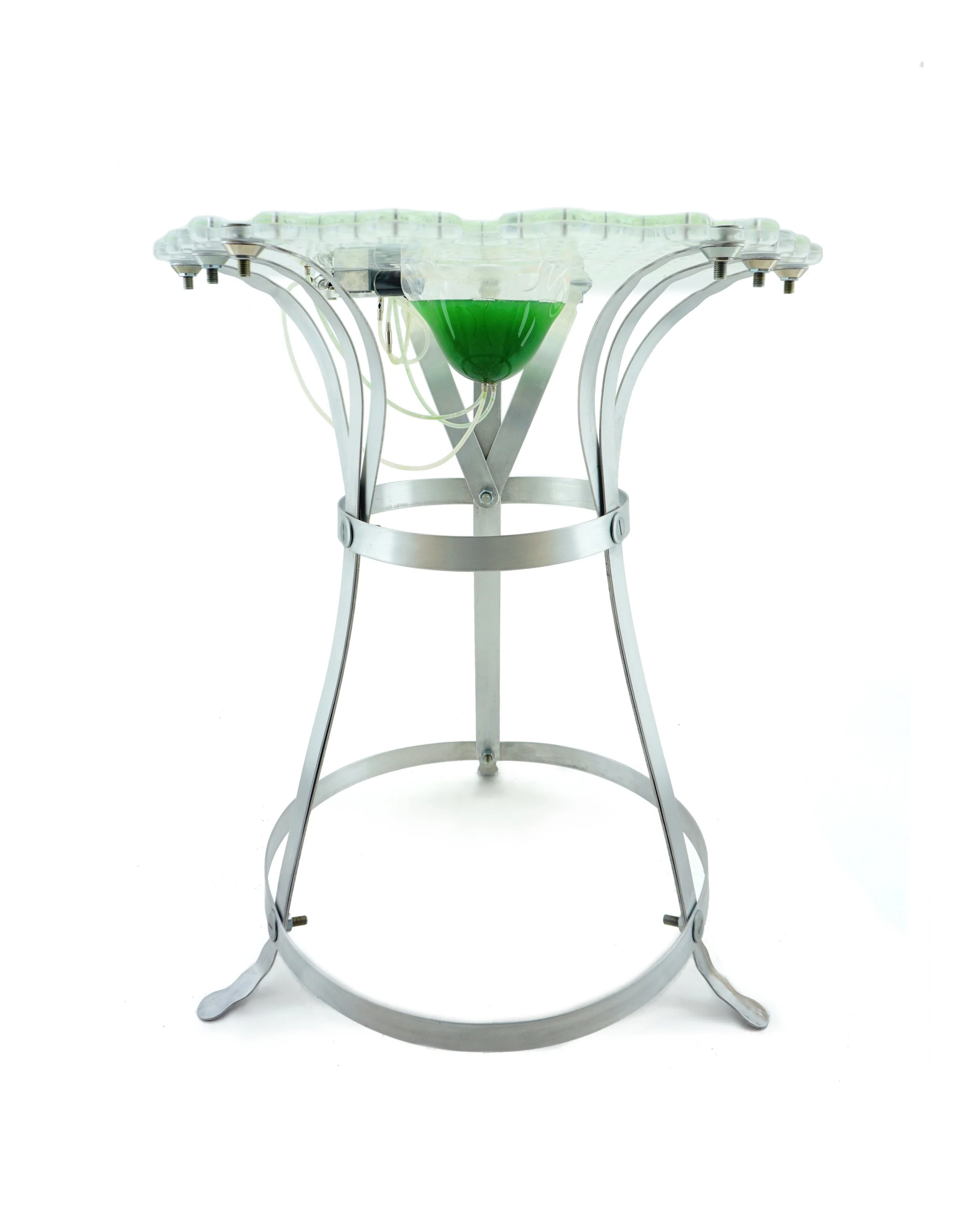
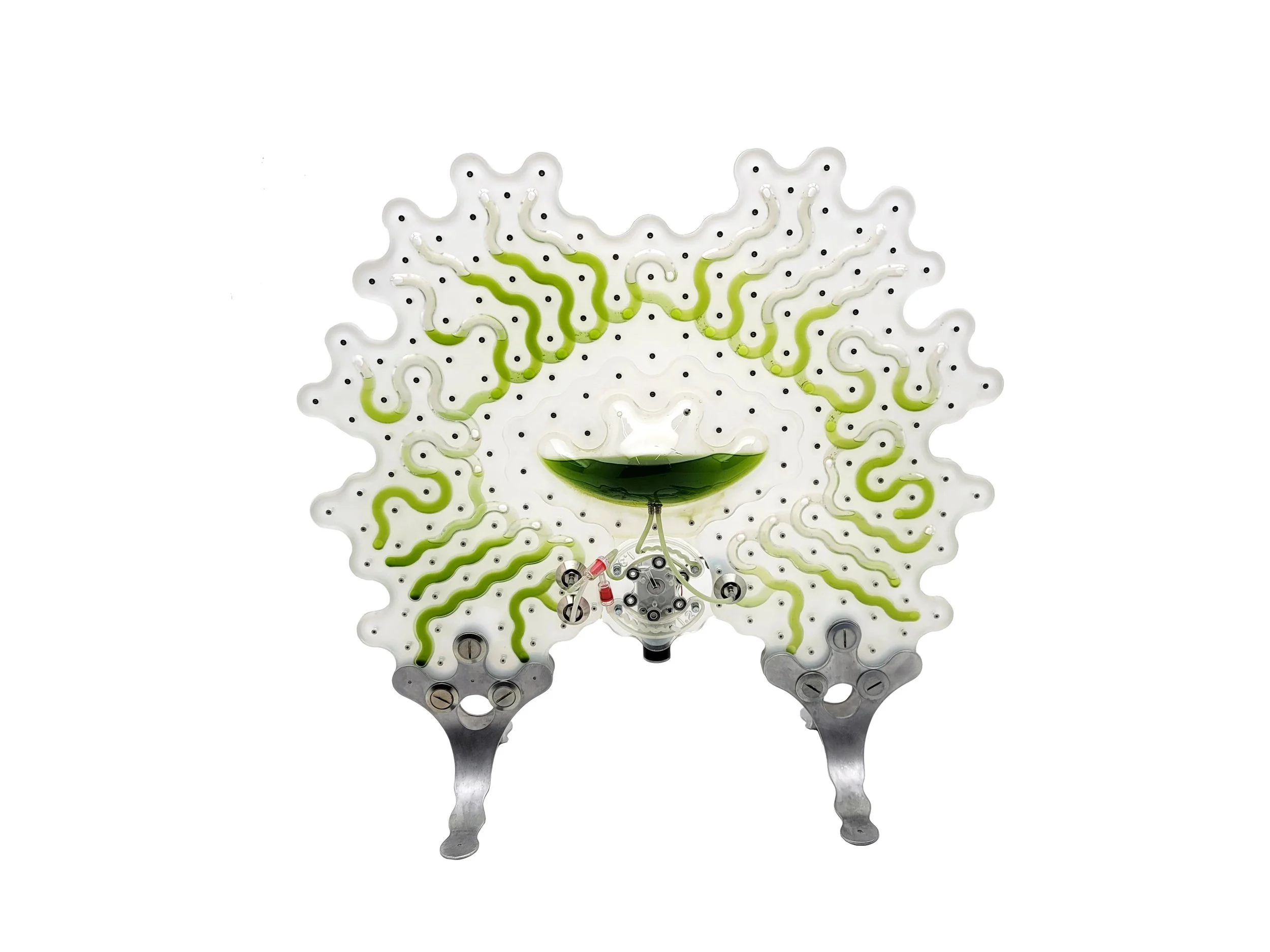
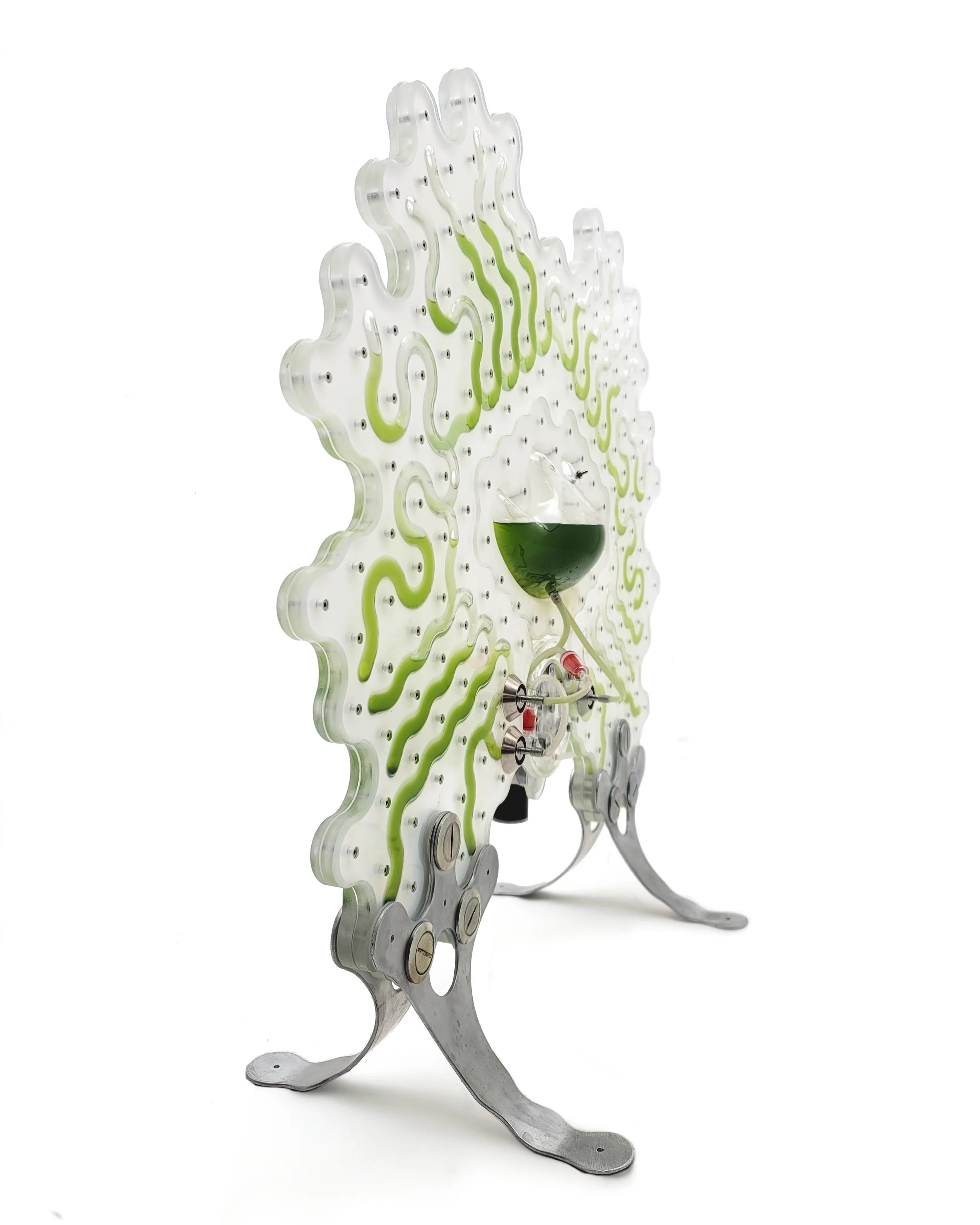
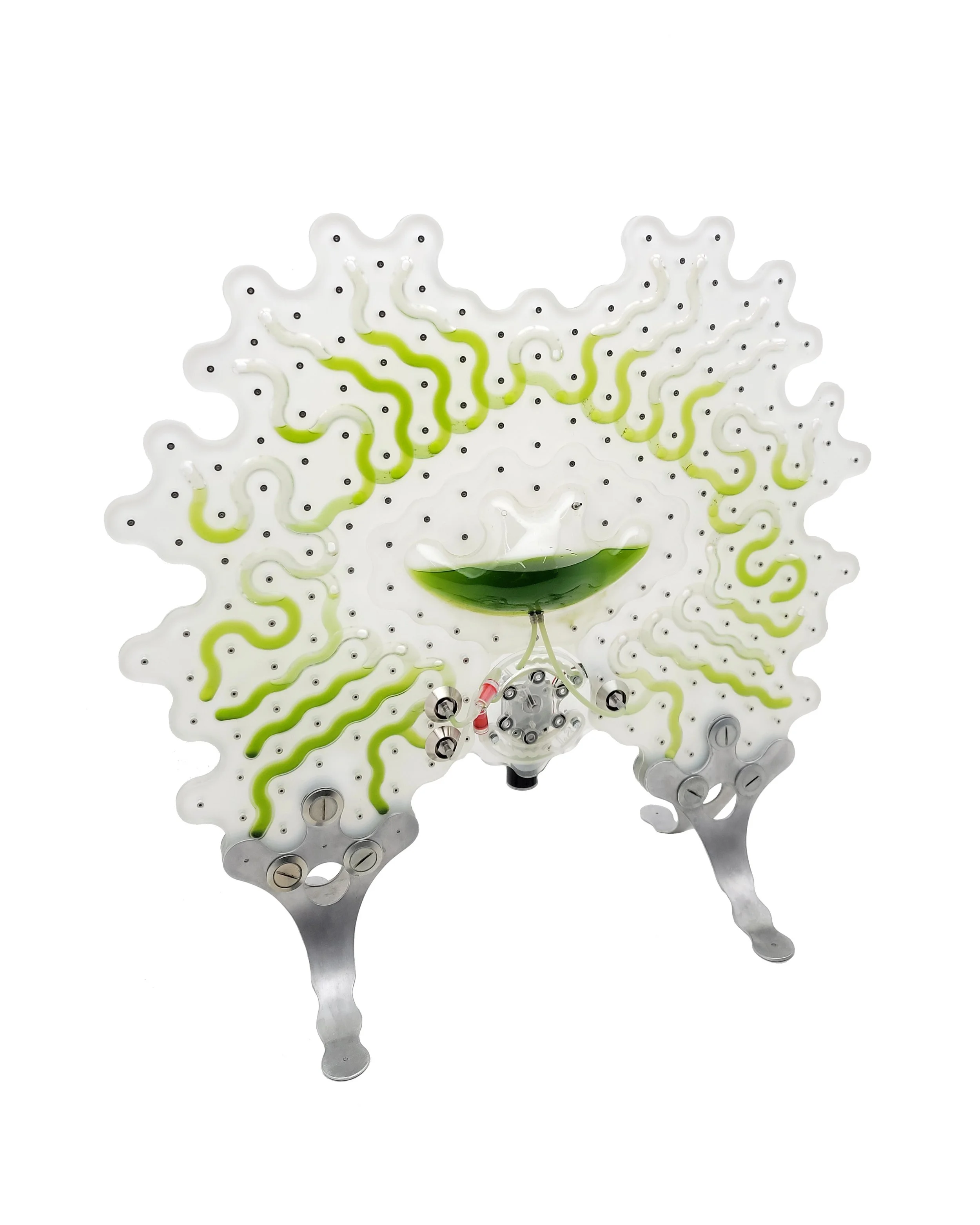
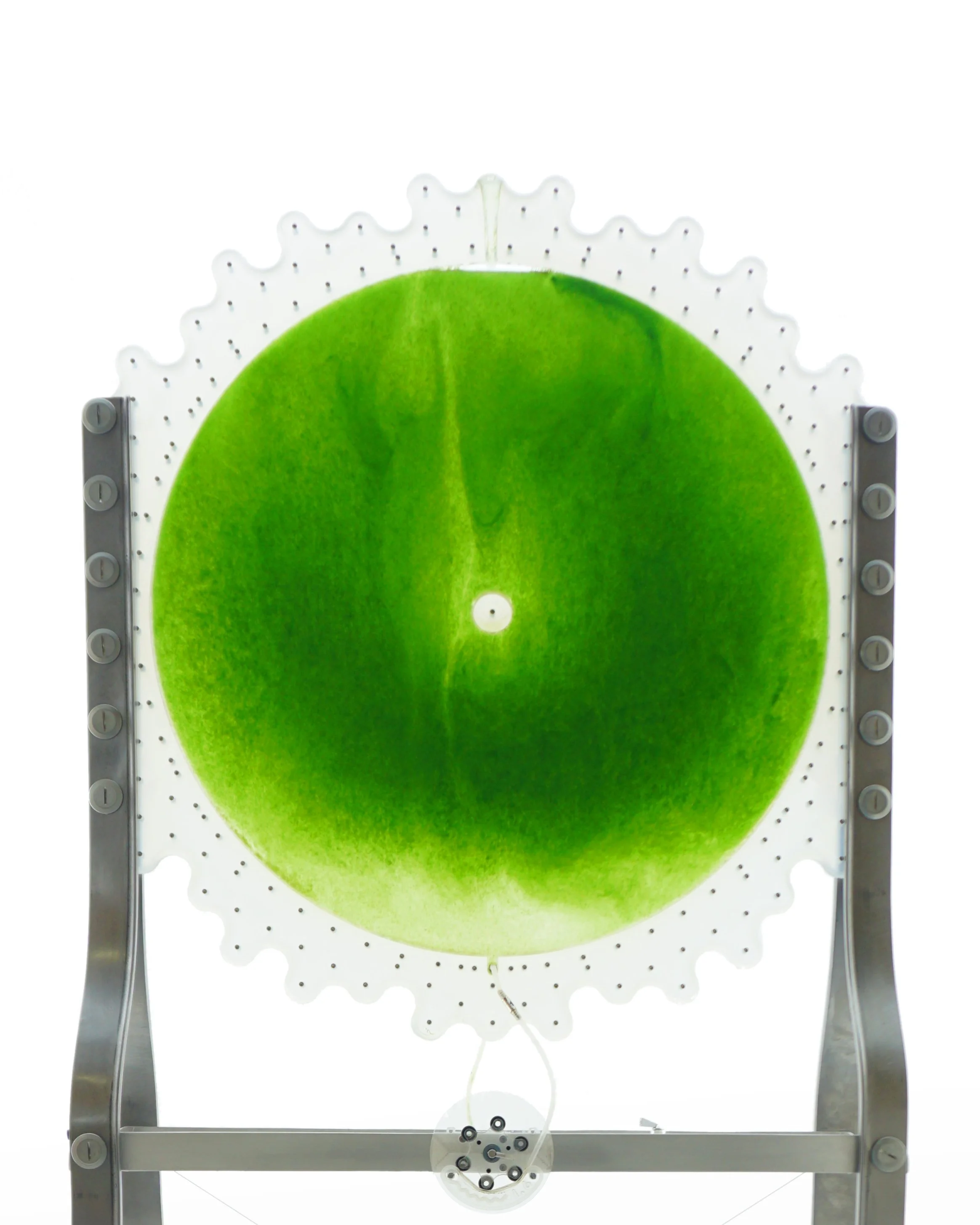
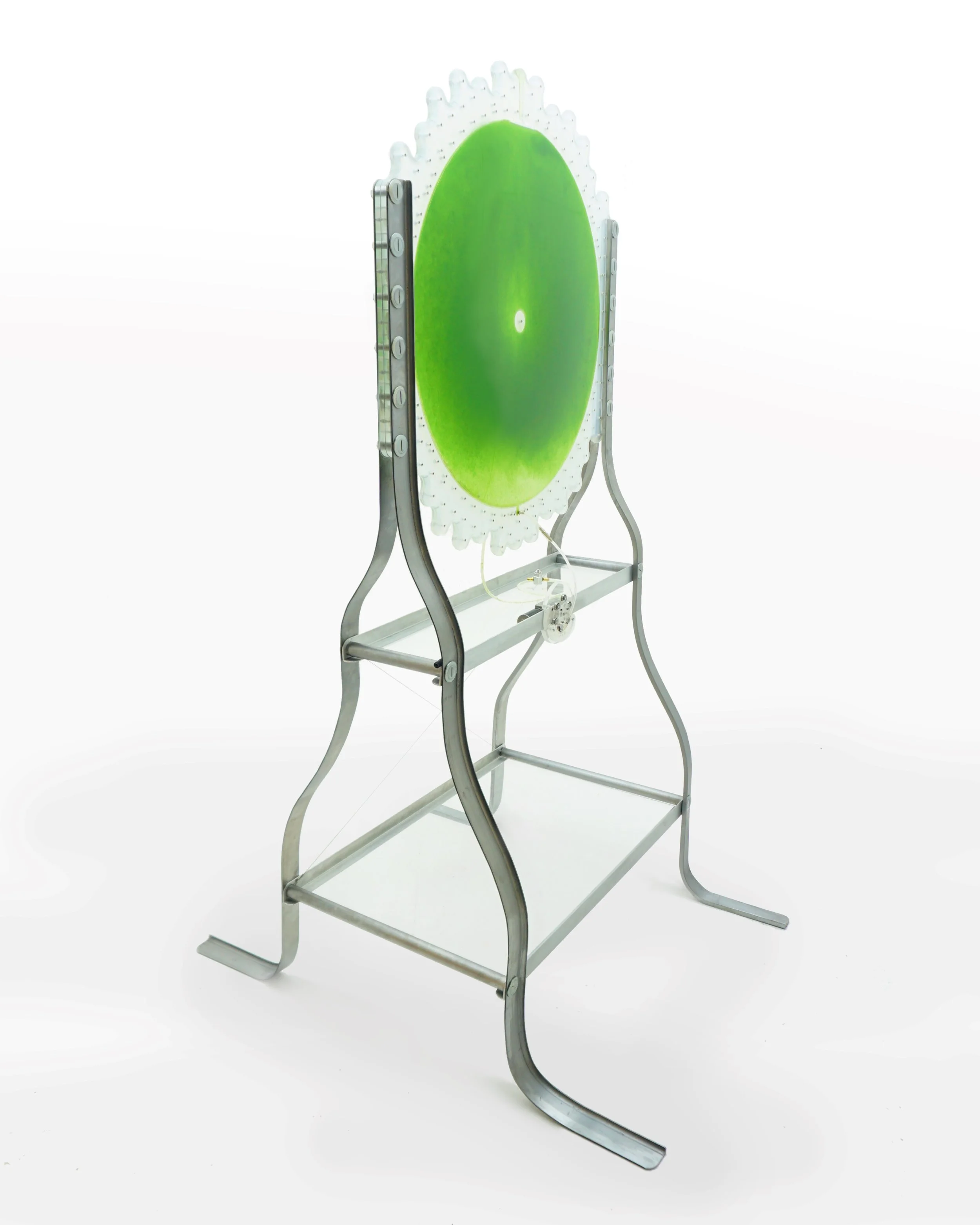
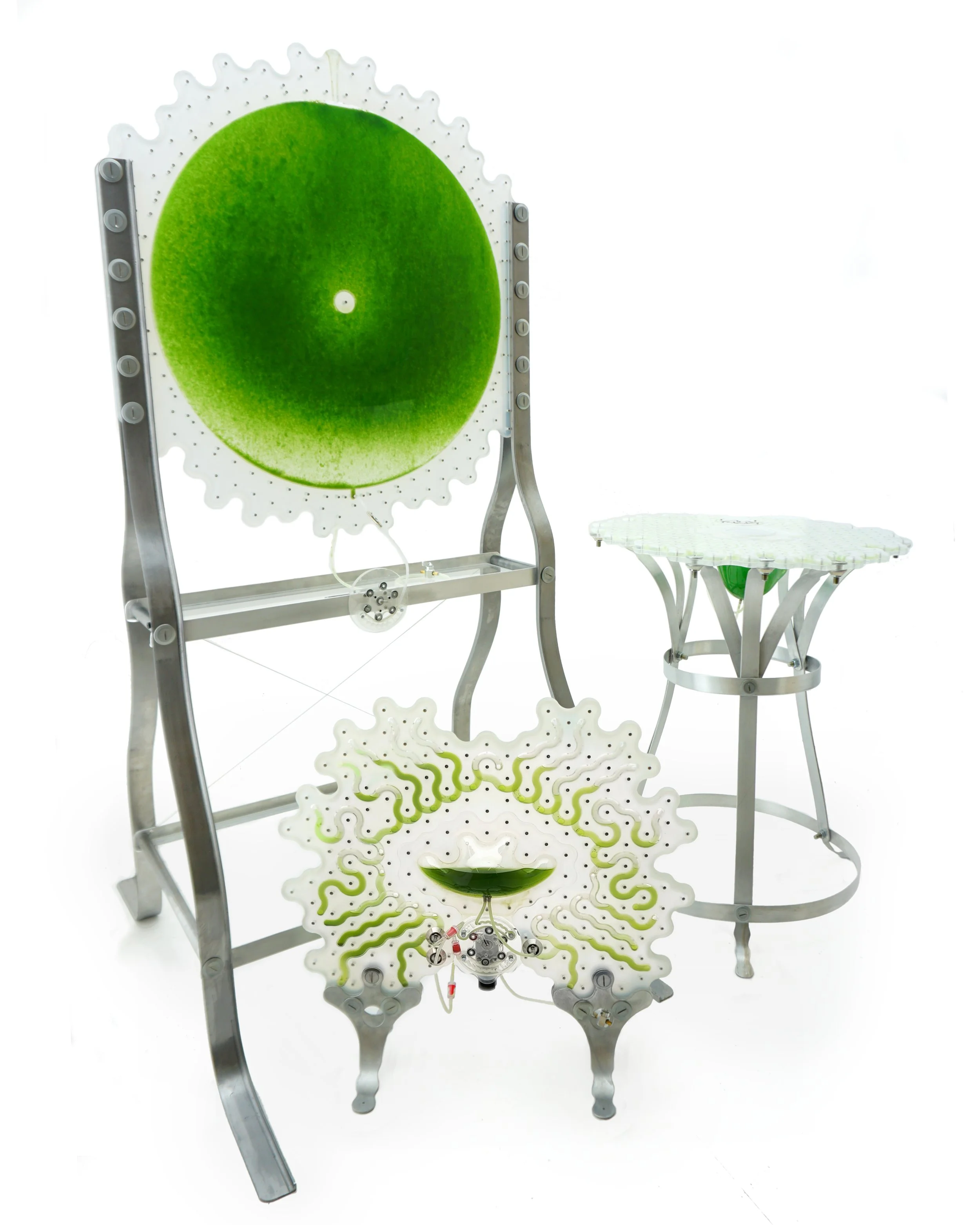
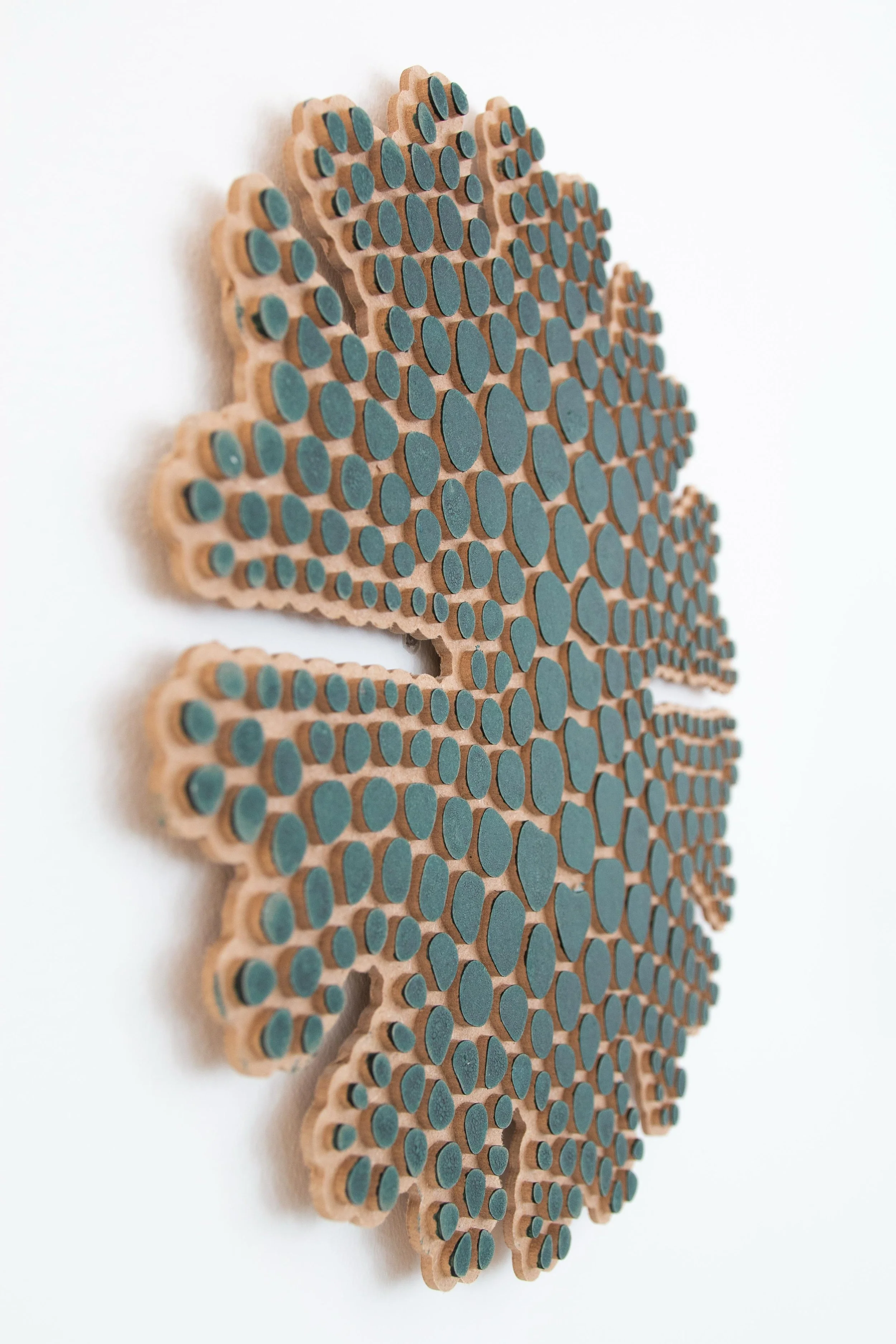
Nasielski’s recent body of work, Symbiocene: Living Furniture, reimagines domestic objects as microalgae gardens capable of producing oxygen and edible biomass. Combining living cultures of microalgae with solar powered electronics and reclaimed waste materials, his pieces bridge the synthetic and biological worlds. In his parametric design process, the intricate geometries of microorganisms guide form, while the metabolism of the living microalgae drives function—creating objects that are truly living symbiotic systems.
Peter holds an MFA from Central Saint Martins and has exhibited internationally in the UK, Netherlands, Germany, and USA. Beyond his art practice, Nasielski advocates for the adoption of low impact biomaterials across all craft and manufacturing industries.
I create objects that merge design, ecology, and technology, materializing artifacts from a speculative regenerative future. Through my work I explore near-future lifestyles and ecologies, collaborating with living organisms to transform domestic spaces into symbiotic systems. All biological life on Earth exists as one interdependent system of material and energy flows, my work is a microcosm of this reality. Through each piece I aim to educate and expand our collective ecological awareness. I realize my projects through a process of interspecies collaboration, parametric design, and digital fabrication.
My recent series, Symbiocene: Living Furniture, manifests bioactive technologies that function as photobioreactors. These pieces are shaped by algae’s fractal geometries and co-authored by metabolism, light, and time. Rather than treating sustainability as a theme, I embed it into the process itself—letting living and artificial systems grow together.
At the core of my practice is a form of ecological storytelling. I ask: what if art and craft could nourish rather than deplete? What new aesthetics emerge when a designer collaborates with other species? By reimagining design as a reciprocal act, I aim to create objects that foster care, intimacy, and futures grounded in interdependence and the mutual flourishing of all life.
Artwork Statement:
Symbiocene, Living Furniture reimagines furniture not as inert objects but as living, regenerative systems - capable of growing food and cleaning the air. Drawing from the ecological concept of the Symbiocene, I envision a future in which our homes, like ecosystems, actively support biodiverse living beings and processes.
These functional art pieces act as photobioreactors, solar-powered devices for cultivating spirulina microalgae. The living algae panels — crafted from waste materials through parametric design — mimic the organic patterns of microscopic cellular structures, visually communicating the underlying photosynthetic process and celebrating the unseen microorganisms that generate 70% of the planet’s oxygen.
By engaging daily with these symbiotic systems, users deepen their ecological awareness, recognizing our shared dependency on nature’s ancient technology. My intent is to provoke conversations—and inspire action—towards a regenerative design paradigm, where extraction is replaced with reciprocity and design celebrates the living world as co‑creator.
“Living systems generate endless diversity and abundance through the ancient technology of Evolution. Coding mimics this technology, bringing us closer to understanding - and one day perhaps replicating - the way nature shapes matter to support life.”