
NOĒMA
“CODE&CRAFT”
2025
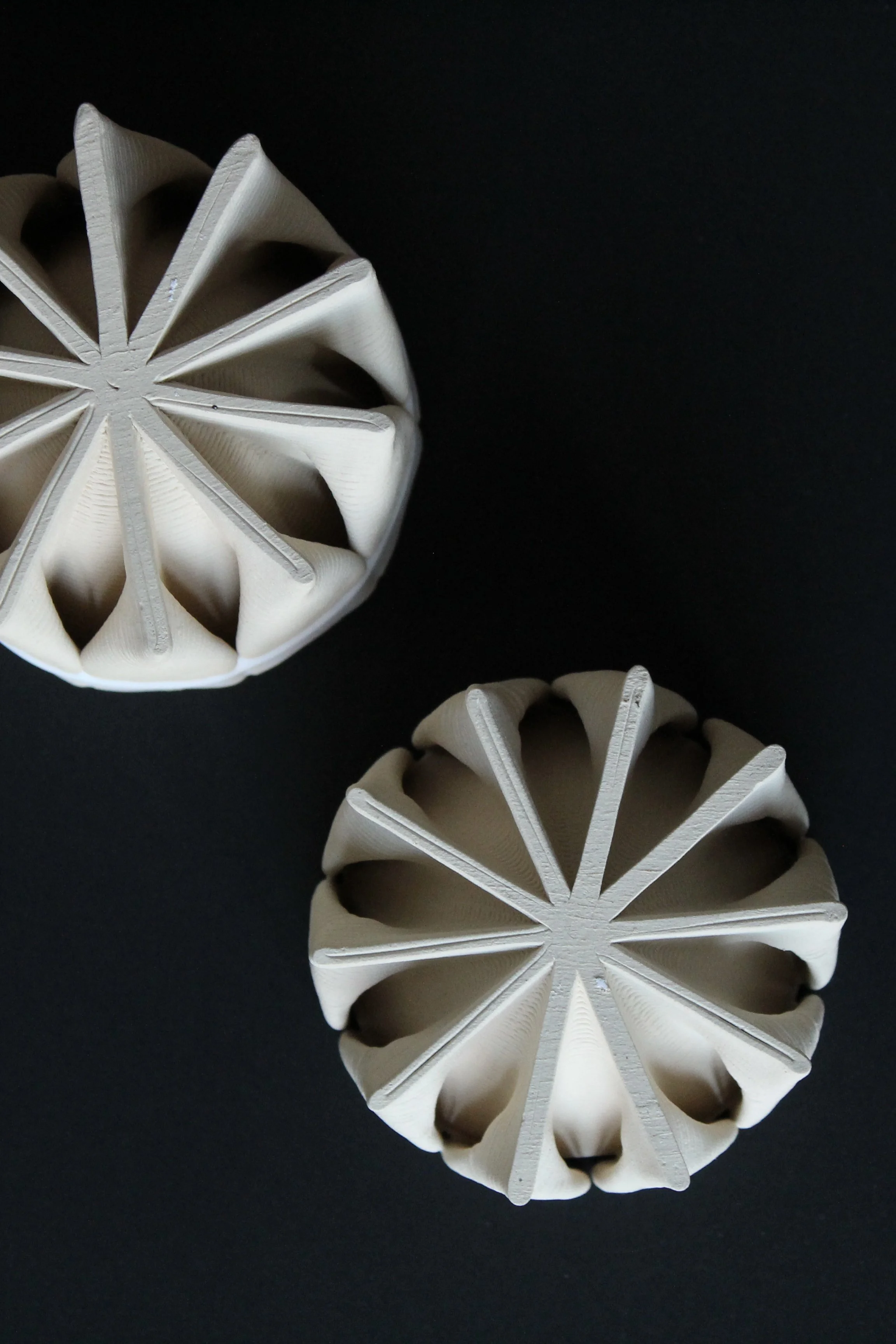
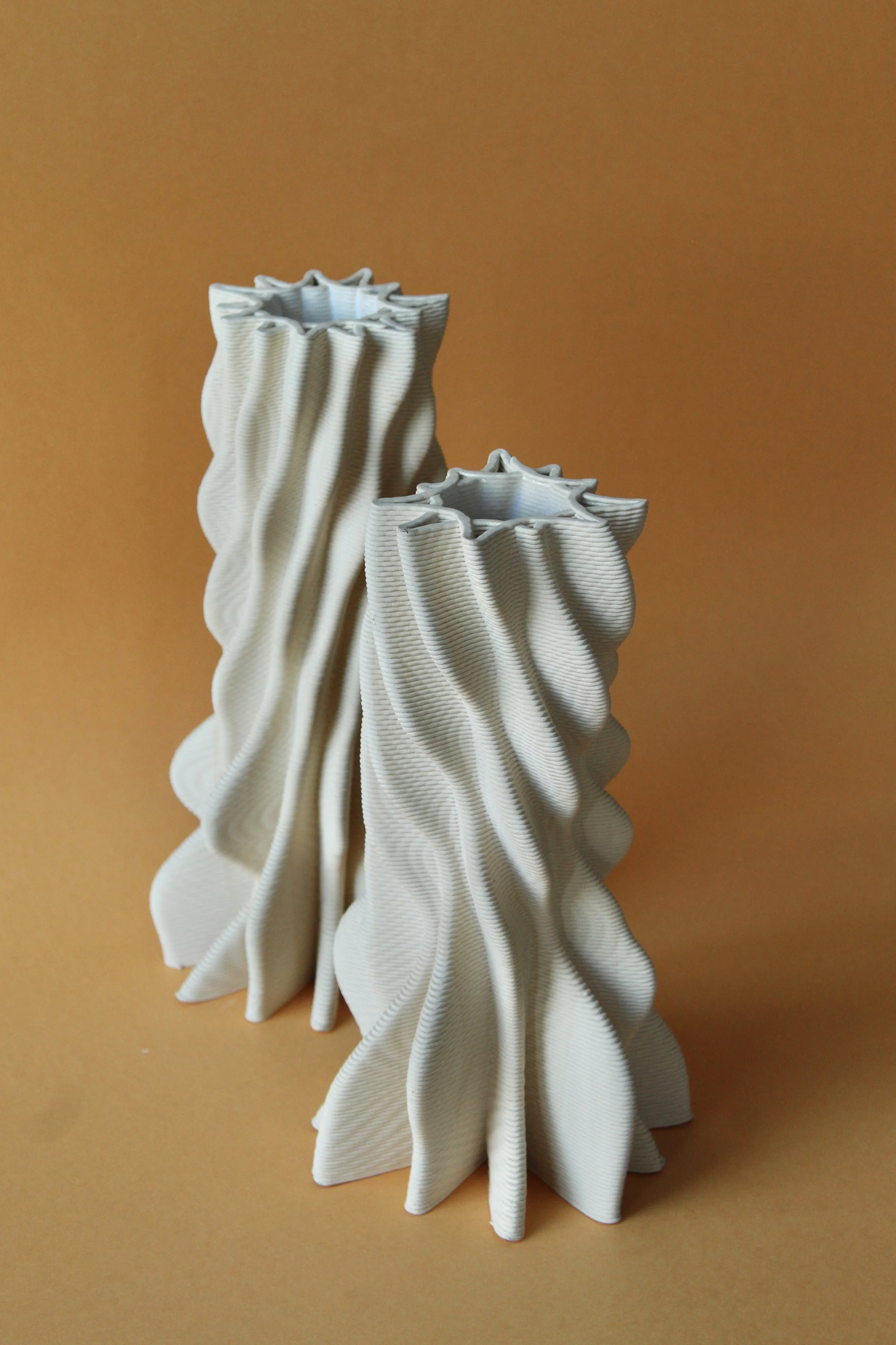
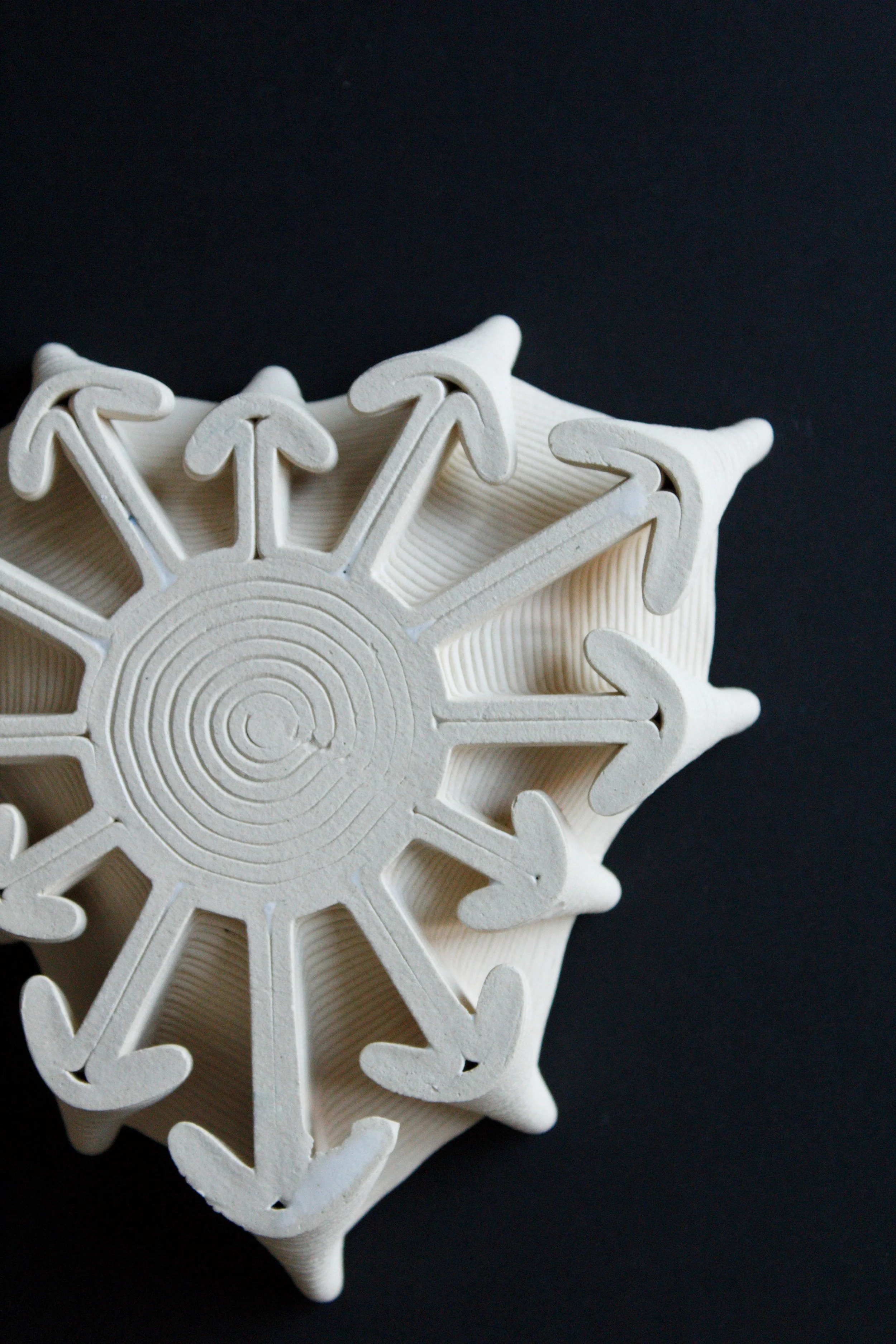
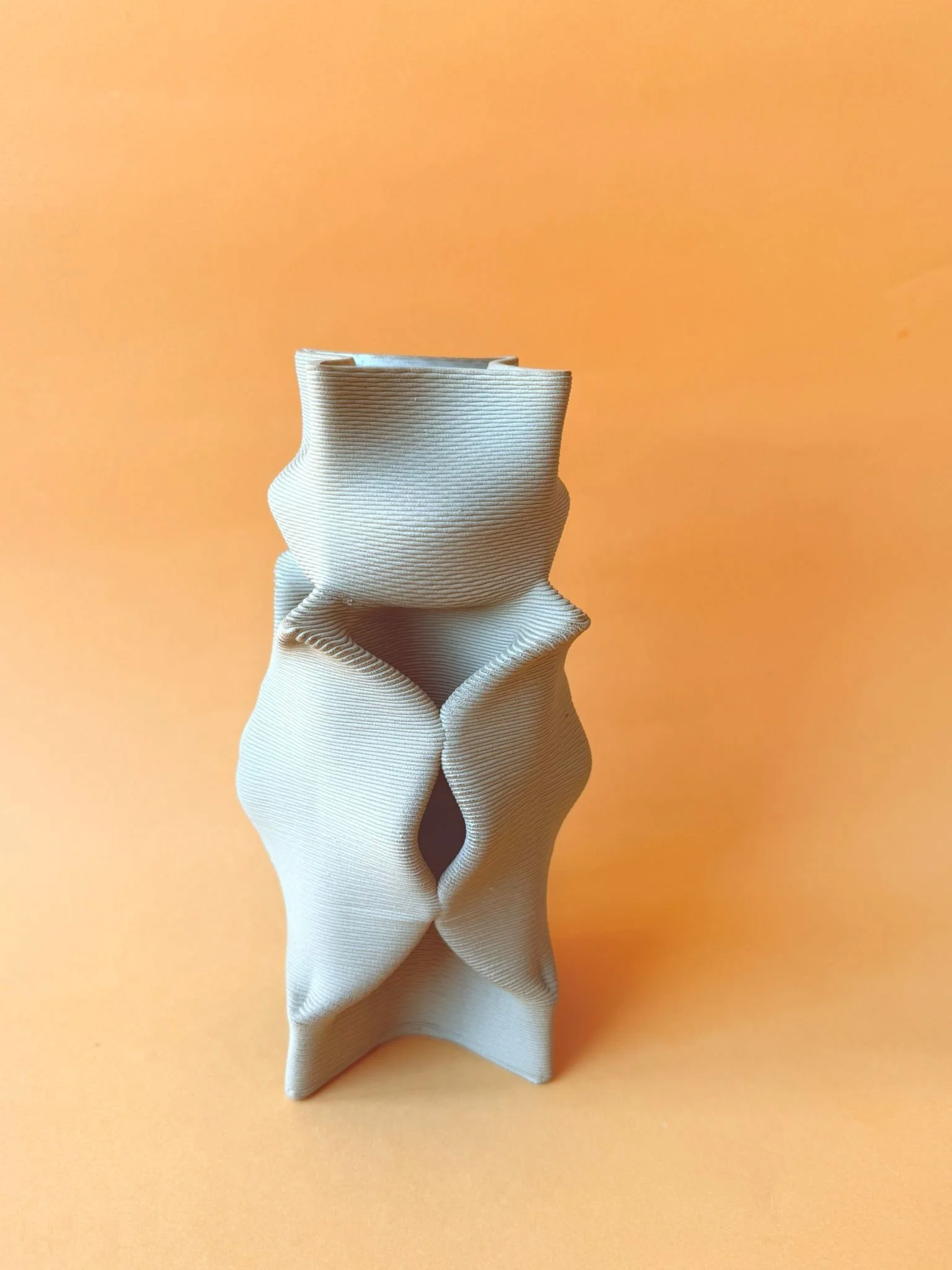
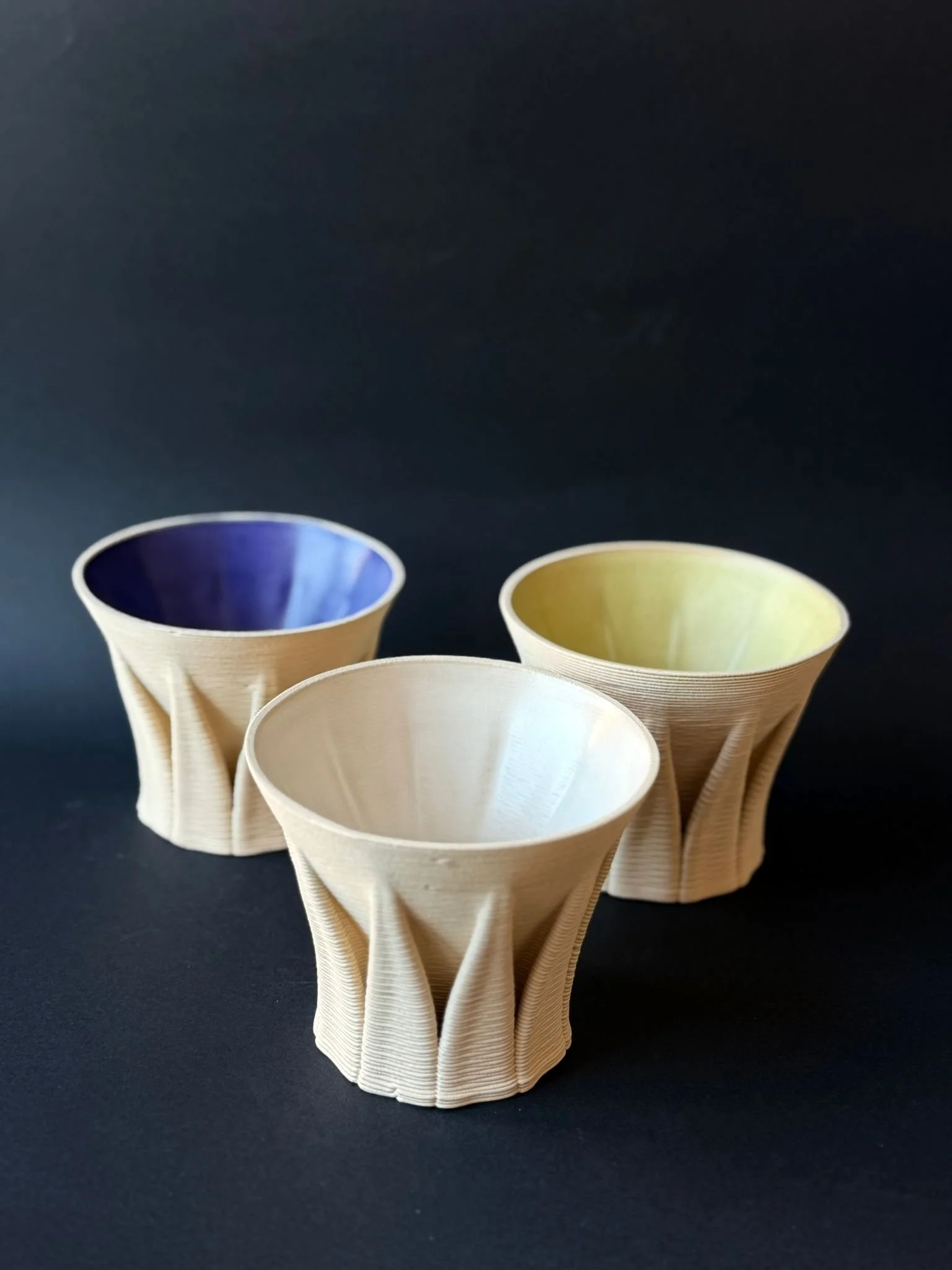
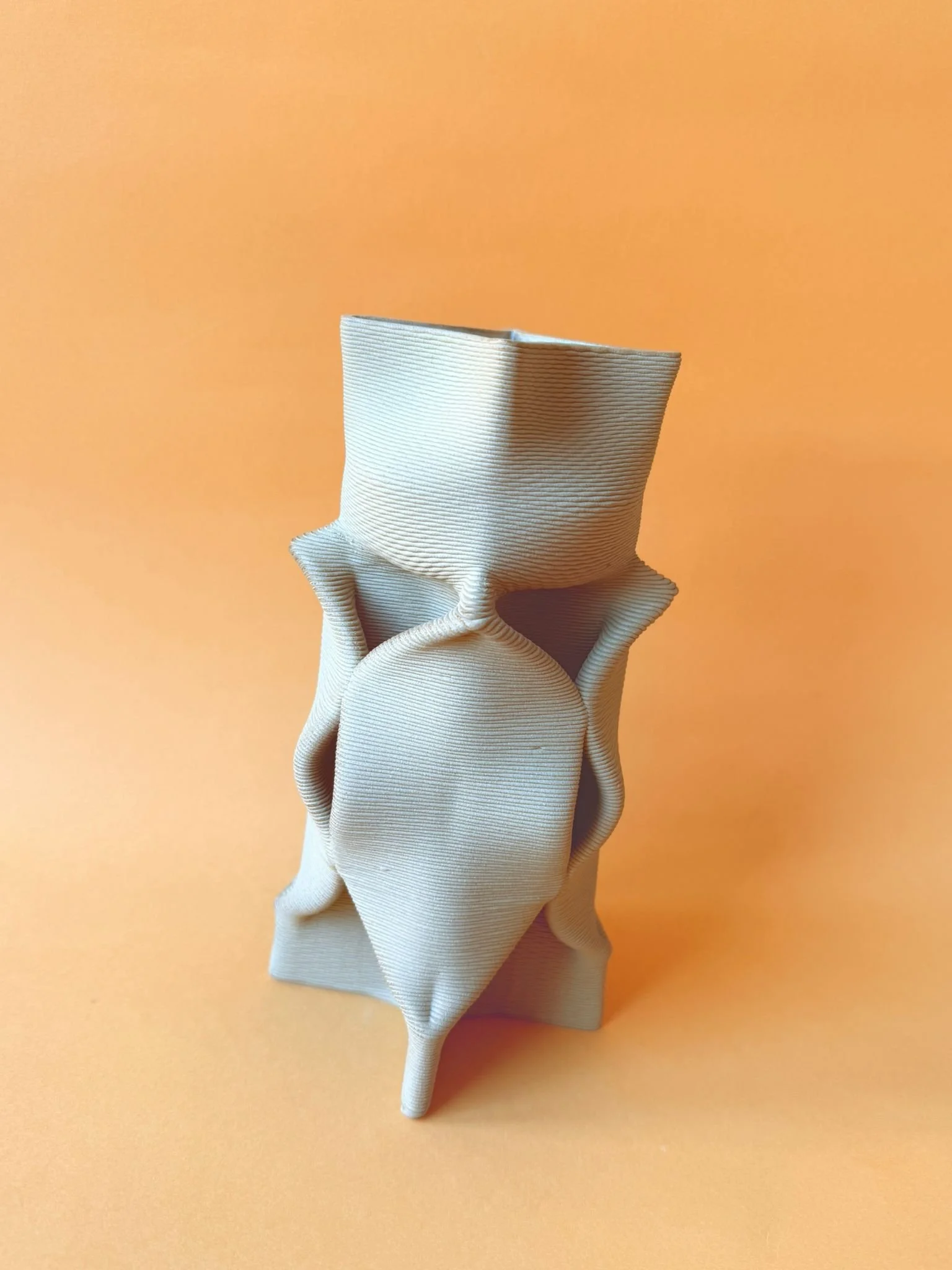
Alejandra Rodríguez (Ecuador) is an architect trained at the University of Havana, where she specialized in bioclimatic design and resource optimization in contexts of scarcity. There, she collaborated with Precious Plastics, exploring creative strategies for waste reuse.
During the pandemic, she worked at FB+ Estudio (Ecuador), engaging with vernacular construction techniques using earth, wood, and recycled elements, which deepened her interest in sustainability and material innovation. She later developed two roof tile prototypes with agricultural waste and discarded tires, incorporating air-purifying properties—a project that earned the Trepcamp NYC 2021 award.
Rodríguez pursued a Master in Advanced Architecture, where she developed projects like graphene-sensorized glulam (published in Digital Futures CDRF 2025), cork biocomposites for robotic 3D printing, and algorithms for data-driven environmental and structural design. She also presented a 3D ceramic printing project at Barcelona Design Week.
Diego Zambrano (Peru) is an architect dedicated to exploring the intersection of technology and design. His work focuses on new ways of conceptualizing shapes, patterns, and objects, experimenting with innovative material applications in the realms of architecture, design, and artistic production.
Having worked with diverse mediums—including milled plywood (Afrikaburn, 2018) and polymers—he founded Motif Studio in Lima, an initiative that investigates digital design methodologies through 3D printing and ceramics. Through this platform, he has collaborated with Peruvian artists, architects, FabLabs, galleries, and tech fairs, publicly showcasing the potential of these ideas. Now based in Barcelona, his work has also been presented in the NYLAAT BARRO exhibition and Barcelona Design Week.
“By exploring, we play with different ways of thinking design and material expression, letting fabrication reveal emergent qualities. Each experiment folds back into the next, into a loop that generates many outcomes and unexpected paths.”
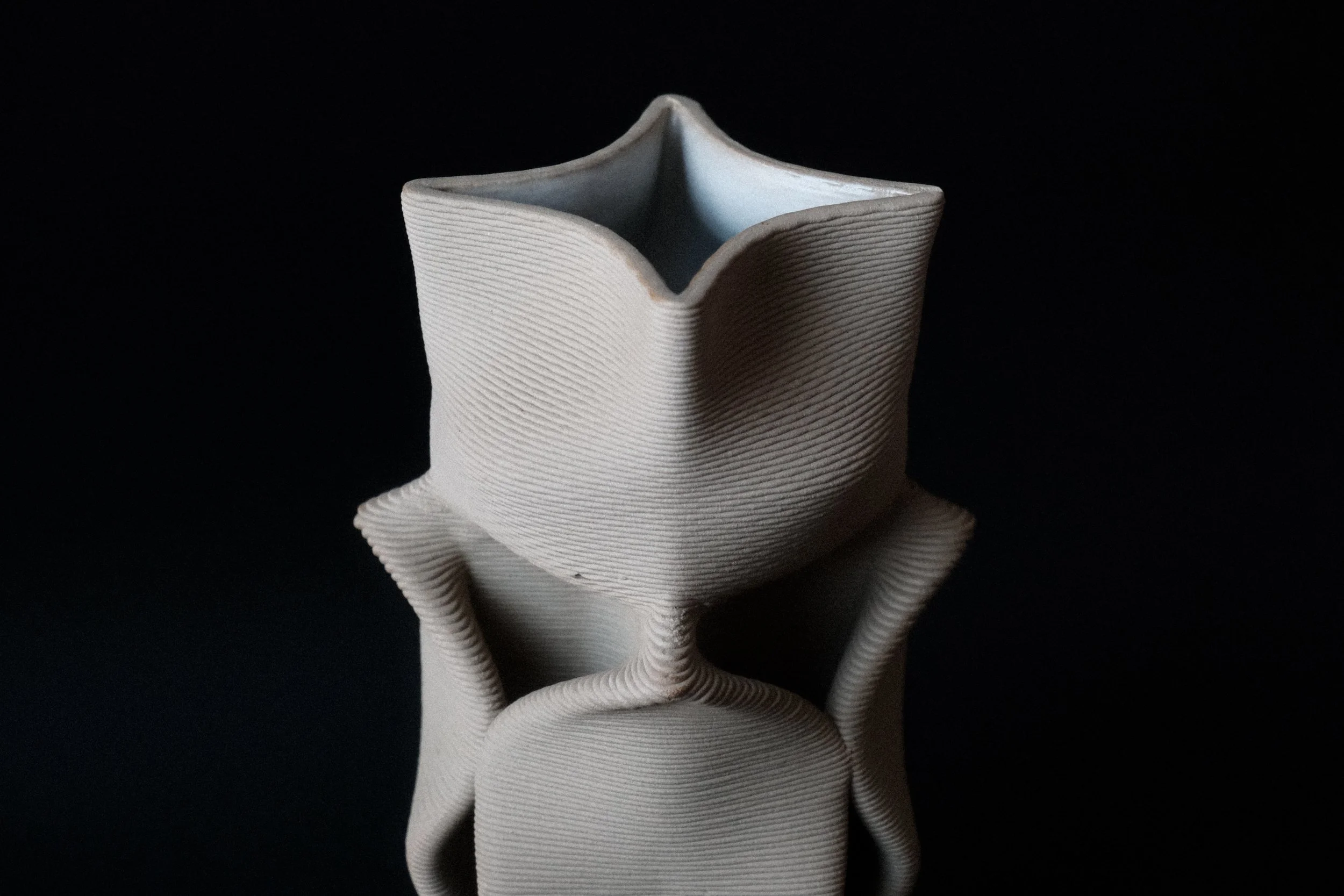
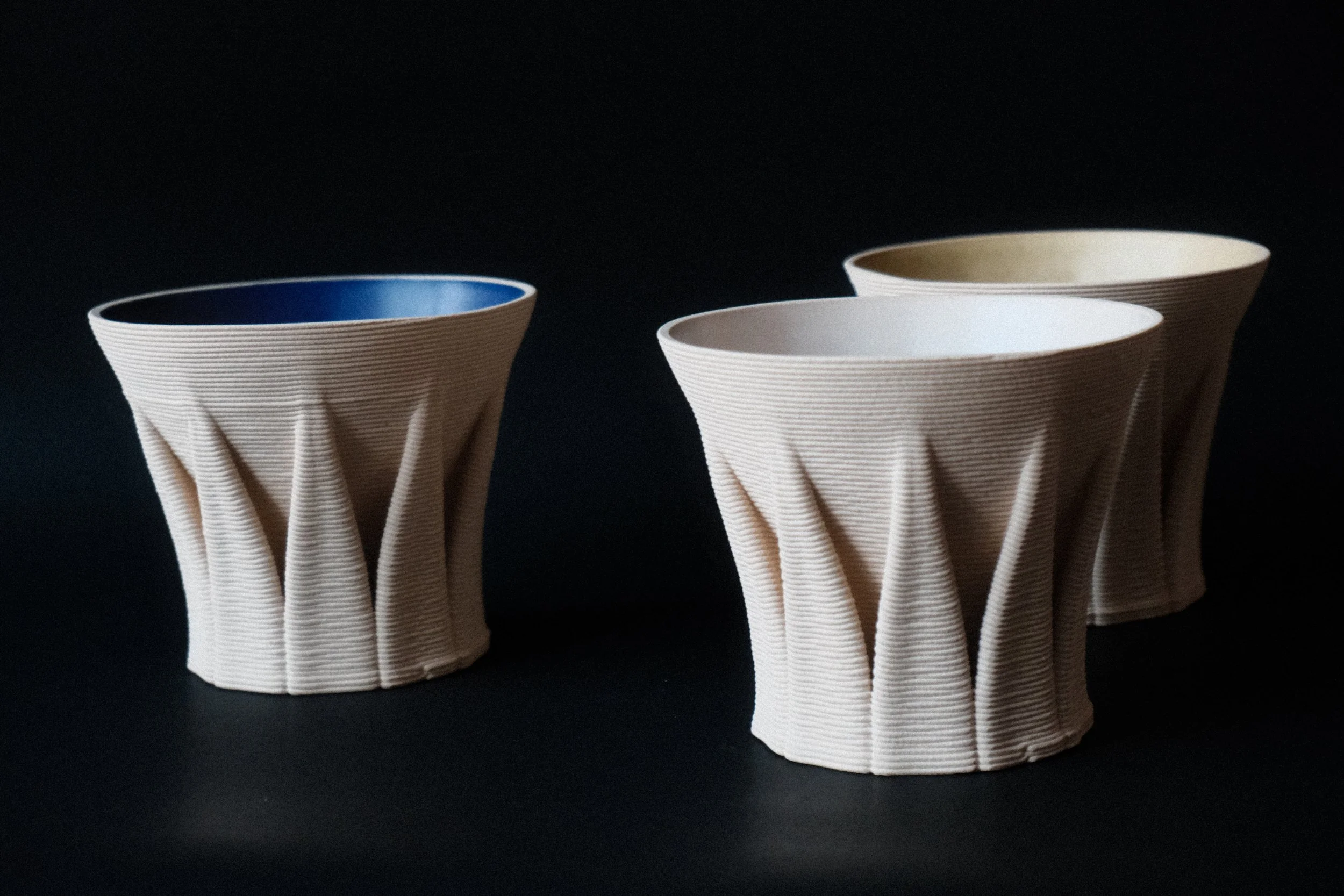
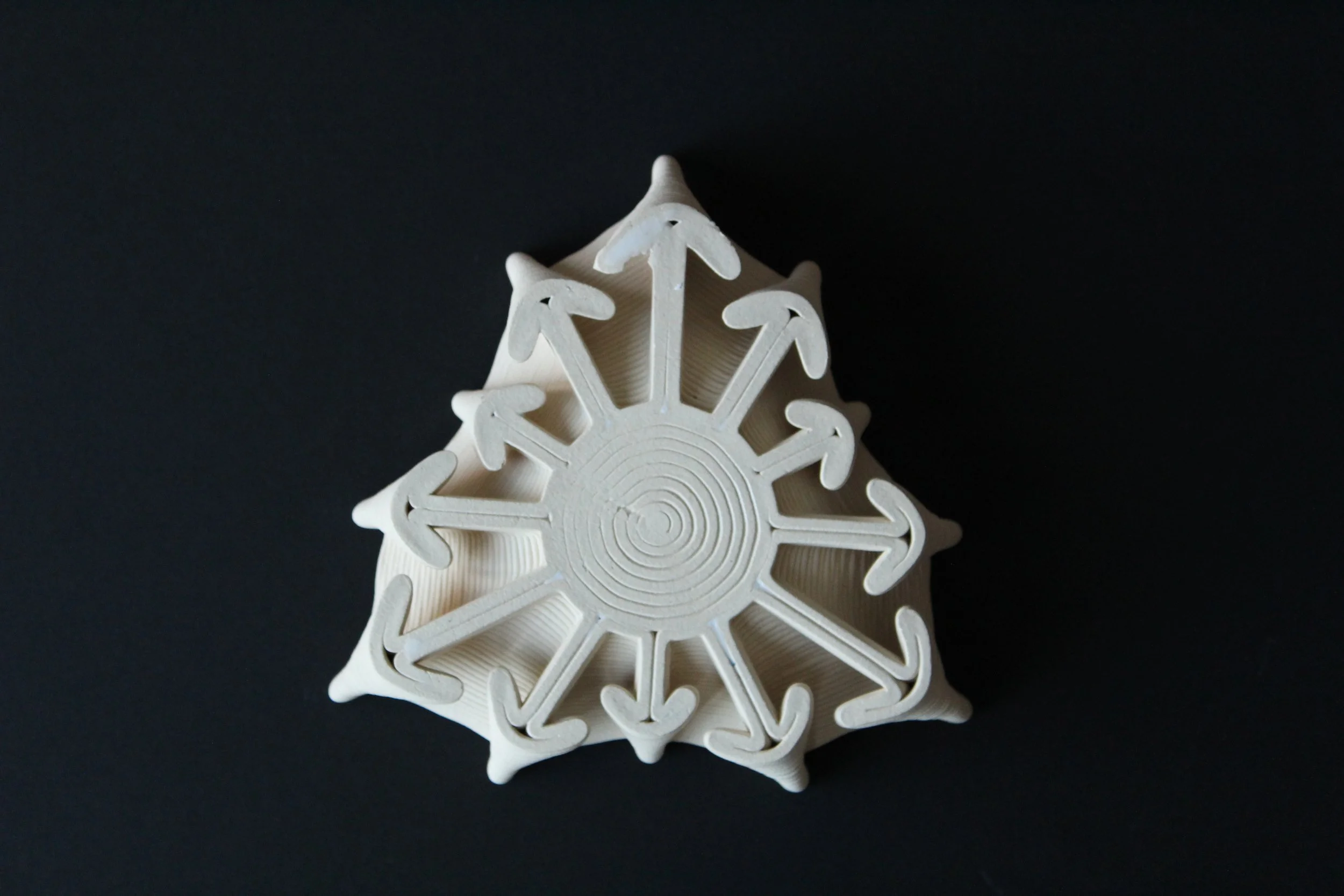
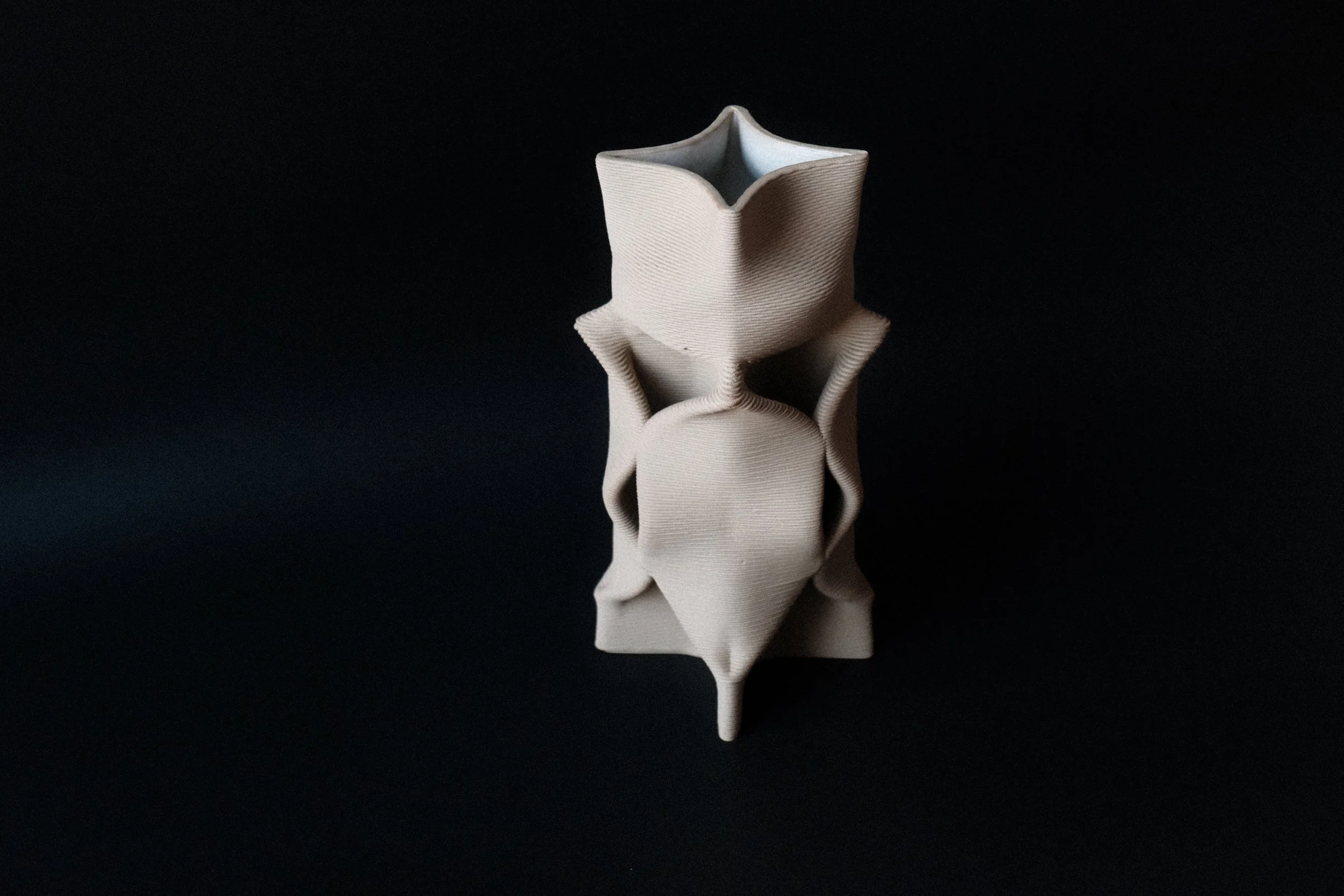
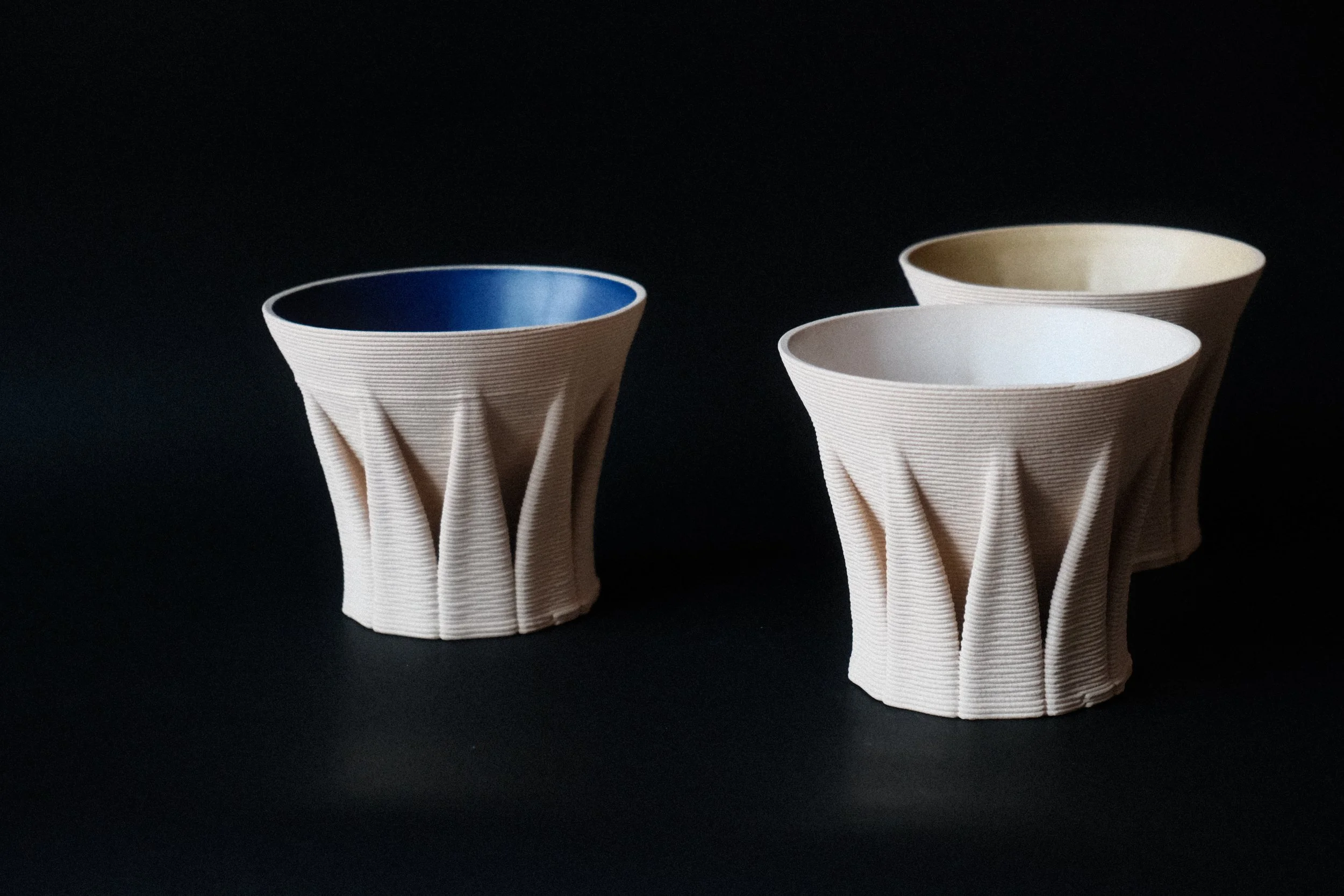
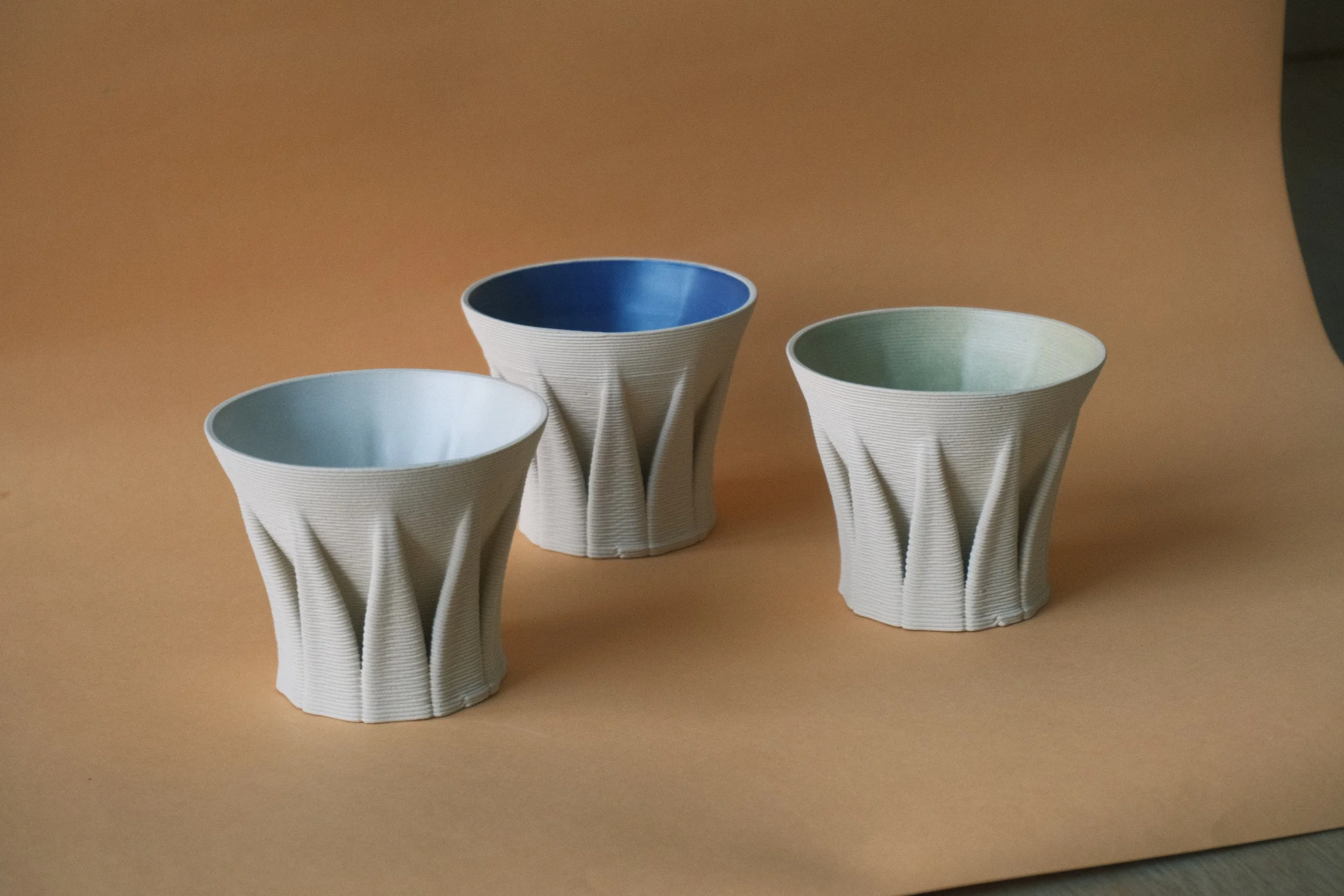
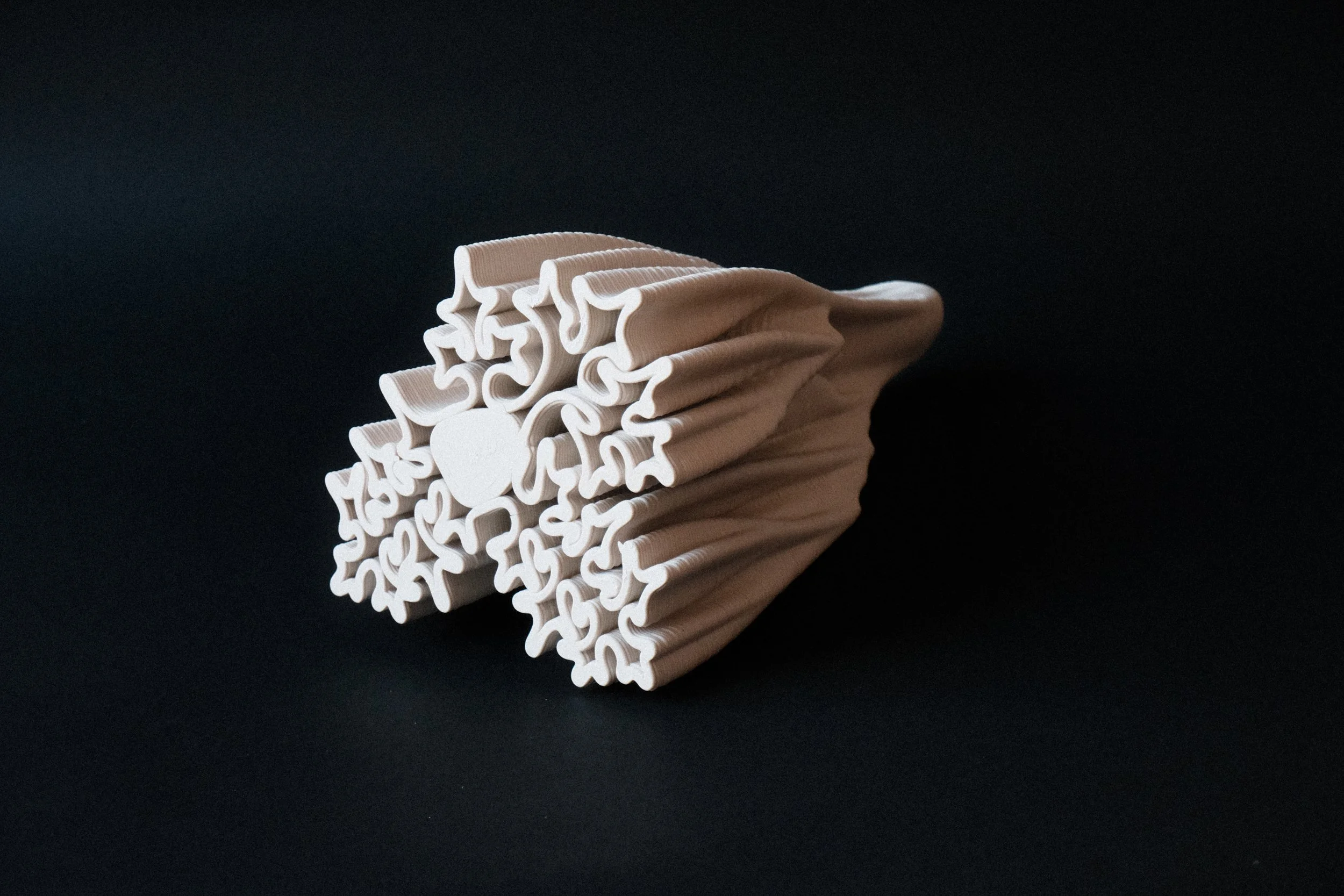
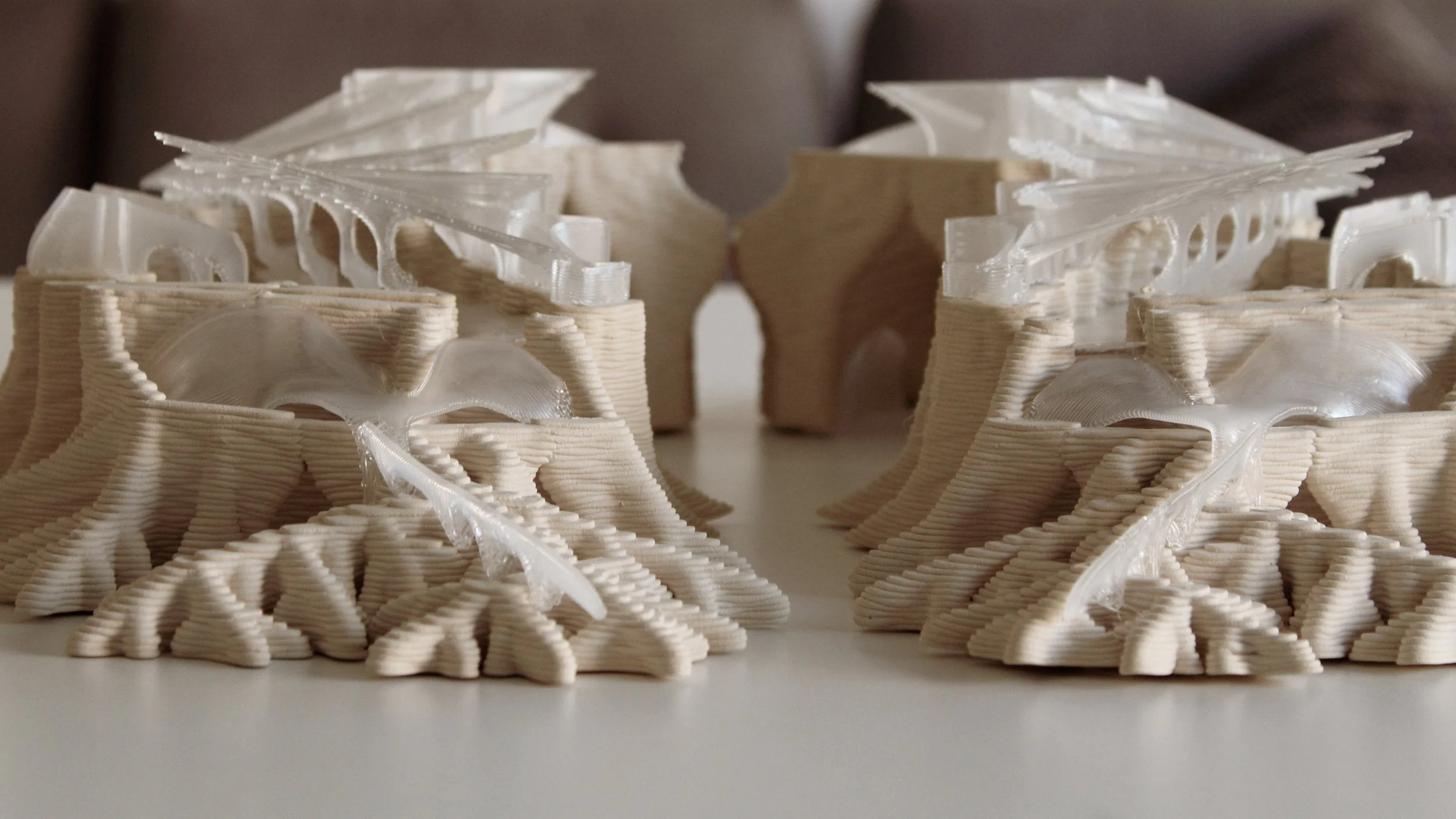

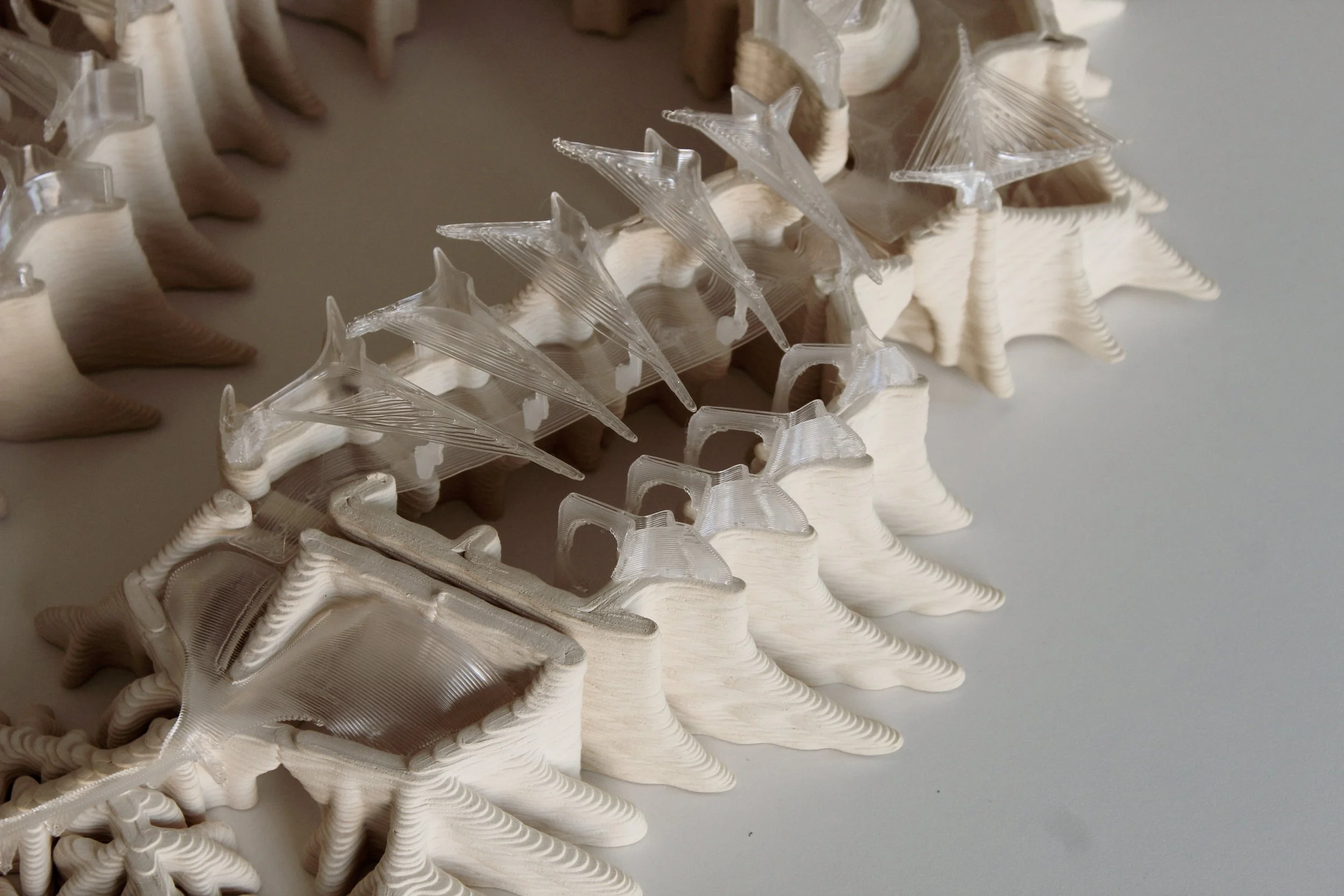
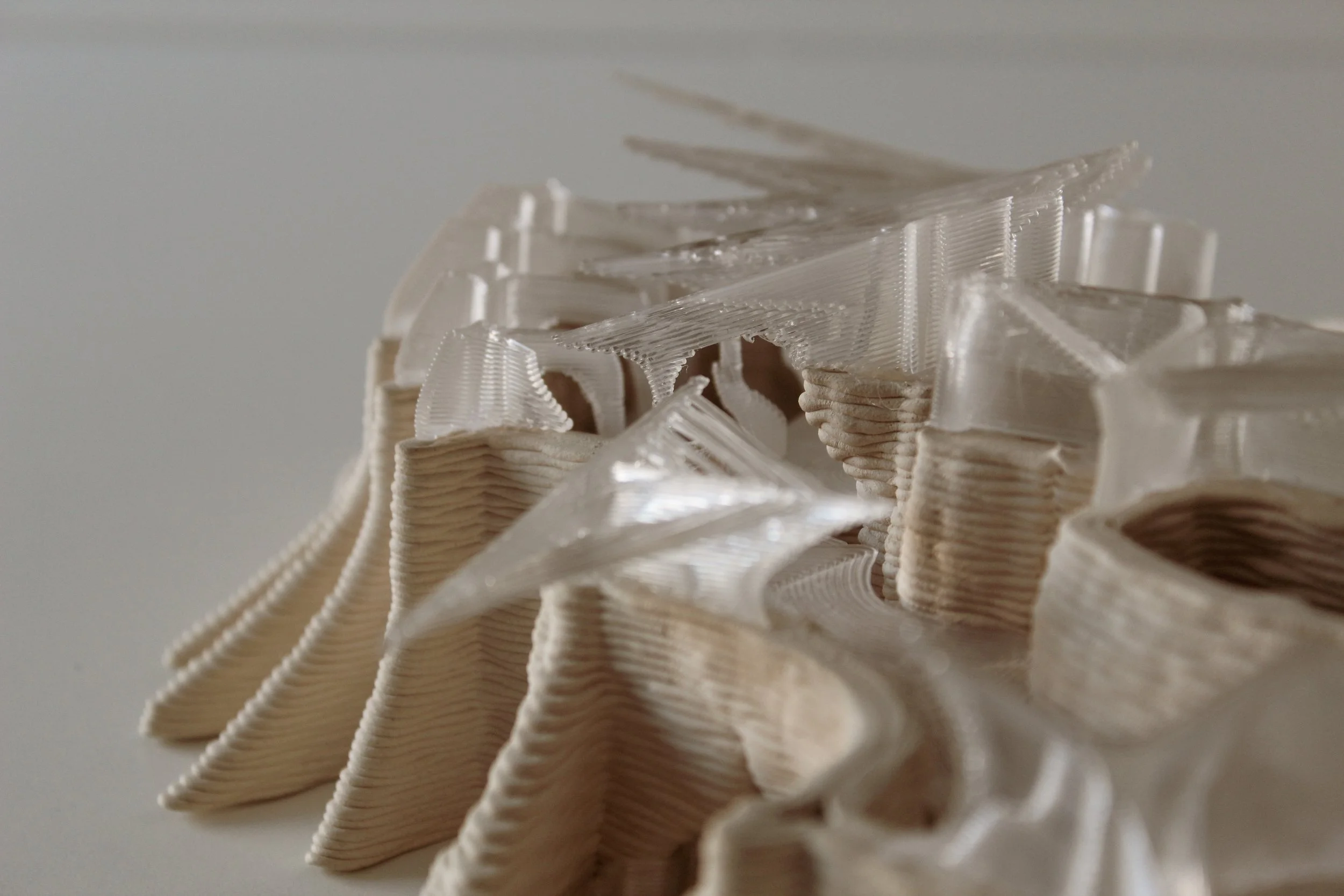
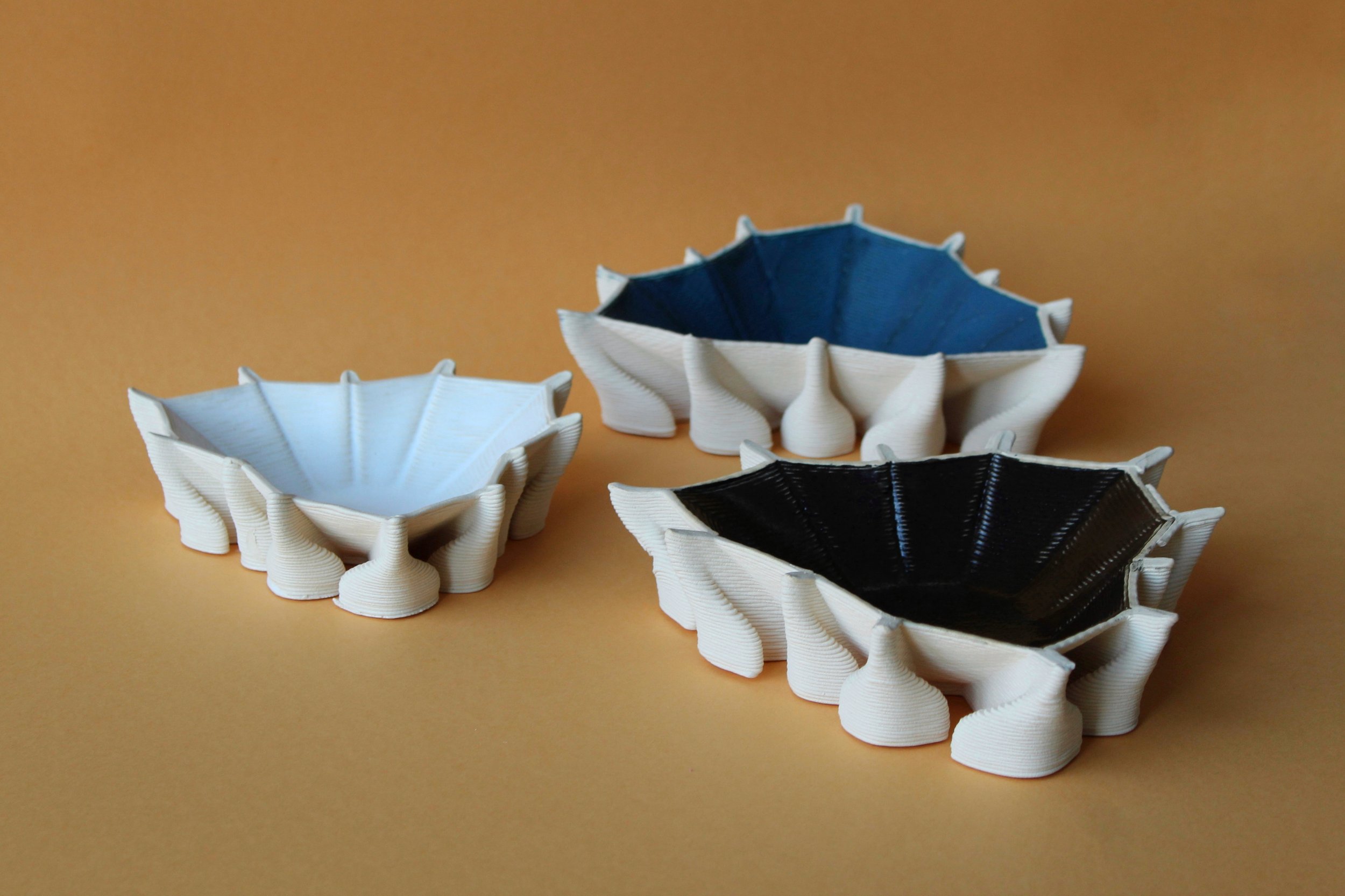

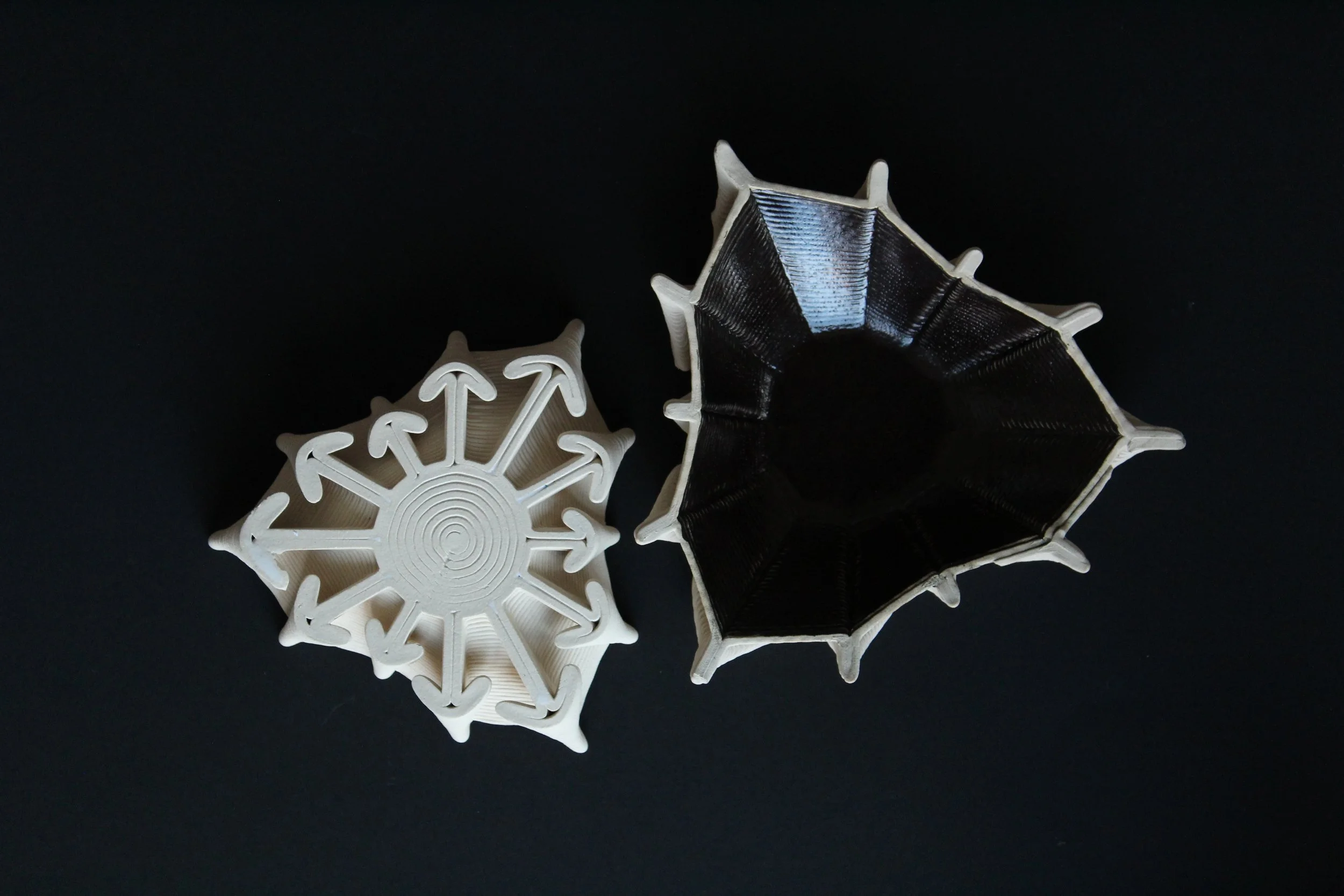
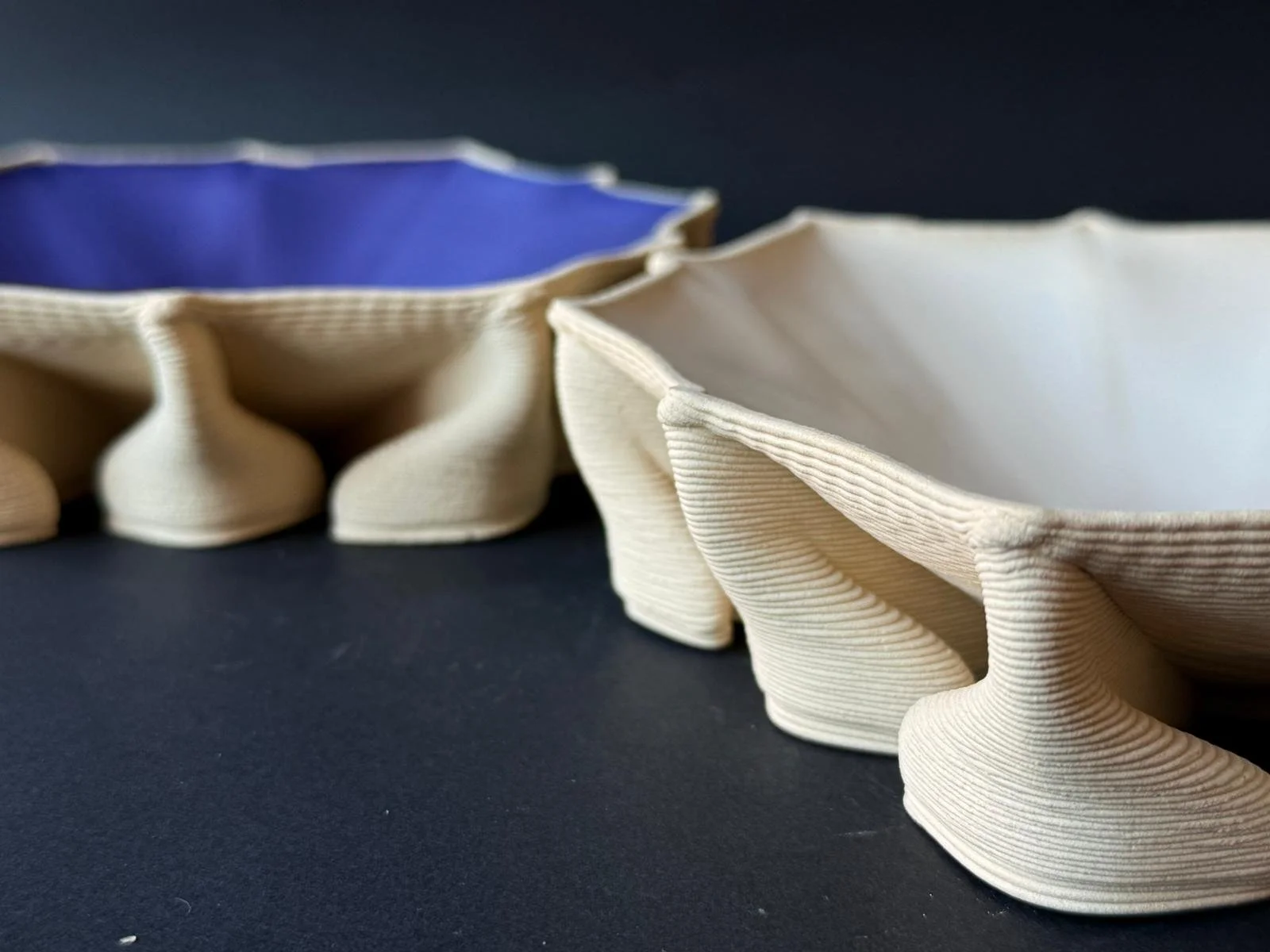
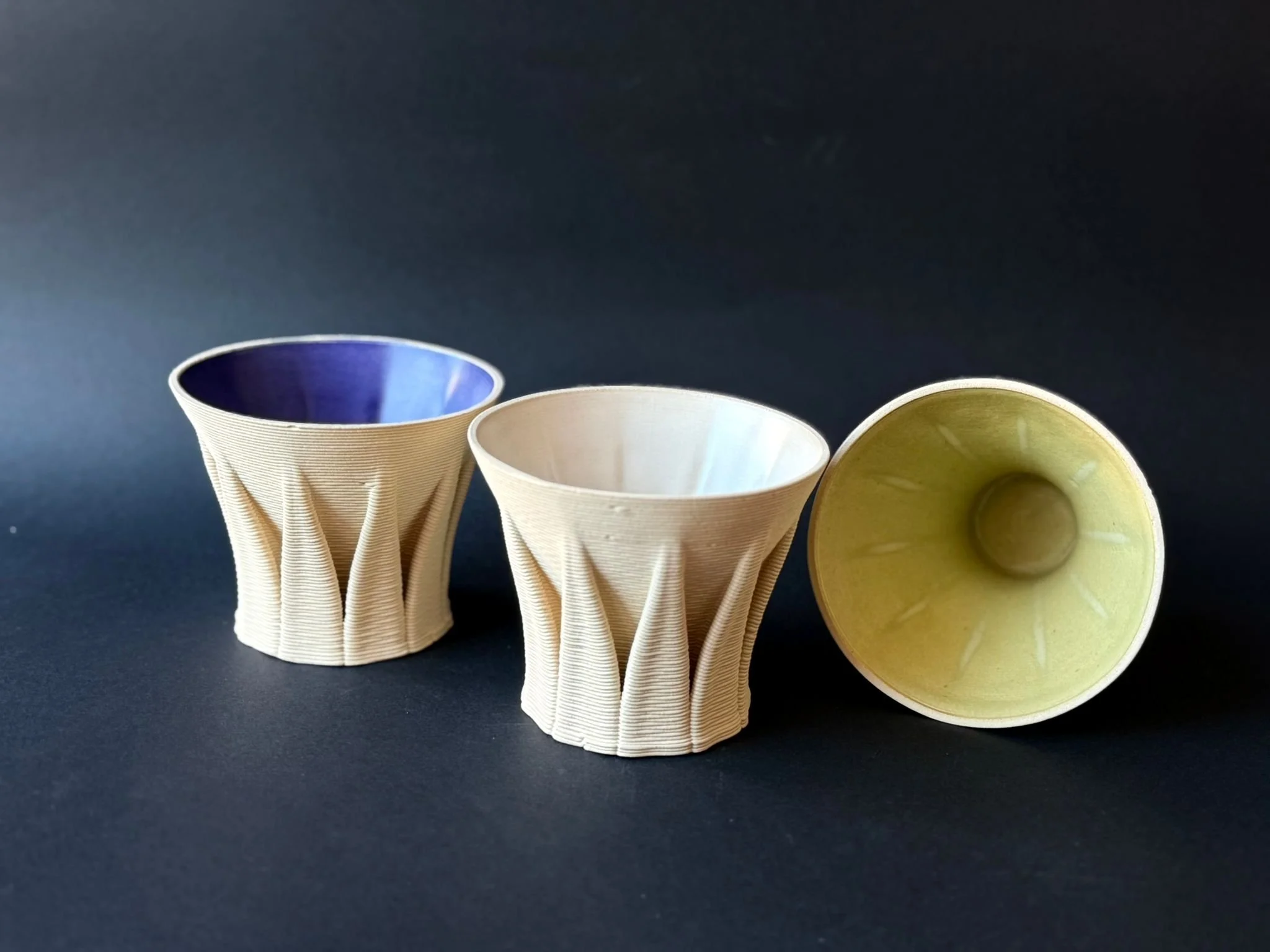
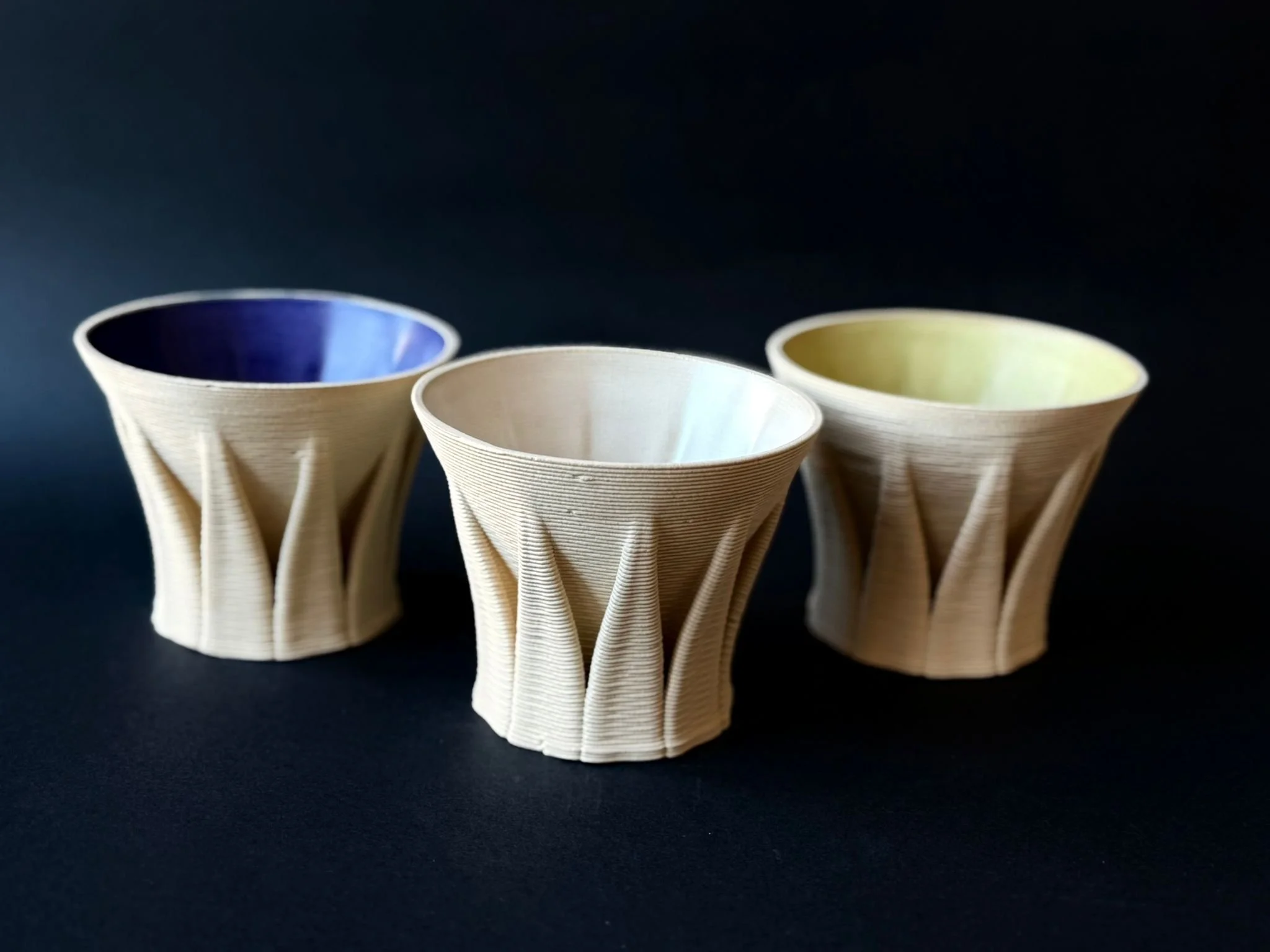
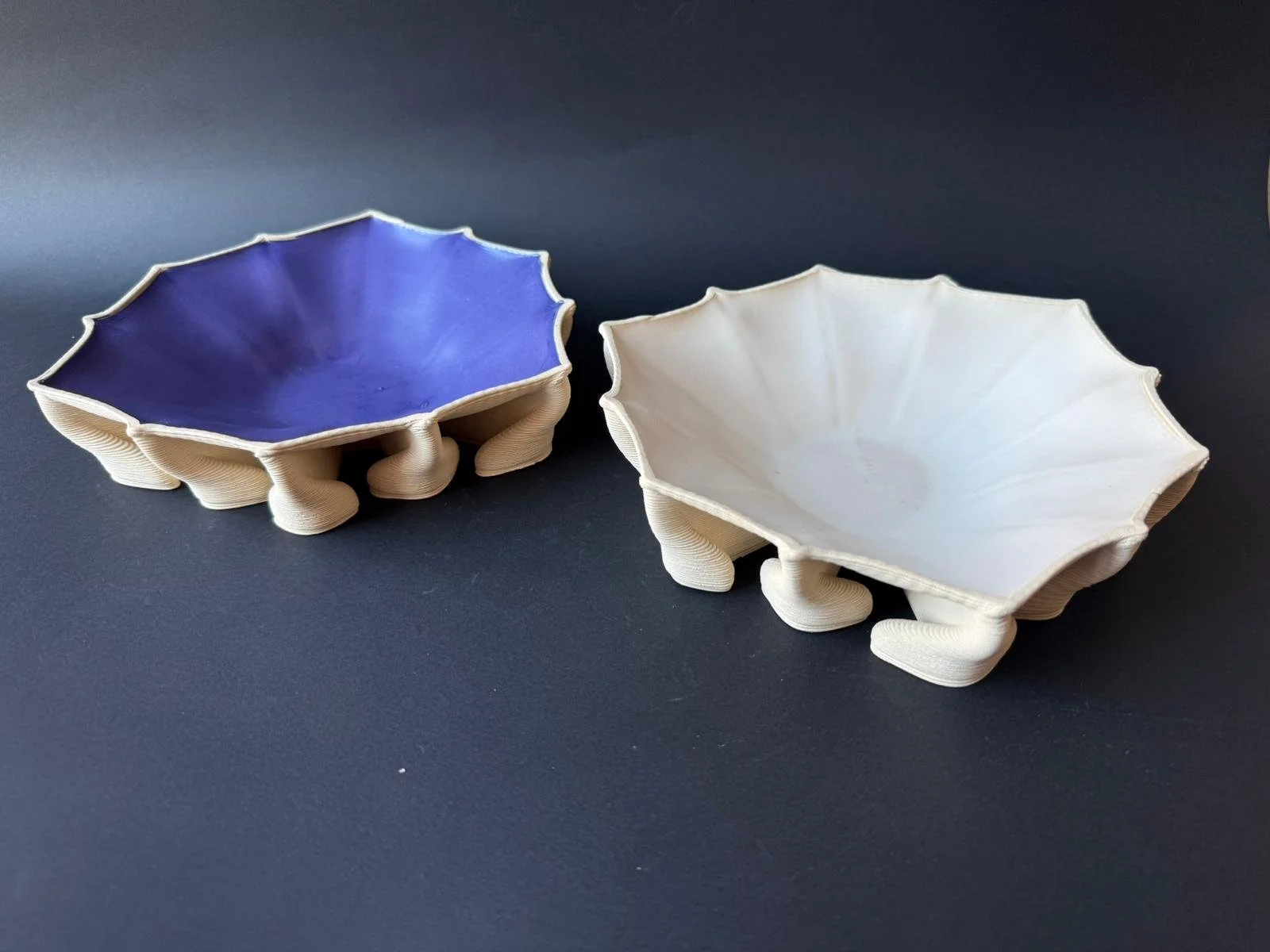
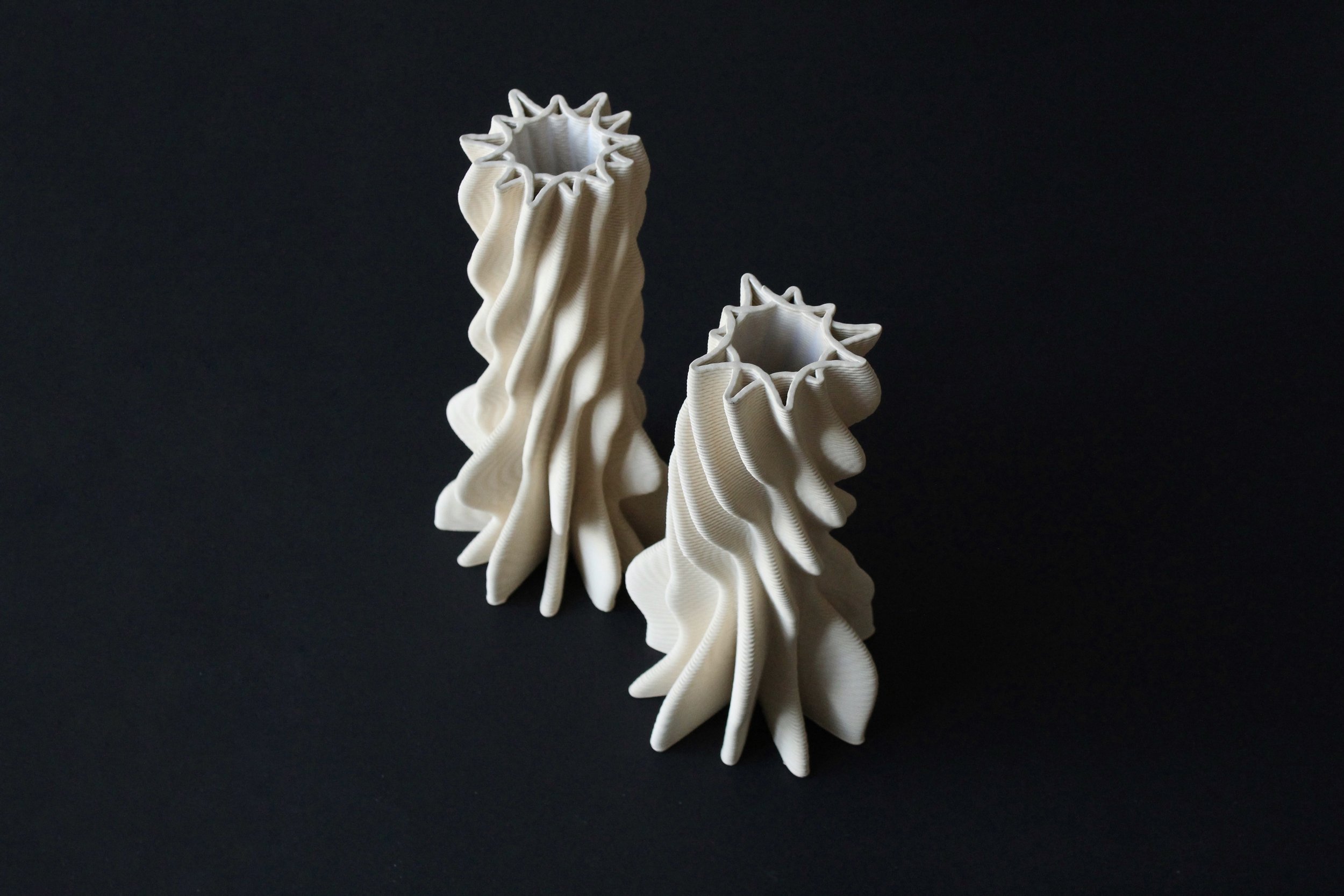
Noēma is where objects take shape, sometimes precisely, sometimes unpredictably, like a dialogue between thought, matter, and imagination. We treat design less as a fixed path and more as an open playground, a place to wander through forms, patterns, and material experiments with curiosity as our guide.
We explore through the realms of design to extract new capabilities of material and in how form, and the adaptive use of digital manufacturing, can bring potential approaches that could also translate into different scales.
In practice, this means drawing new toolpaths, testing fabrication logics, and letting machines and materials surprise us as much as we direct them. Each line of code, each extrusion, is both a question and a dare to possibility.
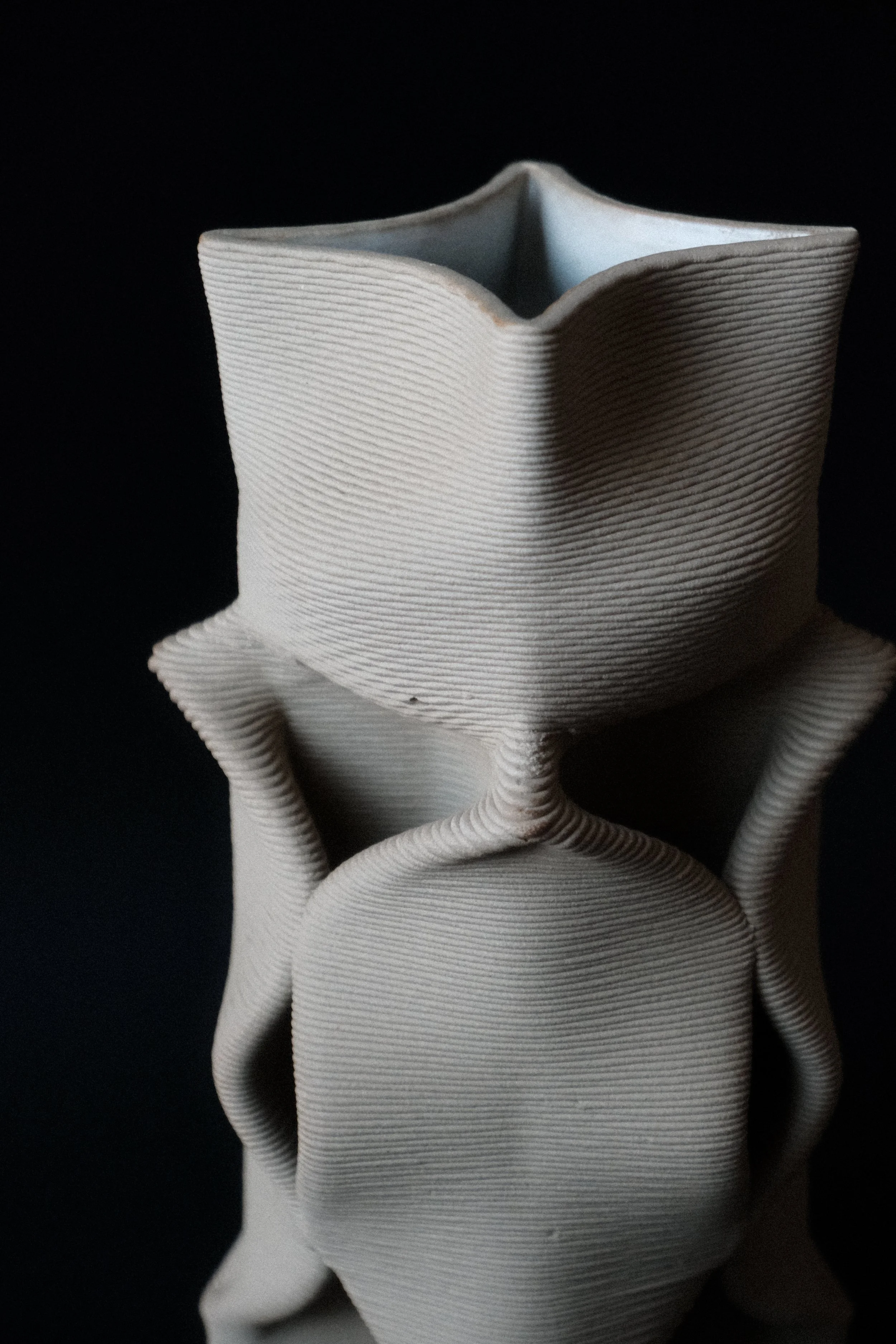
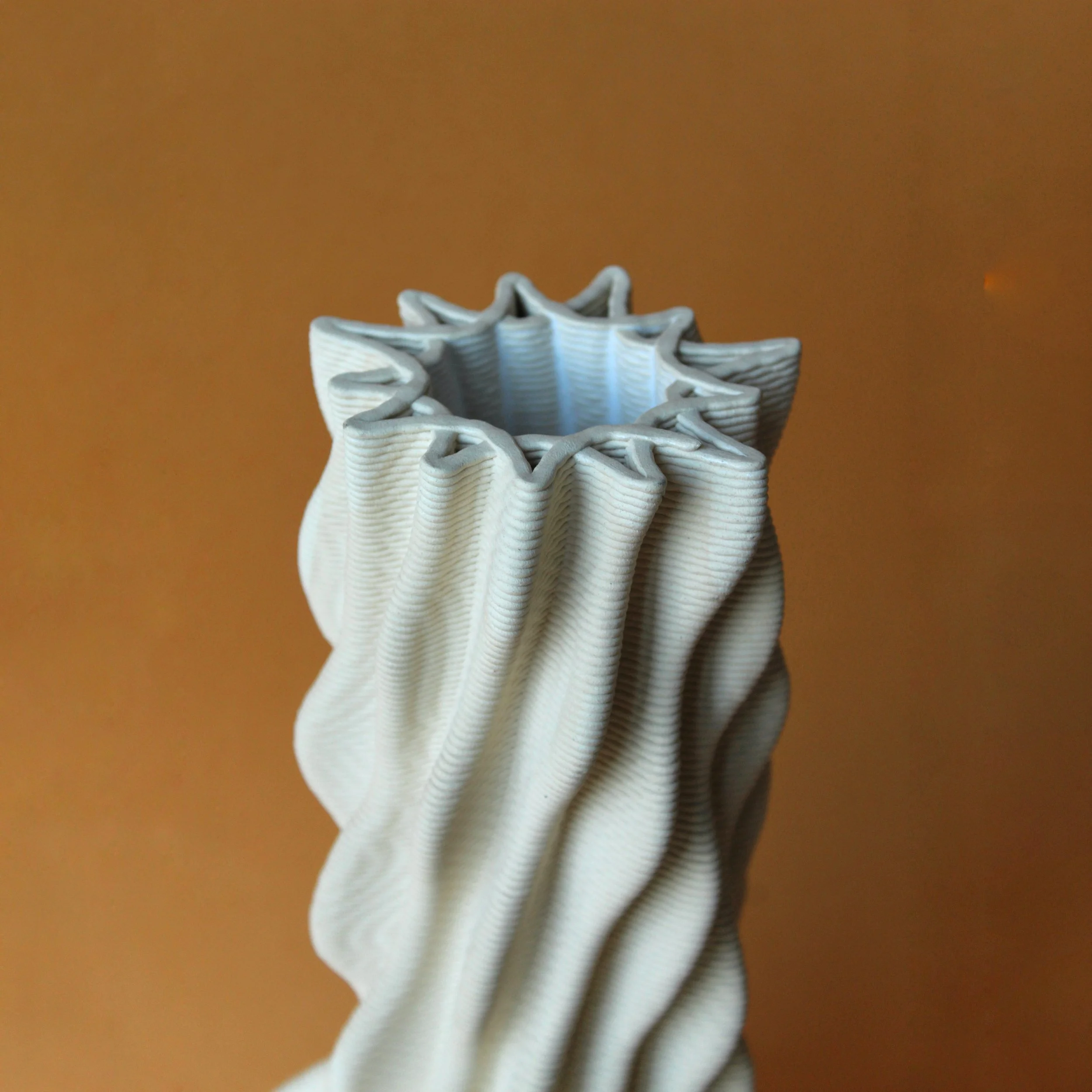
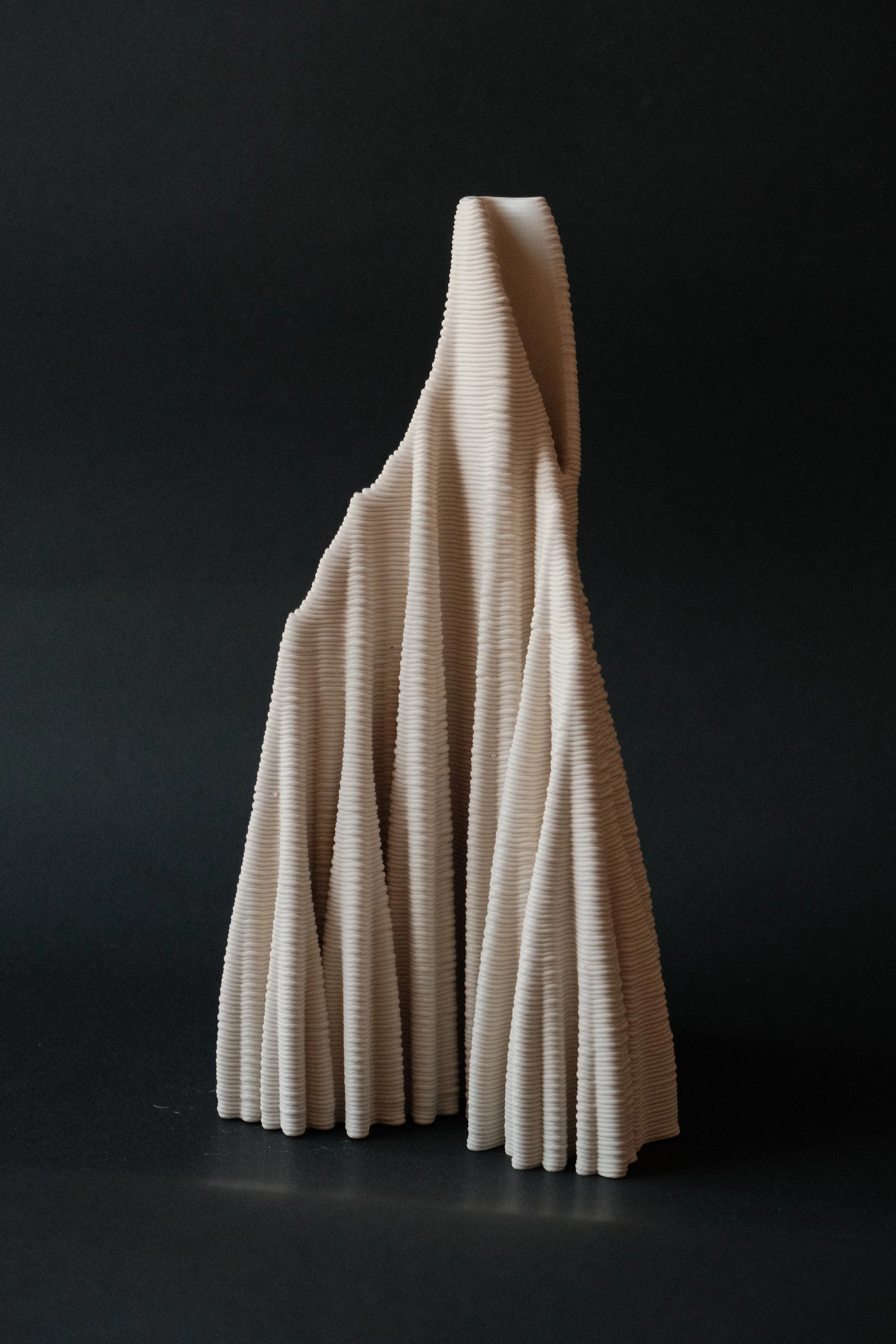
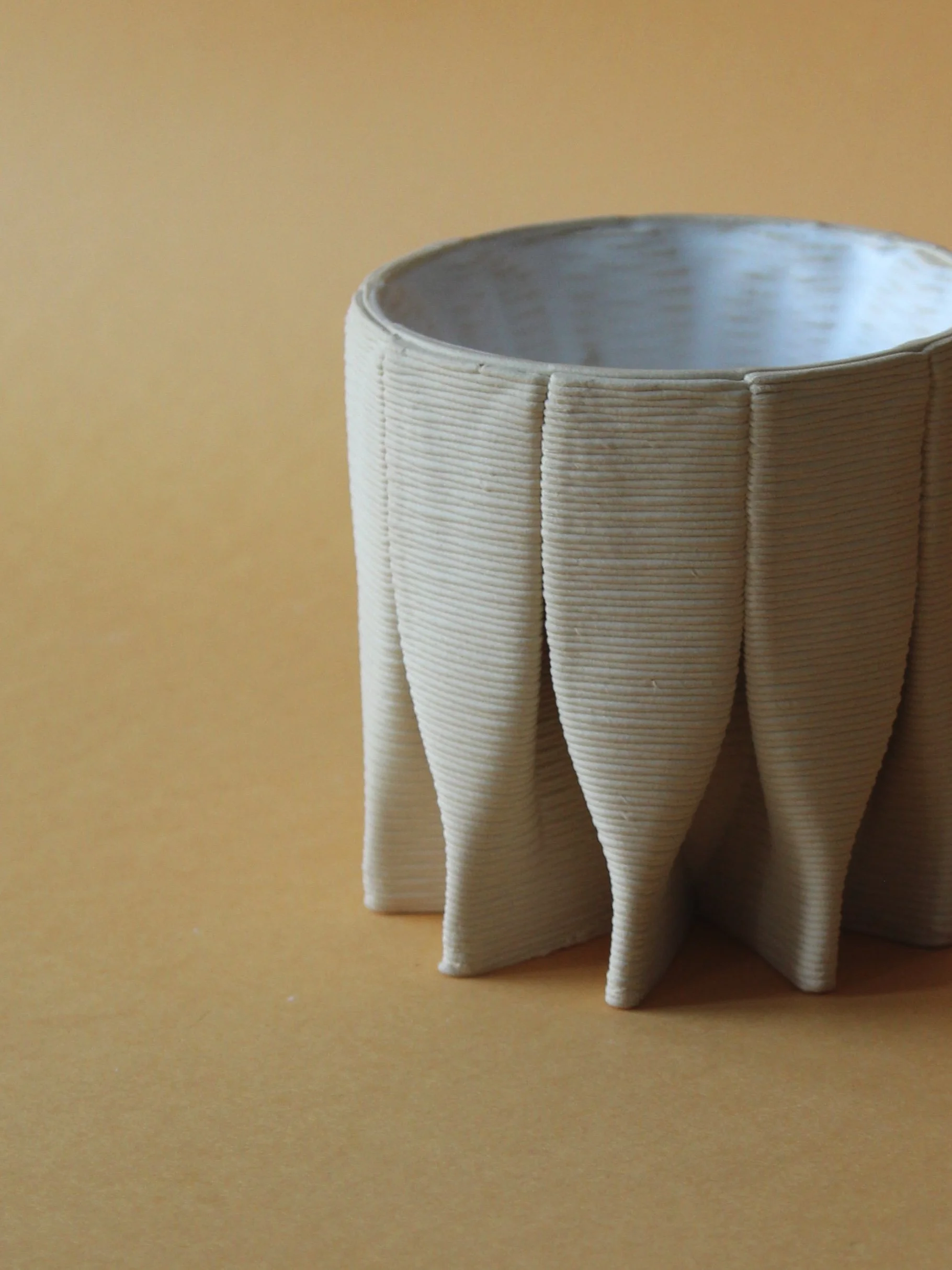
Fabricating, for us, is a form of storytelling. Clay might twist into delicate lattices, polymers might fold into translucent surfaces, and digital traces might leave behind tangible structures that seem to invent their own rules. These playful collisions remind us that design is not only about control, it is also about letting these possibilities intersect and translate into something unexpected.
Noēma embodies this spirit of exploration, not as a finished object but as an ongoing conversation, where experiments in craft, computation, and technology spill into installations, functional pieces, or architectural prototypes. We like to think of our work as invitations: touch this surface, imagine its scale enlarged, wonder how these shapes could live in other contexts.