
KEITH SIMPSON
“CODE&CRAFT”
2025
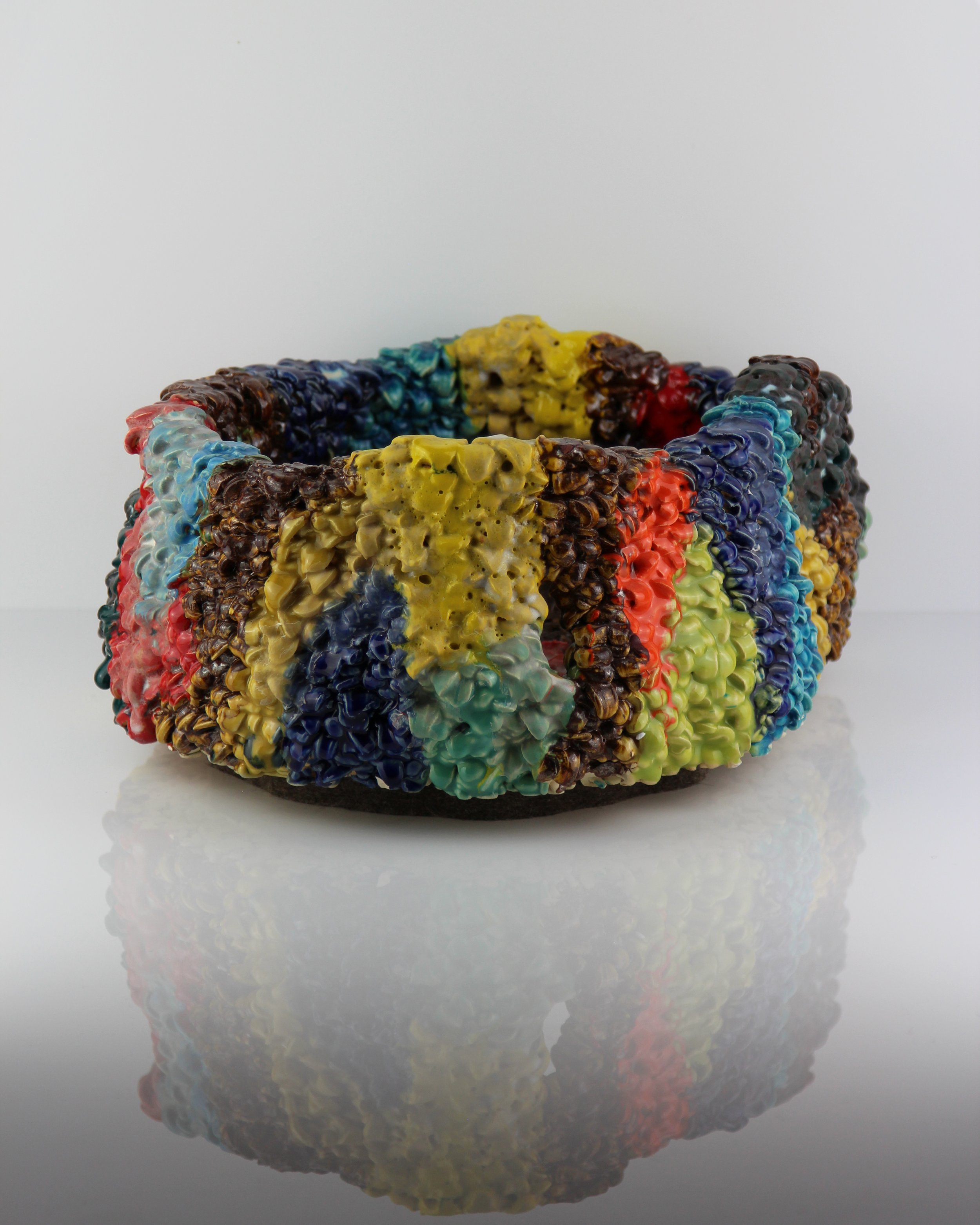
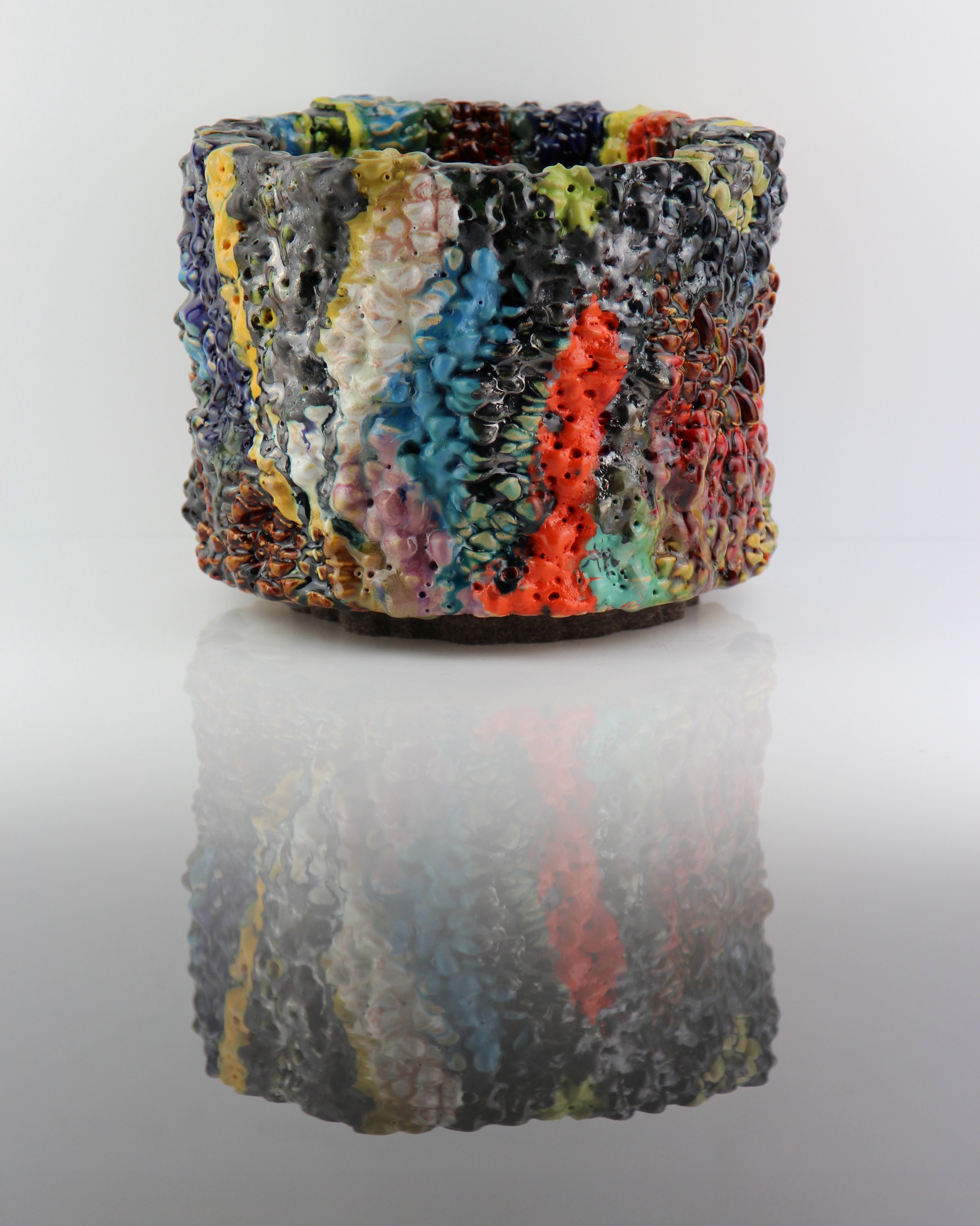
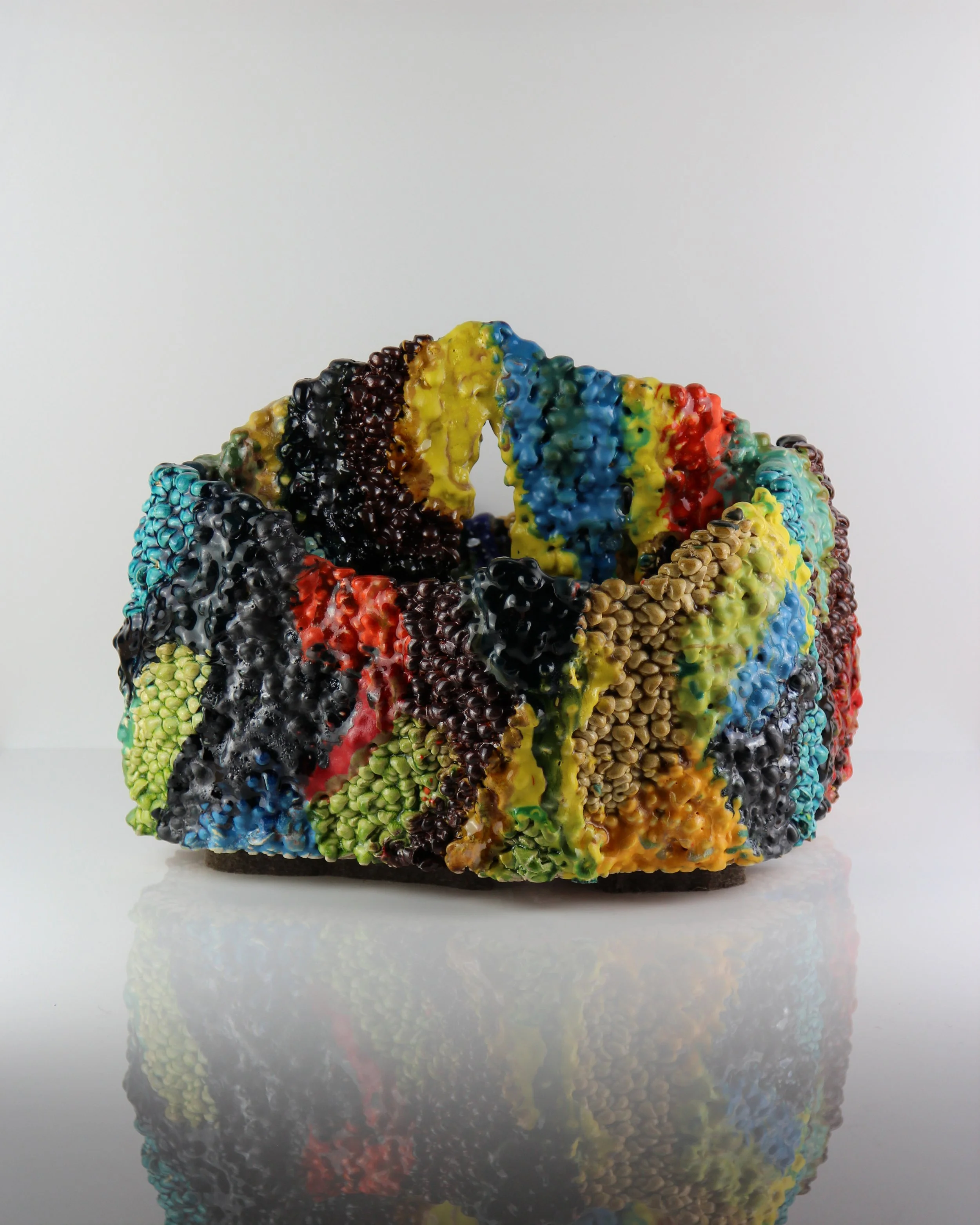
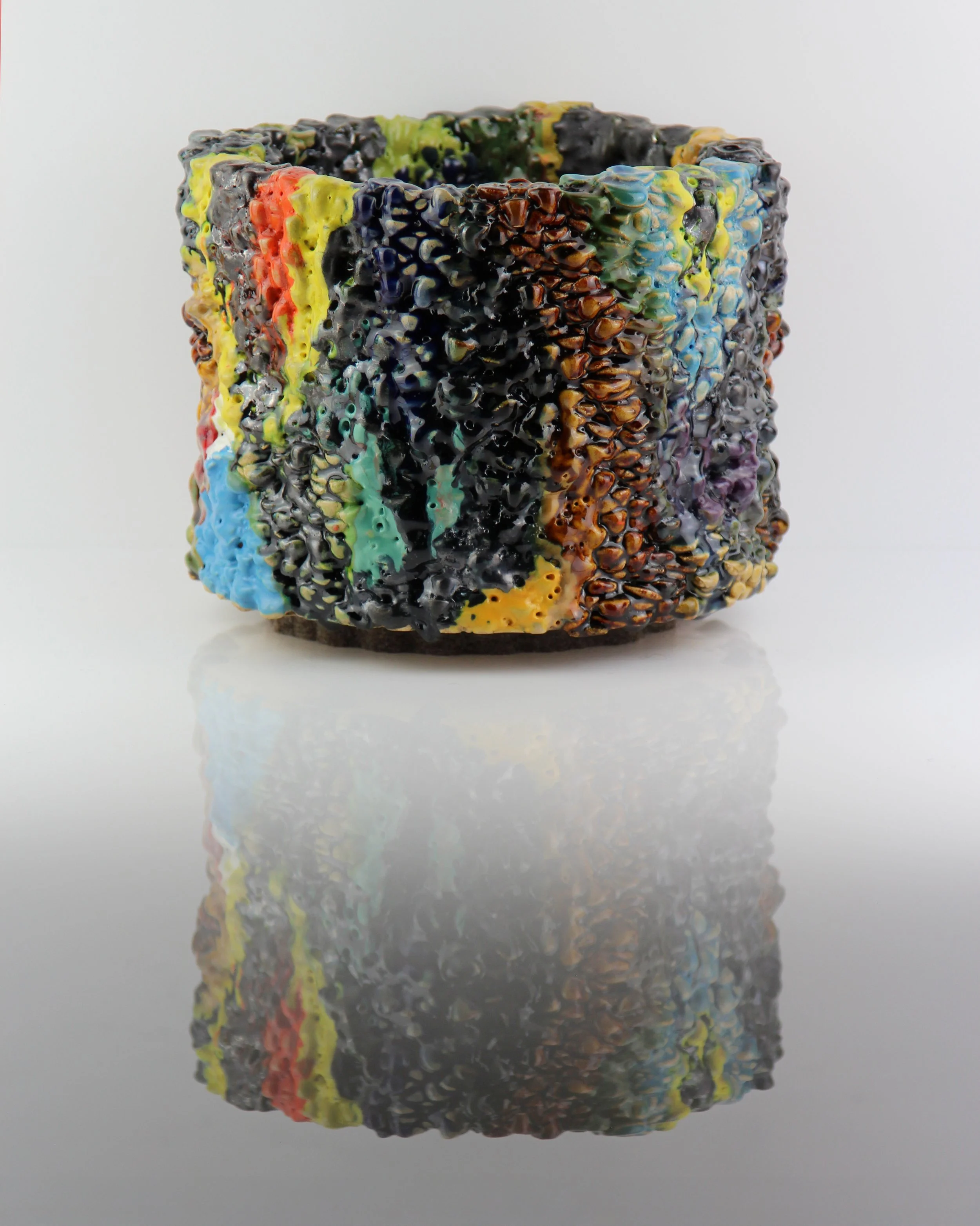
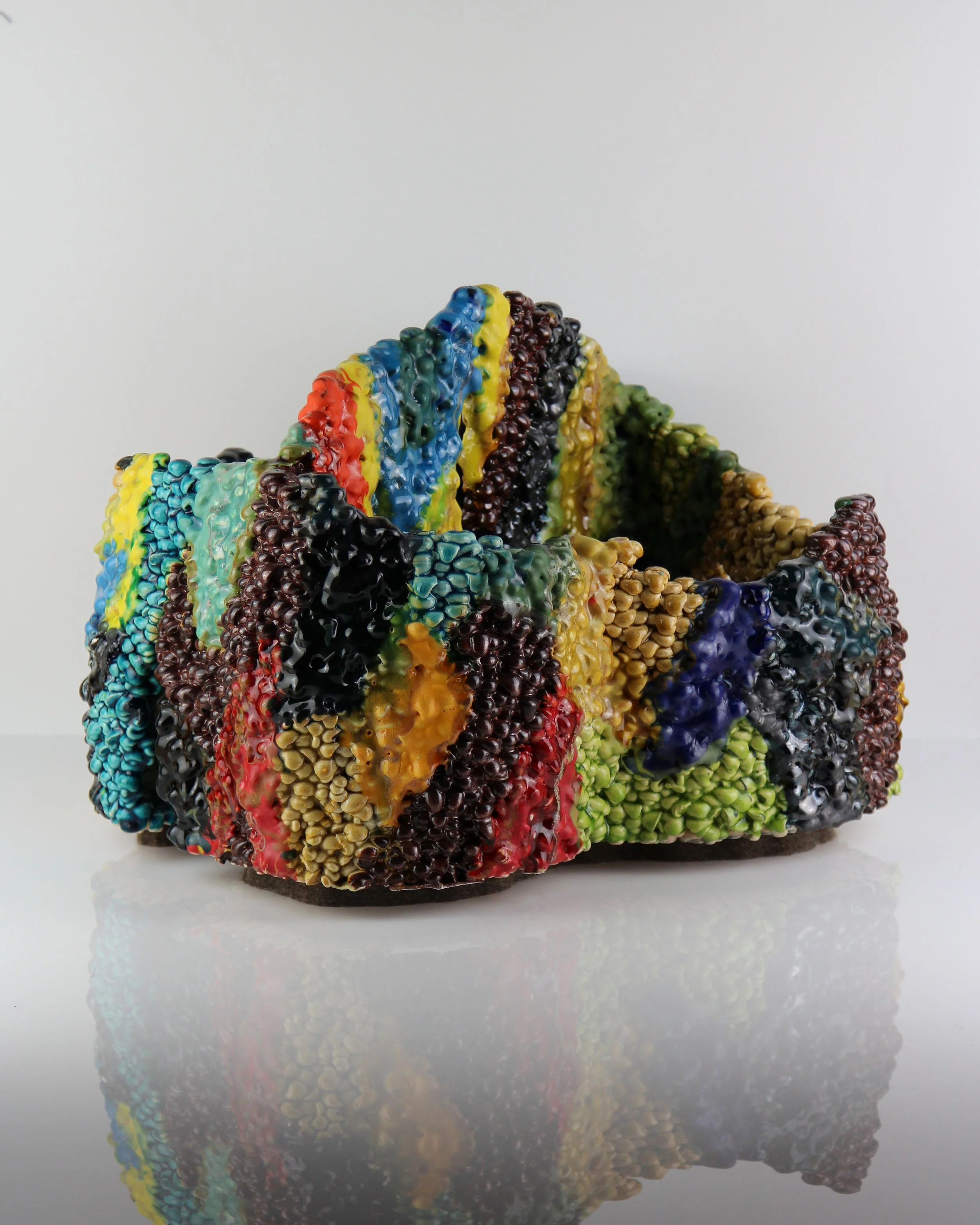
Keith Simpson (b. 1979, USA) is a ceramic artist and educator whose work merges experimental digital code with clay’s primordial substance. For more than a decade he has designed custom 3D printers and written unique methodologies that extrude clay in clumps, producing vessels that recall swallow nests, bubbling mud pools, and grotto-like architectures. Their surfaces are layered by hand with polychrome glazes across multiple firings, concealing and revealing richly textured forms that resist the immateriality of data.
Simpson earned his BFA from the Kansas City Art Institute (2010) and MFA from The Ohio State University (2012). He has taught ceramics and material science at Pratt Institute, Alfred University, and currently Greenwich Country Day School, where he teaches Studio Arts and Ceramics. His technical expertise includes nearly a decade as Raw Materials Specialist at Alfred University, where he guided glaze formulation and material research.
He has held residencies at Haystack Mountain School of Crafts, Alfred University, and the Archie Bray Foundation, and his work has been exhibited internationally at venues including the State of the Art Ceramics Biennial, Jerusalem Design Week, and the Holter Museum of Art. His pieces are held in the collections of the Archie Bray Foundation, the Ceramic Research Center in Tempe, and the Ken Ferguson Teaching Collection at KCAI. He lives in Greenwich, Connecticut, and maintains his studio practice in nearby Stamford.
“My practice hesitates at the edge of craft and code, searching for forms that resist precision, begin to forget their own history, and fully embrace the gravity of their substance—anchored and unmoored.”
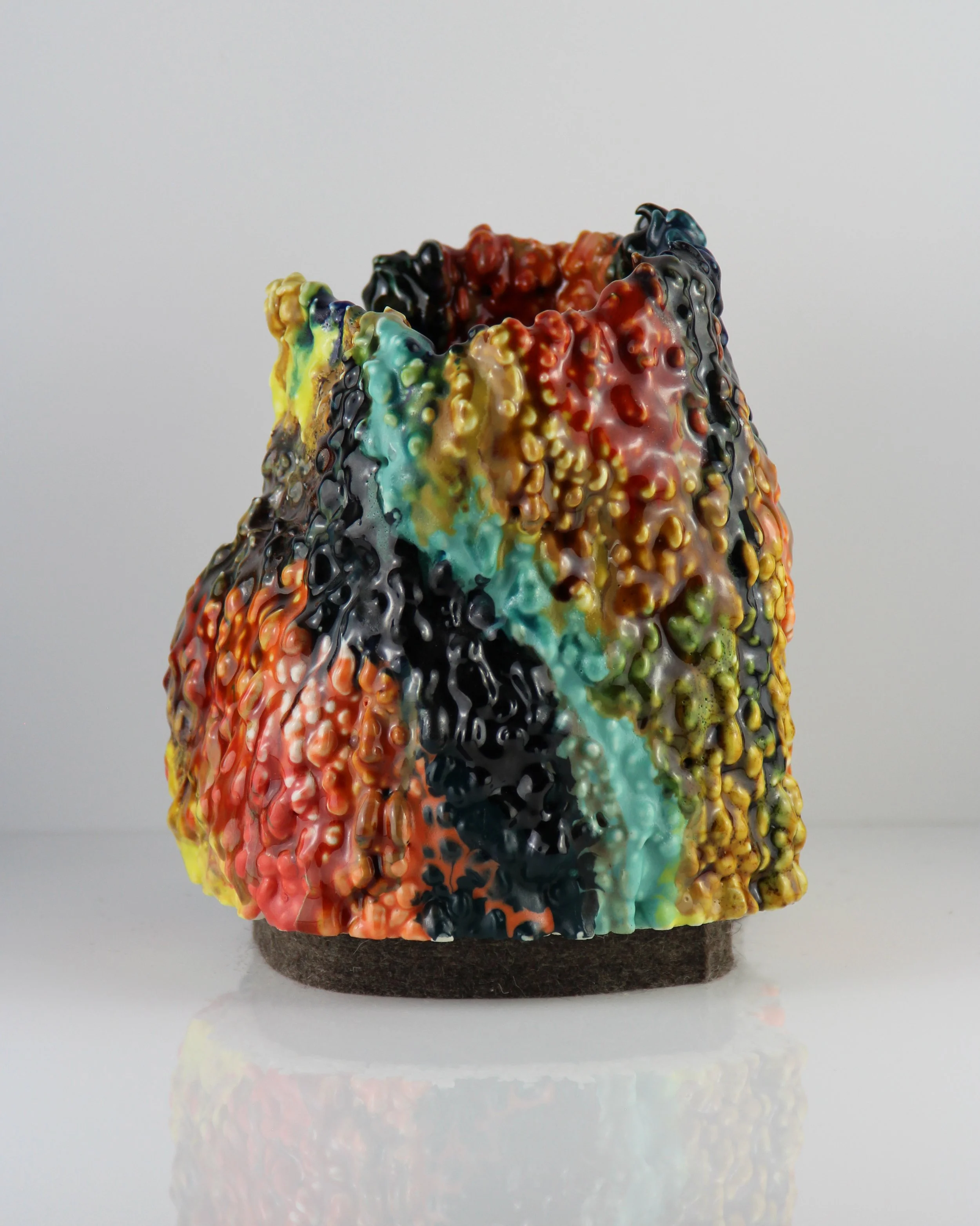
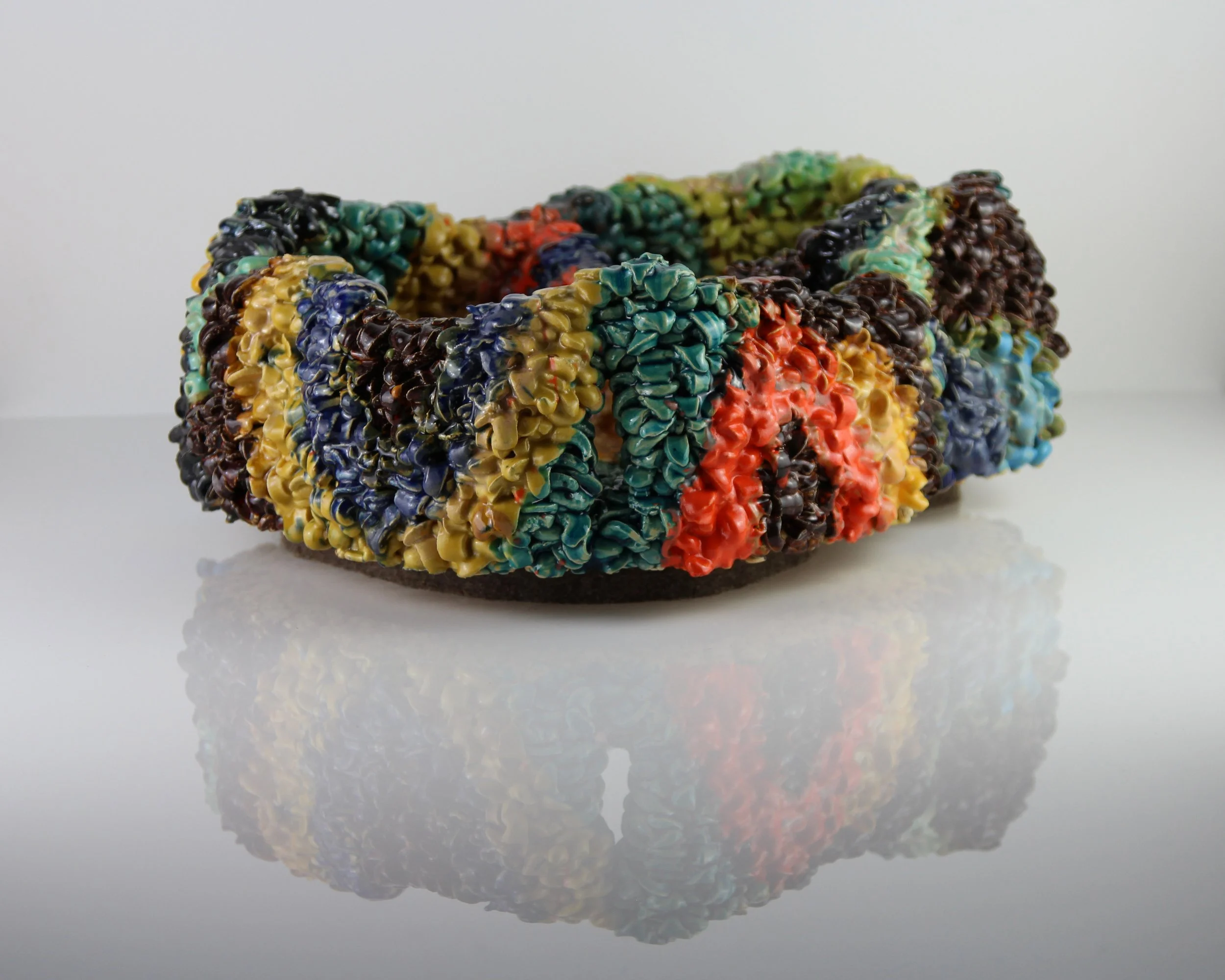
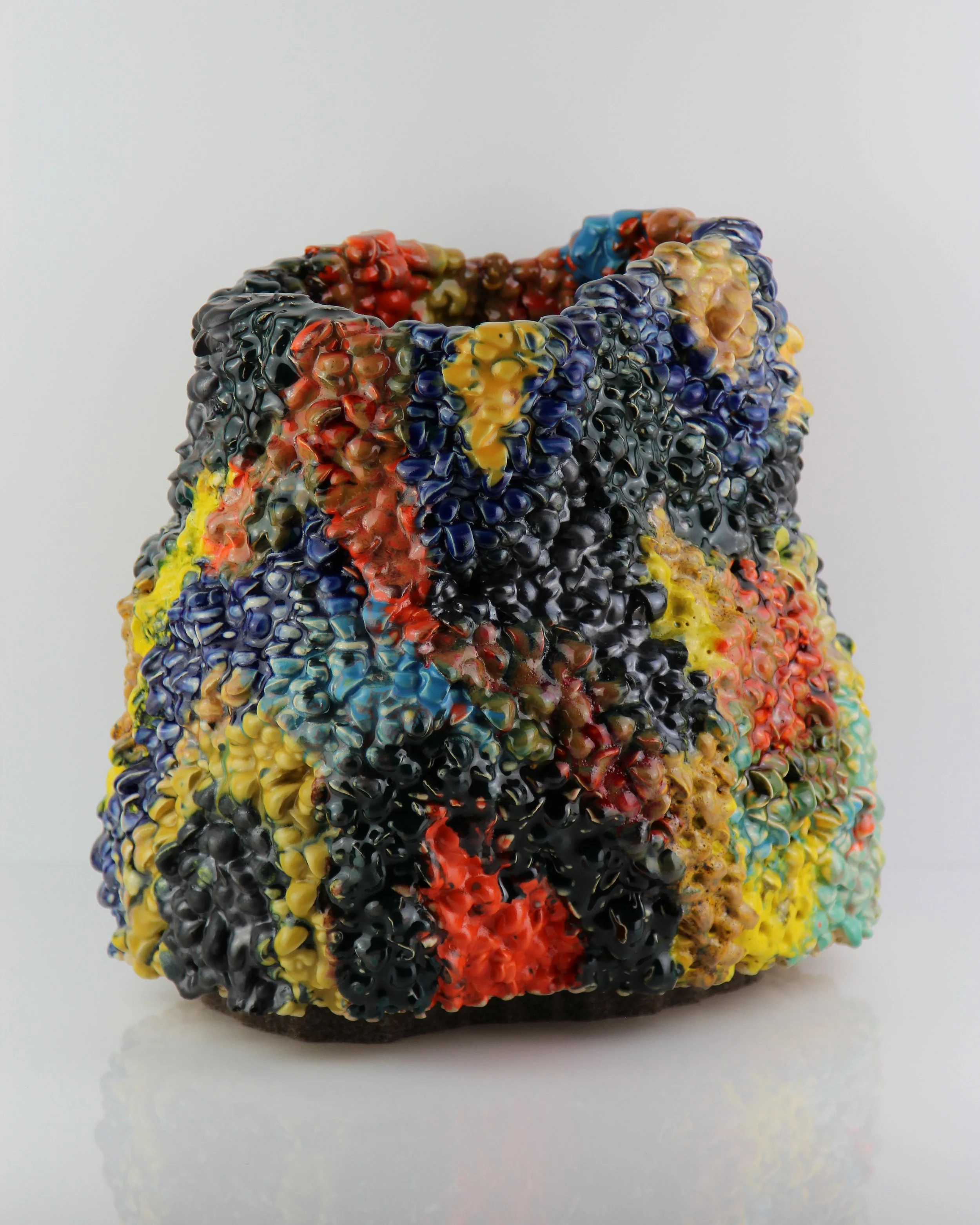
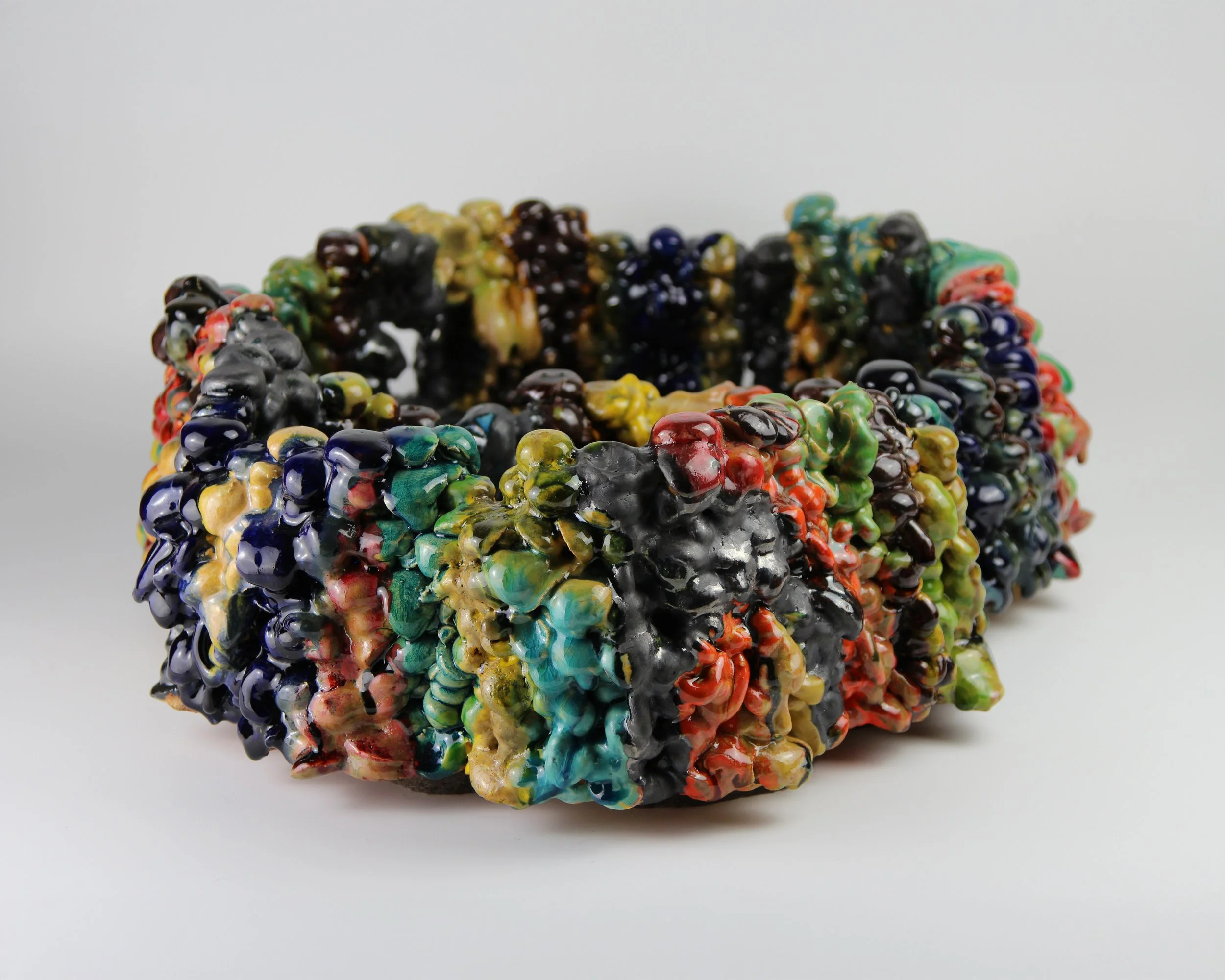

These vessels arise where digital code meets the resistance of material. Rather than following the smooth logic of slicer software, I write custom programs that deposit clay one clump at a time. This process builds as a swallow layers mud for its nest or a wasp shapes its hive, a looser form of precision in which each accretion responds to the irregularities of the one before it. The results are vessels that seem less printed than accreted—swelling, slumping, and eroding like geological formations. Stumbling to take foothold; they are chthonic and otherworldly manifestations of mineral, data, and heat. They recall the bubbling mud of thermal springs, limestone hollows, or tidal pools, spaces that are at once natural architectures, containers, windows into other worlds.
Surface becomes another site of tension, where glazes which are brushed on by hand are layered across multiple firings to both conceal and reveal the textured substrate. These shifts in depth and color refuse clarity and return the work to the gravity of substance. The vessels are not tidy replicas of digital models but objects that have mostly forgotten the code of their origins, accreting instead toward the uncertainty of transformation.