JUKJU GLASS
Cluster Contemporary Jewellery
”AMALGAM”
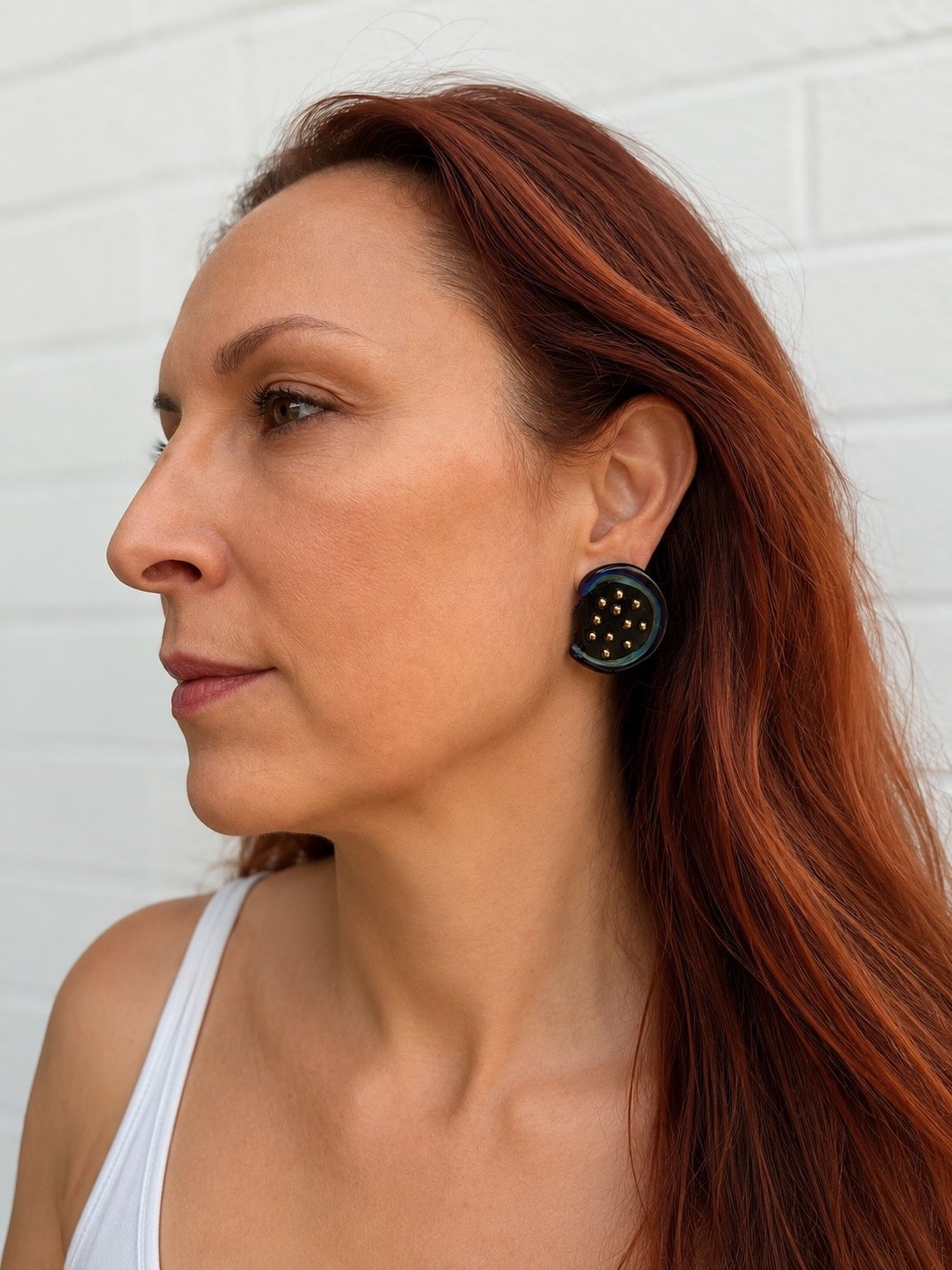
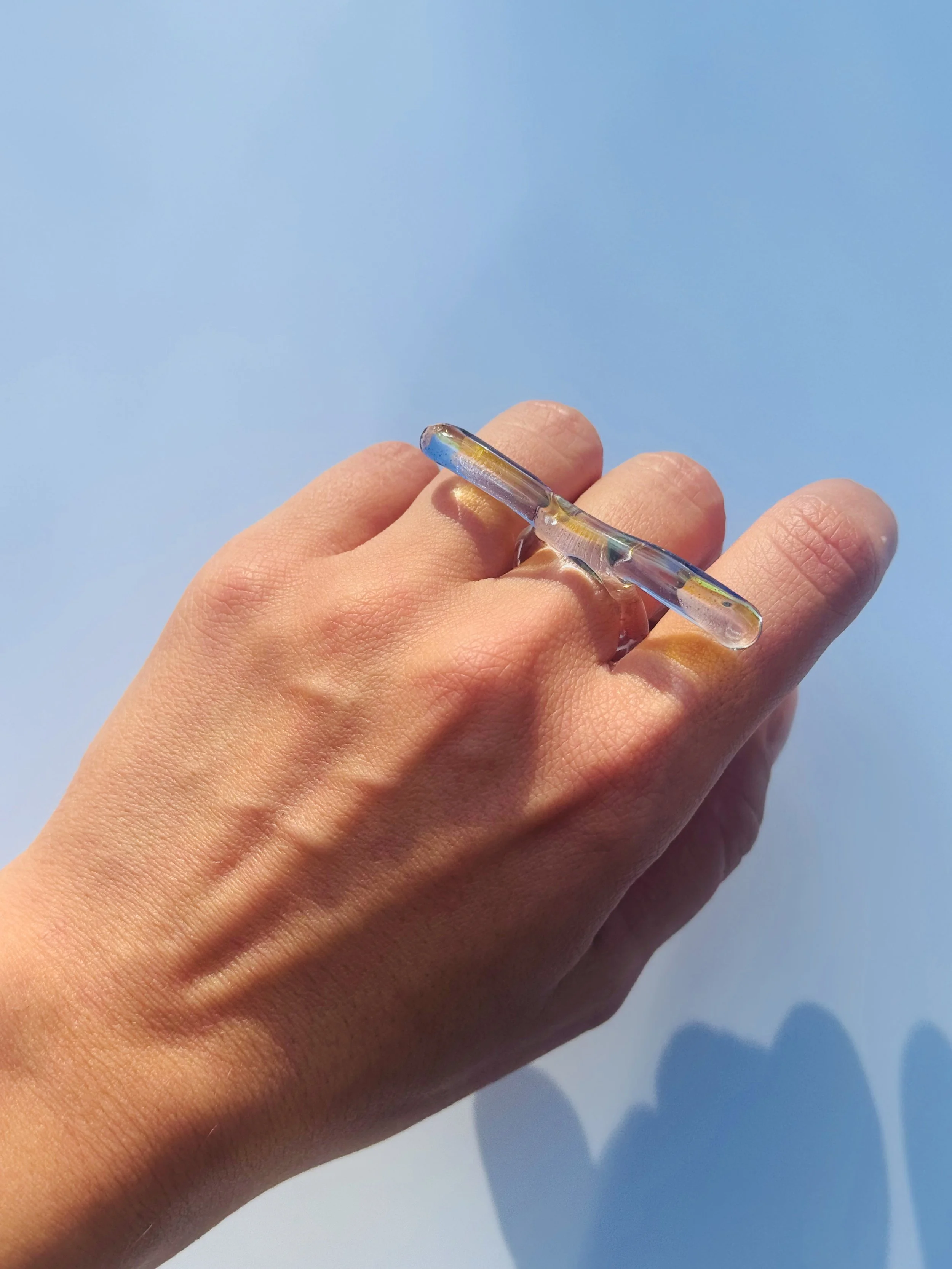
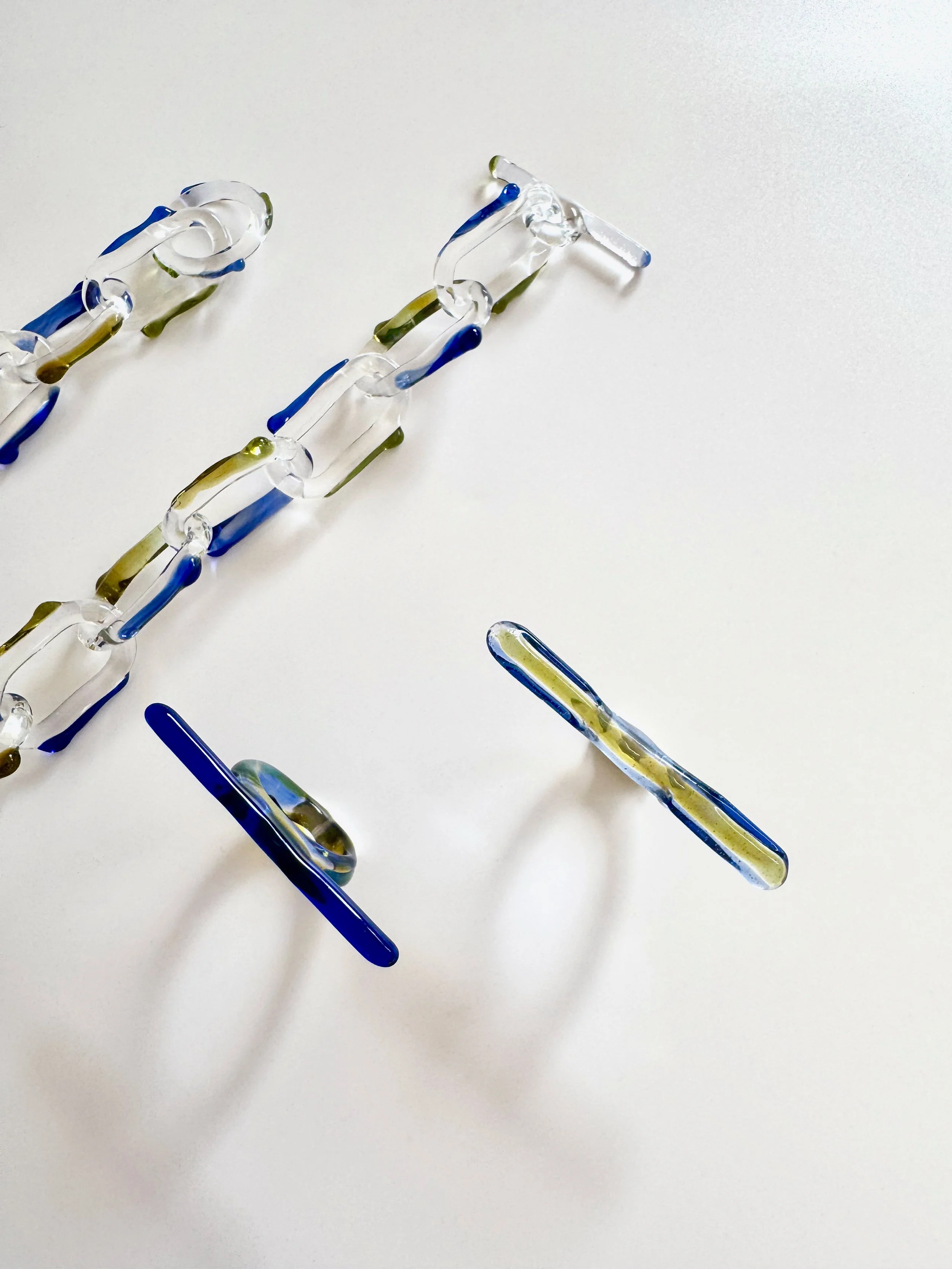
Burcu Sevgor is a London-based glass artist working primarily with borosilicate glass. Originally trained as an industrial engineer, she discovered flameworking as a way to merge technical precision with the expressive possibilities of molten glass.. She received her first formal training at The Glass Furnace in Istanbul before relocating to London in 2021, where she established her studio and developed her practice.
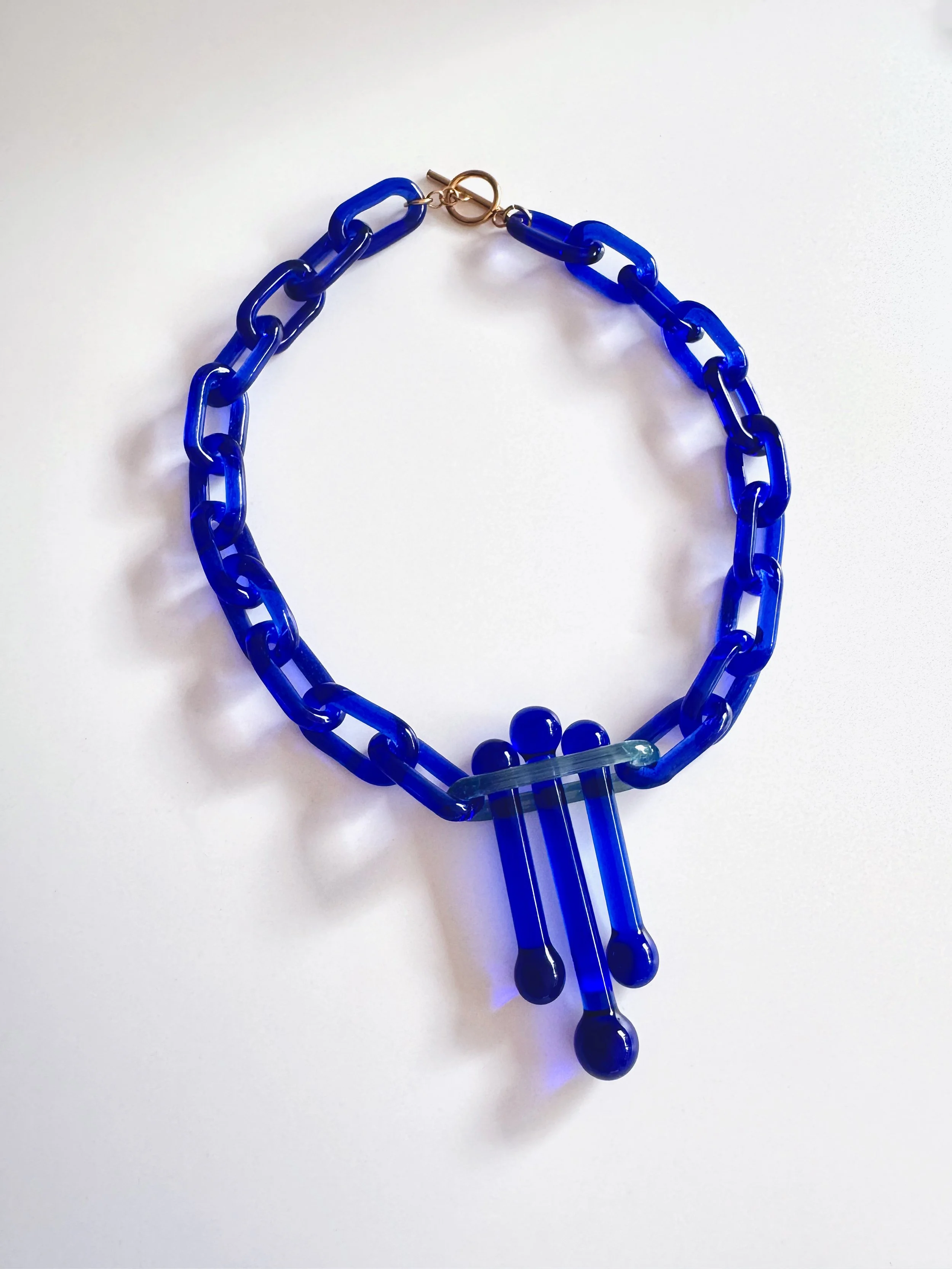
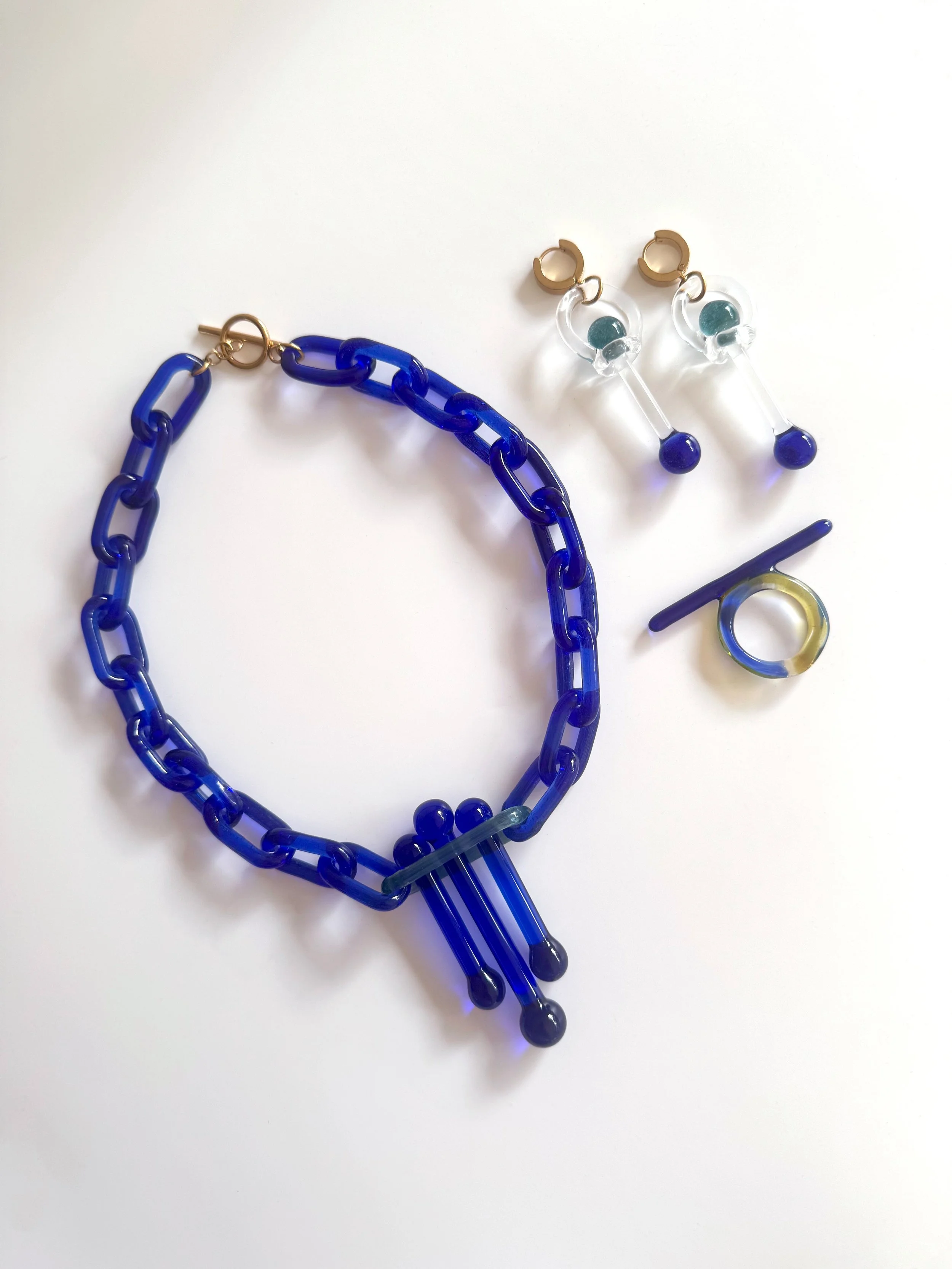
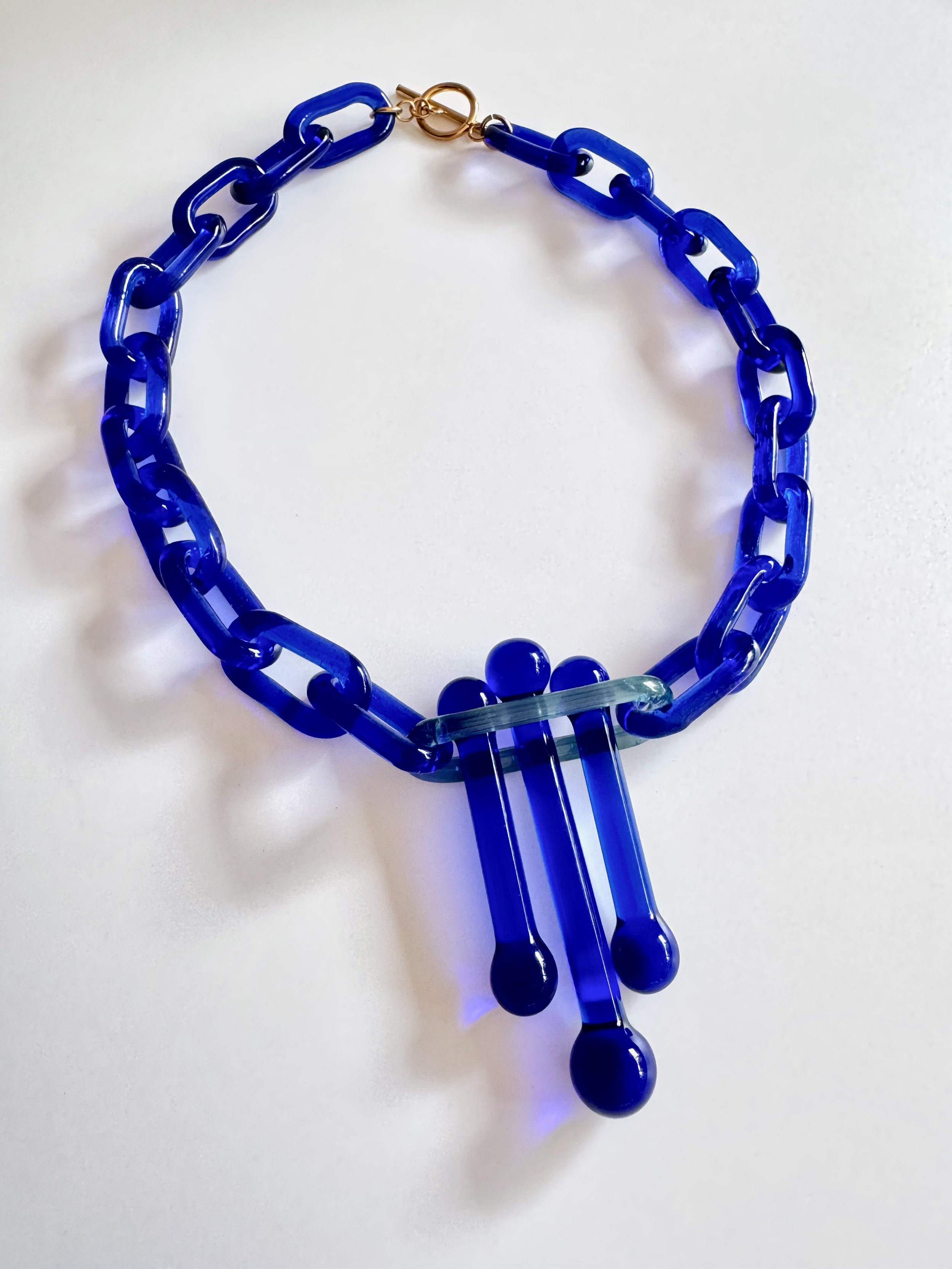
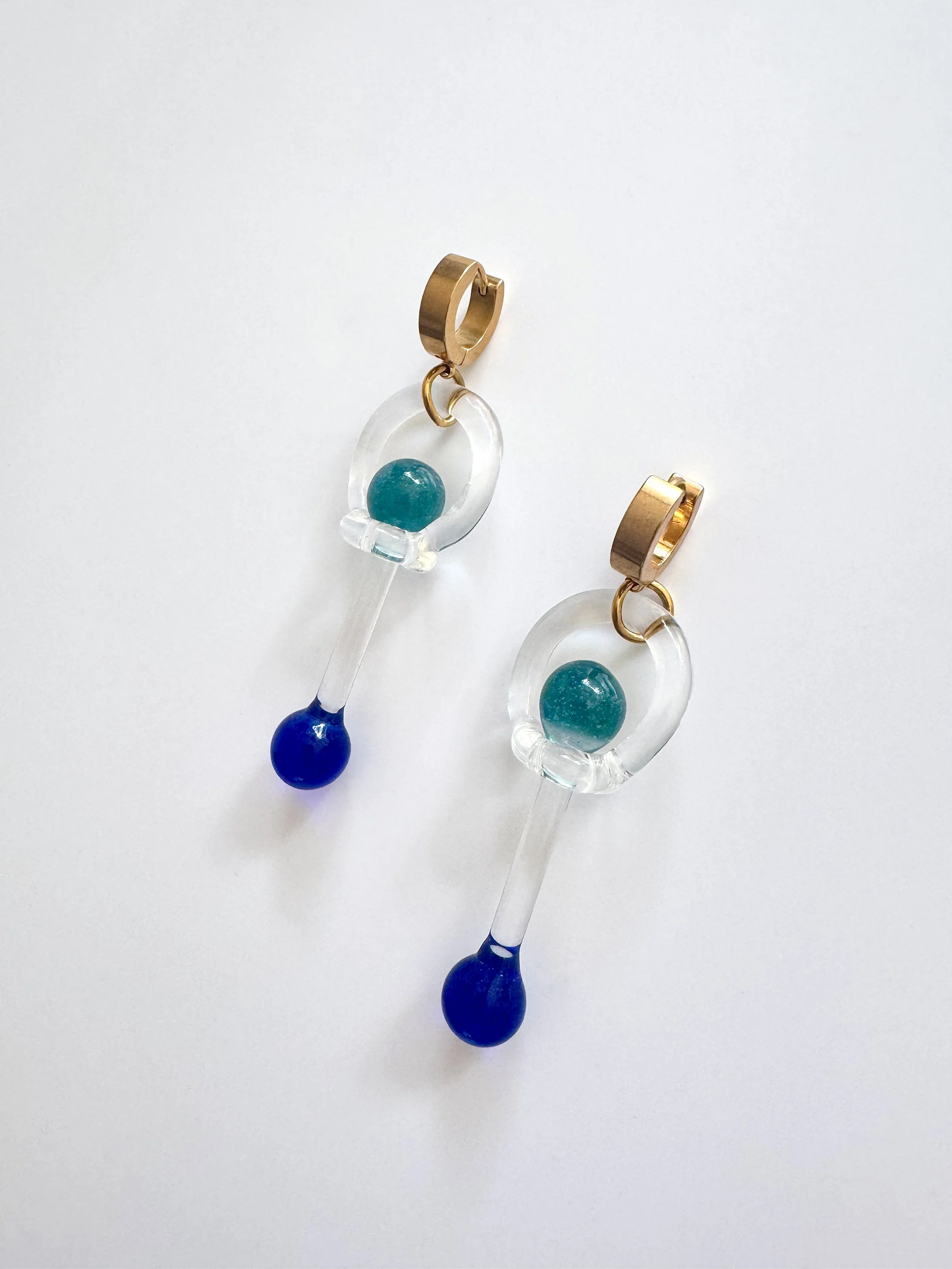
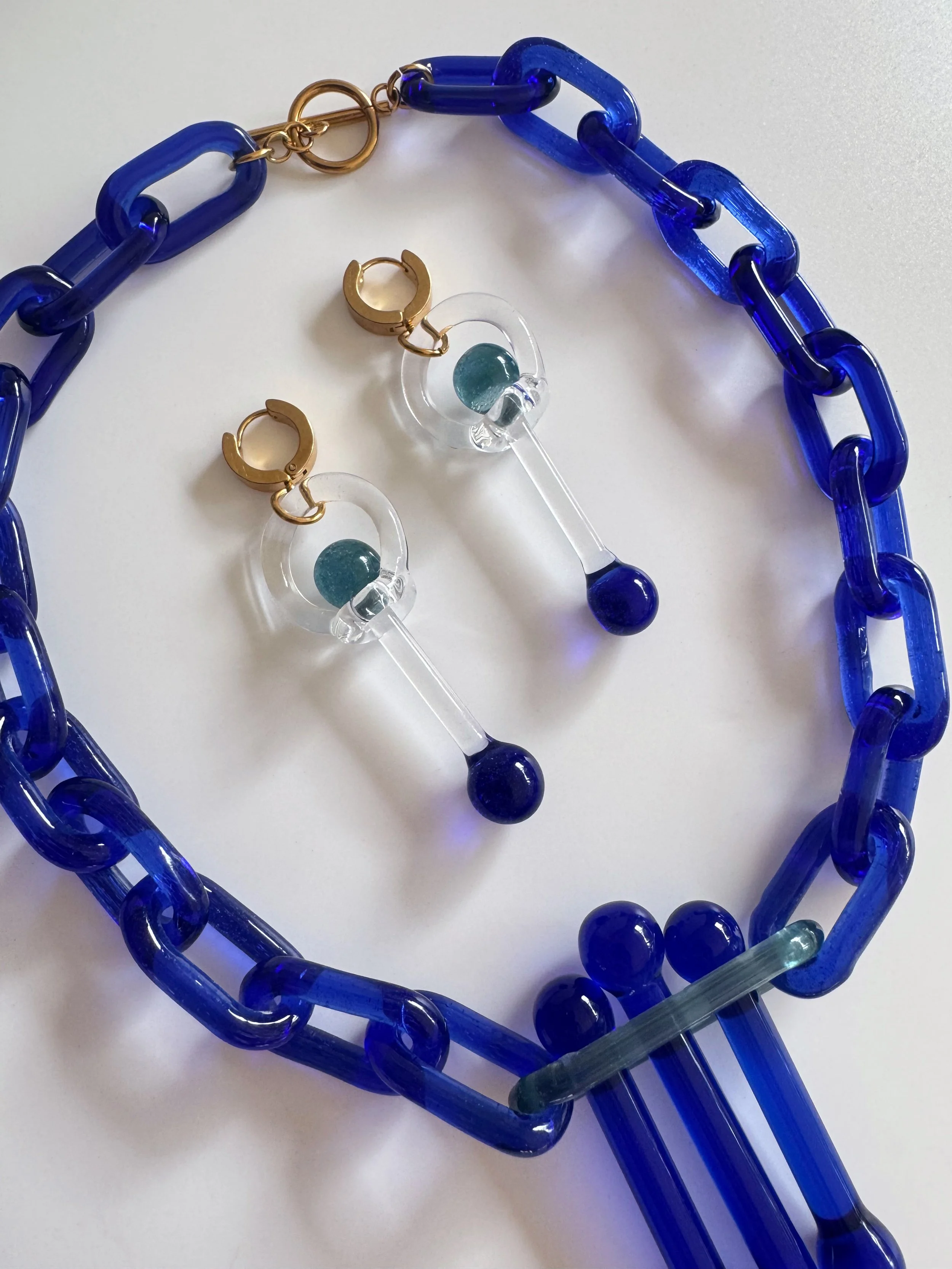
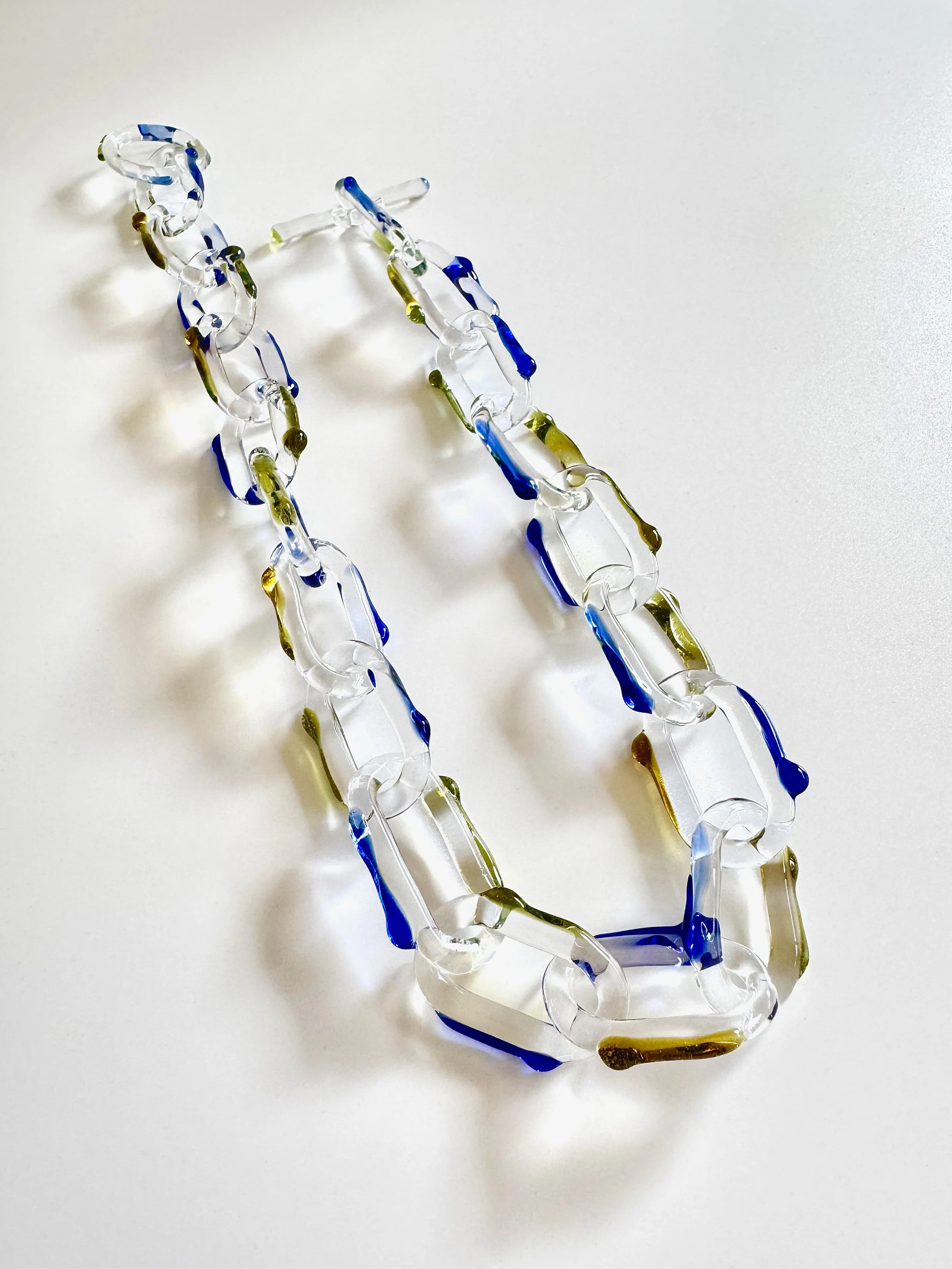
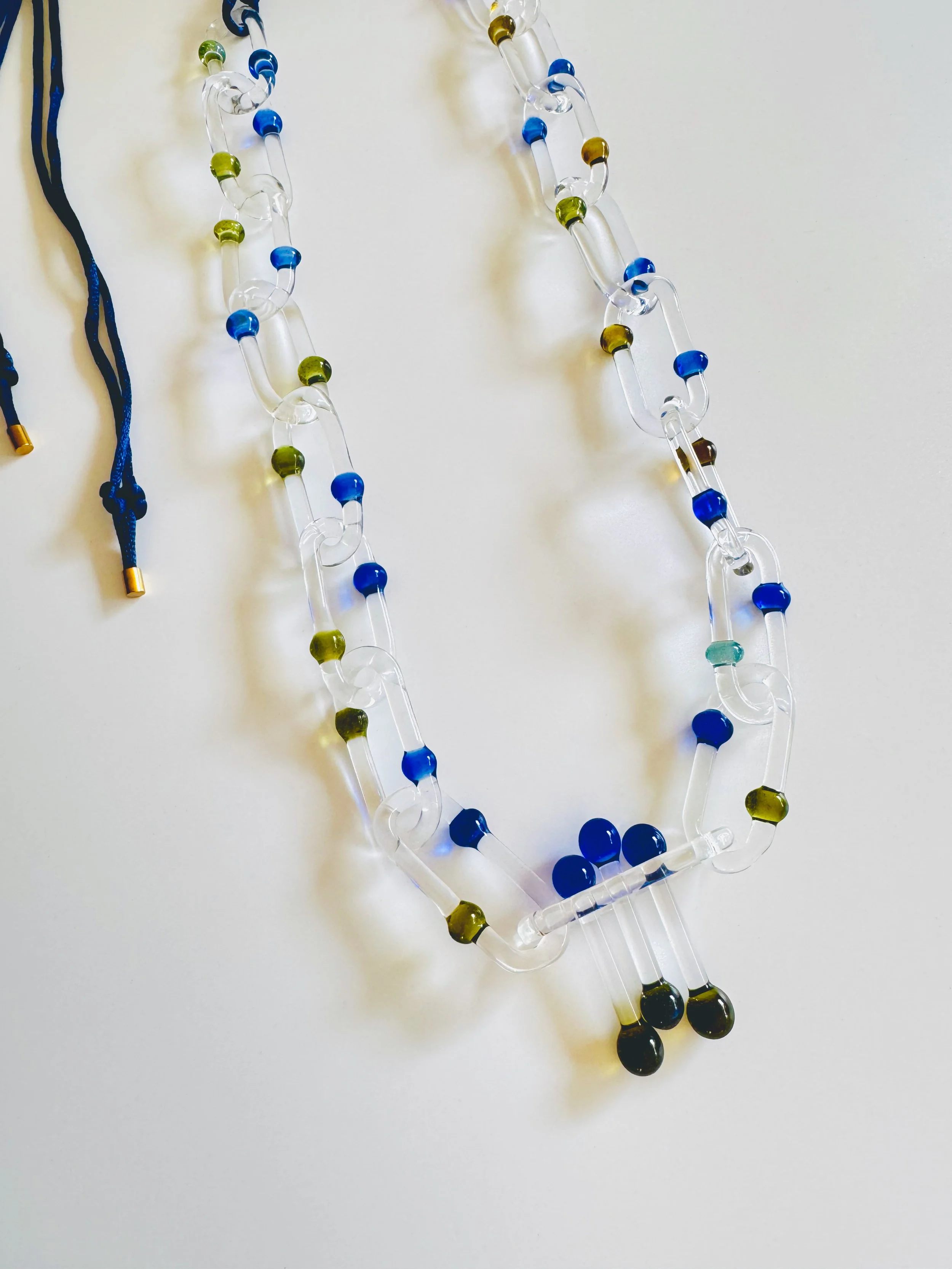
Burcu creates contemporary jewellery using traditional flameworking techniques, alongside sculptural glass objects. Working directly in the flame without moulds, she individually forms every piece, balancing precision with the unpredictable nature of molten glass. Despite the fluidity of the material, her work is guided by a pursuit of geometric forms and symmetry, often drawing inspiration from everyday objects, structural forms and the natural world.
Every piece is made in her South East London studio, where craftsmanship and experimentation go hand in hand. Through her practice, she continues to explore new ways of shaping borosilicate glass while creating jewellery that is both sculptural and wearable.
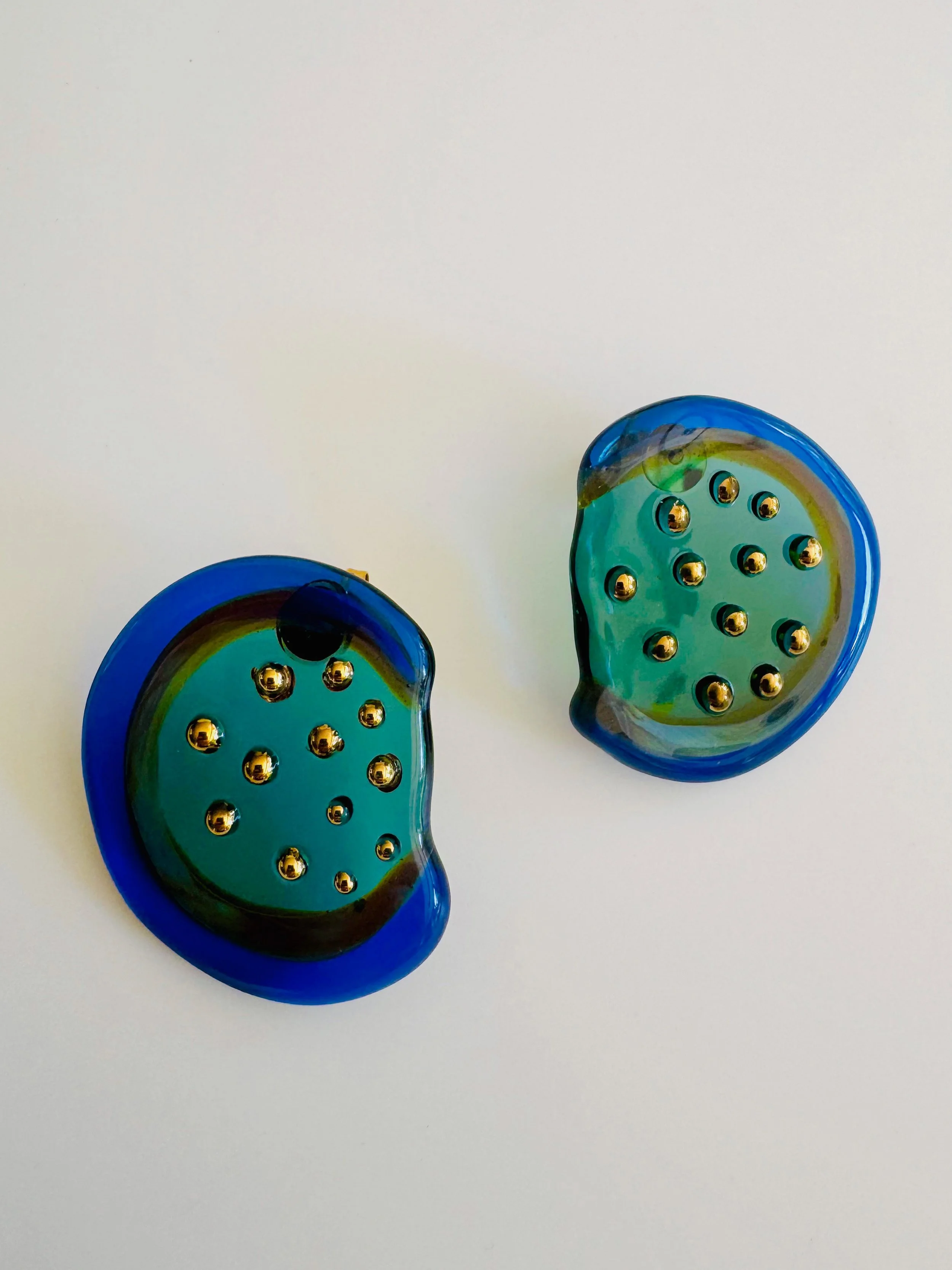
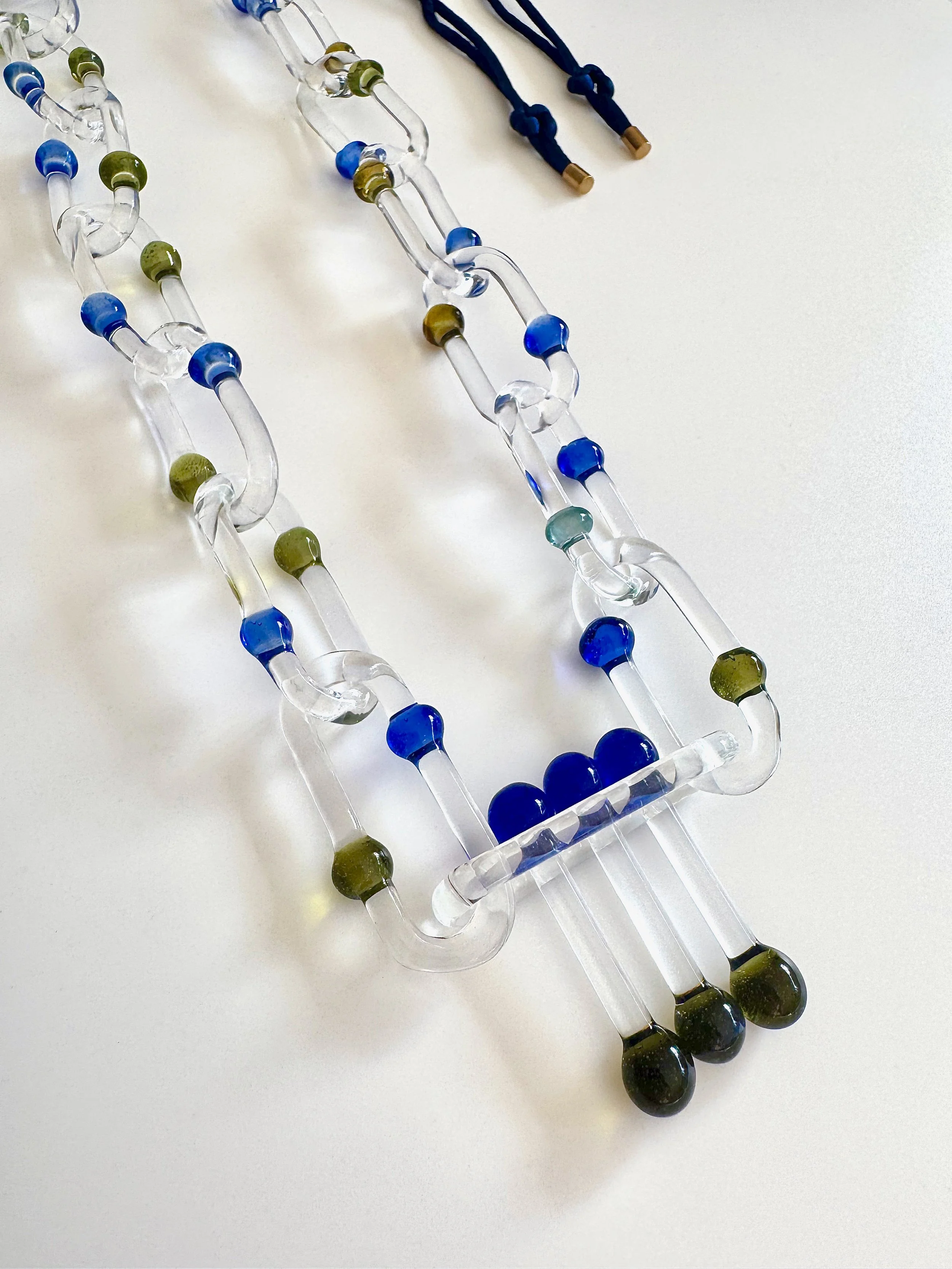
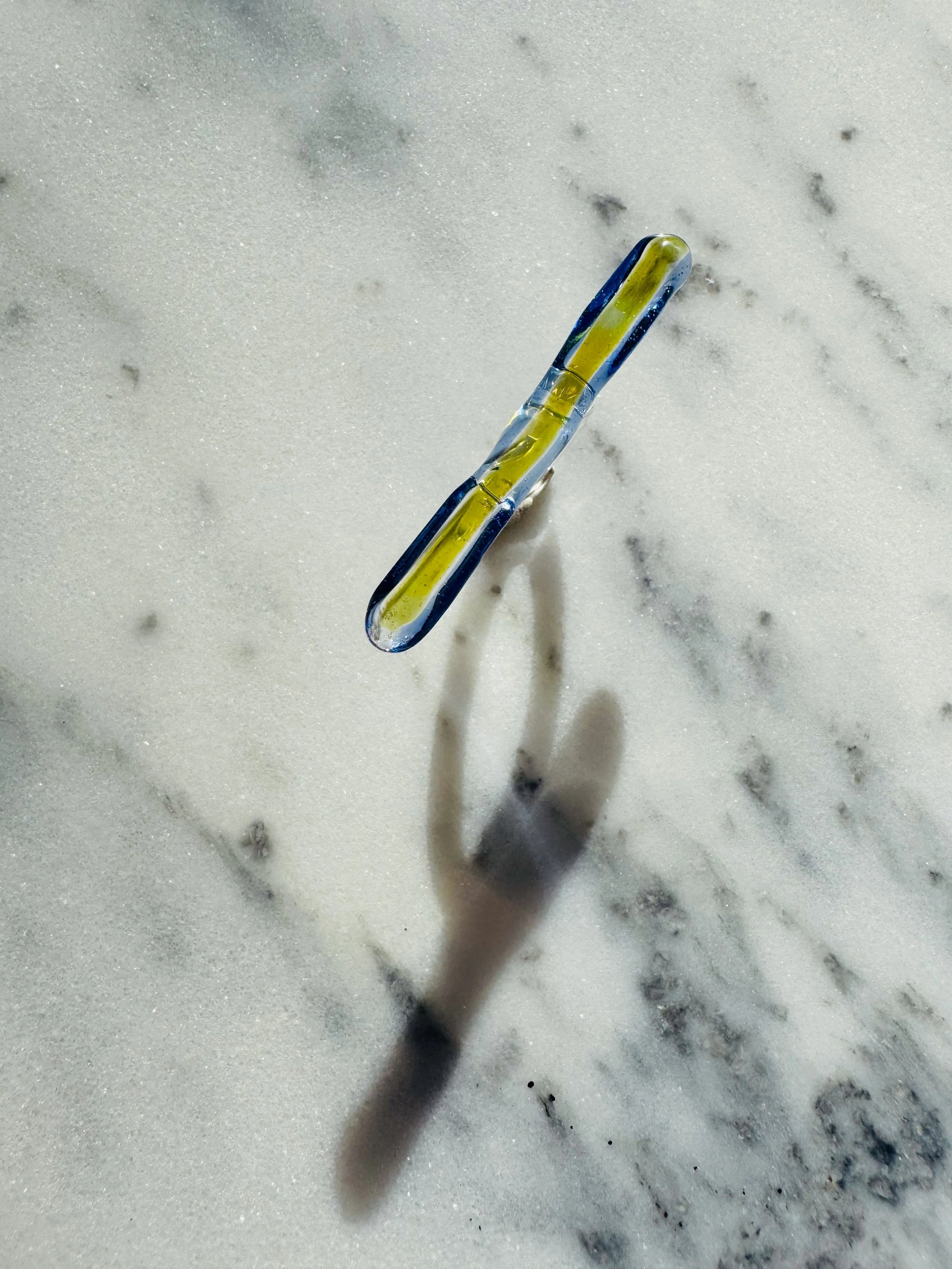
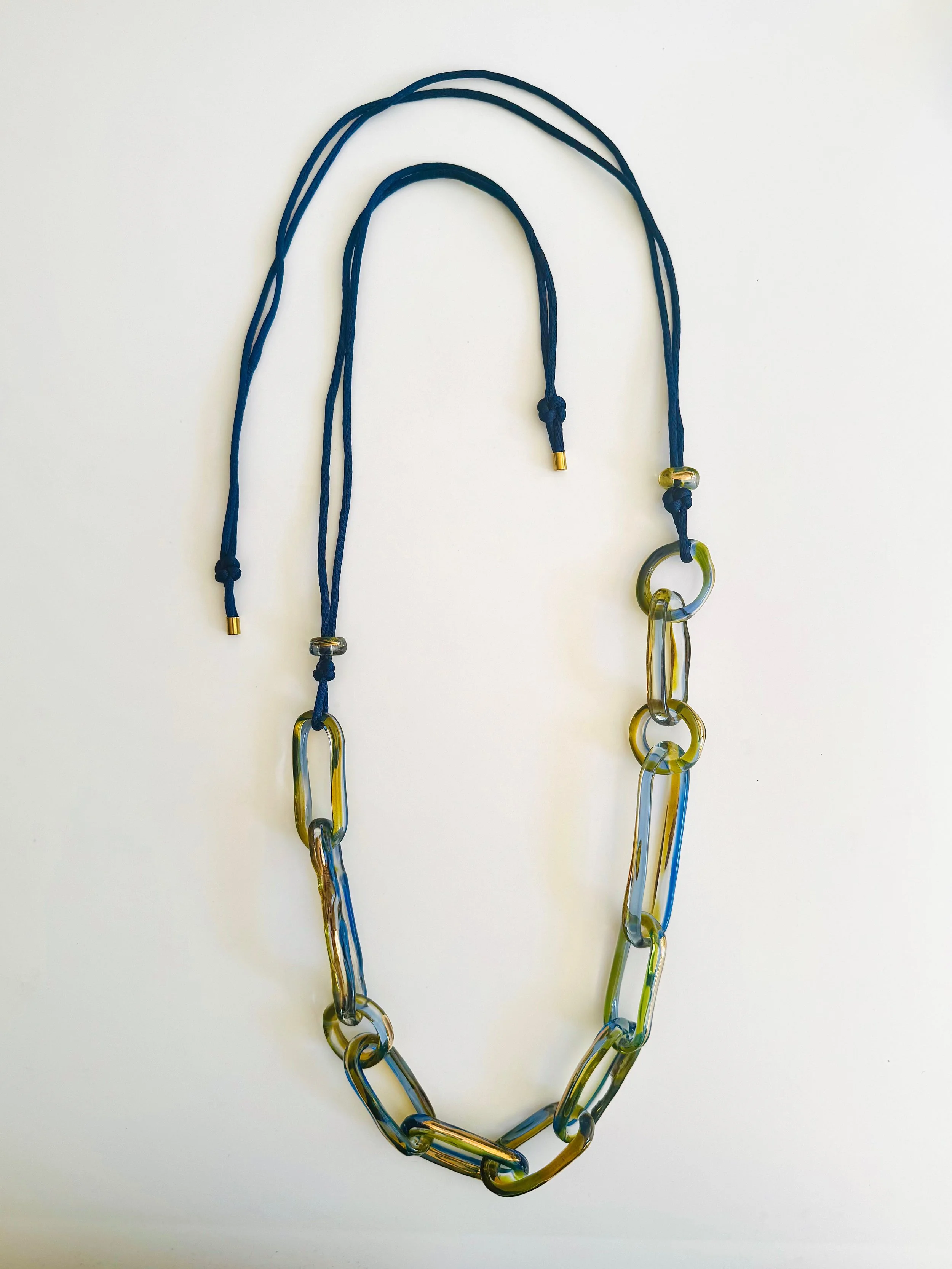
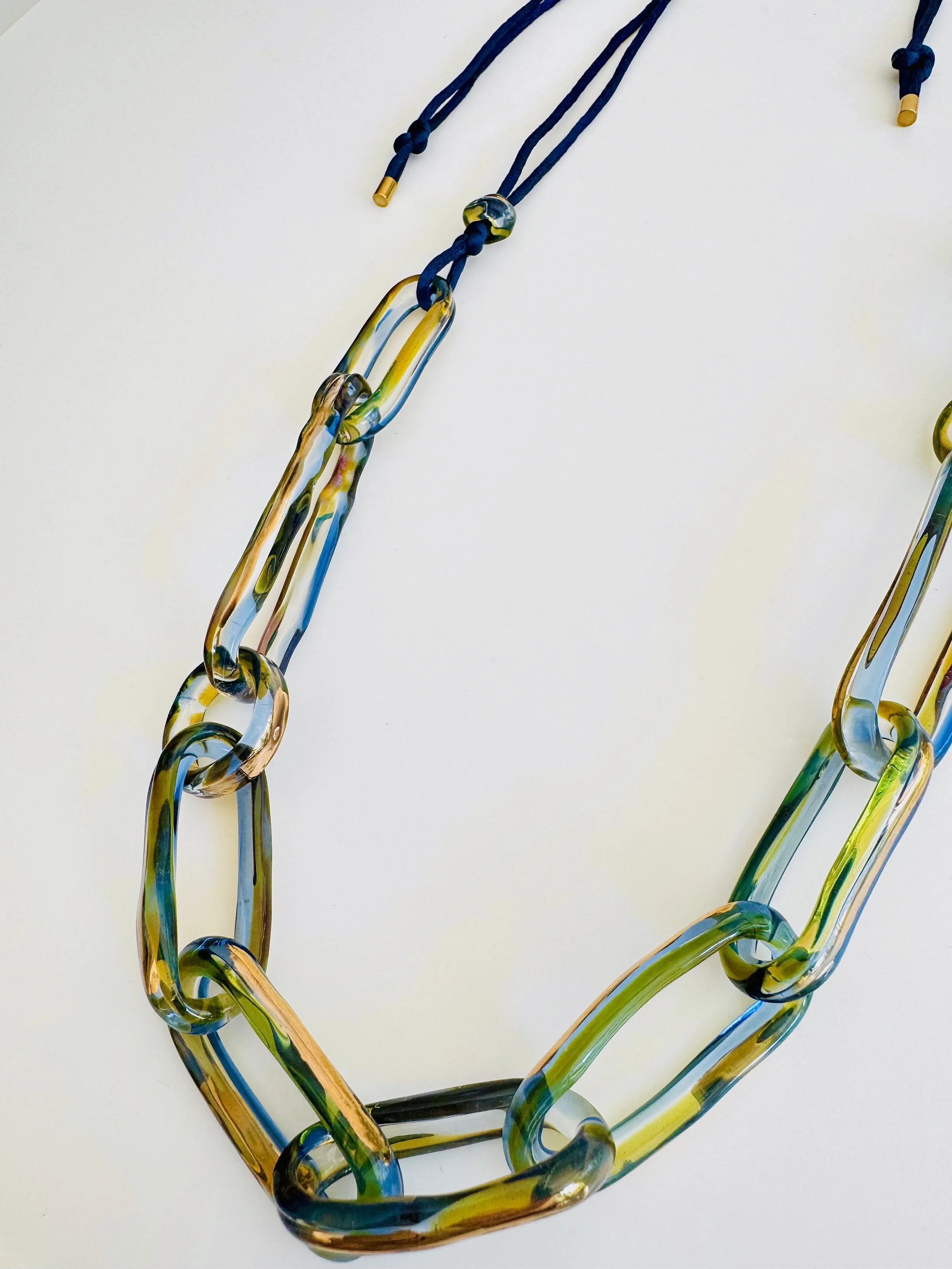
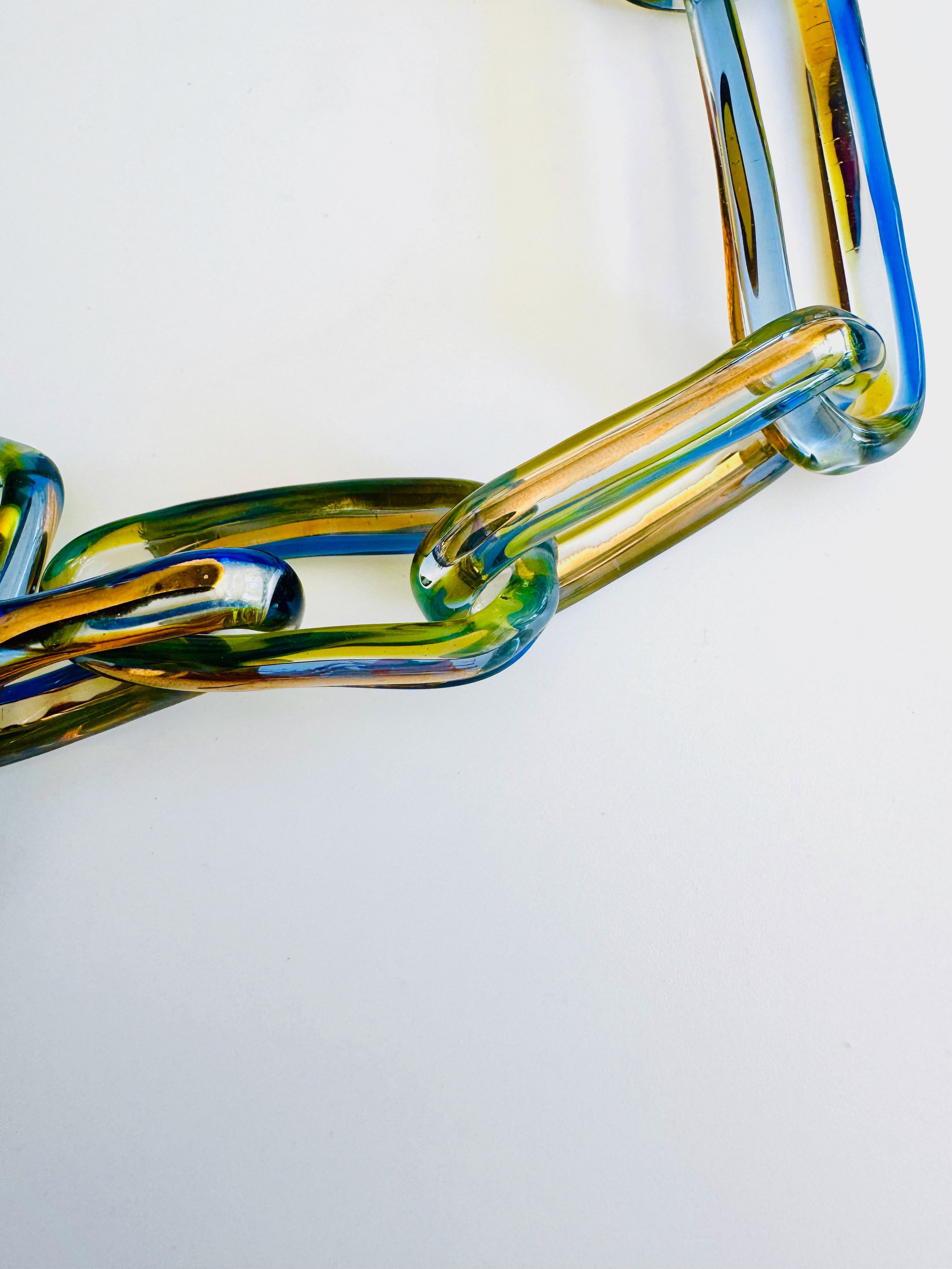
Jukju Glass is a London-based glass studio founded by Burcu Sevgor. Working with borosilicate glass using traditional flameworking techniques, Burcu creates contemporary jewellery and small sculptural objects by. Each piece is individually made in the flame without moulds, making subtle variations an integral part of the finished work. Her work is usually defined by geometric forms, symmetry and precise craftsmanship, often drawing inspiration from everyday objects and structural forms.
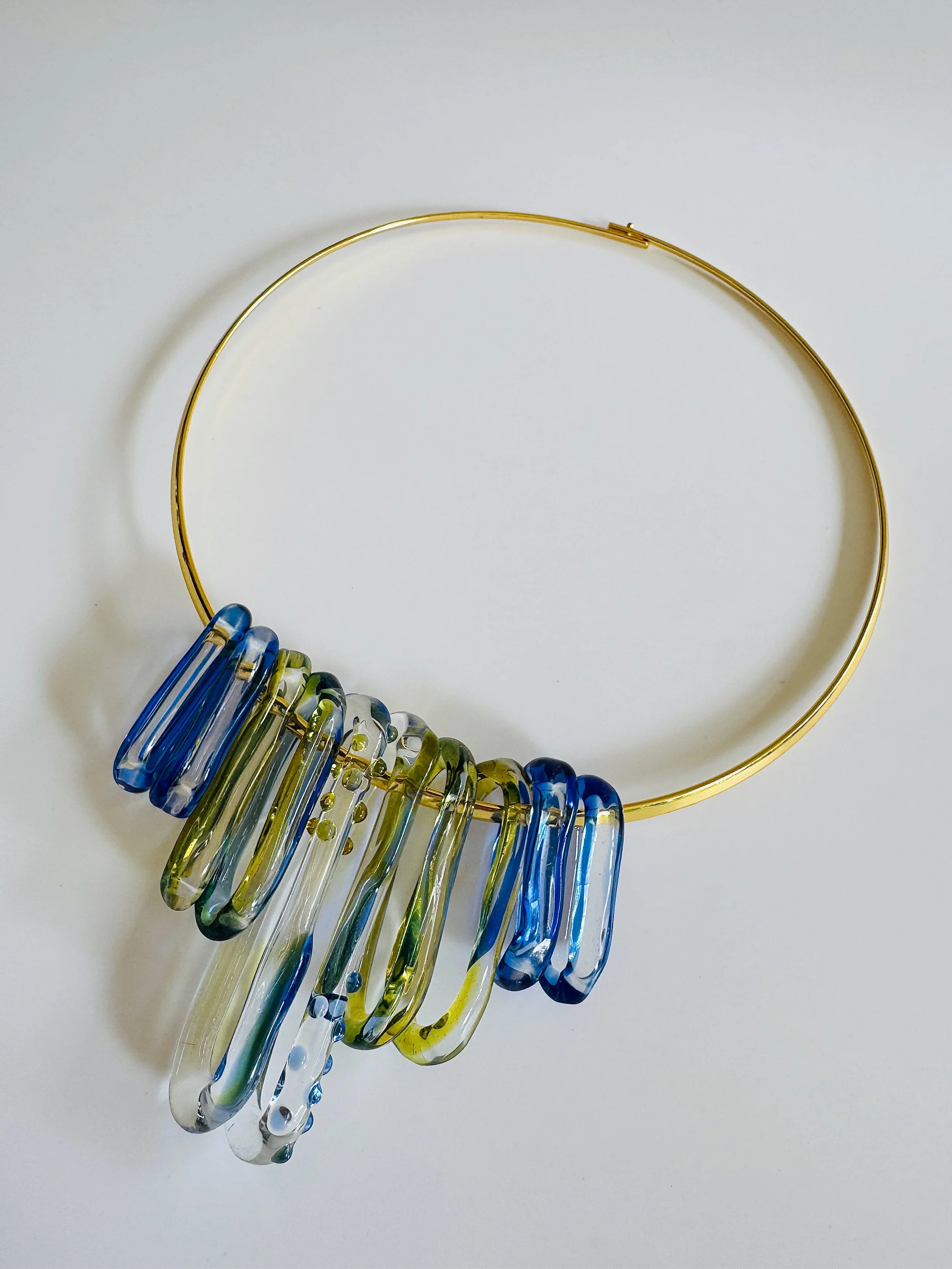
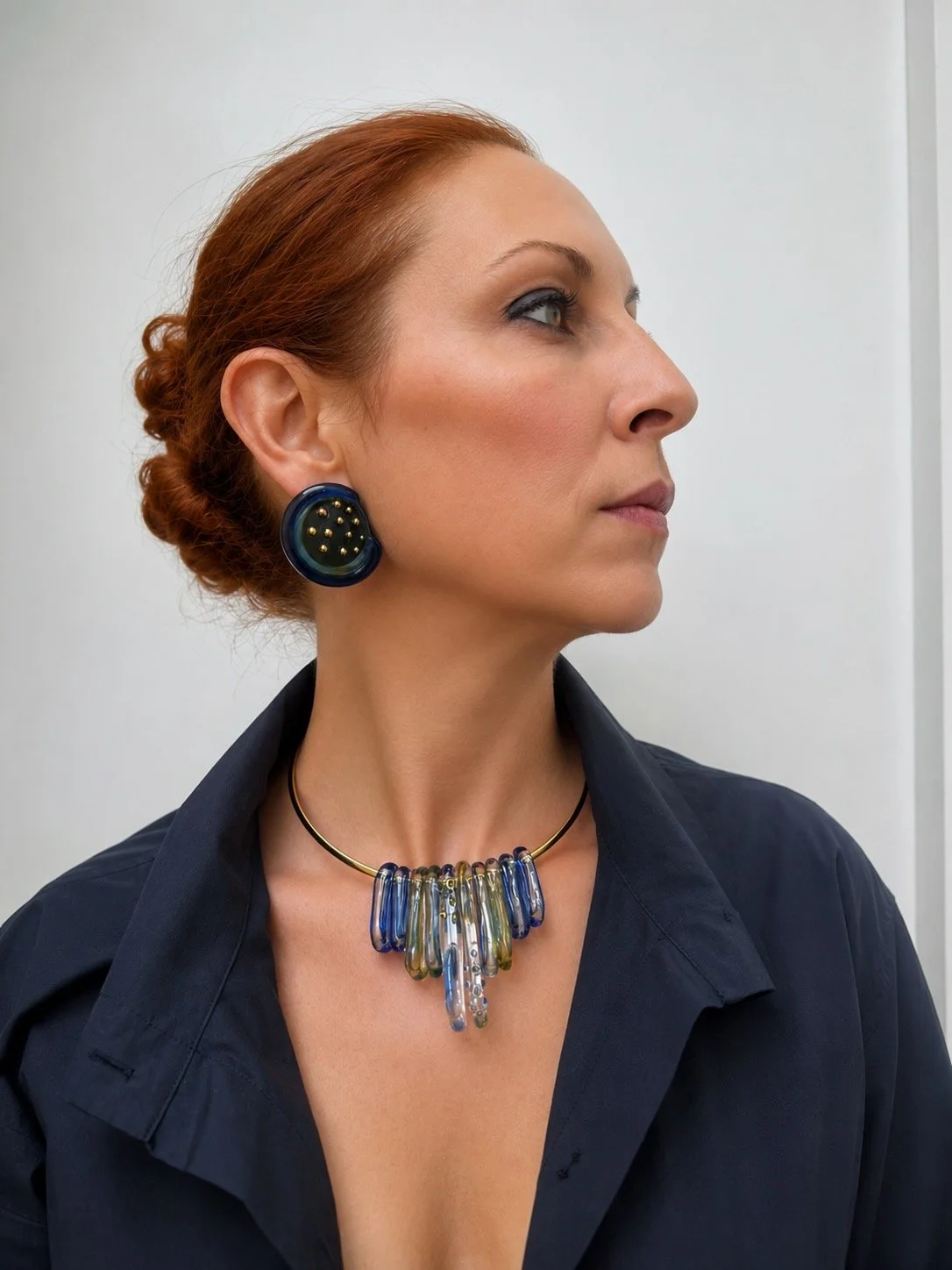
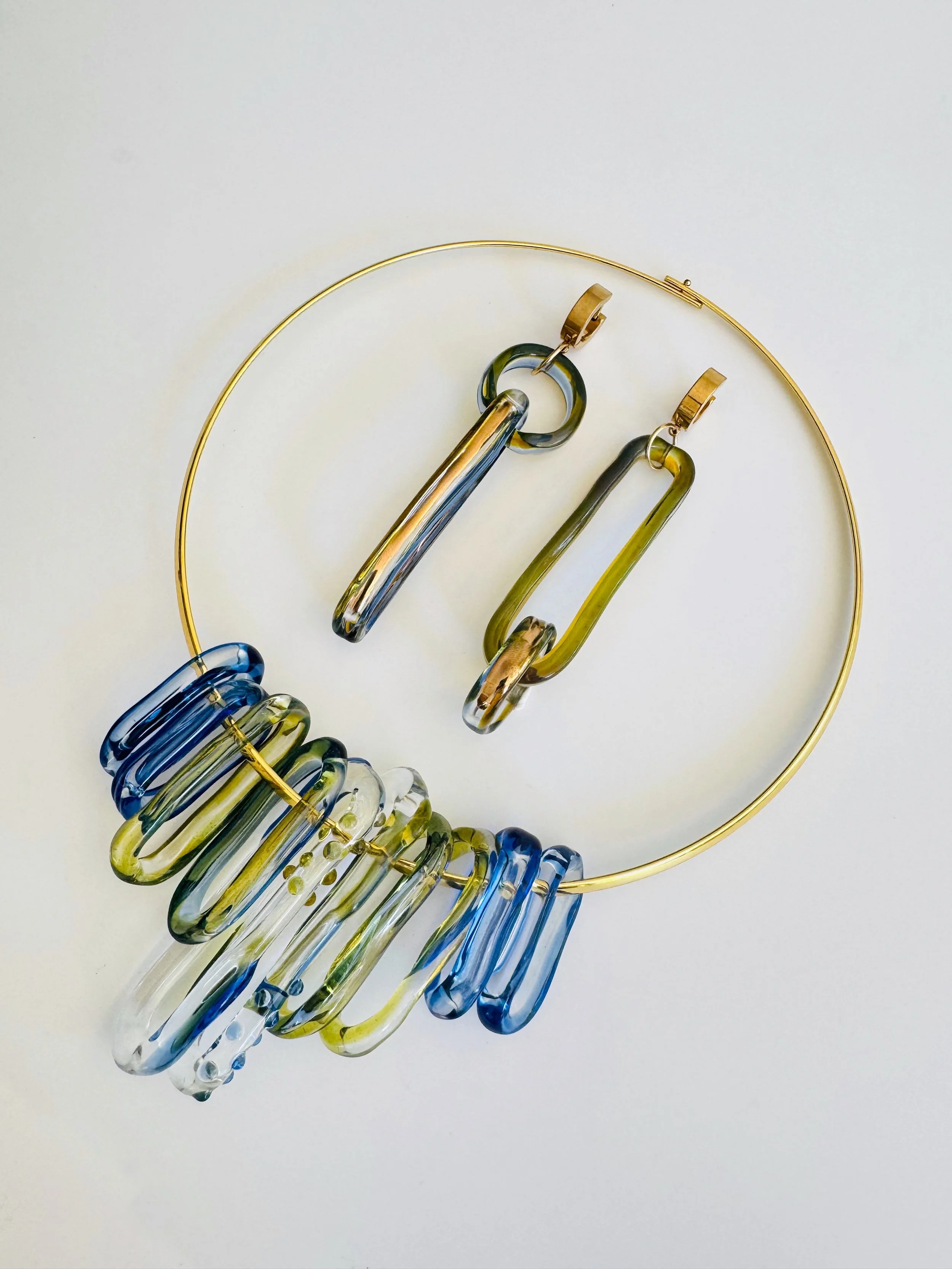
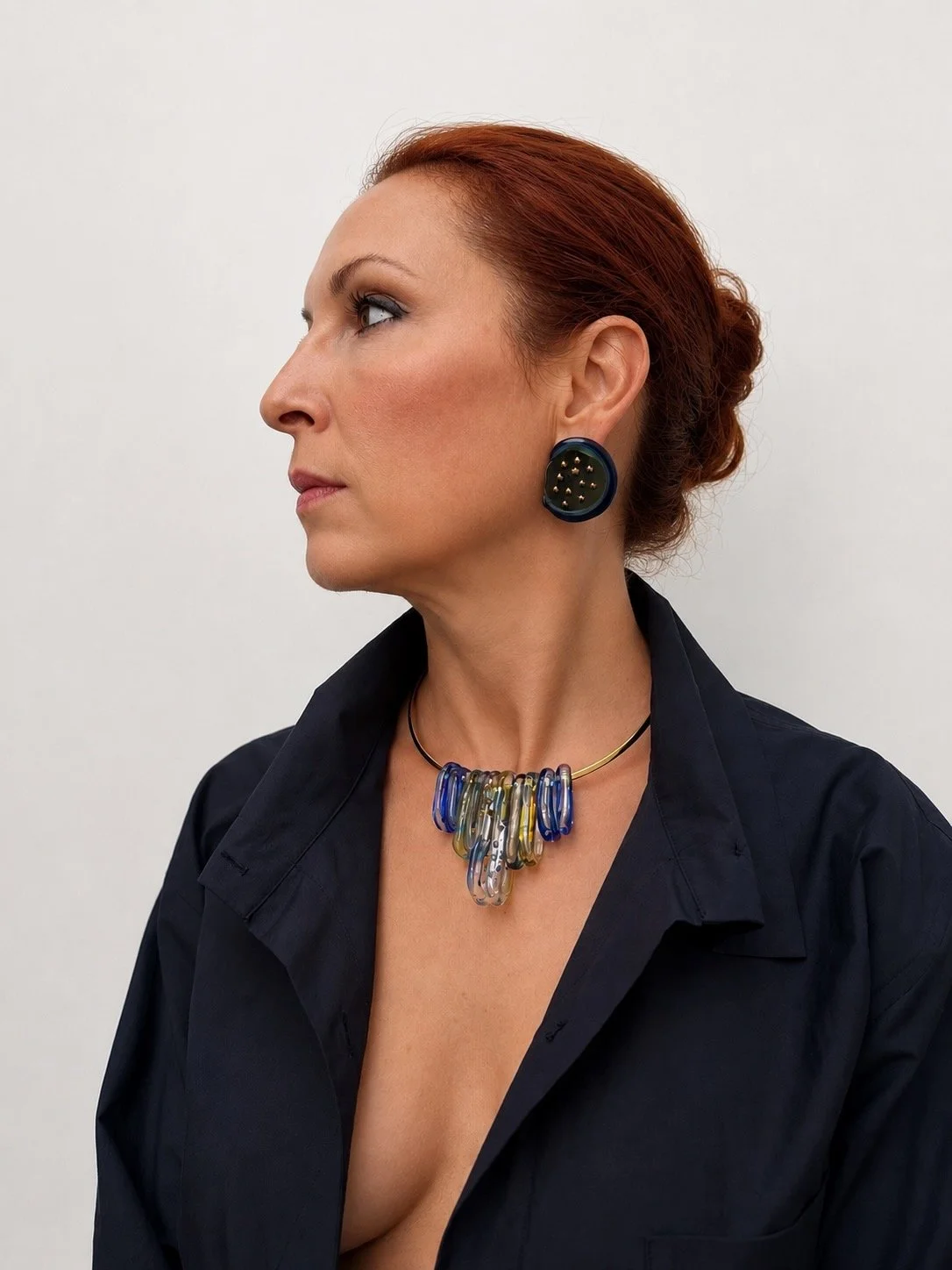
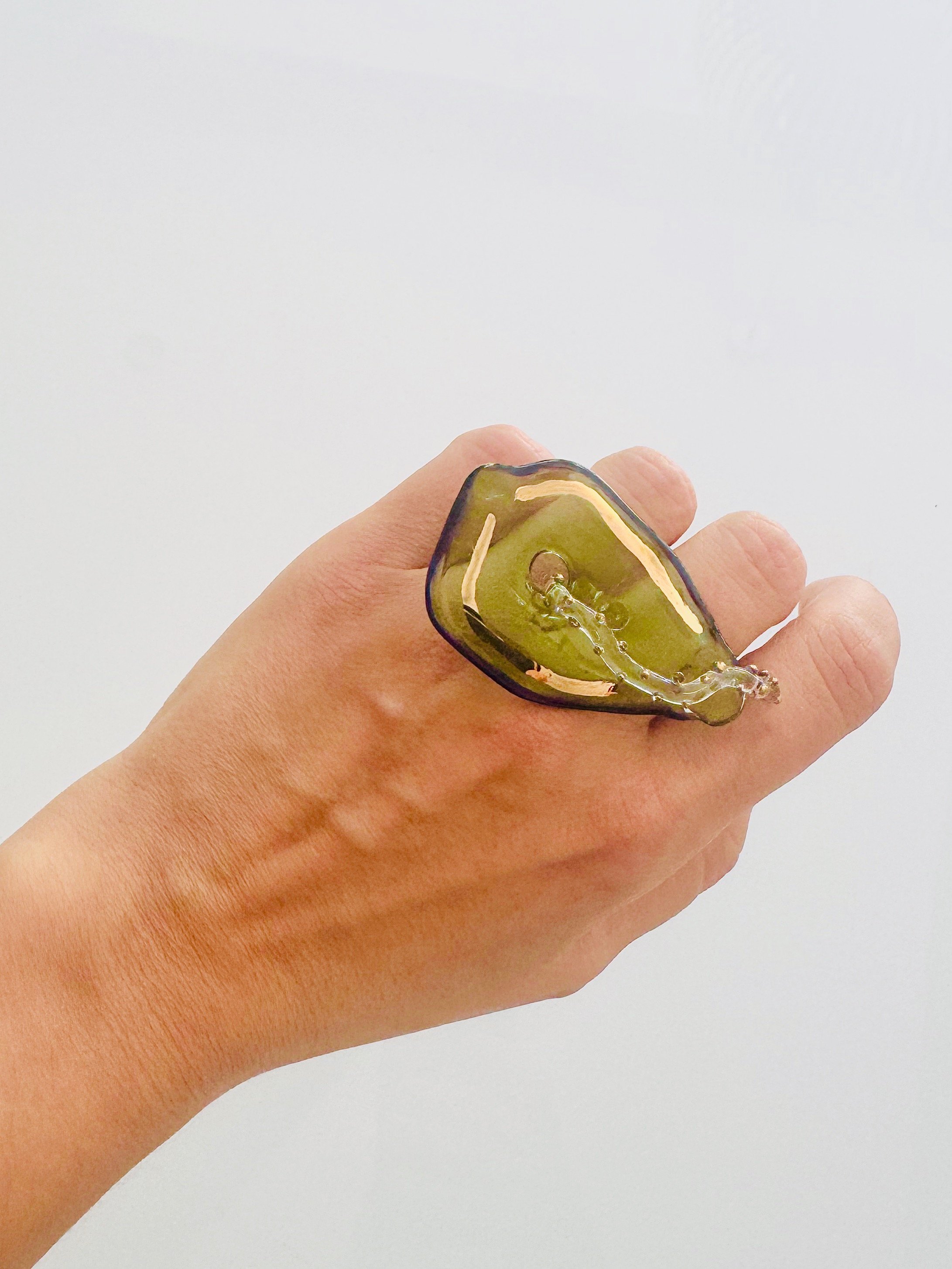
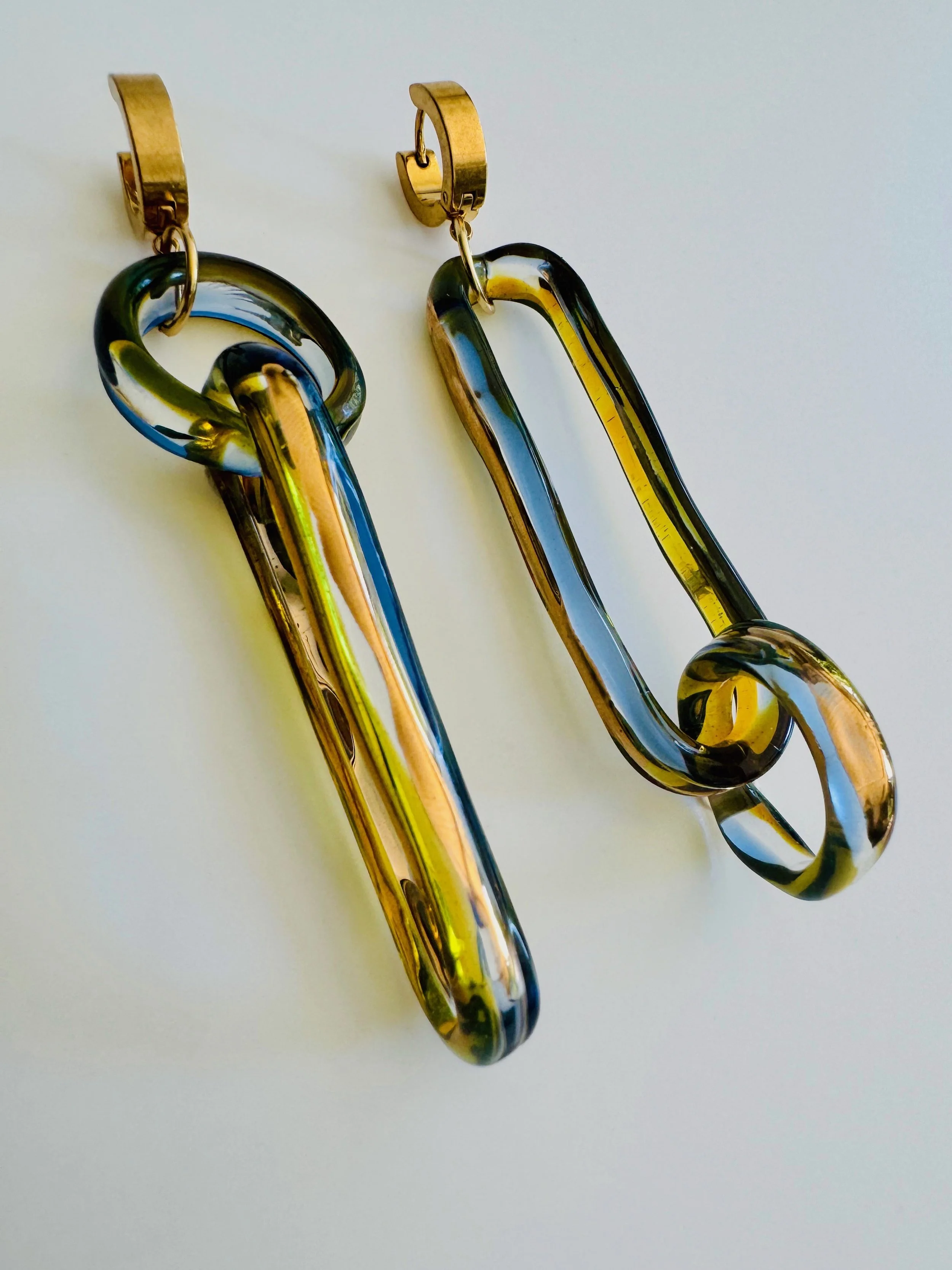
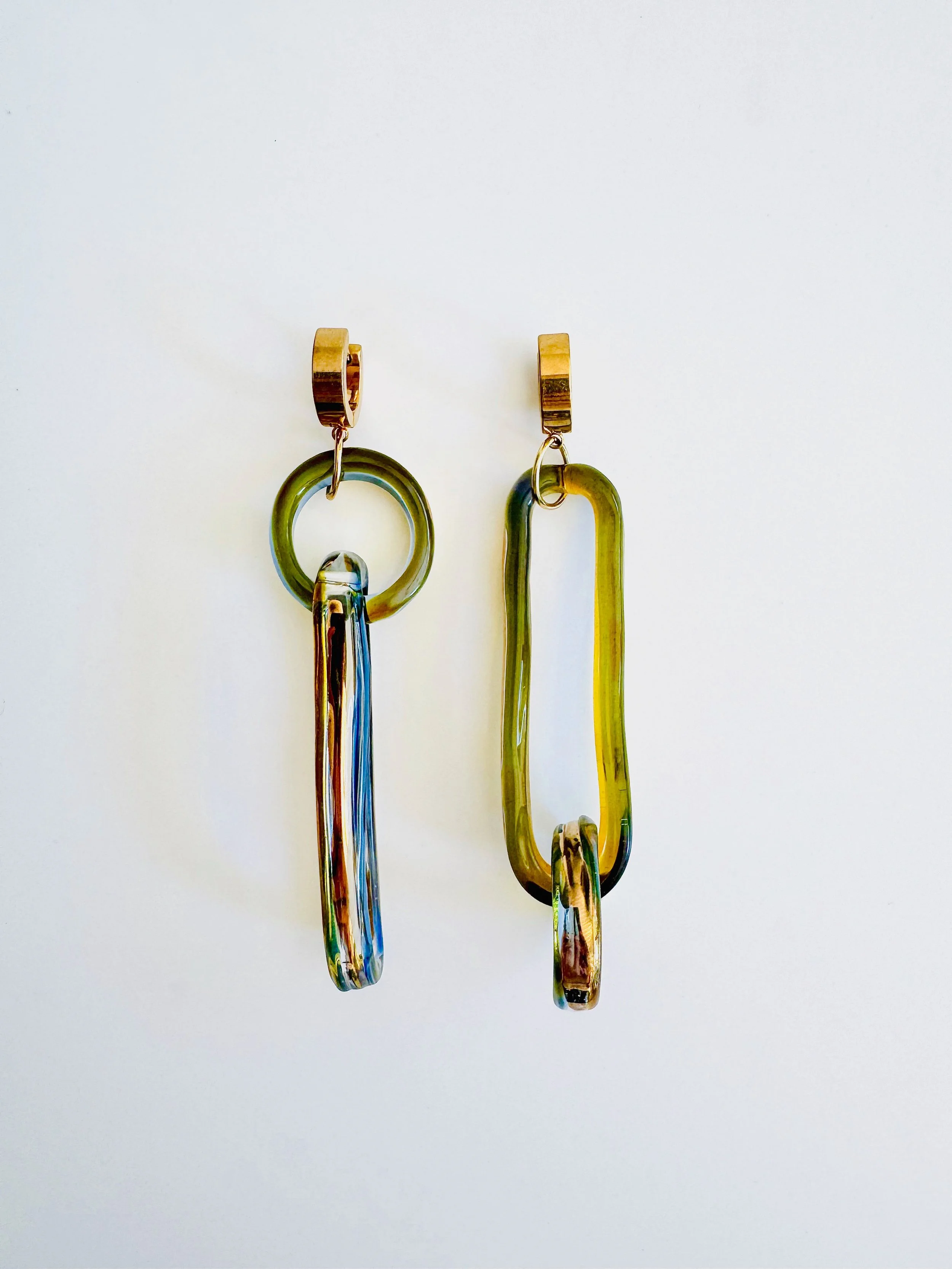
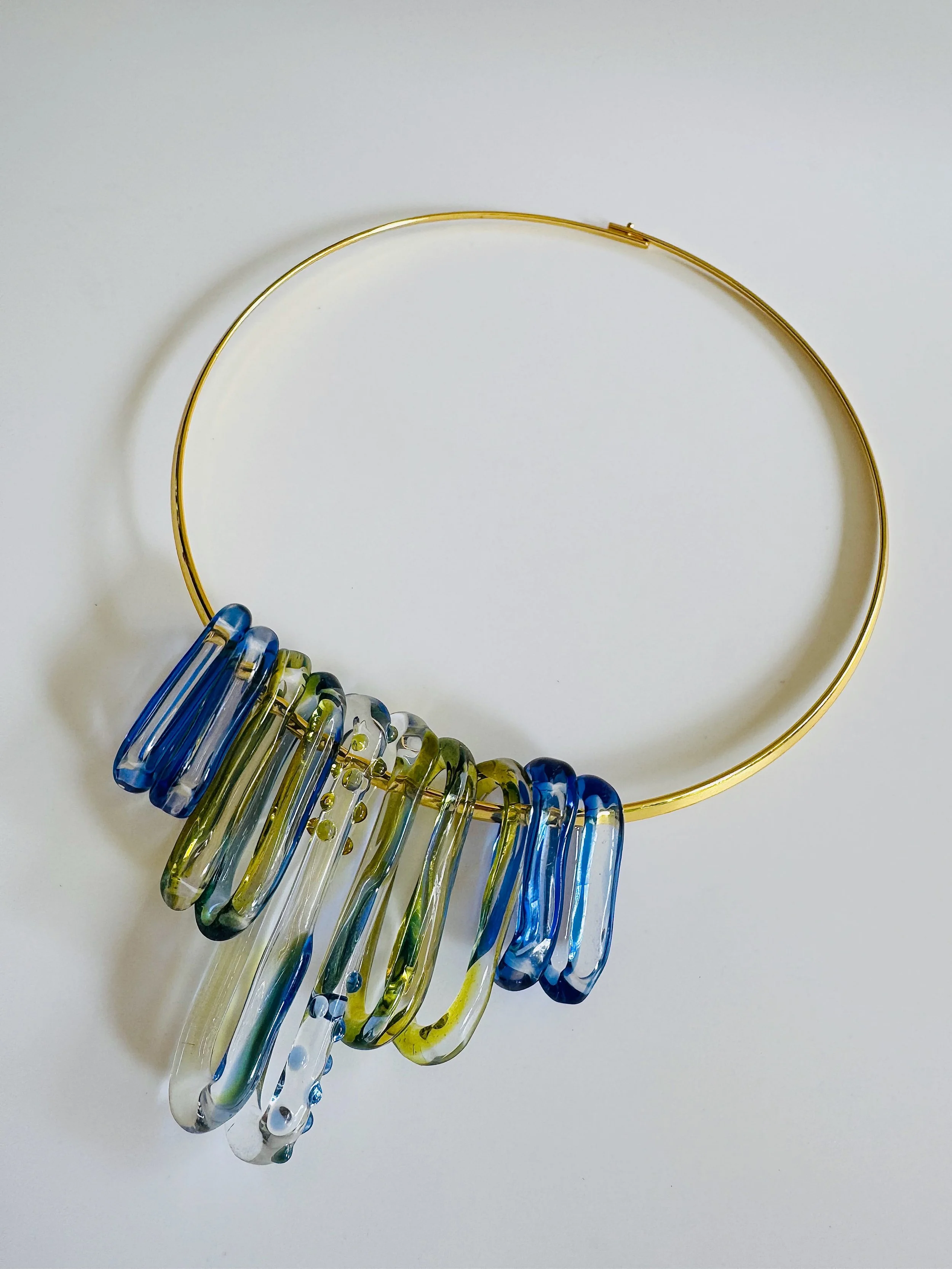
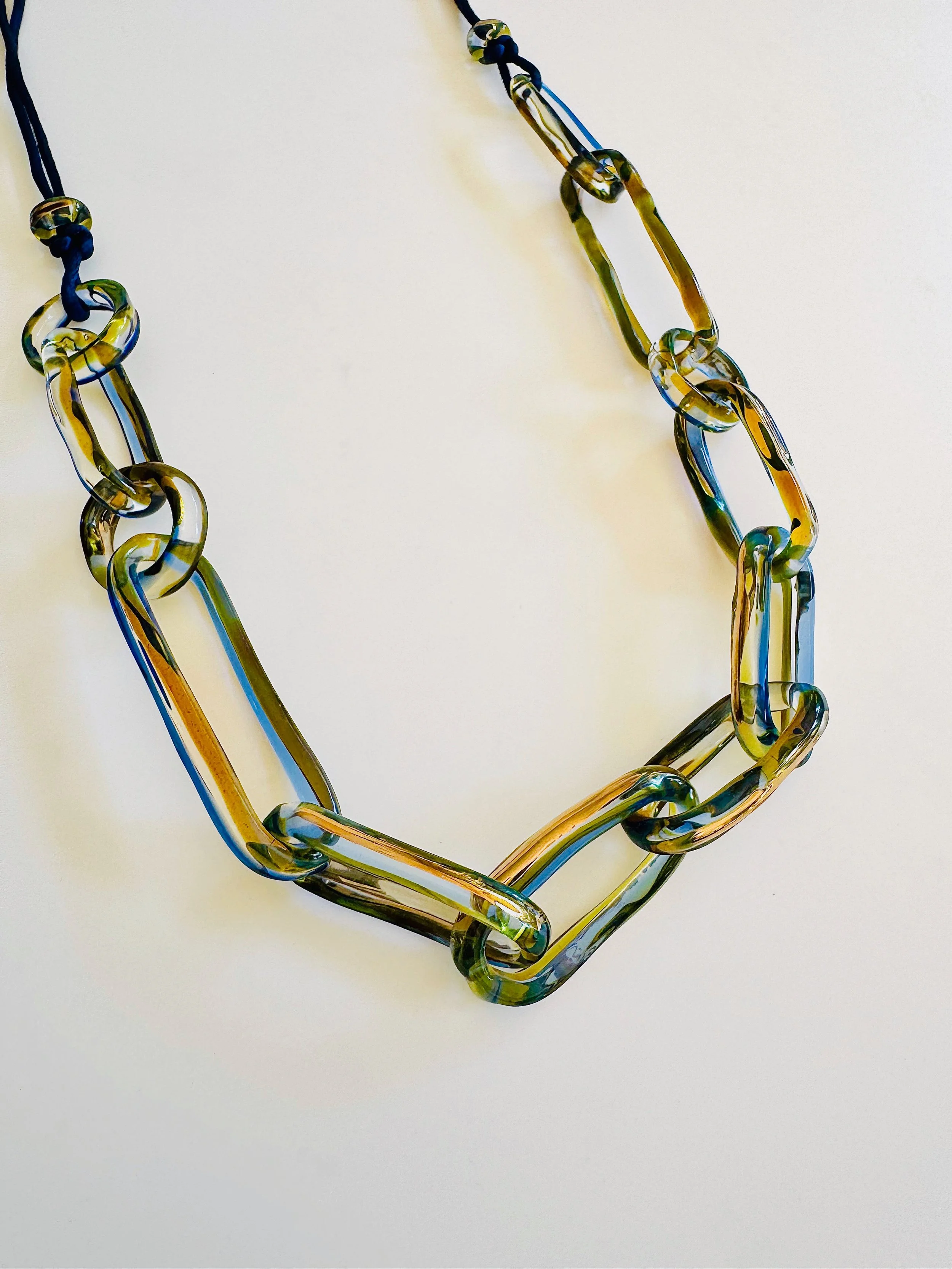
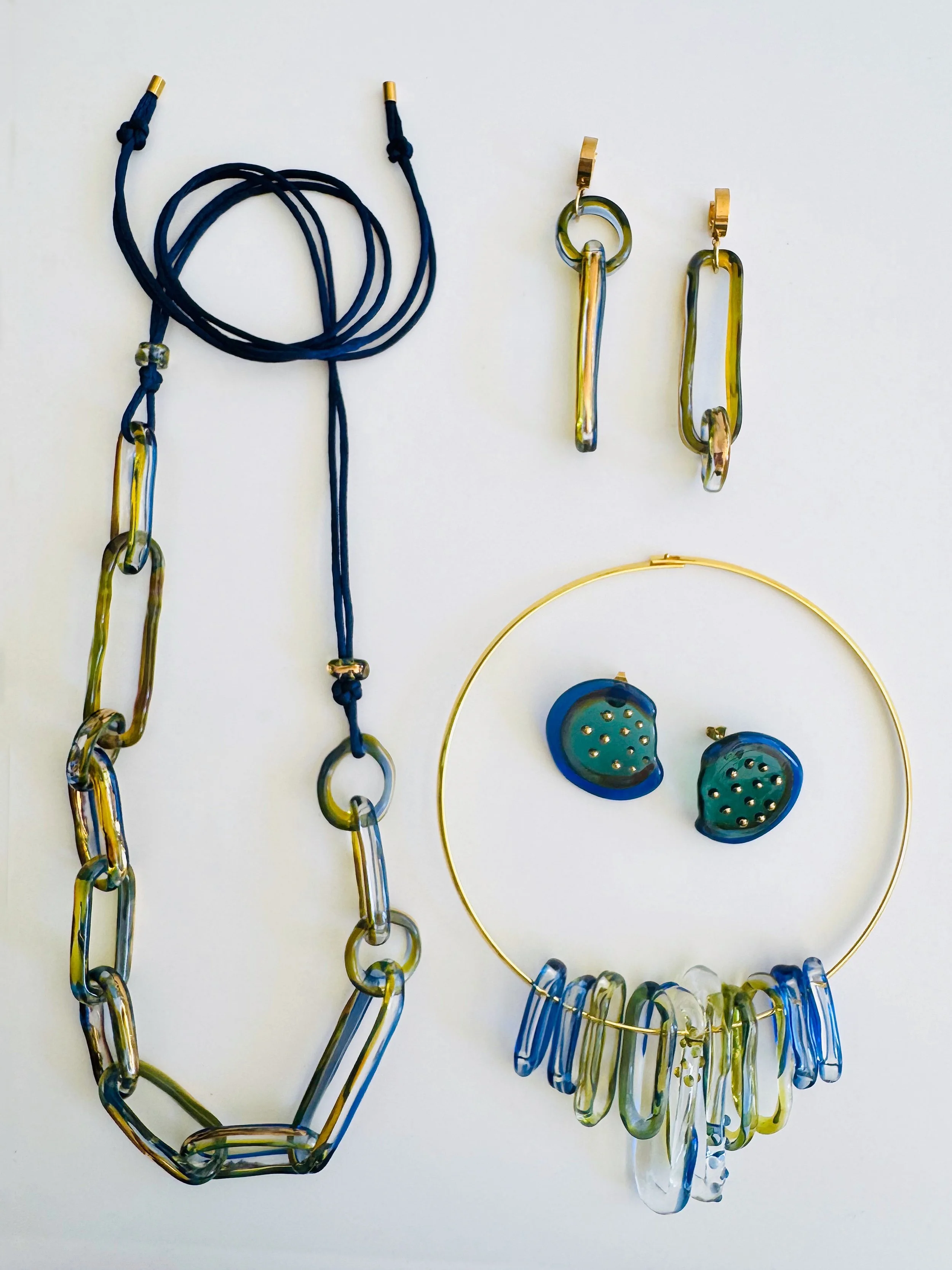
For this collection, she stepped outside her usual way of making, allowing the movement of molten glass and the flame to play a greater role in shaping each piece. Rather than refining every curve into a controlled form, she embraced a more intuitive process, allowing the material itself to influence the final result. Blue and green tones, combined with gold lustre, were used to soften the boundary between glass and metal, creating surfaces that shift with the light and challenge the viewer’s first impression of the material. The collection reflects an ongoing curiosity about how glass can imitate the visual qualities of metal while still retaining its own identity.