
INTERVIEW WITH:
SEREN CHENG
Cluster Residency Shortlisted Artist | Cluster Jewellery | 2026
Your project transforms architectural elements—door handles, buttons, and connectors—into wearable objects. What initially drew you to these overlooked details of the built environment as emotional anchors?
While making this body of work, I went through a period when I often felt anxious in crowded spaces. I realised that I would shift my attention by observing small details on industrial components—the numbers engraved on them, the rust patterns on street signs, or the worn surfaces of places that are frequently touched by hand.
When I looked at them closely, the feeling of breathlessness in the crowd would ease slightly, and the surrounding noise became less overwhelming. I began to feel that there was a connection between myself and these ‘inanimate objects’, which are designed to serve human needs. For example, a button has a rounded shape that naturally invites the hand to press it, while the spring mechanism inside provides a reassuring tactile response.
Through these interactions, I felt a subtle sense of support.
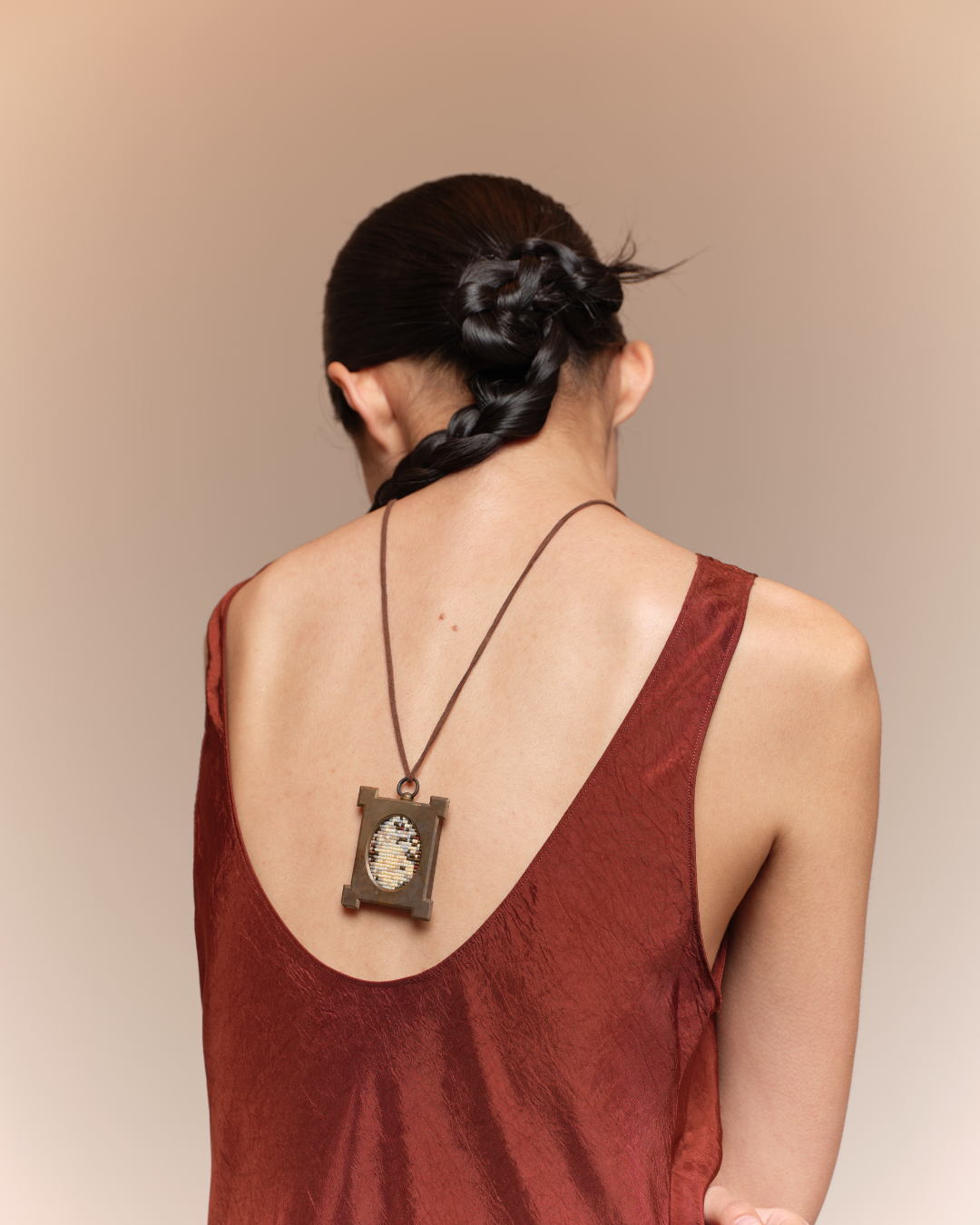
You describe transitional spaces—corridors, doorways, entry points—as places where subtle psychological states occur. How do you translate these fleeting emotions into material form when designing jewellery?
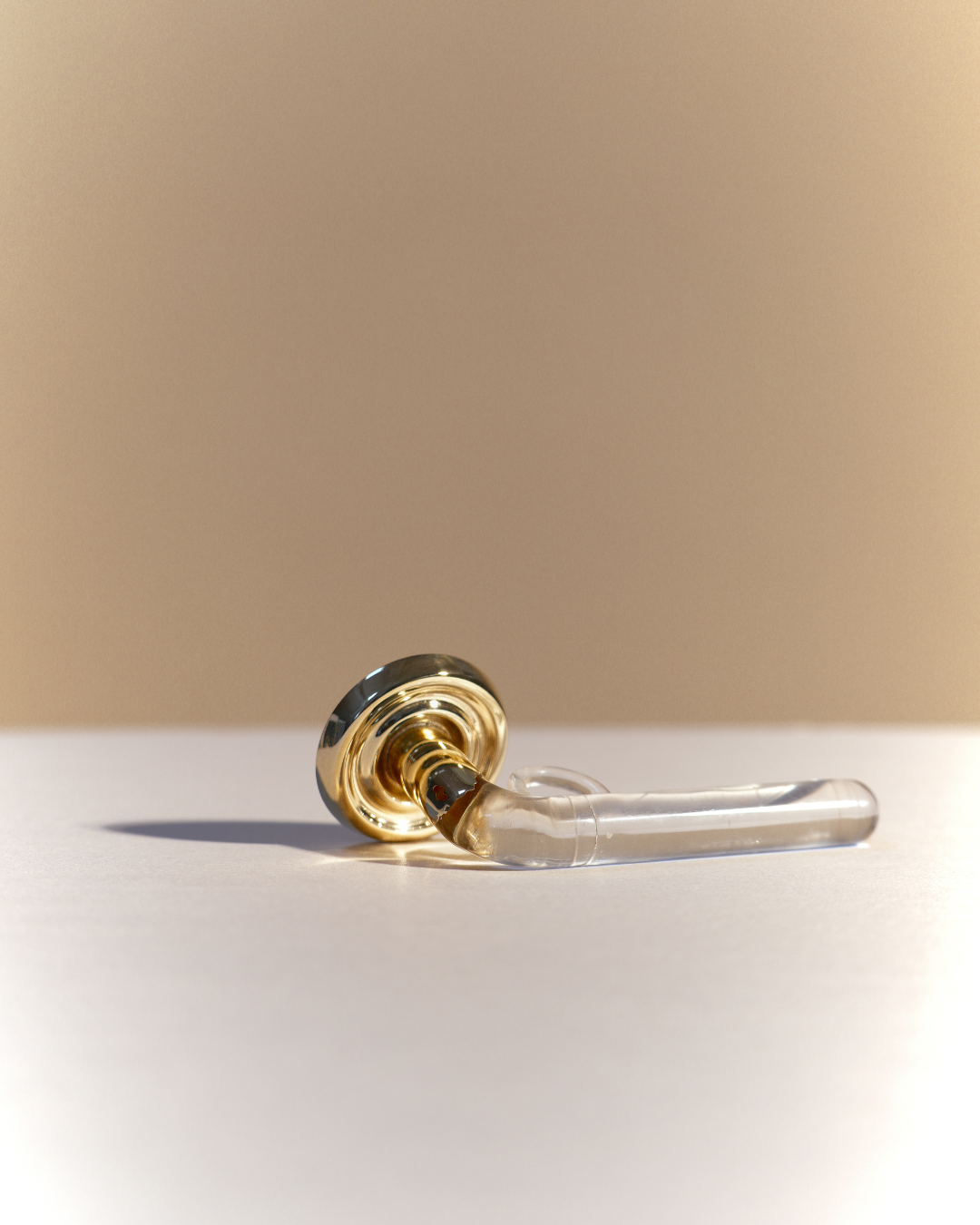
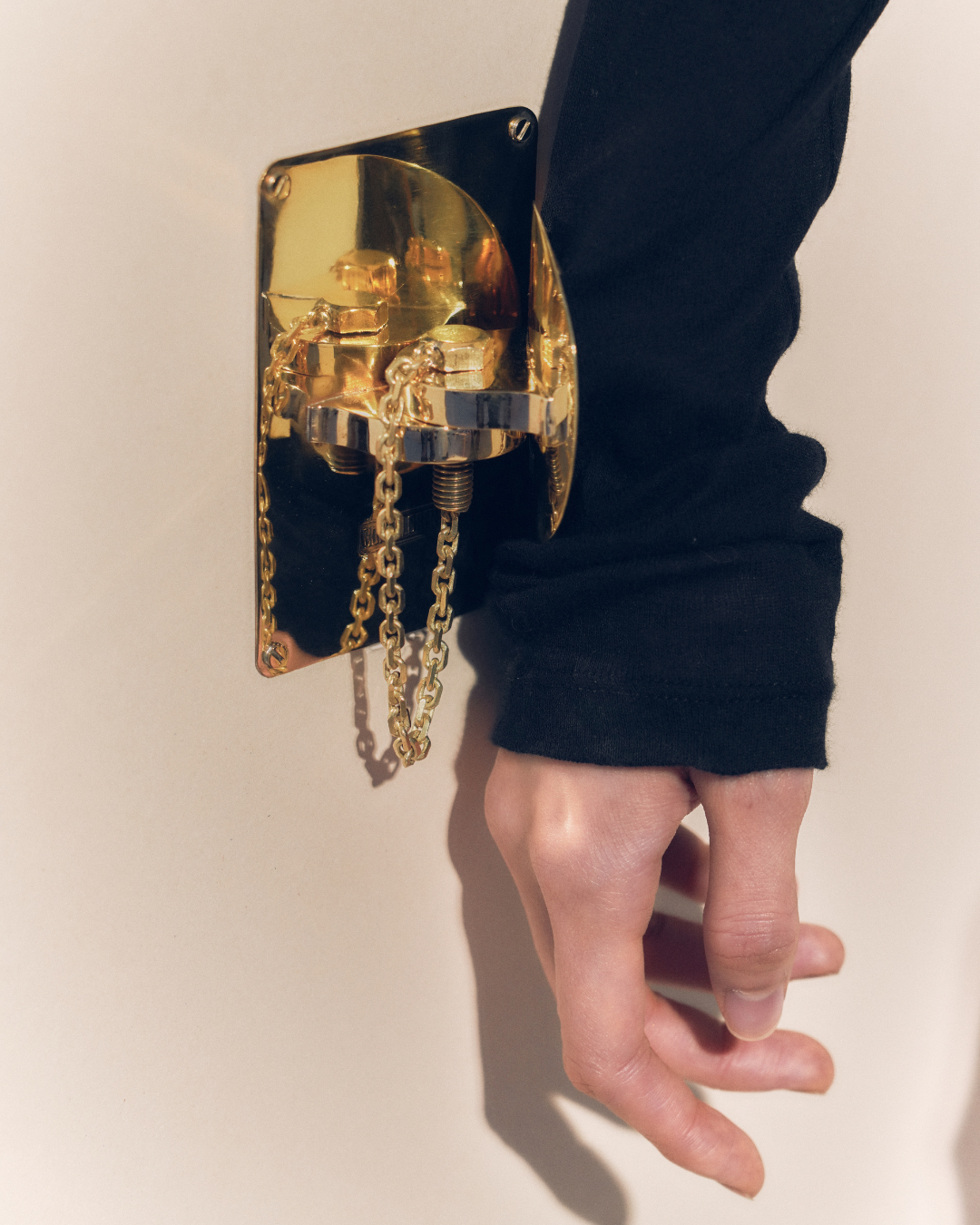
As we move through transitional spaces, sometimes we step into areas of uncertainty, and at other times we pause for a moment in hesitation. In my door-handle piece, the part held by the hand gradually shifts from metal to transparent resin. I use transparency to suggest this sense of the unknown.
In another brooch shaped like a keyhole, I softened the geometric edges of the keyhole, almost like the slight stretch of a soft material just before a finger passes through it, extending the brief moment of unlocking and entering a space. In the pieces Pass and Stay, I try to capture the moment when people actively linger within a space. In that moment, the surrounding design of the space can both disorient us and guide us forward.
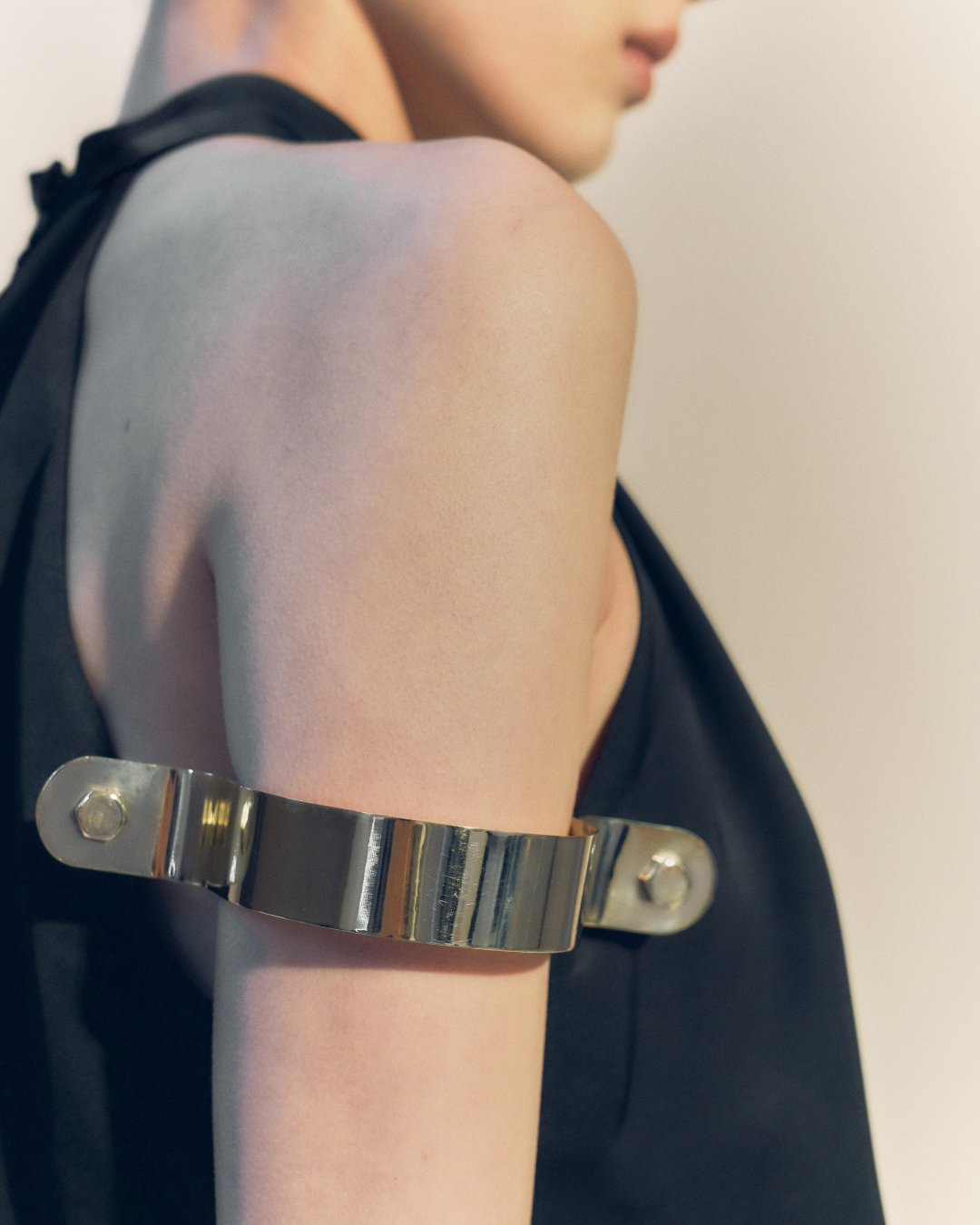
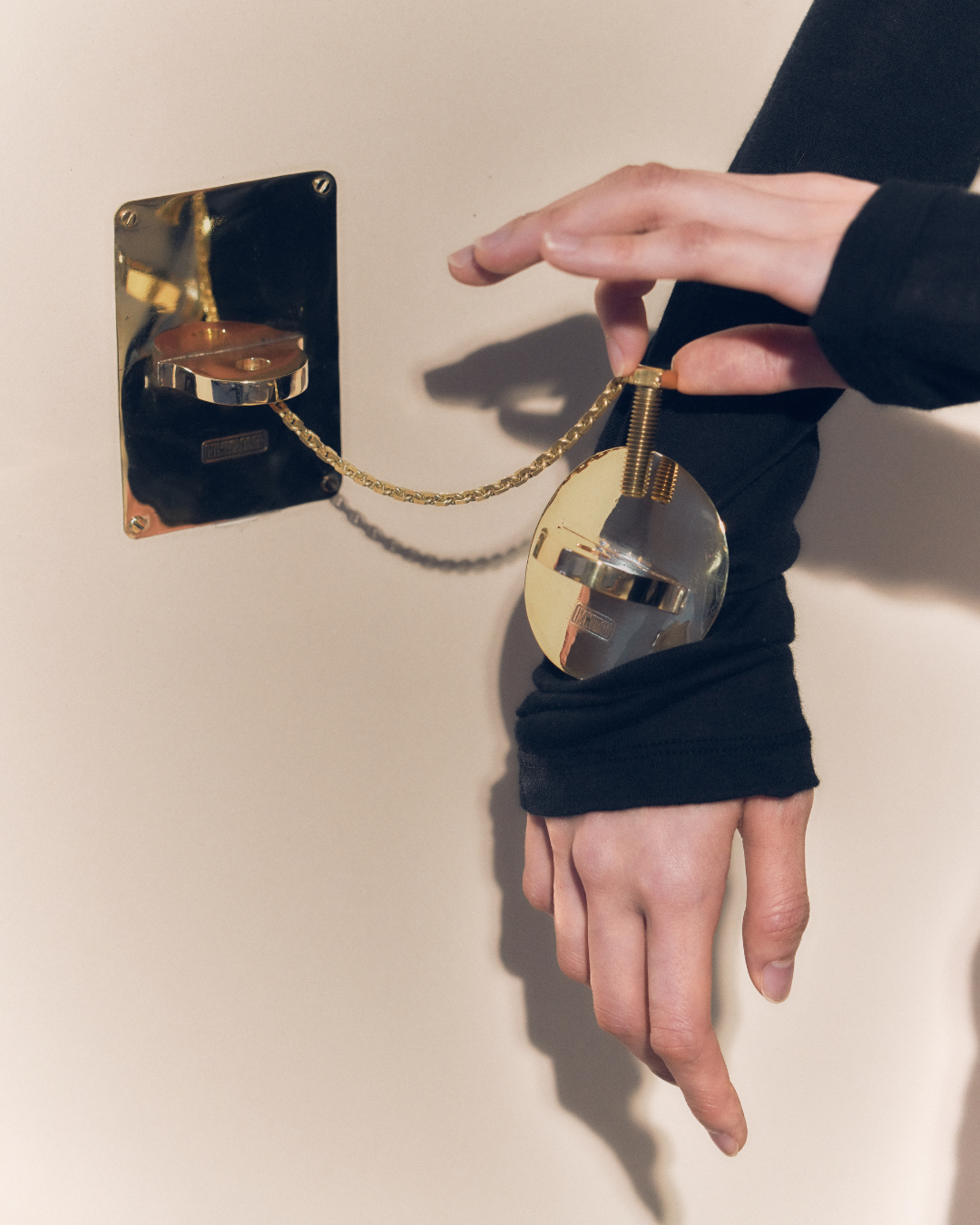
Many of your works seem to sit between jewellery, architecture, and design. How do you see your practice positioned within contemporary jewellery today?
I hope my work can convey small gestures of human care from my own perspective. As long as this intention remains, the forms it takes can vary widely, from interactive jewellery that engages bodily experience to handcrafted objects that express the ‘emotion’ and agency of materials.
I see jewellery as a very intimate scale where people can directly experience touch, emotion, memory, and structure. Because of this intimacy, my work sometimes draws on elements from architecture or everyday design, while still remaining grounded in jewellery.
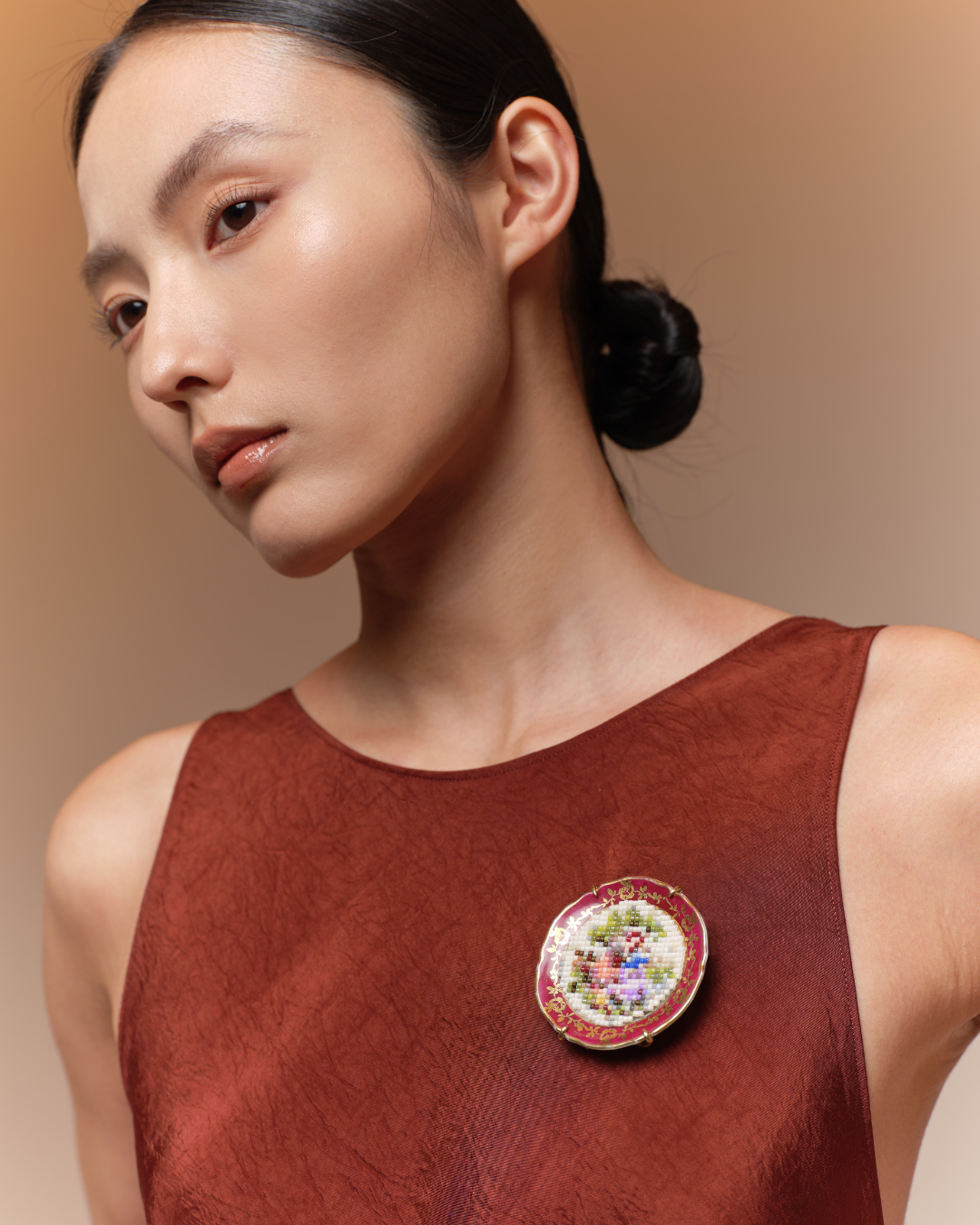
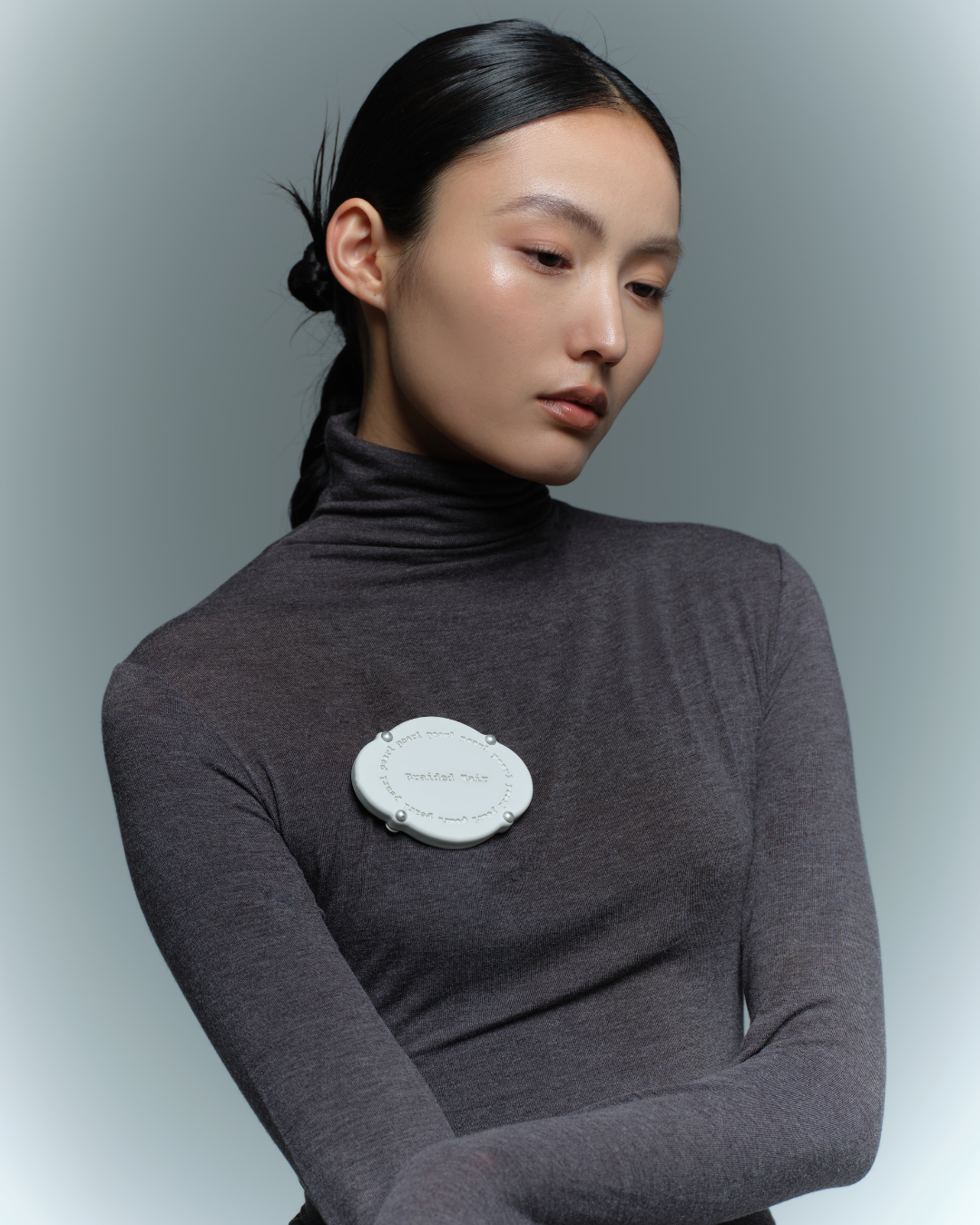
Your work also reflects on attention and reduction in a world of information overload. How might the residency give you space to expand this idea into a larger body of work?
The residency would give me the time and space to develop this project into several small groups of works that explore the idea of reduction in different ways.
One group could explore moments of confusion created by information overload, for example pairing the outline of one historical jewellery piece with the description of another, creating a slight misalignment between form and text.
Another group could focus on the gradual reduction of textual information, where descriptions become shorter and eventually disappear.
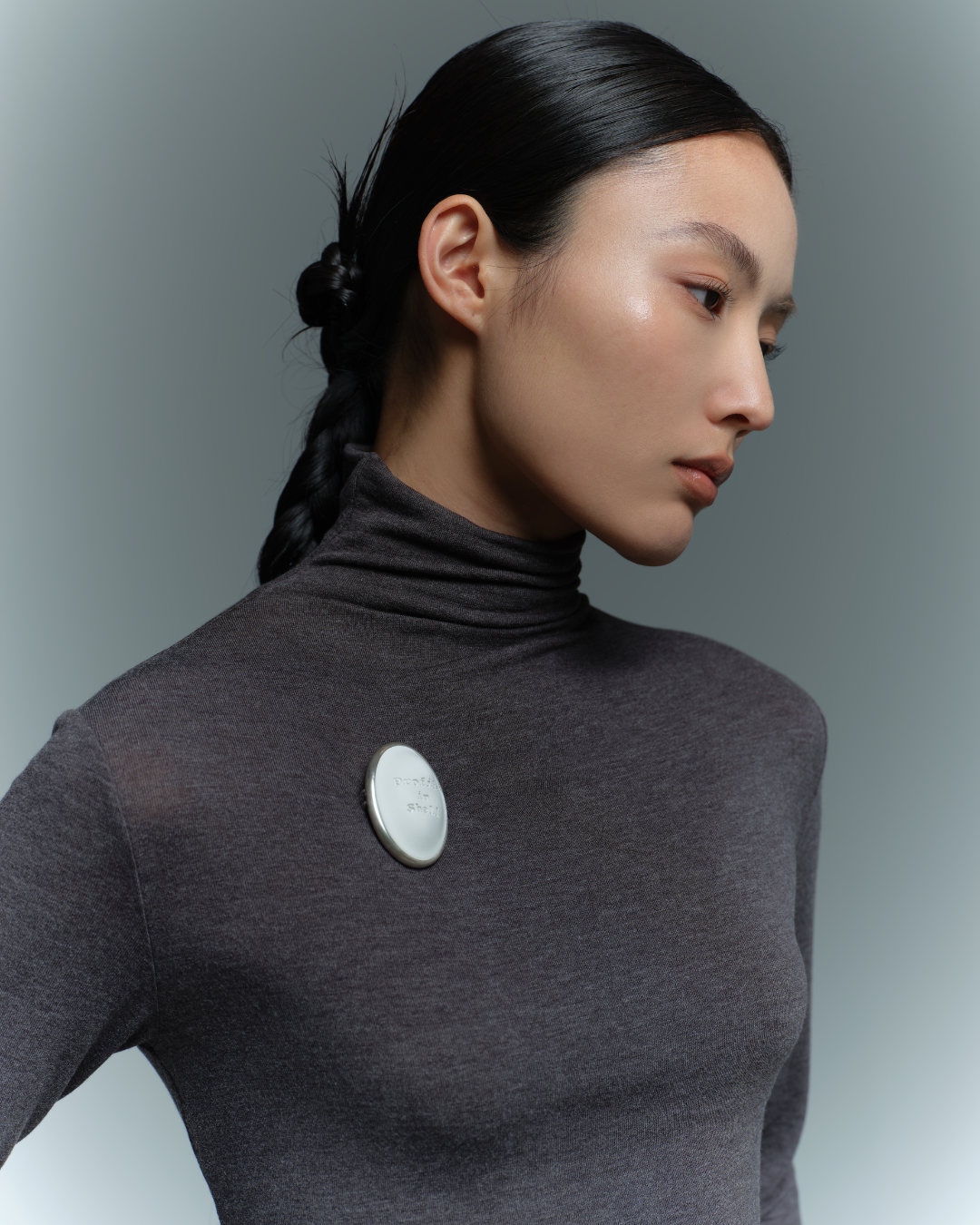
A final group could shift the focus to scale. Each work would be a small geometric cement block scaled to correspond with different jewellery types such as rings, brooches, or necklaces. These blocks function almost like tablets or plaques carrying short textual fragments, while remaining unwearable objects. Together they begin to resemble archive fragments, almost like ghosts of jewellery.
During the residency I would also like to further refine the cement mixture and how the cement elements connect with metal, and benefit from technical guidance in developing this material process.
What aspects of the residency programme stood out to you as particularly relevant for your current artistic development?
What stood out to me is the level of freedom the residency offers. It doesn’t seem to impose strict limits on either the duration of the project or the direction of technical research, which makes it a supportive environment for experimentation.
I was also particularly interested in the mentoring aspect of the programme and the opportunity to exchange ideas with professionals in the field, which I think would be very valuable at this stage of my practice.
Finally, the location in East London feels very relevant. It’s a very active creative area with many studios, material suppliers and artist communities nearby, which makes it a stimulating environment for developing new work.
Thank you for reading,
Cluster Team.