INTERVIEW WITH:
JOANNA GRIGORIOU
Cluster Residency Winner | Cluster Jewellery | 2026
Material & Fragility
Many of your works explore fragility through unconventional materials—paper, gauze, organic matter, and rattan. What draws you to materials that change, age, or even deteriorate over time?
I am drawn to the impermanence of the artwork and the haptic qualities of these materials. The challenge I face when I intervene with their properties, and they take on new identities. These materials reflect the nature of our very own existence as the artwork changes, the result of inevitable decay. The piece is enriched by the time and attention I have paid to it giving meaning and importance to its ephemeral nature. Using non-precious materials gives me a sense of freedom to work on a large scale whilst I enjoy repurposing them.
Body & Vulnerability
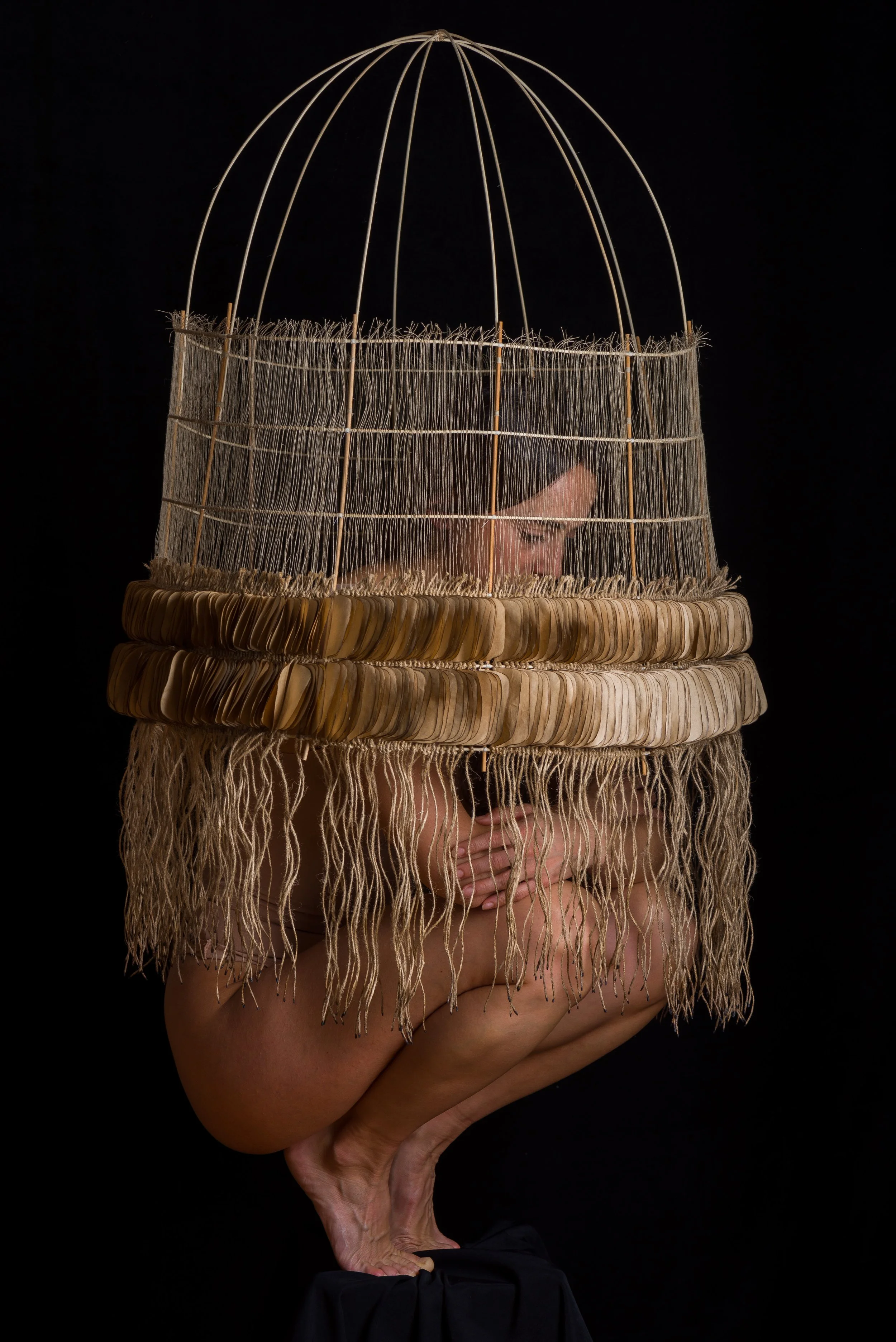
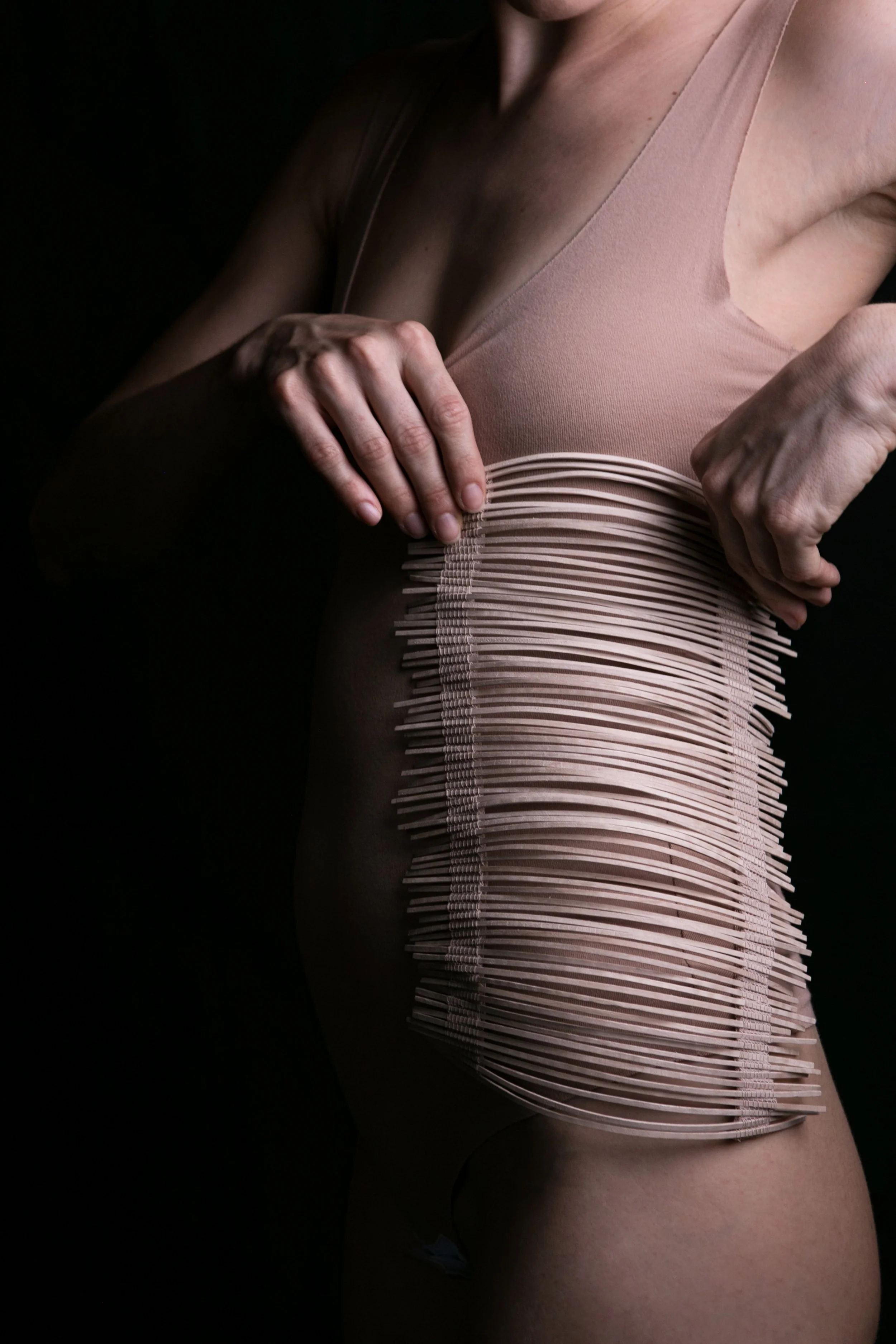
In pieces such as Bare, the materials evoke healing and protection, yet the structures themselves feel extremely fragile. What role does this contradiction play in your practice?
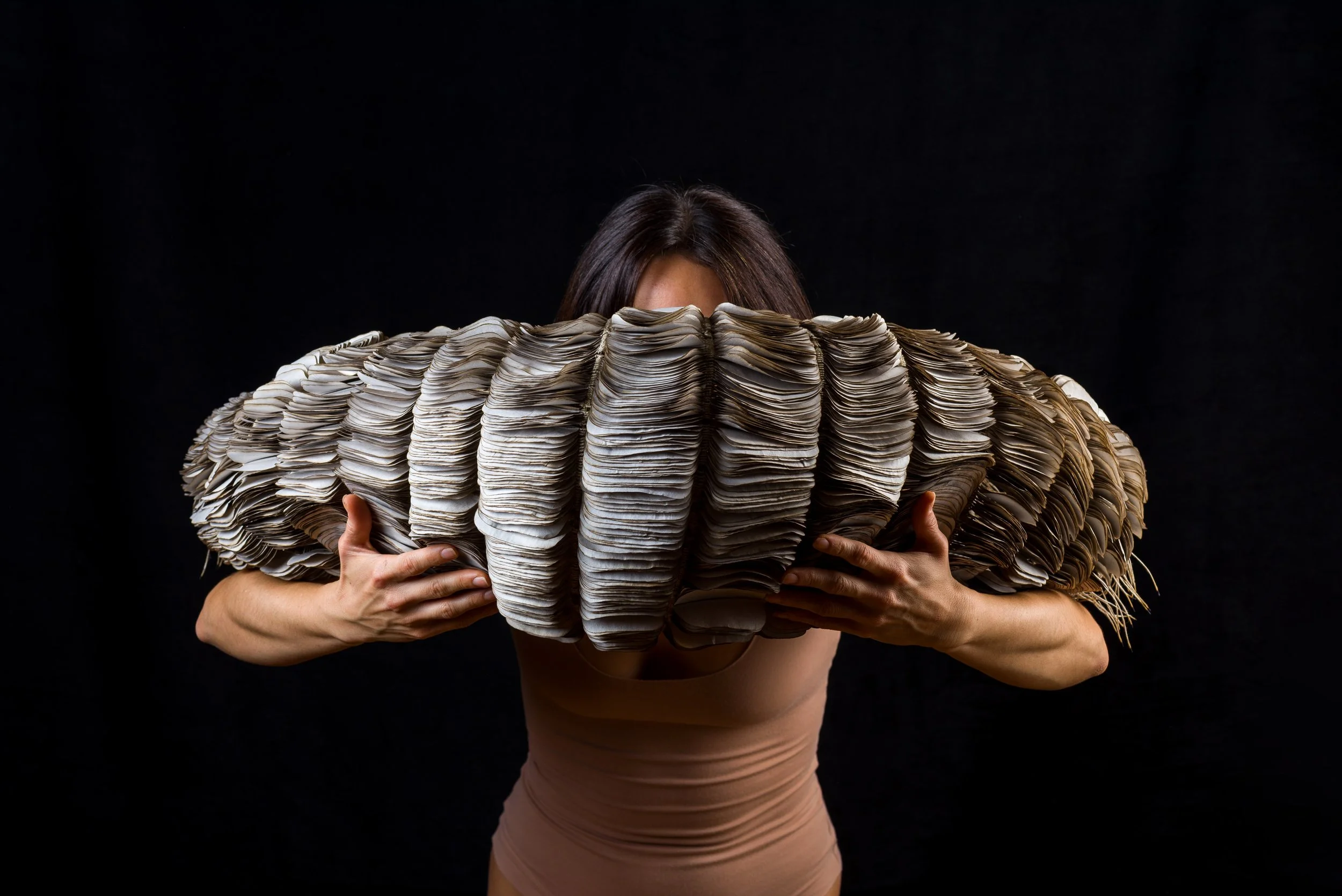
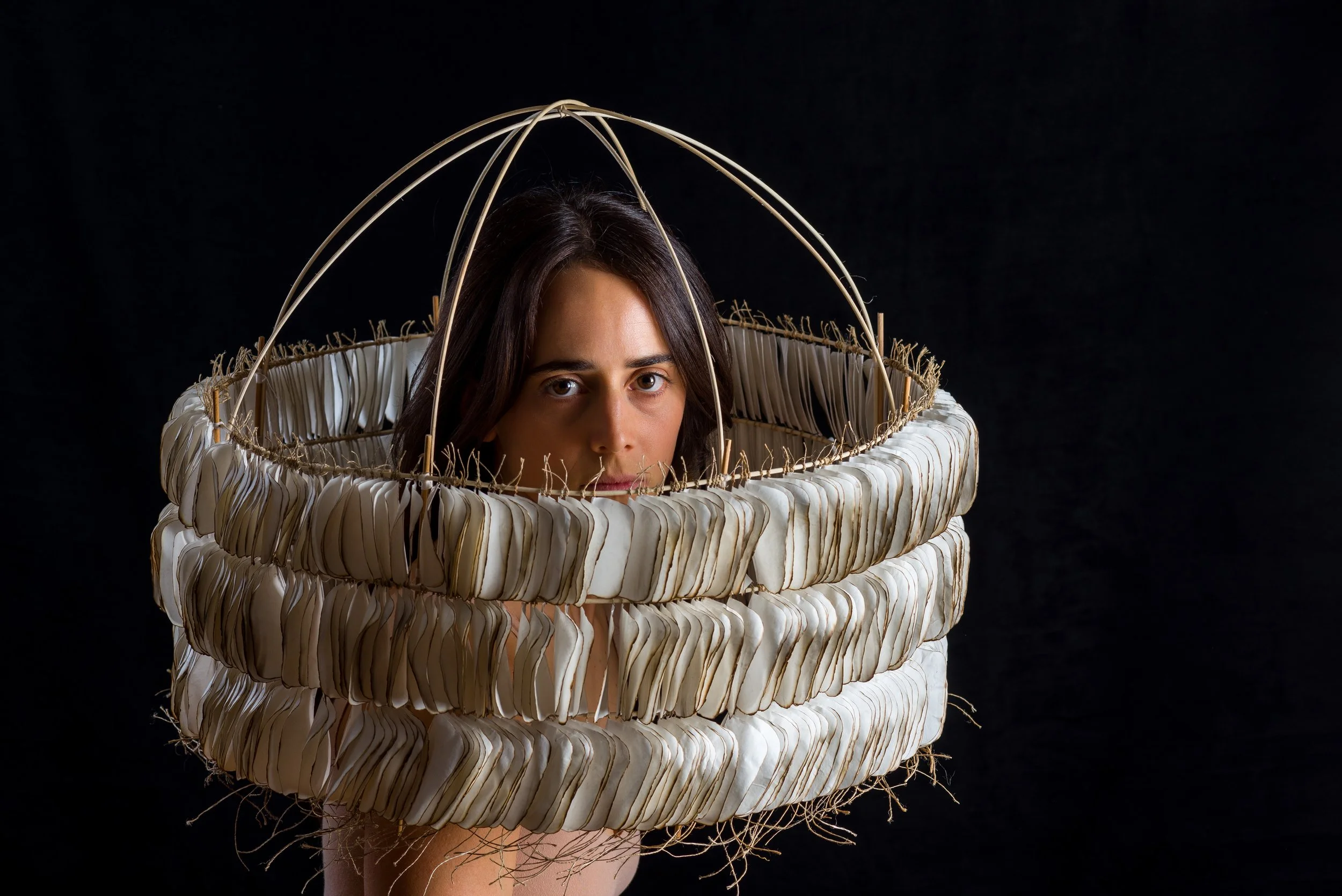
This contradiction expresses the fragility of our physical and emotional being. The need for protection doesn’t call for rigid ‘cages’ or barriers. Exposing their fragility welcomes the viewer to handle the pieces with care and attention. Revealing our vulnerability allows for sensitivity and softness which permits healing and repair.
Jewellery vs Wearable Sculpture
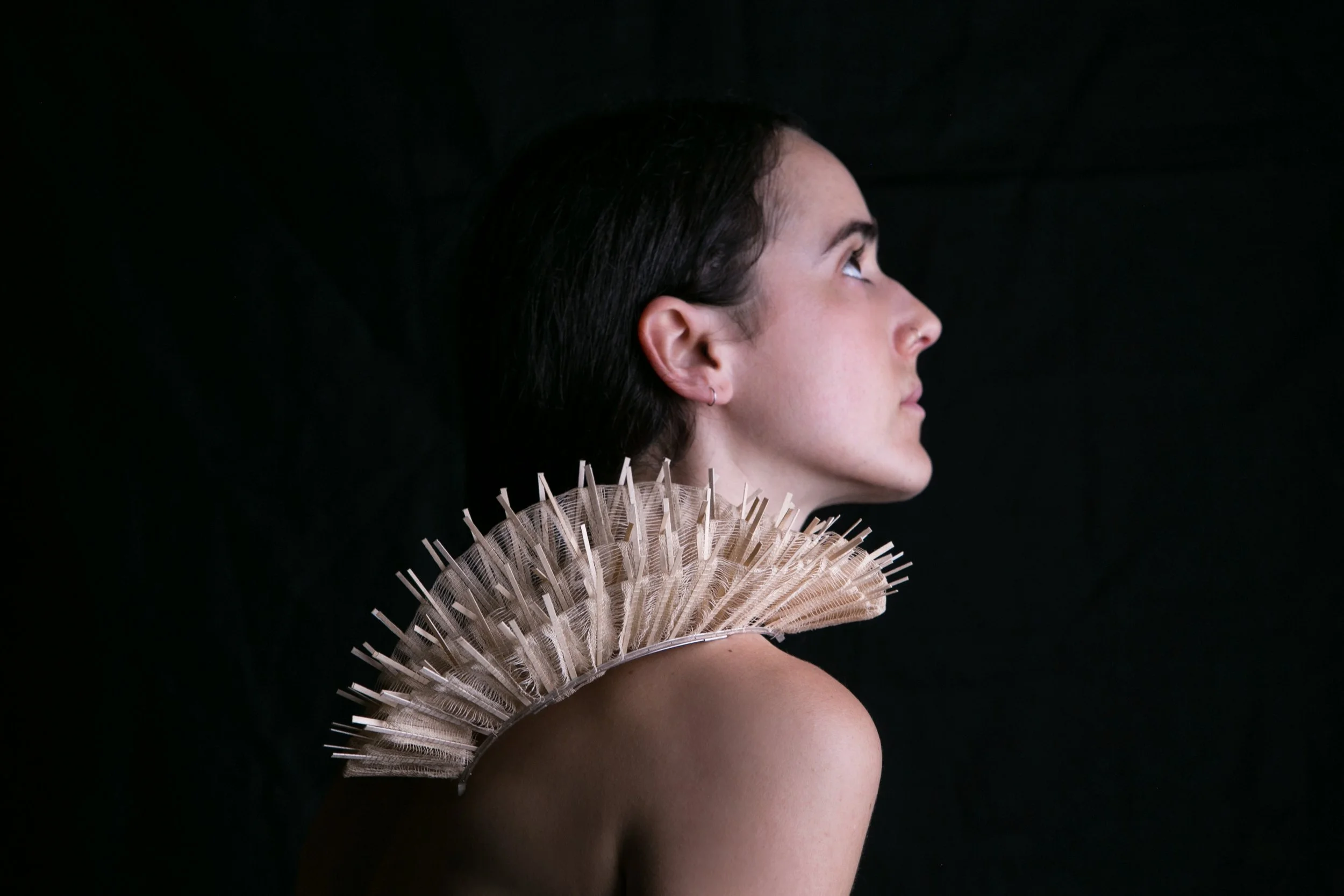
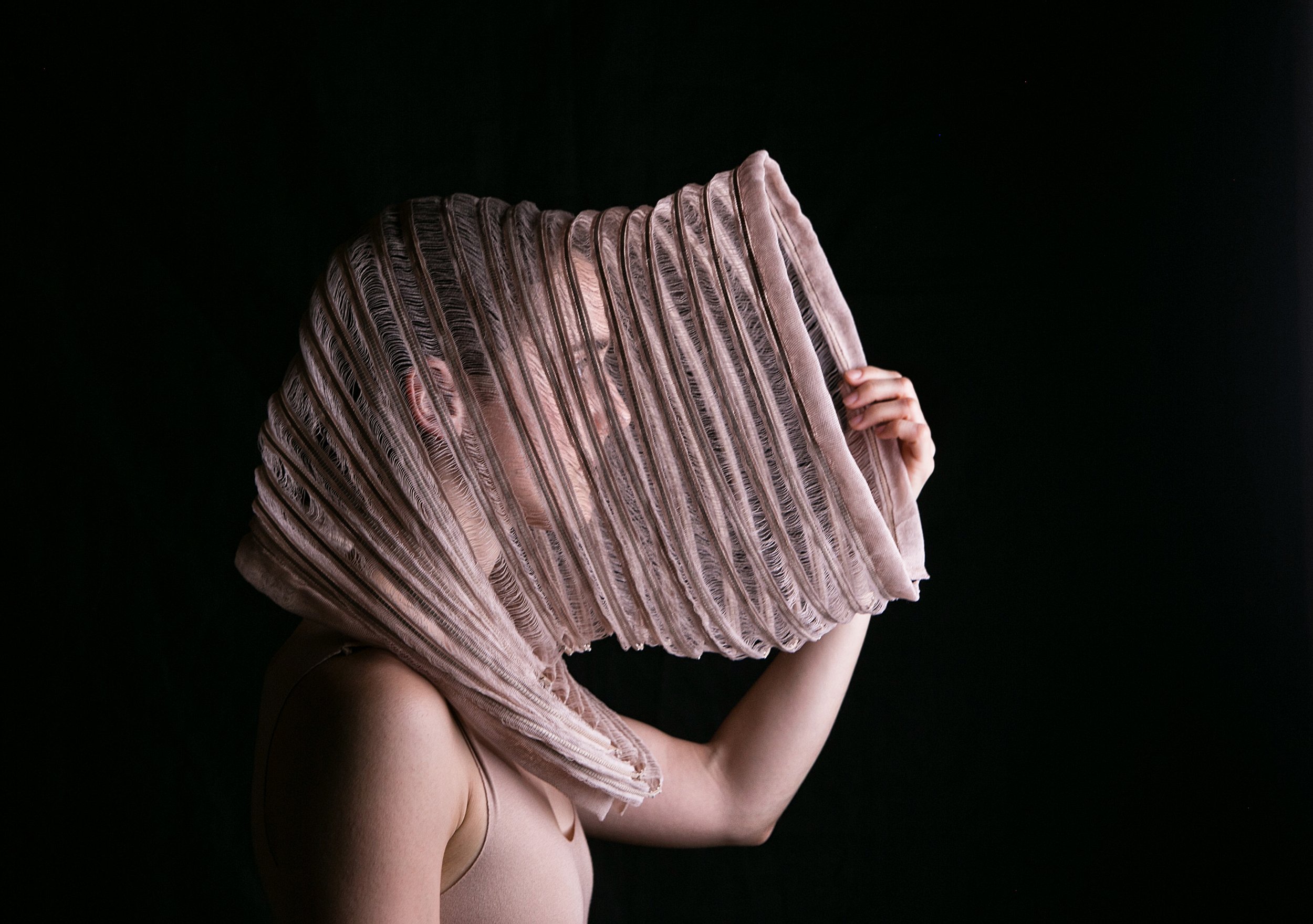
Your pieces often move beyond the traditional scale of jewellery and enter the realm of wearable sculpture. How do you navigate that boundary between object, ornament, and body architecture?
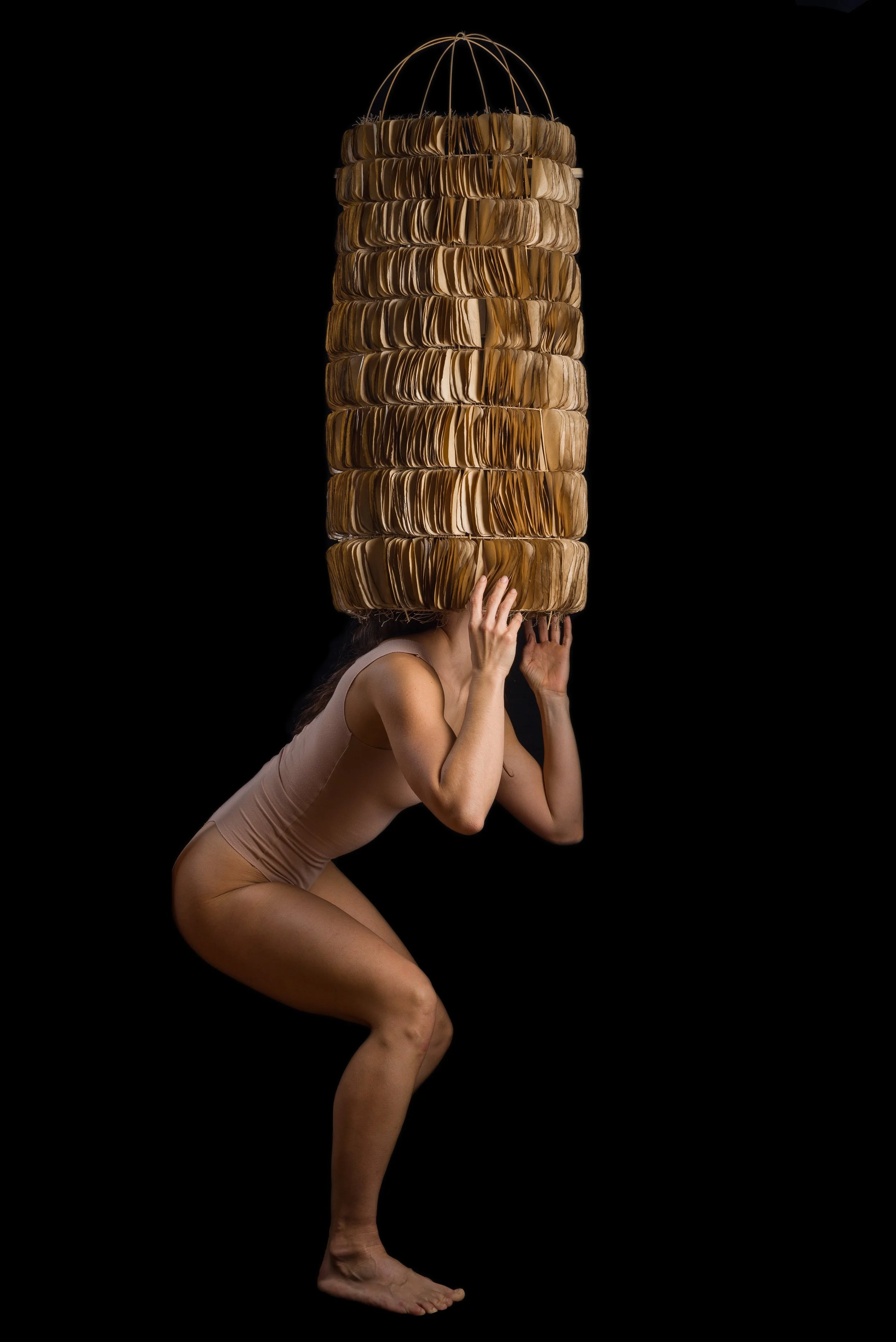
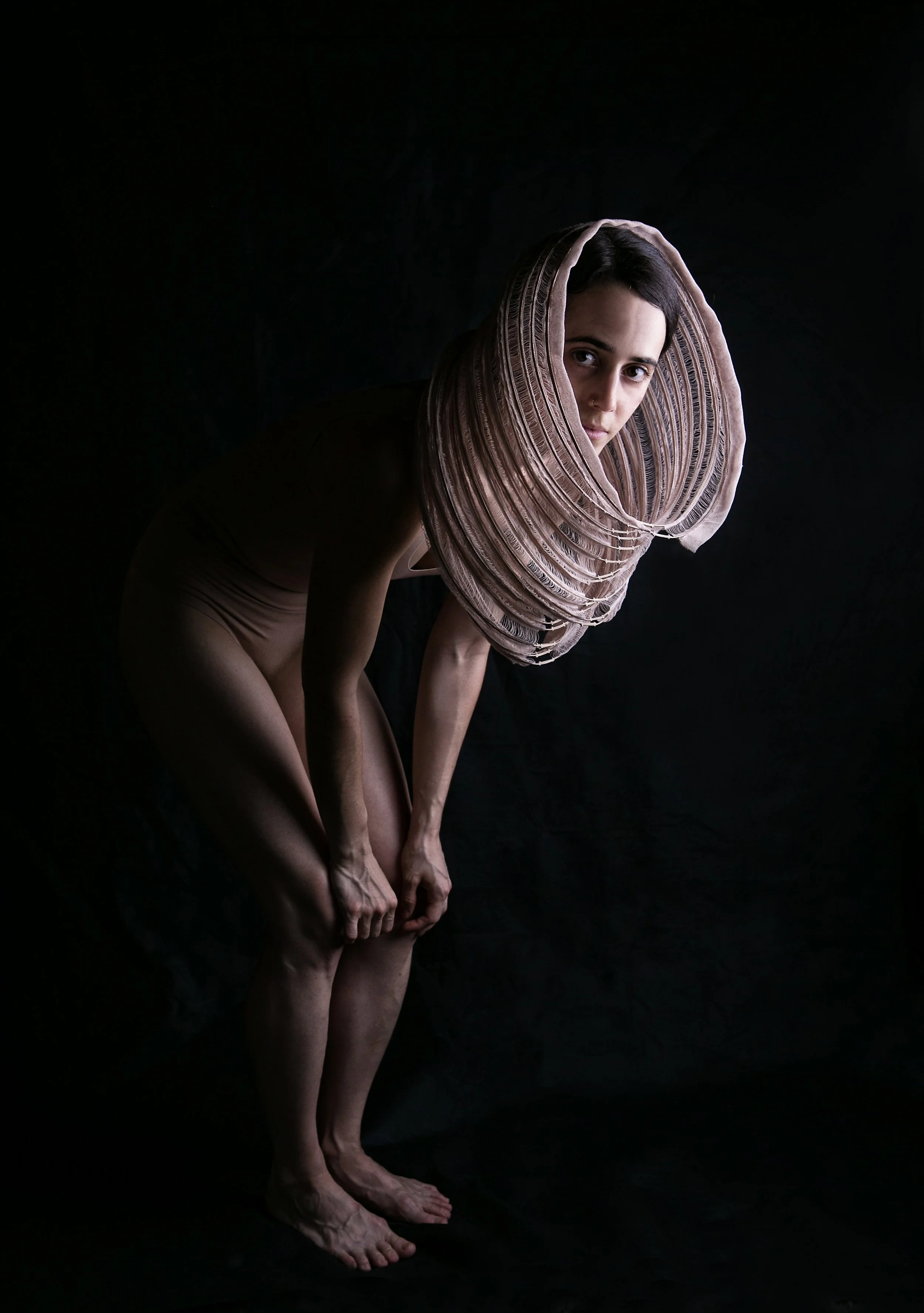
Having been exposed to diverse disciplines such as Art, Architecture and Jewellery has influenced my practice. By merging these boundaries my work is expressed through a wide range of media and scale. My current work, no longer concerned with small sculptures which inhabit the body but sculptures which contain the body, led to an increase in scale and a shift towards wearable sculptures.
Transformation & Cycles
Ideas of transformation - decay, regeneration, repair - recur throughout your practice. Do these themes emerge from personal reflection, philosophical influences, or from the materials themselves?
A culmination of all the above.
My creative process is material and process led while working with a concept in mind. Material transformation lies at the core of making as I enjoy working hands on without making any prior designs. I often use non-precious materials on which I apply time, labour and care until they become unrecognizable. Choosing to work with repetitive and meditative processes allows for personal reflection. Decay and regeneration are themes which recur as I contemplate our transient and ephemeral nature. Reading philosophical texts also aids this process of self-reflection.
Looking Ahead
As you begin your residency with Cluster, what kinds of material or conceptual directions are you most excited to explore in the coming months?
I intend to explore new materials for me, bone and basketry techniques; and how these can potentially be combined to make objects. I am excited to learn these techniques hands on by attending workshops to introduce myself to the processes of sourcing, preparing and making using organic matter and plant fibers. The notions of fragility, protection and regeneration are themes that I wish to explore further in the coming months.
Thank you for reading,
Cluster Team.