INTERVIEW WITH:
DAYE KIM
Cluster Residency Shortlisted Artist | Cluster Jewellery | 2026
Your work explores relationships as something that can be mapped through form and distortion. What inspired you to translate emotional dynamics into jewellery objects?
The starting point was deeply personal. It is my relationship with my sister. It's a relationship that holds everything at once: gratitude, rivalry, tenderness, the kind of friction that only exists between people who are completely entangled with each other. In The Brothers Karamazov by Dostoevsky, "Why do we quarrel, try to outshine each other and keep grudges against each other?"
THIS REALATIONSHIP IS...
THIS REALATIONSHIP IS...
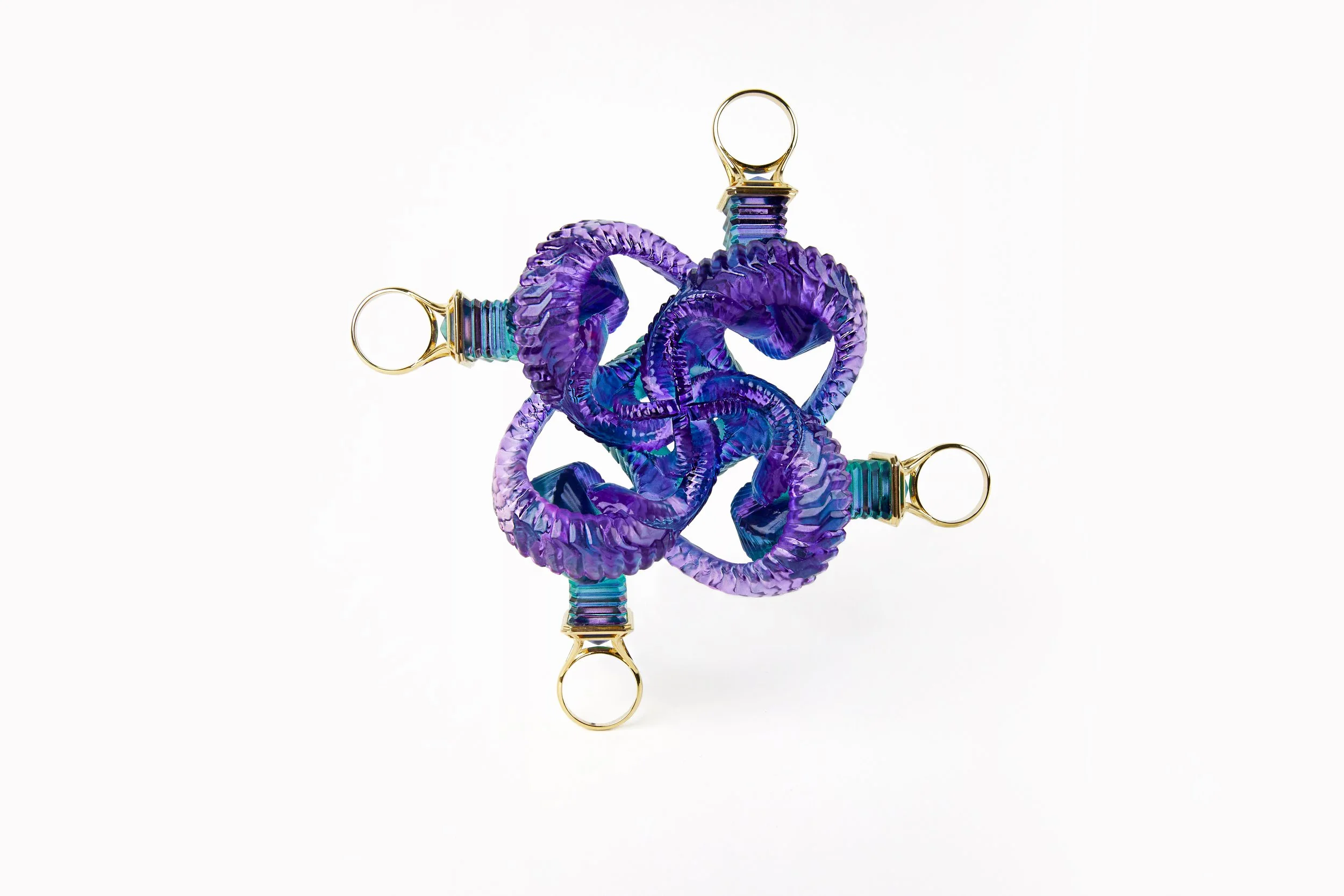
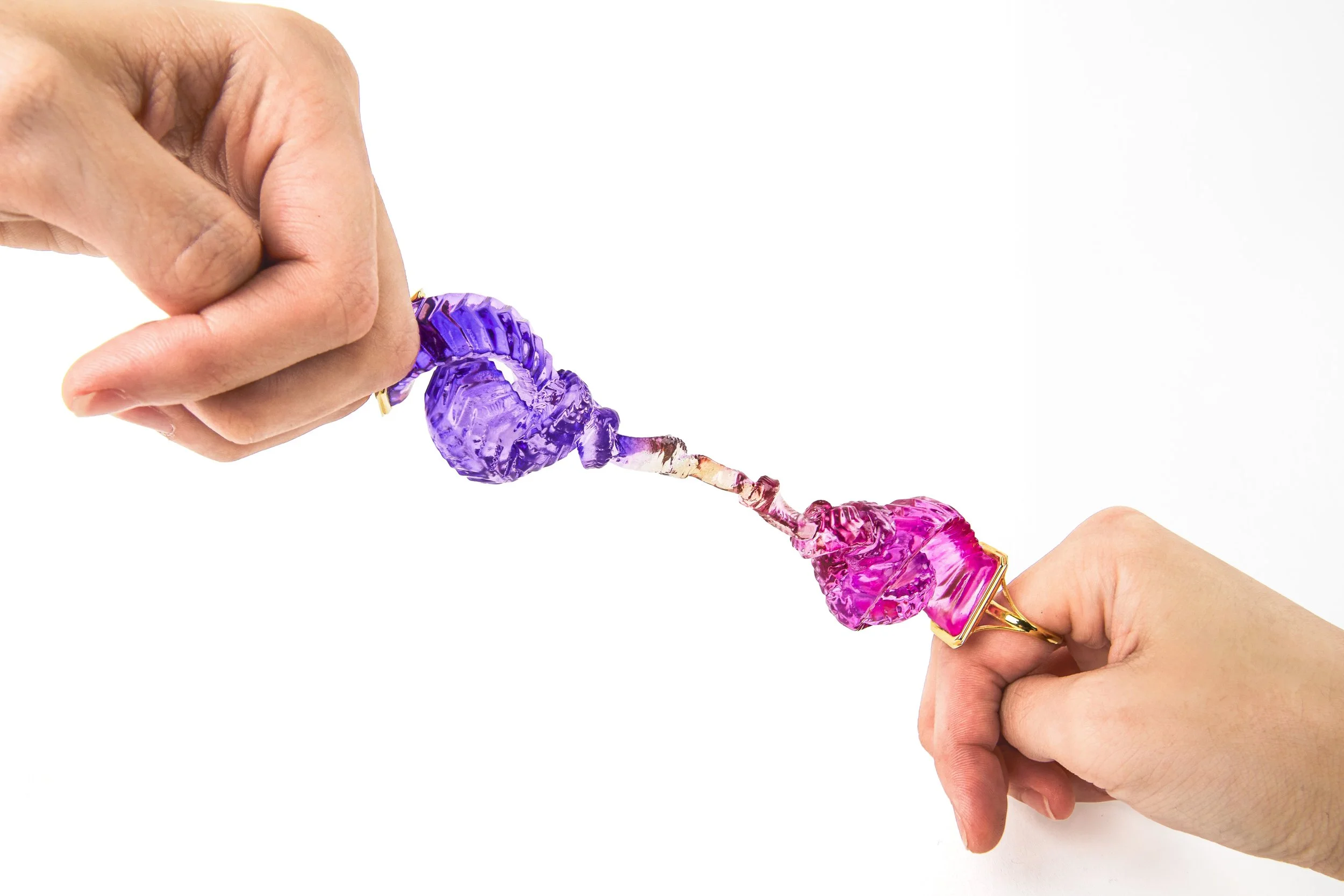
It's a question that has no clean answer, because the quarrelling and the loving are inseparable. I kept finding that ordinary language couldn't hold all of it. But during my research into these ambivalent emotions, when I came across the painting Portrait of Gabrielle d'Estrées and Her Sister, something shifted. Two bodies in a single frame, one hand reaching toward the other. It captured an intimacy that was neither comfortable nor uncomplicated. I thought the tension between the two women in the painting expressed the relationship I've imagined, and I wanted to make objects that worked the same way: things that couldn't be worn alone, that only made sense in relation to another person. The distortion in the forms isn't decorative; it's structural. It reflects how we reshape each other simply by being close.
You combine digital sculpting with traditional casting. How does the digital process influence the conceptual language of your work?
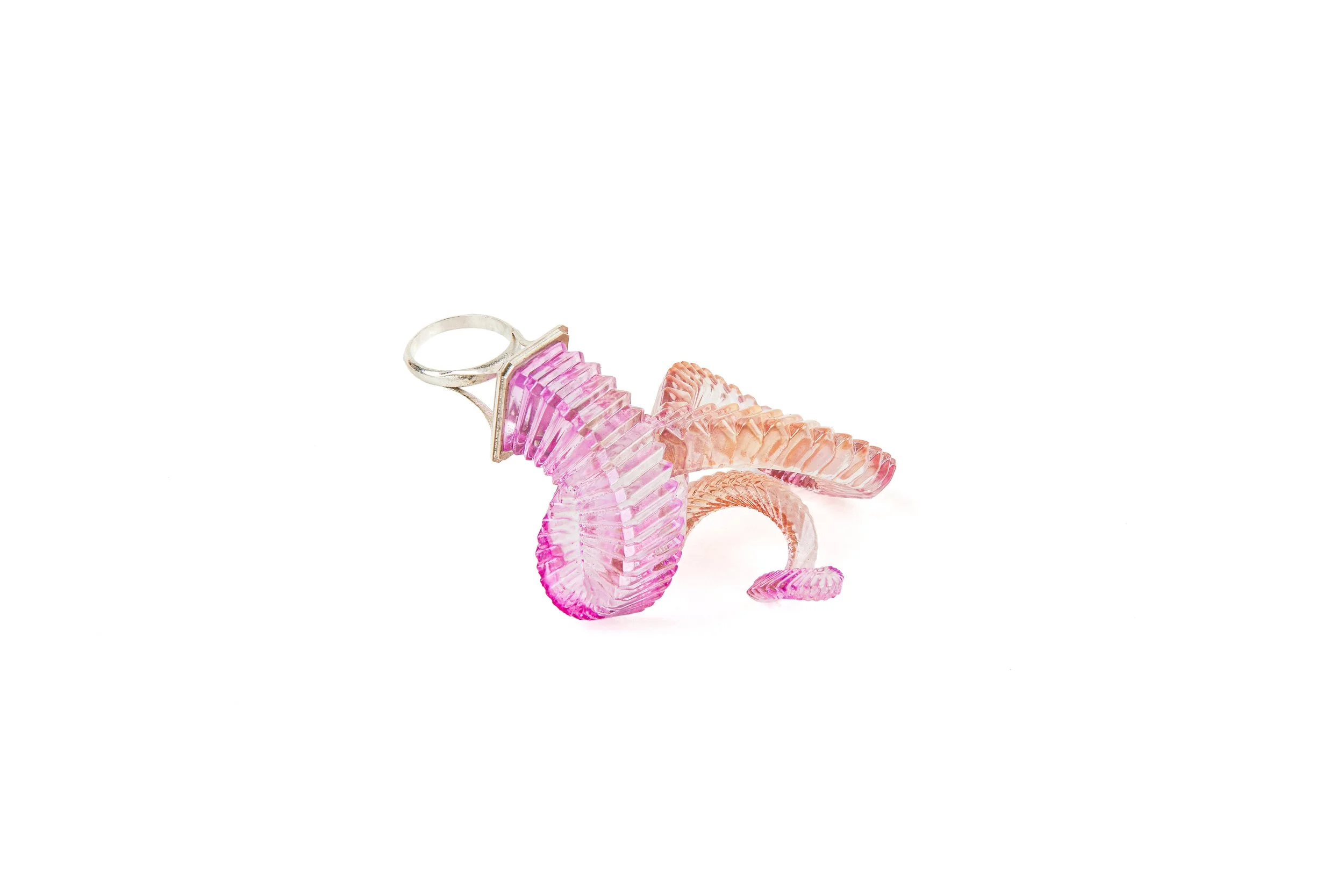
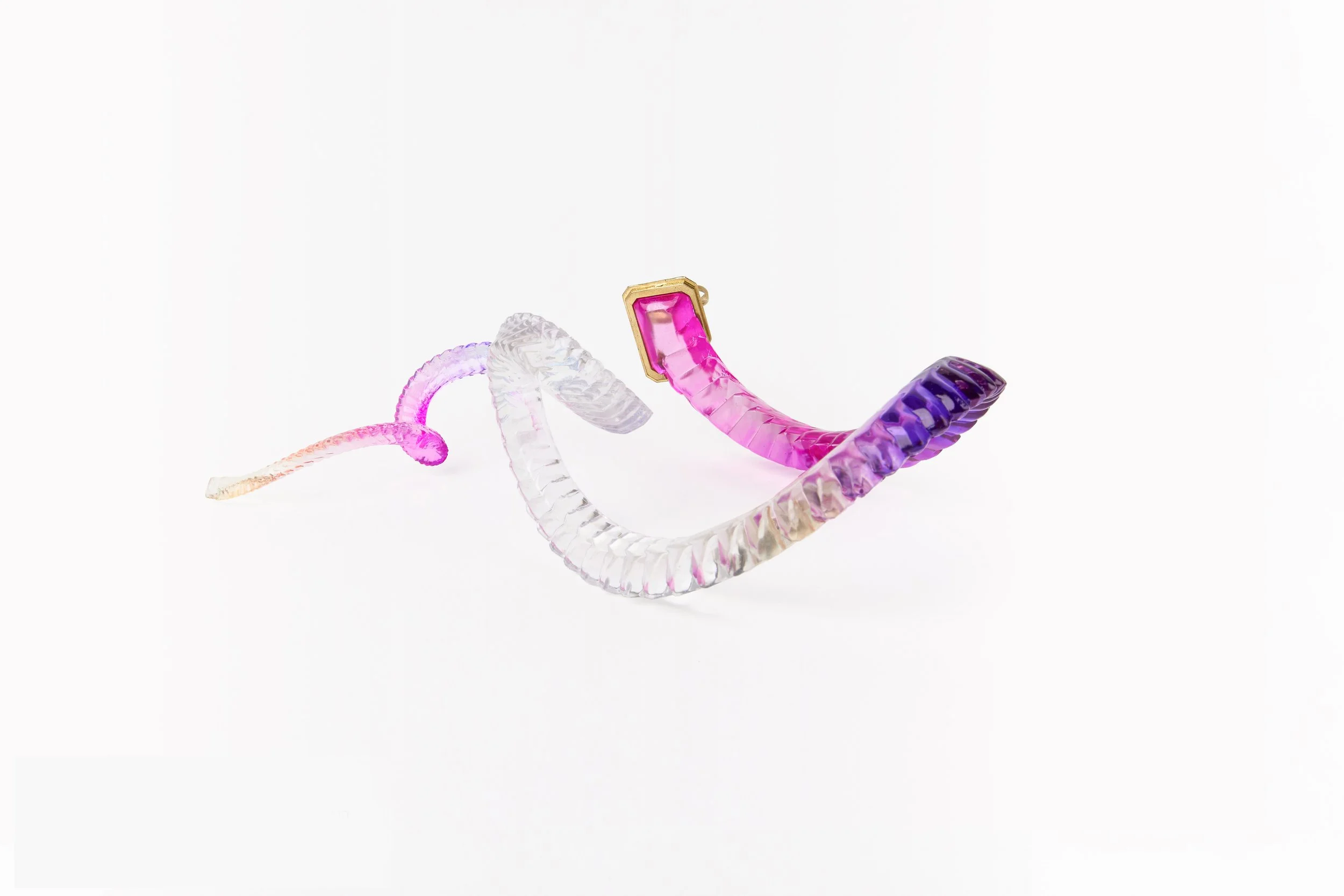
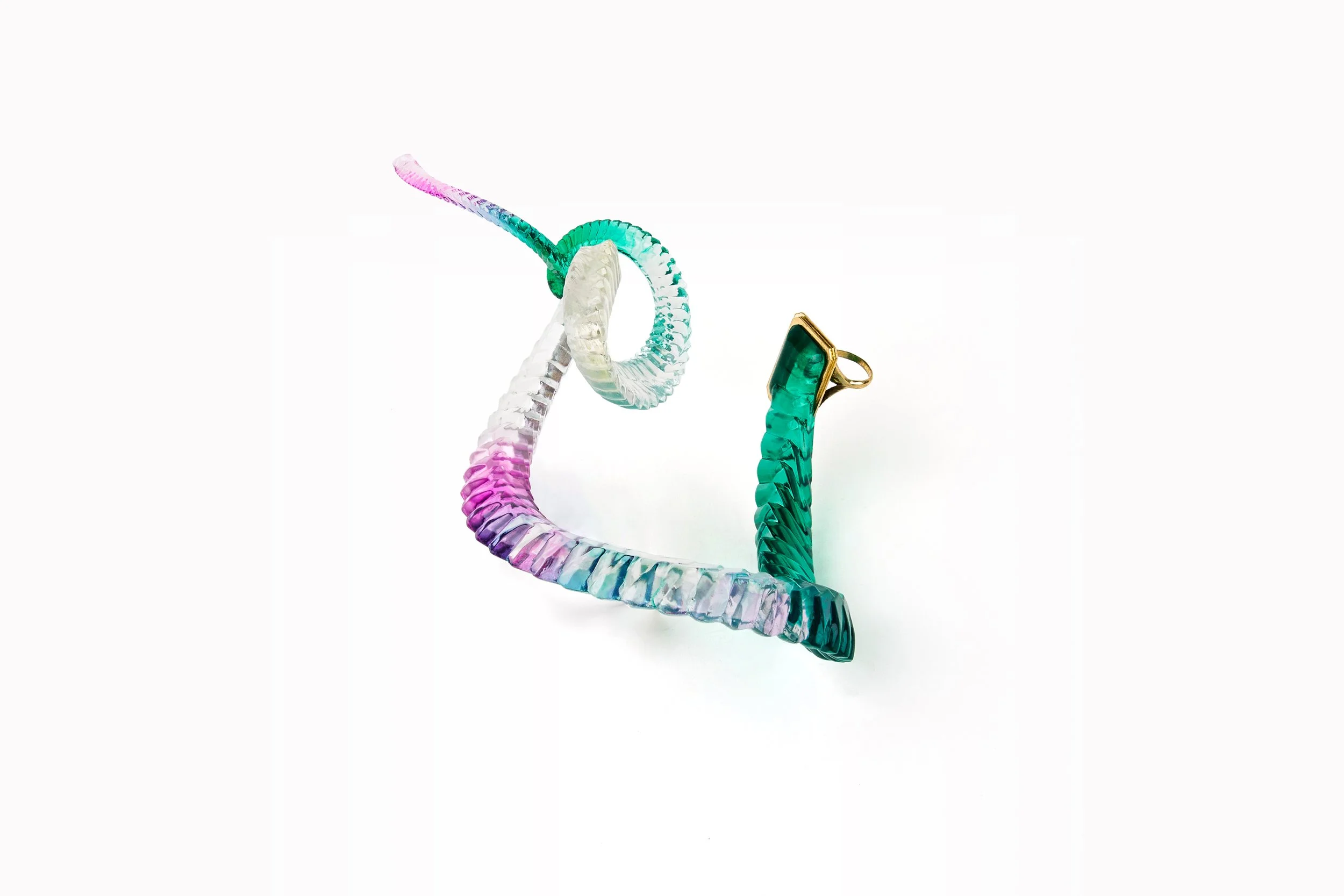
Digital sculpting gives me a space where form isn't constrained by gravity or material resistance. I can push and pull intuitively, following a piece's emotional logic before committing to anything. What I find equally meaningful is the role of algorithmic variation: structures shift and mutate in response to numerical input, and no two outputs are identical. That mirrors something I believe about relationships: each one is shaped by its own particular pressures, and none of them repeats. The casting process is where that logic gets tested. Something that existed without friction or weight has to become metal, and in that transition, the piece stops being an idea and becomes a fact.
THIS REALATIONSHIP IS...
THIS REALATIONSHIP IS...
Your proposed residency project involves collecting relationship narratives from London’s communities. How do you imagine translating those stories into wearable objects?
I'm interested in what people don't usually say out loud about their relationships: the ambivalence, the dependency, the love that coexists with difficulty. During the residency, I imagined creating quiet spaces for people to share those stories, not as data, but as material. From those conversations, I would extract gesture, proportion, and pressure, the physical grammar of how people describe connection. A story about always walking slightly behind someone, or the way two people's hands fit together imperfectly but habitually. These become the basis for form decisions. The resulting objects wouldn't illustrate the stories, but they would carry them in the way that bodies carry history.
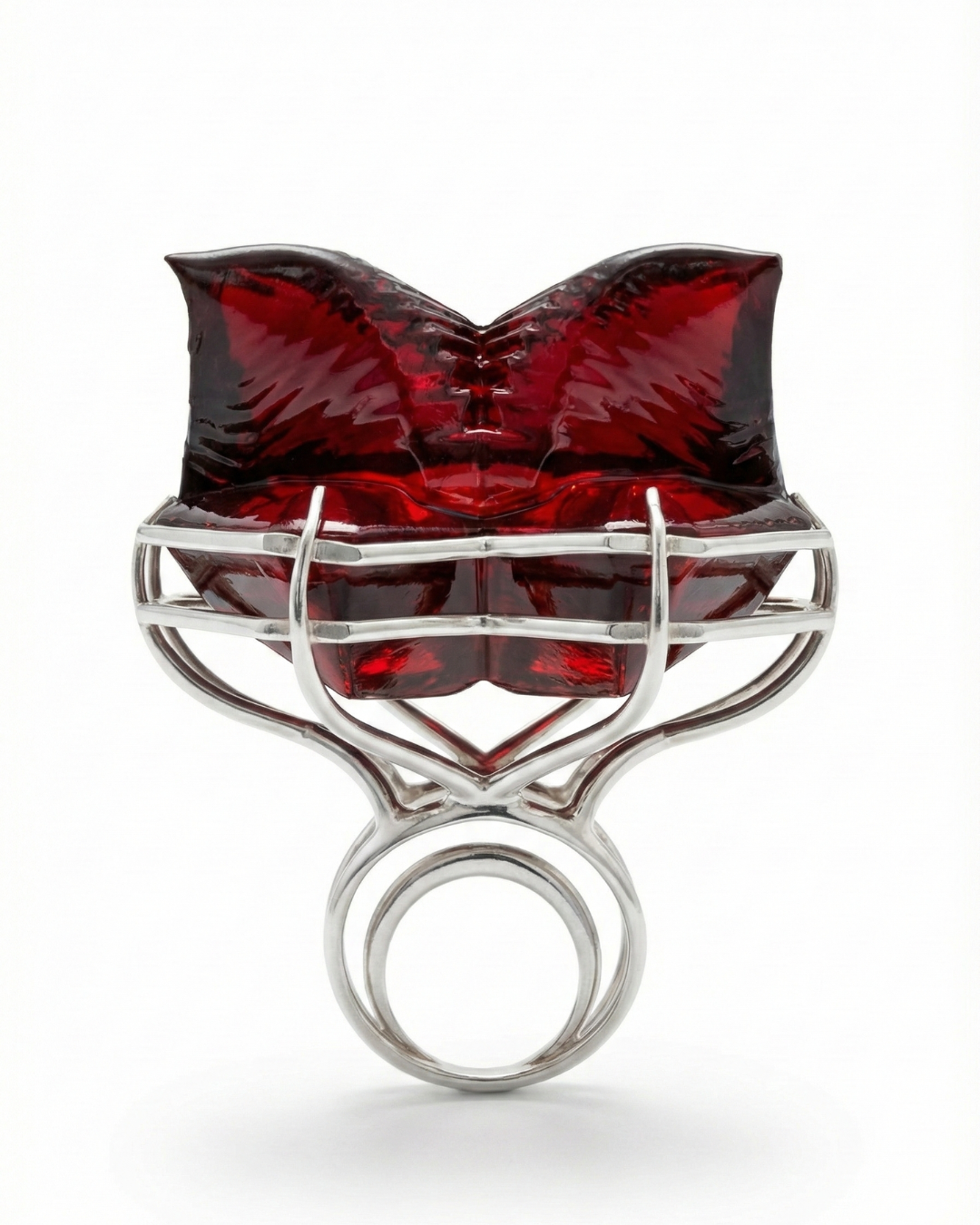
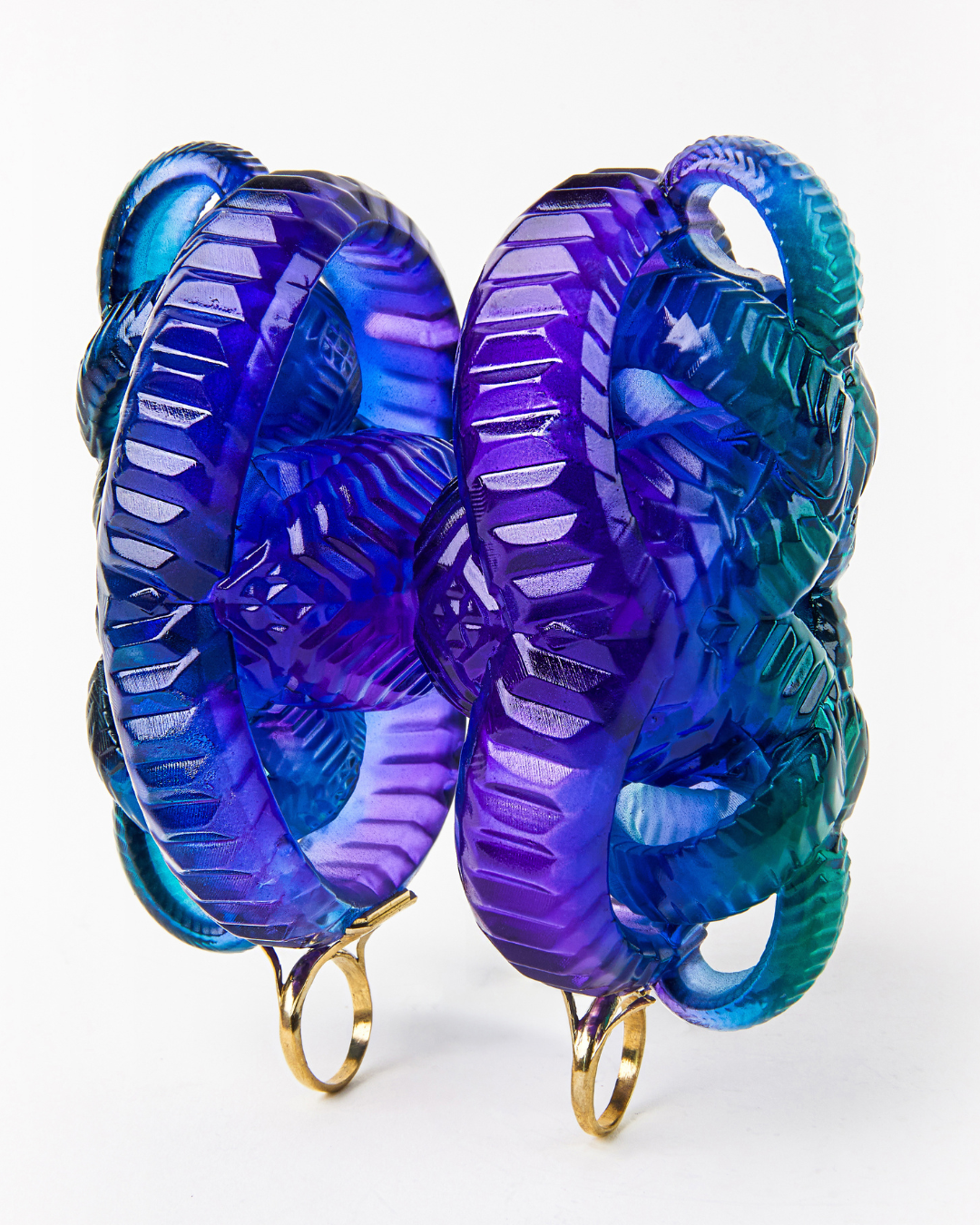
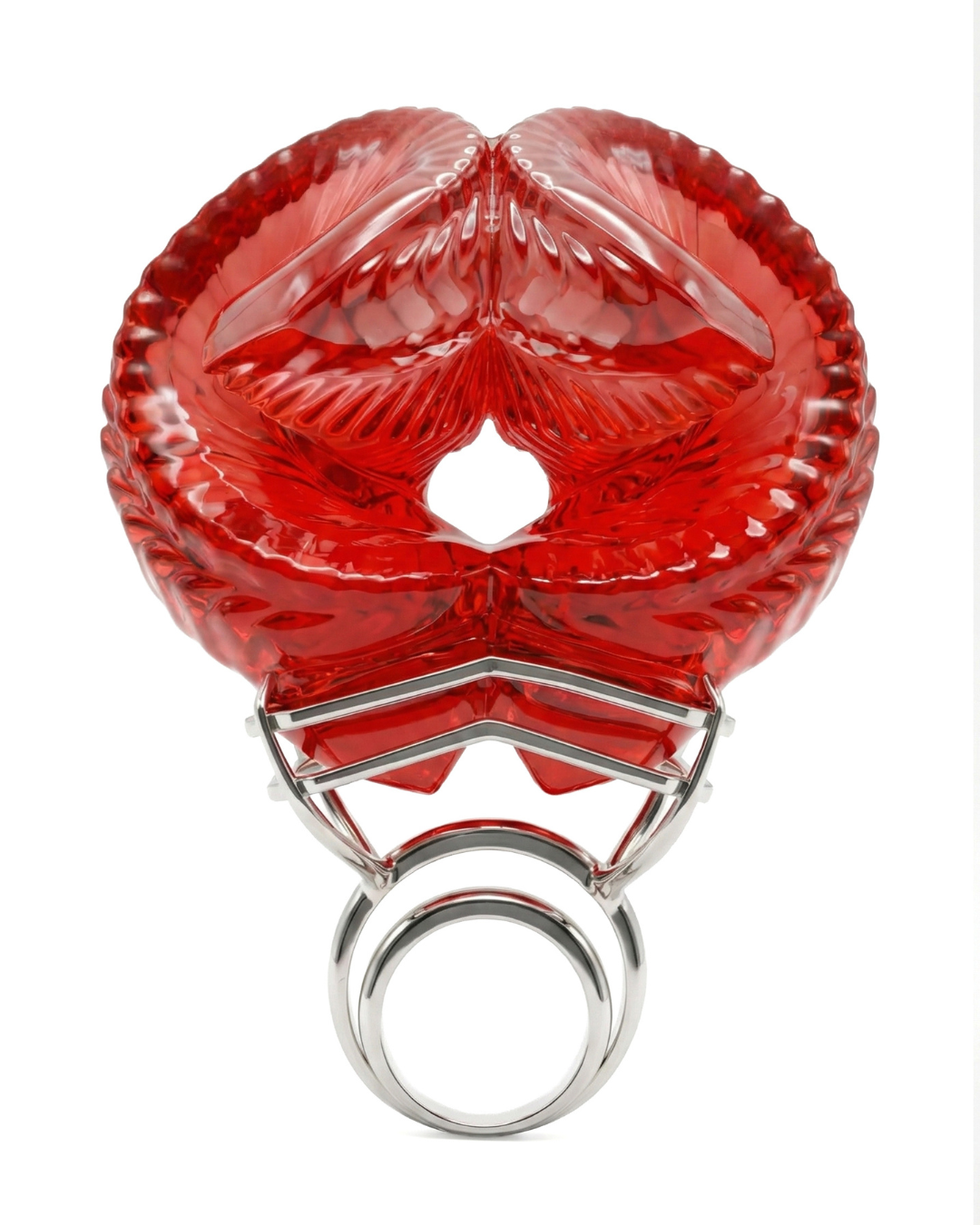
Many of your pieces reveal hidden faces or shifting surfaces when viewed closely. What role does perception and discovery play in your work?
I want the first encounter with a piece to feel incomplete, not confusing, but open. The faces embedded in Face Face Face, or the surfaces that shift as you move, are invitations to look again. There's something important about that: jewellery is worn close to the body, seen at close range, yet we often stop at the surface. I'm drawn to work that rewards sustained attention, that gives more the longer you stay with it. In that sense, perception isn't just a formal quality. It's relational. The piece changes depending on how much time and closeness you're willing to offer it.
THIS REALATIONSHIP IS...
THIS REALATIONSHIP IS...
How do you see jewellery functioning as a form of social sculpture or collective storytelling in contemporary society?
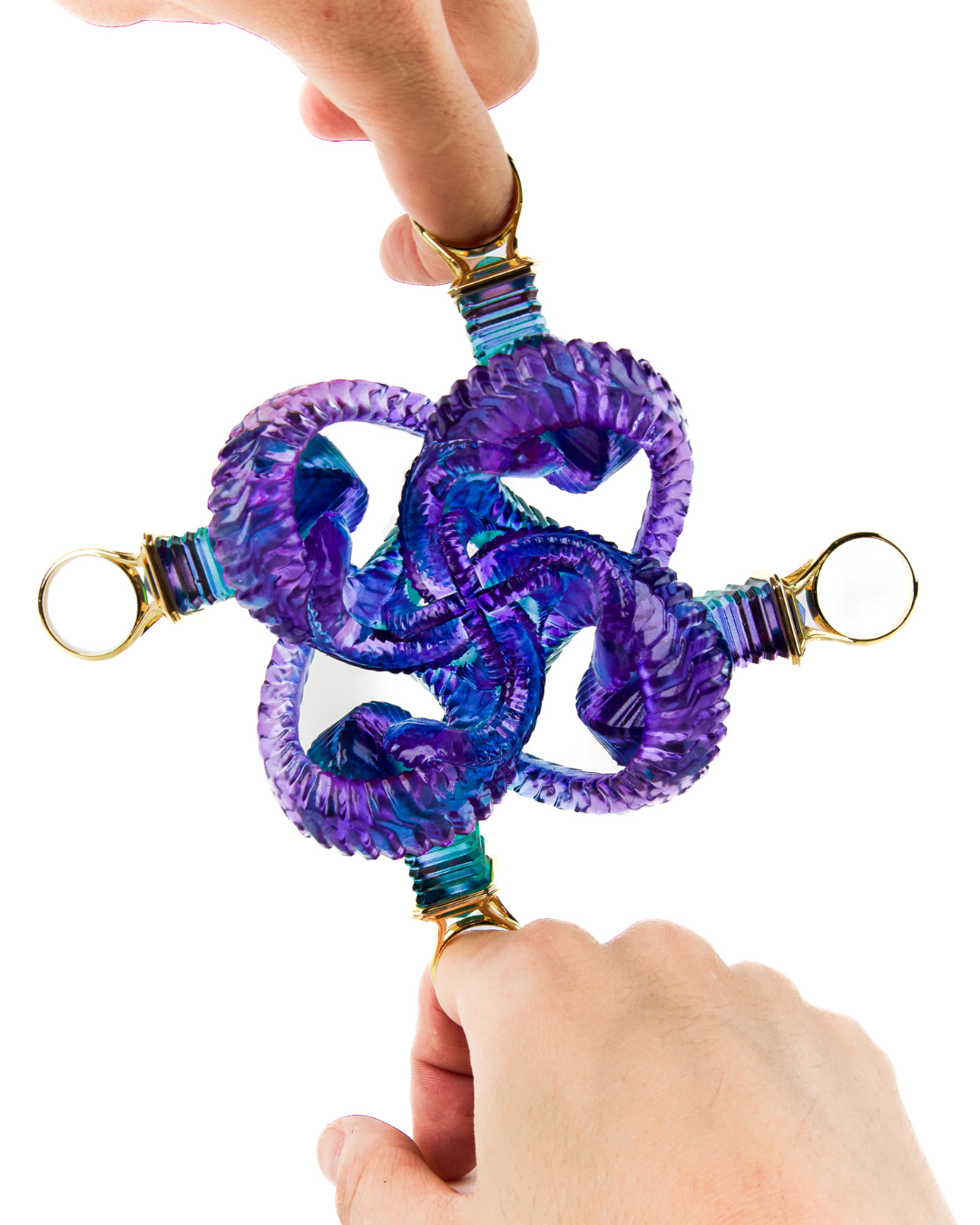
The most basic condition of my work is that it can't be worn alone. That's not a conceptual statement. It's a physical fact. Two people have to negotiate how to move, how close to stand, and how long to stay. In that moment, the object ceases to be an adornment and becomes a situation.
Jewellery is uniquely positioned to do this kind of work because it operates at the scale of the body and the intimacy of touch. It has always been a social form, marking belonging, grief, love, and status. What I'm interested in is making that social dimension explicit and participatory rather than implied. I believe objects can hold collective memory in ways that images and words sometimes can't. They have weight, they have touch, they exist in time. When a piece carries the stories of people who've never met, their habits, their compromises, their unspoken ways of being close, it starts to function less like an object and more like a record of how we need each other. That, to me, is what social sculpture actually means.
Thank you for reading,
Cluster Team.