GIACOMO BEVANATI
Cluster Contemporary Jewellery
”AMALGAM”

Giacomo Bevanati is a wire artist based between Manchester and Córdoba, Spain. Balancing a structural background with high-end craftsmanship, he holds a Bachelor’s degree in Product Design and a Master’s degree in Architecture, which provided him with a technical understanding of 3D modeling, structural tension, and spatial volume.
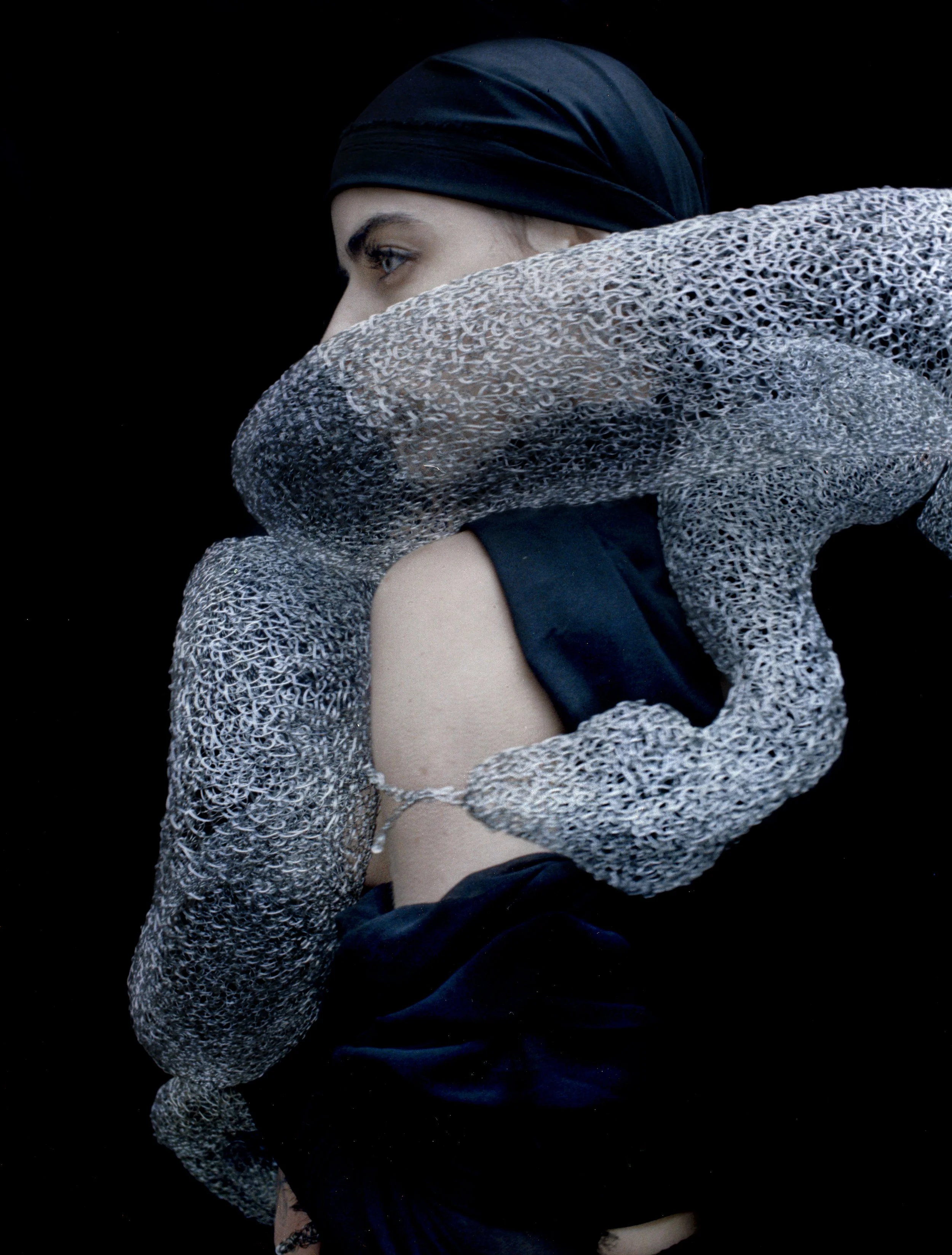
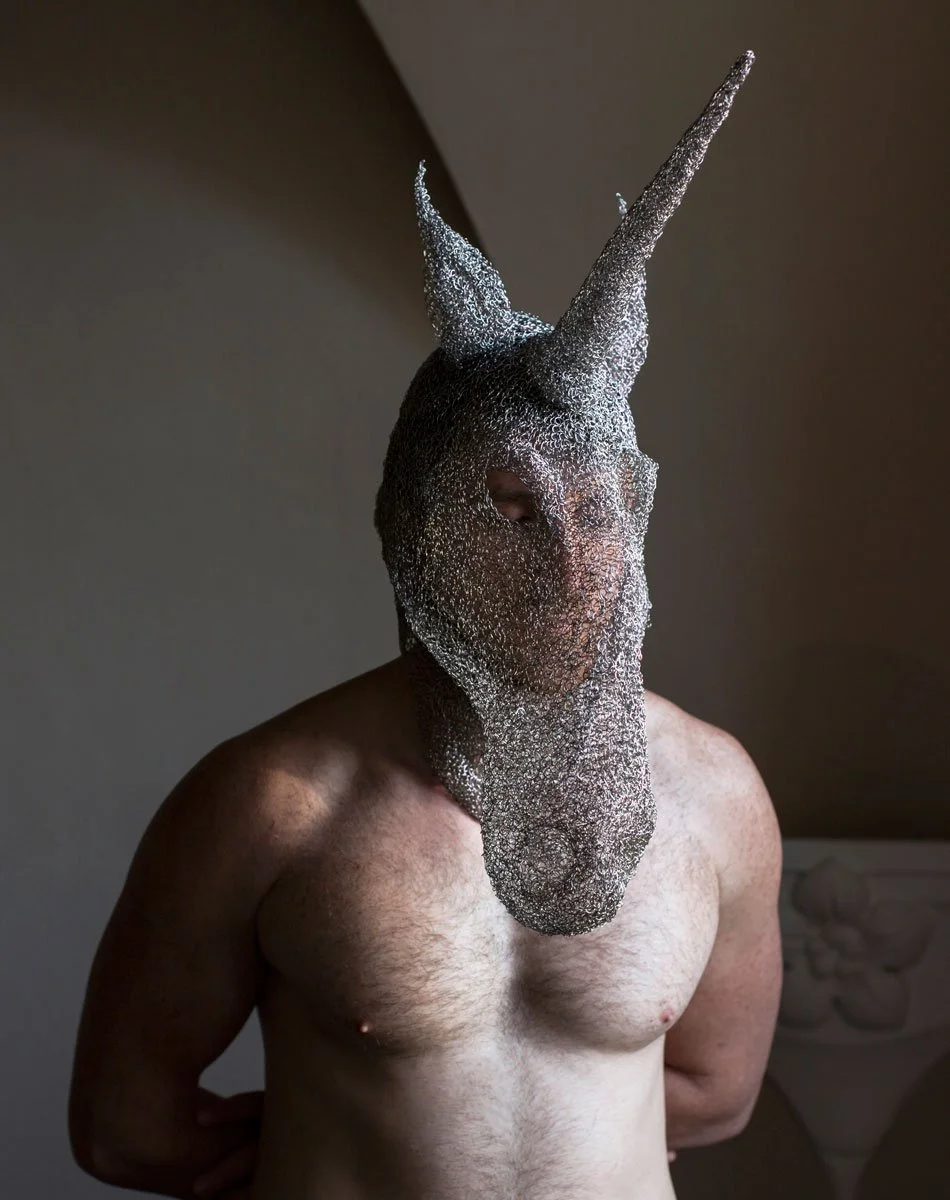
Bevanati’s path into wire art began entirely by self-taught experimentation during his studies, where he developed a unique, freehand sewing and stitching technique. Transforming industrial brass and steel wire into complex, fluid geometries, his practice oscillates between fine art and avant-garde wearable sculpture. His signature pieces include meticulously crafted, transparent volumes inspired by mythology, traditional folklore, and contemporary human rituals.
Since beginning his artistic career in 2016, Bevanati’s works have been featured in international fashion publications such as Vogue, AD, and 10 Magazine, and showcased globally at prestigious platforms including London and Milan Fashion Week, London Craft Week, and the Homo Faber Biennial.
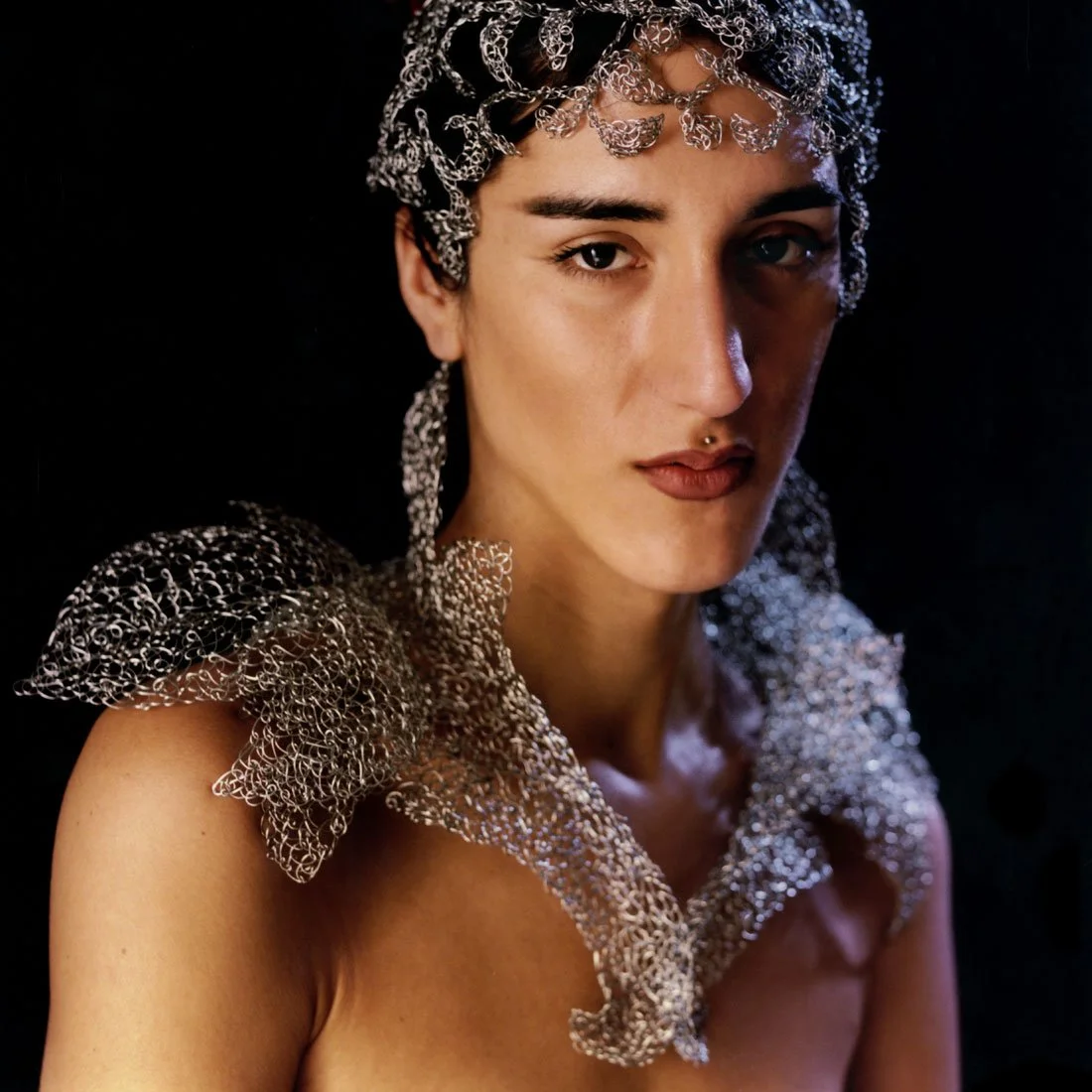

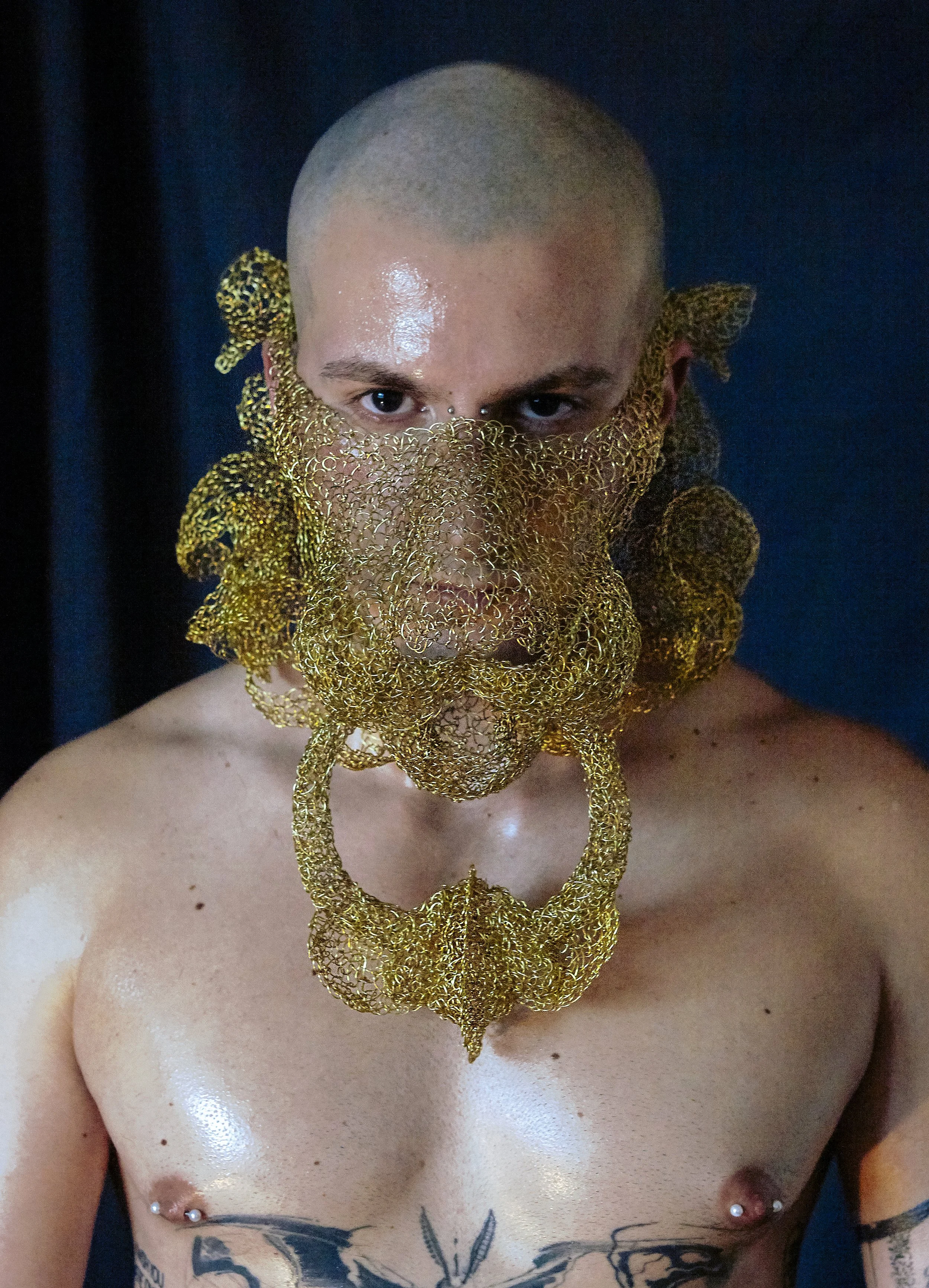
My practice embraces hybridization as a condition rather than a choice. Operating at the intersection of body architecture, fine art, and contemporary wearable sculpture, I build three-dimensional metallic skins that challenge binary structures.
Influenced by the concept of relational entanglement, my work transforms industrial wire into an organic, flexible framework that coexists with the body and its environment. I do not create fixed, definitive artifacts; instead, I build porous interfaces where the physical and the digital, the ancestral and the future, blur together.
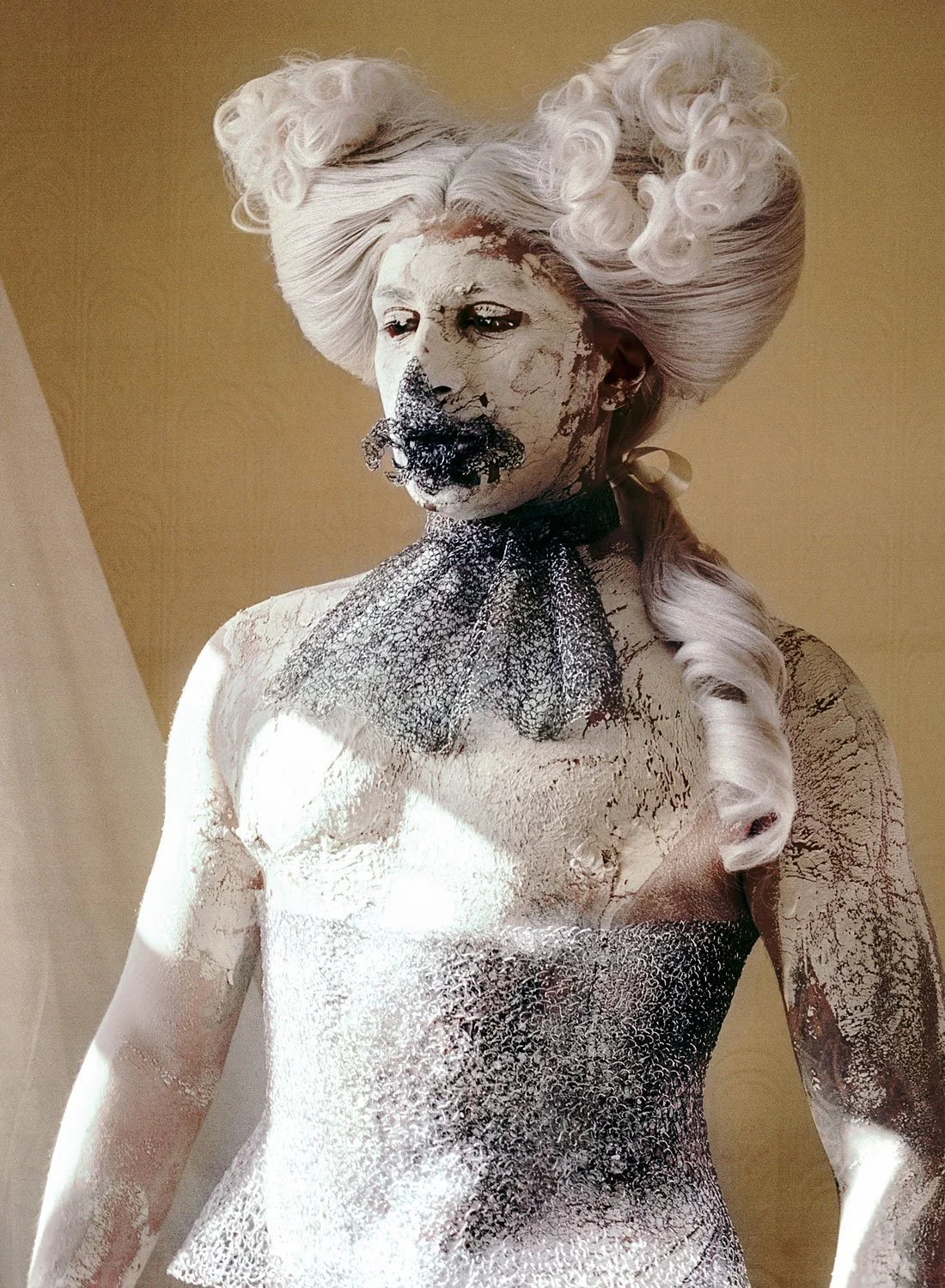
For the AMALGAM exhibition, this dialogue manifests through an unexpected convergence of sci-fi imaginary and historical opulence. By reimagining a UFO-shaped hat alongside sculptural body ornaments inspired by Baroque attire—a corset, a jabot, and a codpiece—I distort the boundaries of time and form. These hand-woven wire armors do not conceal the body; instead, they hybridize it, turning historical dress and futuristic archetypes into an interconnected, transparent second skin where past and future merge.