EDURNE MORALES & MANUFACTURA
“CODE&CRAFT”
2025



Edurne Morales is a Mexican multidisciplinary designer and researcher working at the intersection of architecture, computational design, digital fabrication and art. Her practice involves computational methods and non-standard fabrication, with a focus on natural materials and vernacular systems integrated into advanced technologies. She holds a Bachelor of Architecture from Tecnológico de Monterrey (Mexico) and the Master of Advanced Studies in Architecture and Digital Fabrication from ETH Zurich (Switzerland).
Morales has contributed to international projects such as the Mexico City’s New International Airport (Foster+Partners + FR-EE), Clay Rotunda (Gramazio Kohler Research), SHA Wellness Center (SMA), Magic Queen (MAEID), and Un Proyecto de Talavera (Manufactura + Uriarte Talavera - Patio Efímero 2024). Her expertise extends to aerospace and automotive innovation, with projects such as the GRAM space certification (Gradel LW - ESA) and the BMW M Visionary Seat (BMW + Gradel LW). Her work has been exhibited in NYLAAT 2025, Matter of South (Kunstgewerbemuseum, 2024), Design Week Mexico 2023, Zona Maco 2023 and Venice Biennale 2021. She has been part of teams recognized with awards such as the Young Researcher Award (SIGraDi, 2024), and finalist selections for the Moroccan Pavilion (Venice Biennale 2025), Make It Circular Challenge 2024, and Dezeen Awards 2023.
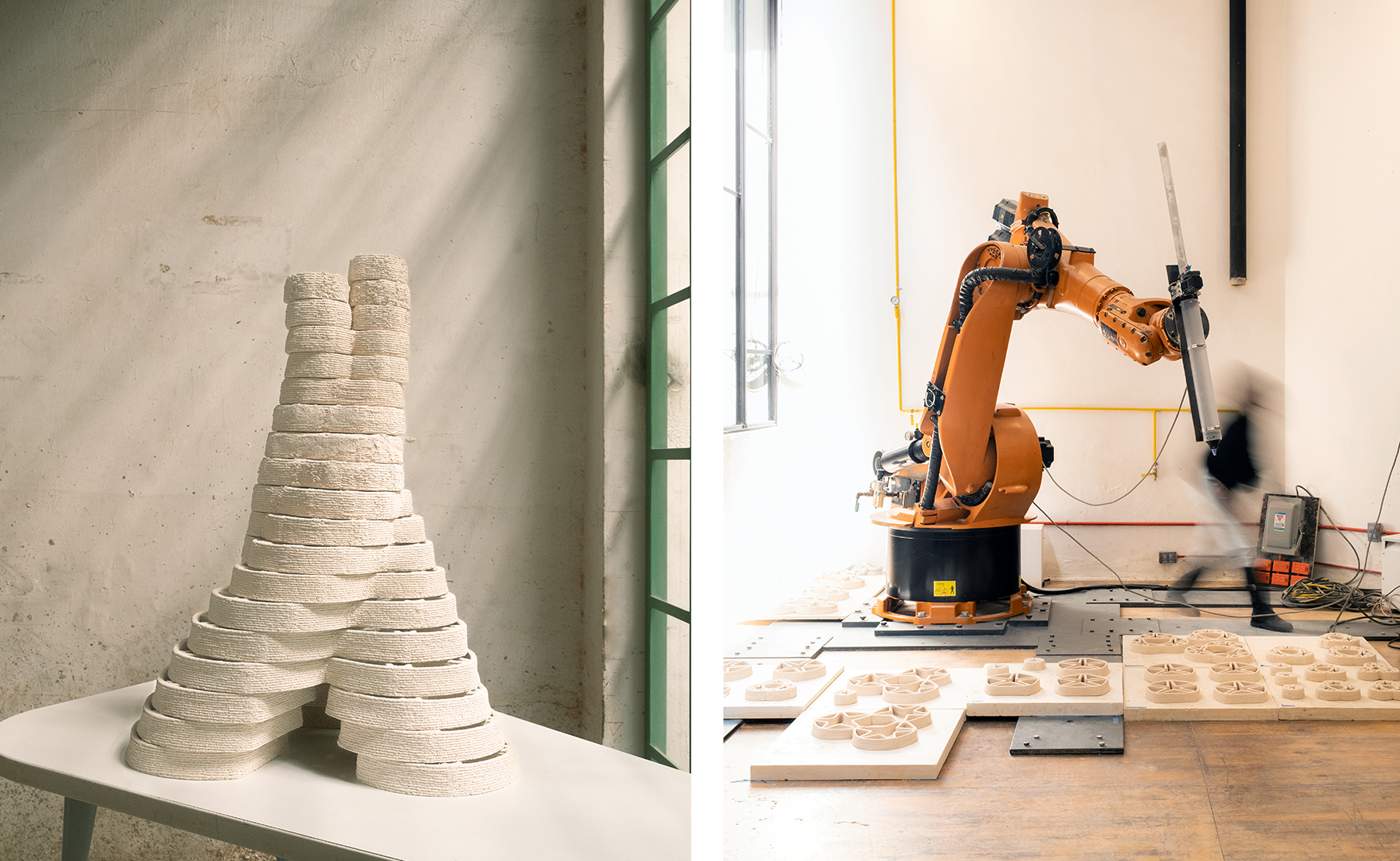
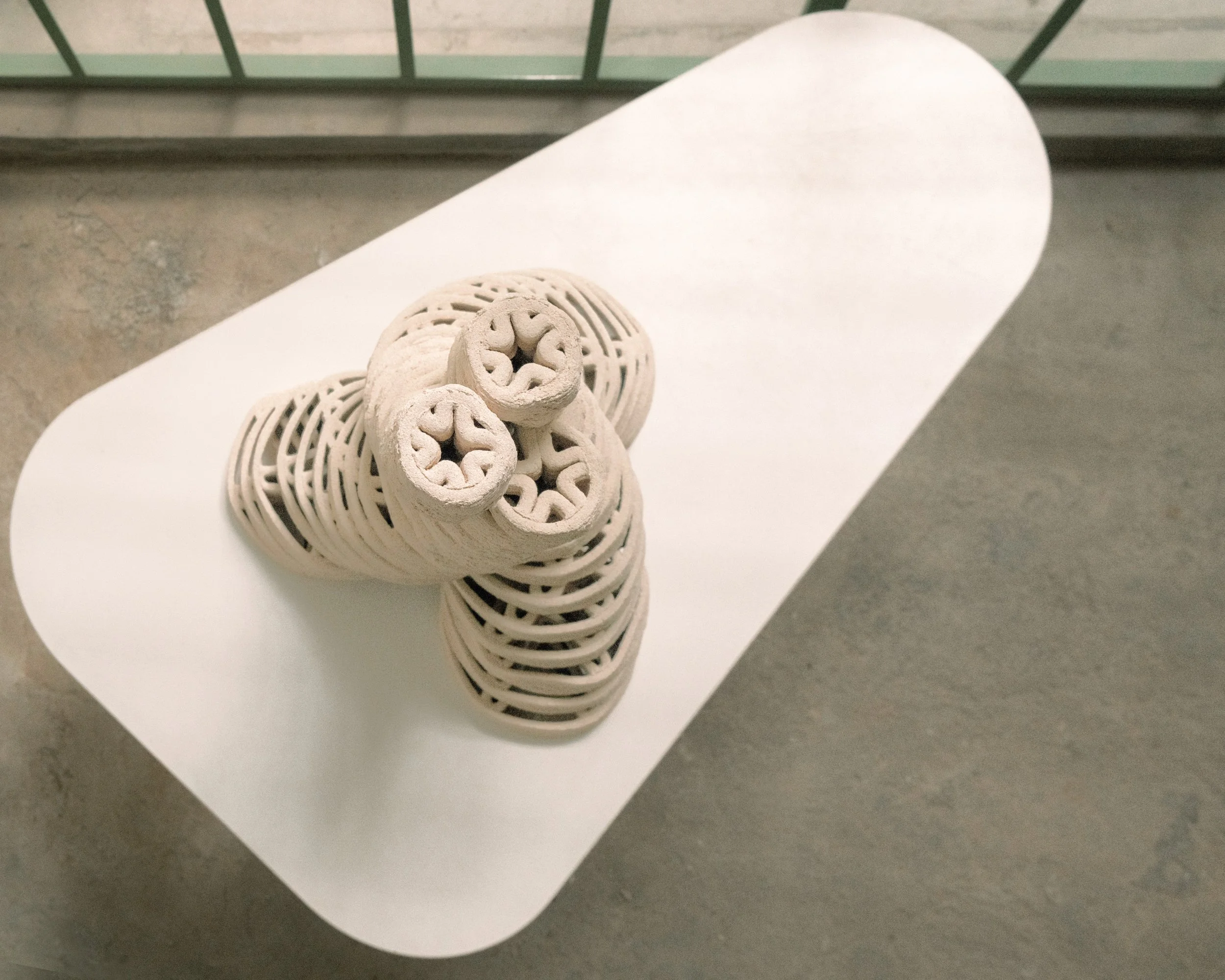
Currently, Morales is an Associate Researcher at Zurich University of Applied Sciences, working on the development of a construction system based on large-scale 3D printed unfired clay modules. Edurne is also a co-founder of Robocraft Dubai and Manufactura, and works as a consultant and collaborator with various groups and companies on design, optimization, modeling and geometric rationalization, process development, digital tools, teaching, and fabrication.
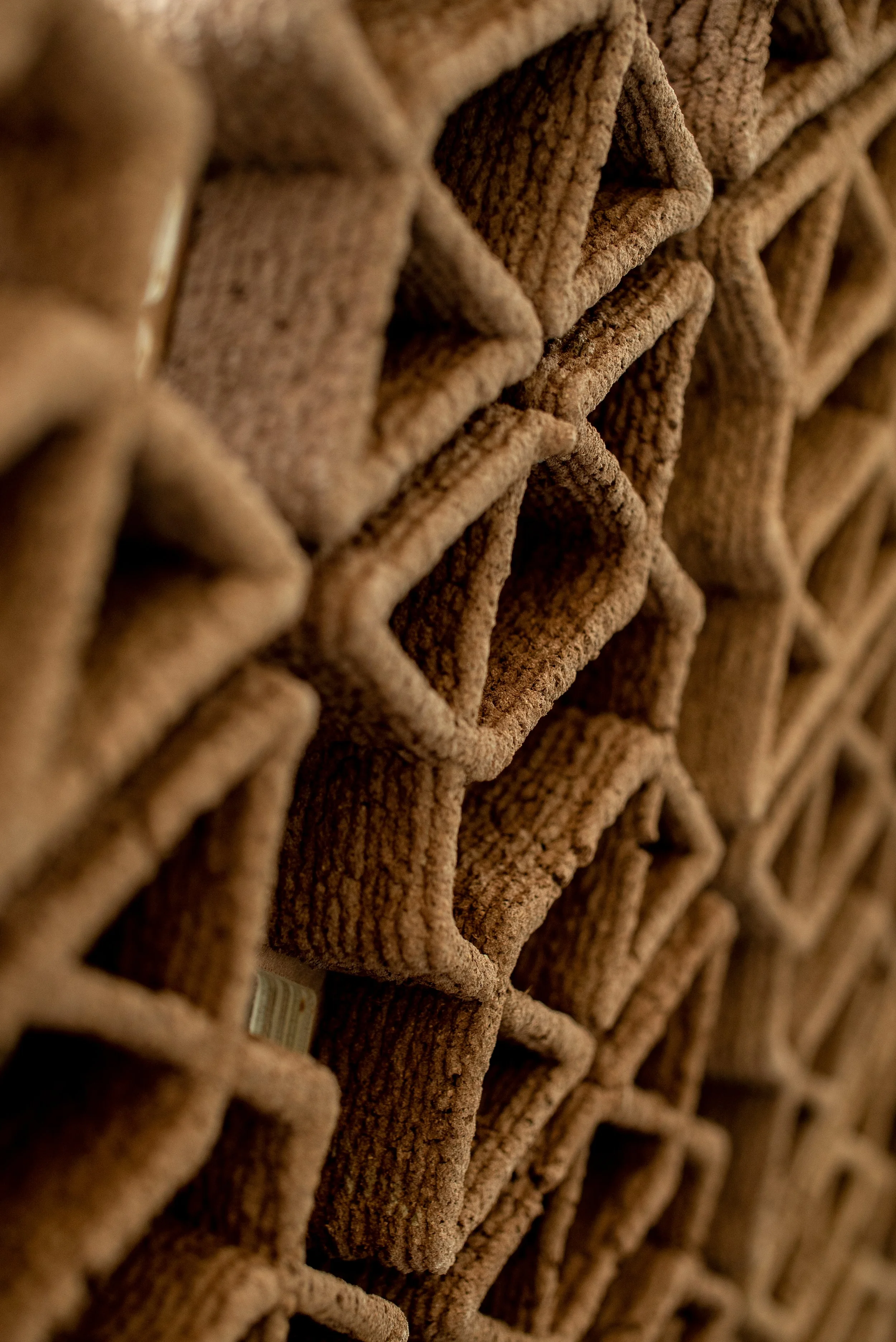
MANUFACTURA is a research and production factory that challenges manufacturing processes through innovation based on tradition. Our initiative transforms organic waste into circular materials using robotic 3D printing and conscious automation technologies, offering new sustainable alternatives to build a sustainable future.
MANUFACTURA is the union between the analog and the digital around local challenges. Its processes recognize the past, represent the present, and are committed to a better future by combining traditional craftsmanship with the development of innovative, responsible, and circular technologies in order to build better communities through the humanization of digital manufacturing.


My practice is based on exploring and understanding machines, natural materials, movement, reactions and vernacular practices. I am a computational designer, but I am interested in how traditional knowledge and folk methods of making can intersect with contemporary technologies. By engaging with natural resources and learning from cultural practices, I want to highlight their continuing relevance, while also opening up possibilities for fresh dialogues between the past and the present.
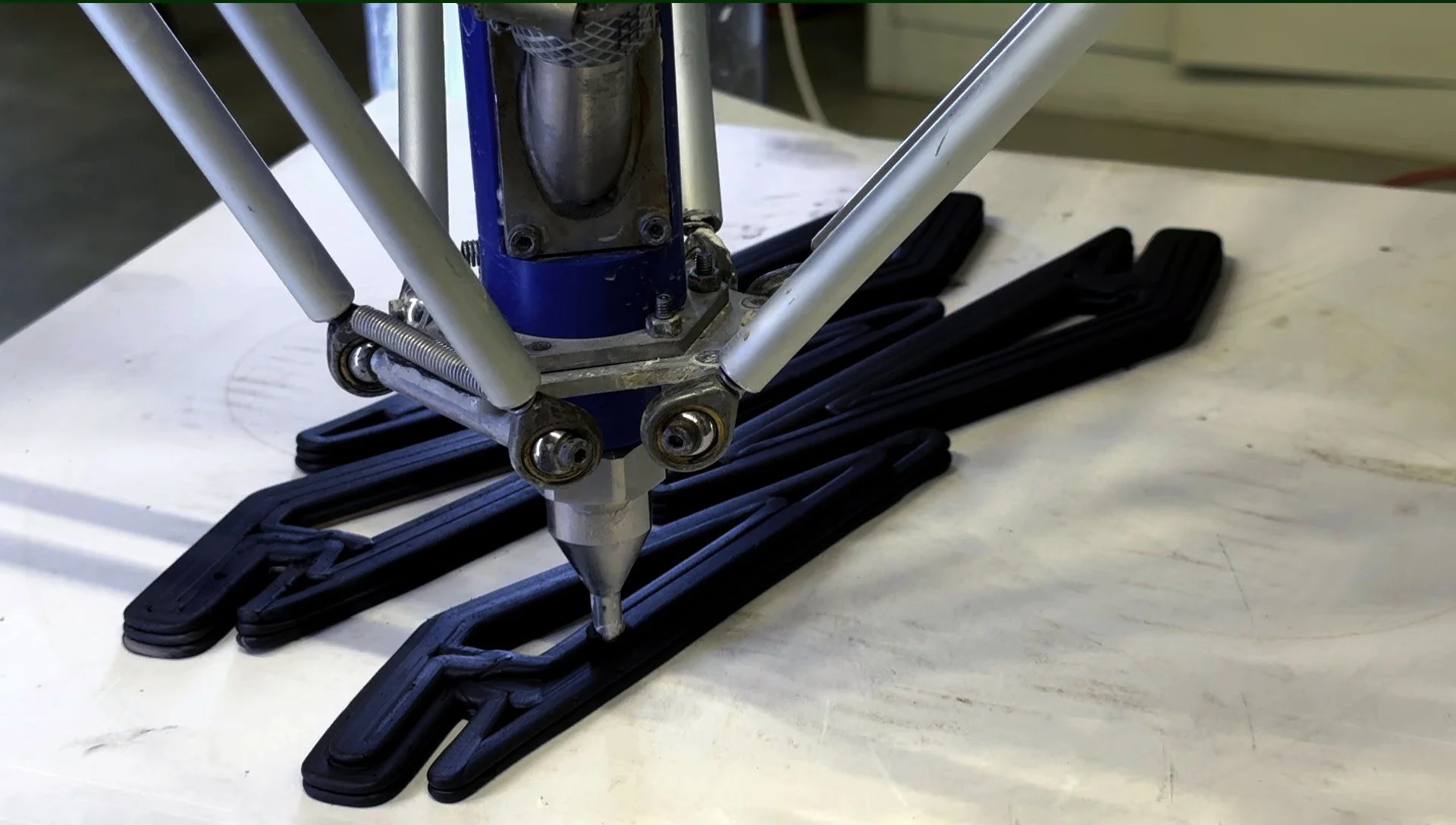
My process moves fluidly across techniques and materials. Some processes that I work with are 3D printing, robotic winding, SLS, laser cutting, drawing, carving and robotic compressive adhesion. These processes are applied with materials such as flax fiber, bamboo, wood, eggshell, clay and other earthen materials.
“Materials have their own way of behaving, and it is always fascinating to find logic in motion and to see the machines translating the information. Together, the materiality and movement create a new dimension of happenings. It is beautiful to get to understand them working together through fabrication.”

PROJECTS
IXIMALTIC
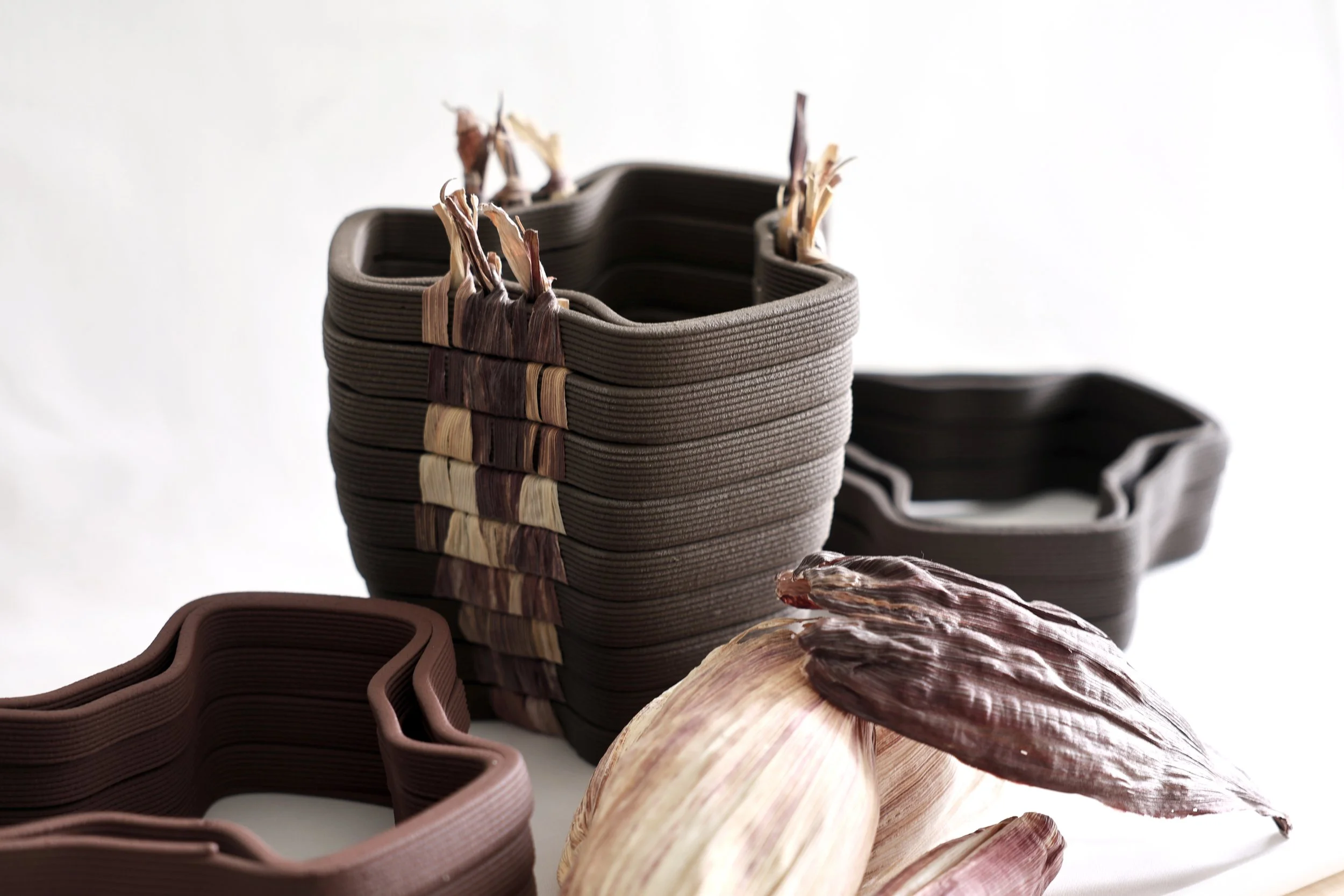
Iximaltic means cornfield in Tojolabʼal, a Mayan language. With this project I want to show a glance of the native corn diversity in Mexico. Currently, there are approximately 64 unique varieties of corn types with different colors, sizes, and tastes. These varieties have been adapting for millenia to local specific environmental conditions, among other qualities, allowing them to require less water and to be more pest-resistant.
Currently, the reliance on genetically modified (GM) corn introduced from the US, impacts their persistence at multiple levels. Cross-contamination and pollution with GM corn can easily modify the requirements of native crops and lead to failure. Additionally, the large production capacity of GM corn leads to lower sale prices. Making native corn becomes less competitive and less attractive for farmers to cultivate, losing not only ancient biodiversity but also ancestral knowledge. Currently there are multiple efforts from chefs, farmers and organizations to push for their endurance, promoting their production, value and use.
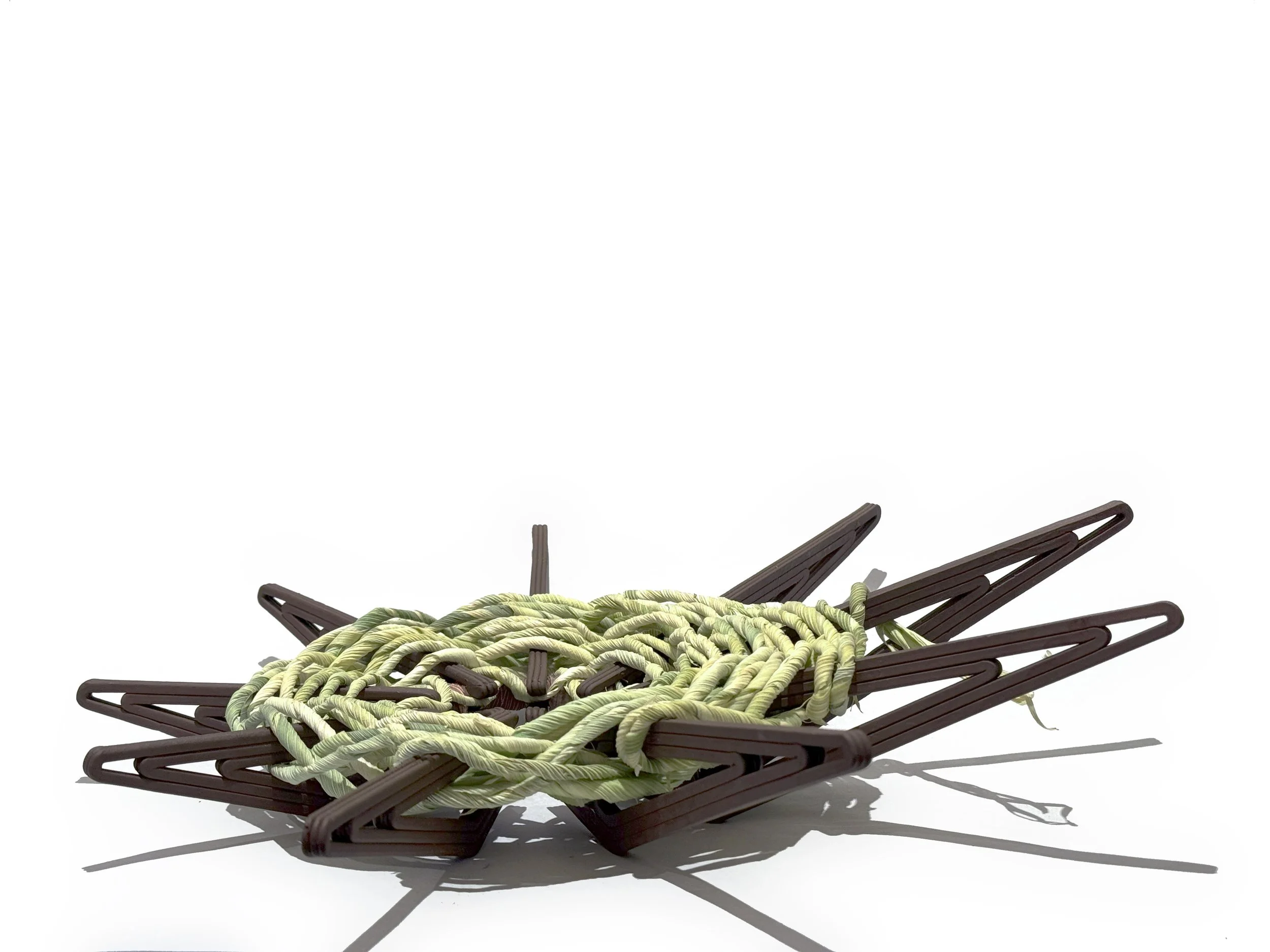
These pieces are based on multiple 3D printed elements of different local clays, sourced and in some cases colored with natural processes by Coeur de Terre. Some of the printed pieces were also fired using open fire, which provides a natural multicolored raw finish due to reduction and variability. The ceramic elements are woven together with native corn husks of purple Cacahuazintle and Oaxaca Green corn, using adapted basketry techniques.
Credits
Artist: Edurne Morales
Machines, clay, firing and material donation: Coeur de Terre
Open fire: Sadik Yigit, Bahar Al Bahar, Edurne Morales
Corn sourcing: Marina Zúniga, Oscar González, Edurne Morales
Special thanks to my family for a month of eating corn.
Photos and videos: Bahar Al Bahar, Edurne Morales
THE TALAVERA PROJECT / UN PROYECTO DE TALAVERA
Un Proyecto de Talavera, is a research initiative developed by MANUFACTURA in collaboration with Uriarte Talavera. Talavera is part of the Intangible Cultural Heritage of Humanity since 2019, this ceramic process was brought to Mexico by the Spanish and adapted in a very particular way to the techniques and materials available in Mexico.
Uriarte Talavera, recognized as the first producer of this craft in Mexico and first to obtain the certification under the Mexican Official Standard, has been producing this craft since 1824. Talking with Uriarte artisans, they shared with us two major problems they suffer today: lack of innovation and high quantity of waste generated during production. With this project we want to showcase our cultural heritage, while showing that a synergy between traditional craftsmanship and technological innovation is possible.
This intervention is composed of two elements. The first one is a column of 180 pieces of Talavera, based on digitally planned and robotically 3D printed pieces. The artisans used the printed piece to create a plaster mold, and followed with the traditional method based on the production of black clay, first firing (jahuete or sancocho), enameling and glazing, and second firing. The pieces are colored with cobalt blue glazing characteristic of the technique, based on a mineral amalgam of aluminates and cobalt silicates.
The second element is a carpet built up with waste from the workshop, based on fractions of pieces that did not pass quality control. This element invites us to consider alternative cycles based on transforming waste, the development of more sustainable practices, and ecologically conscious production.