DARIUS HULEA
CLUSTER CRAFTS : “ANNEAL” EXHIBITOR
2026
ARTWORK FOR PURCHASE AVAILABLE SOON
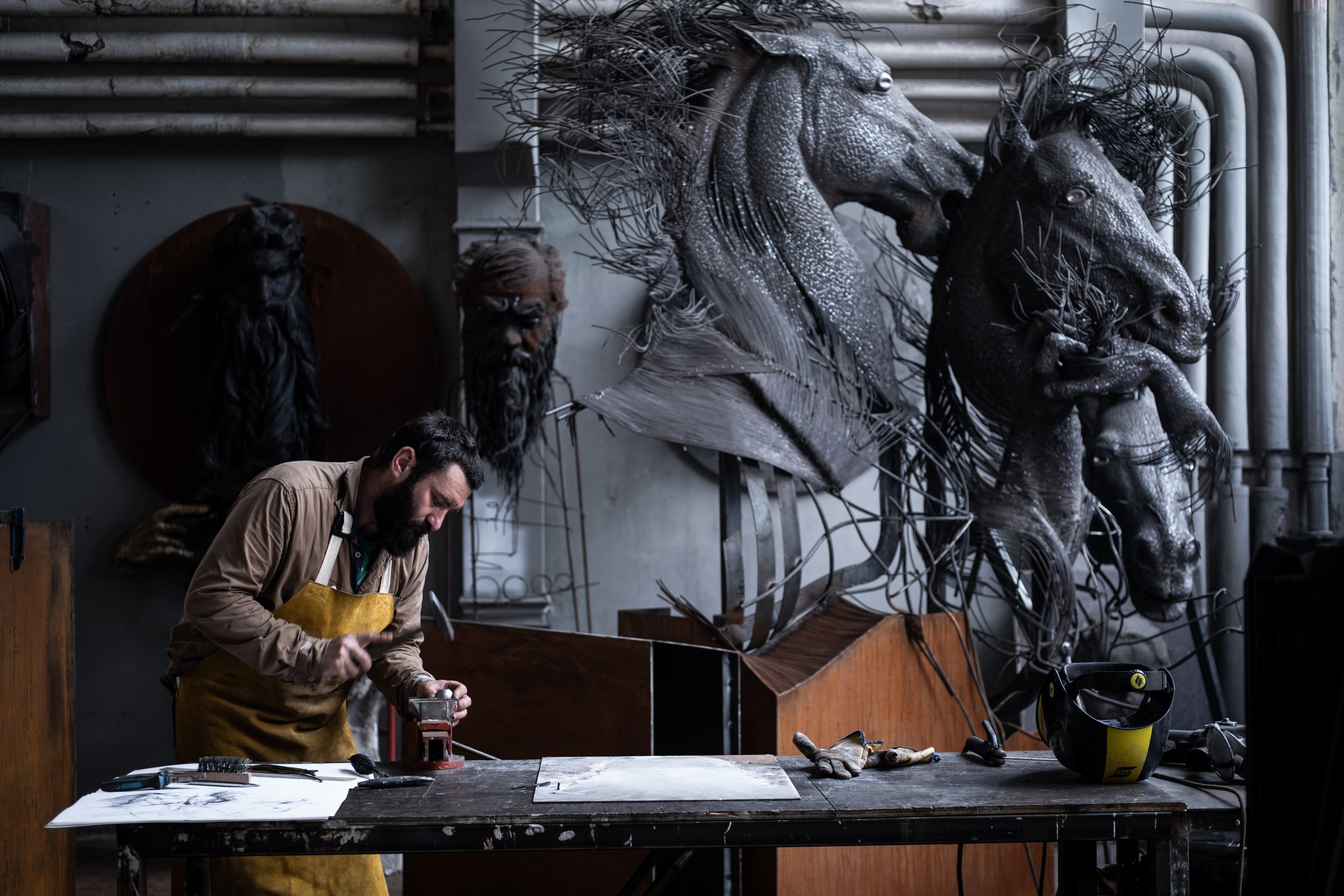
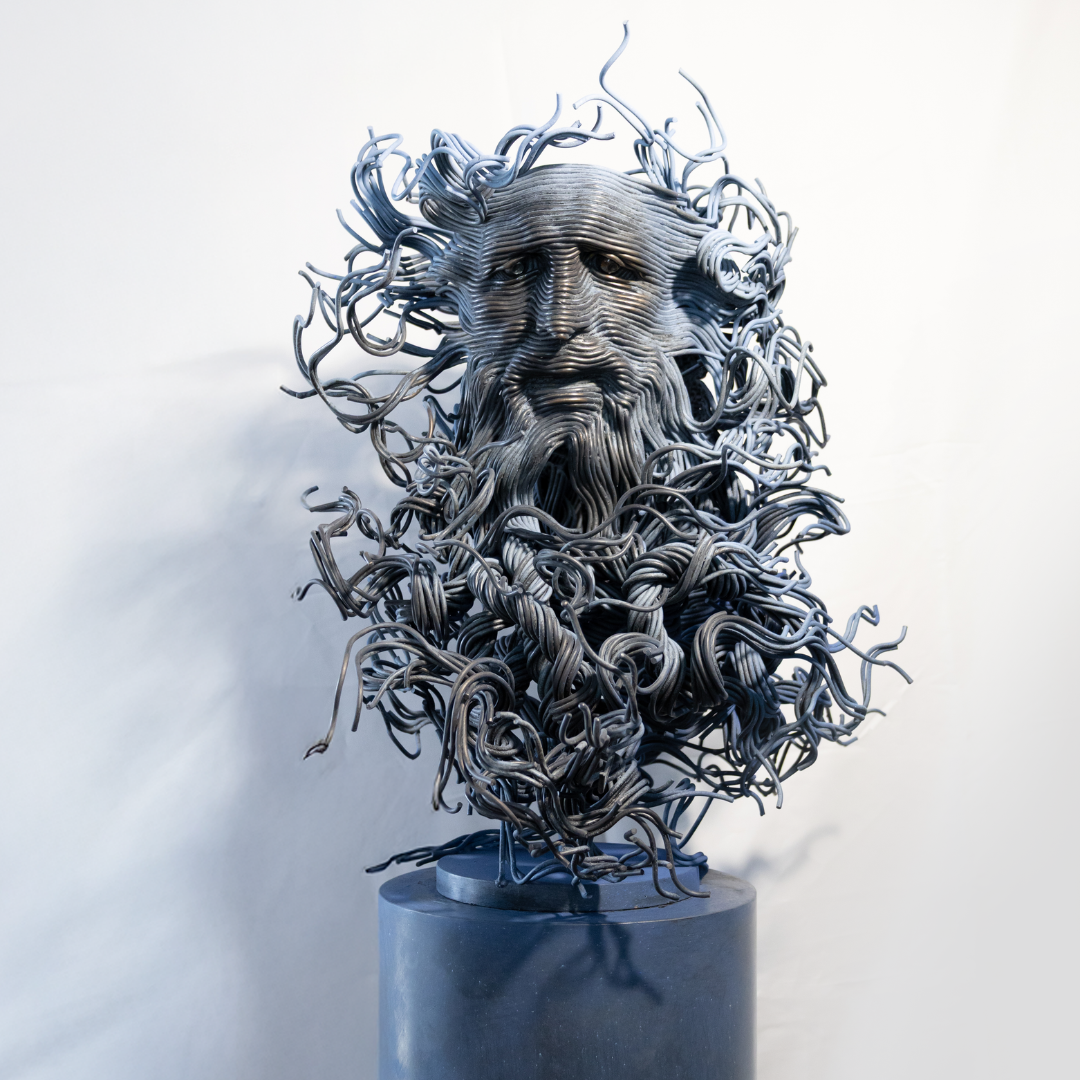
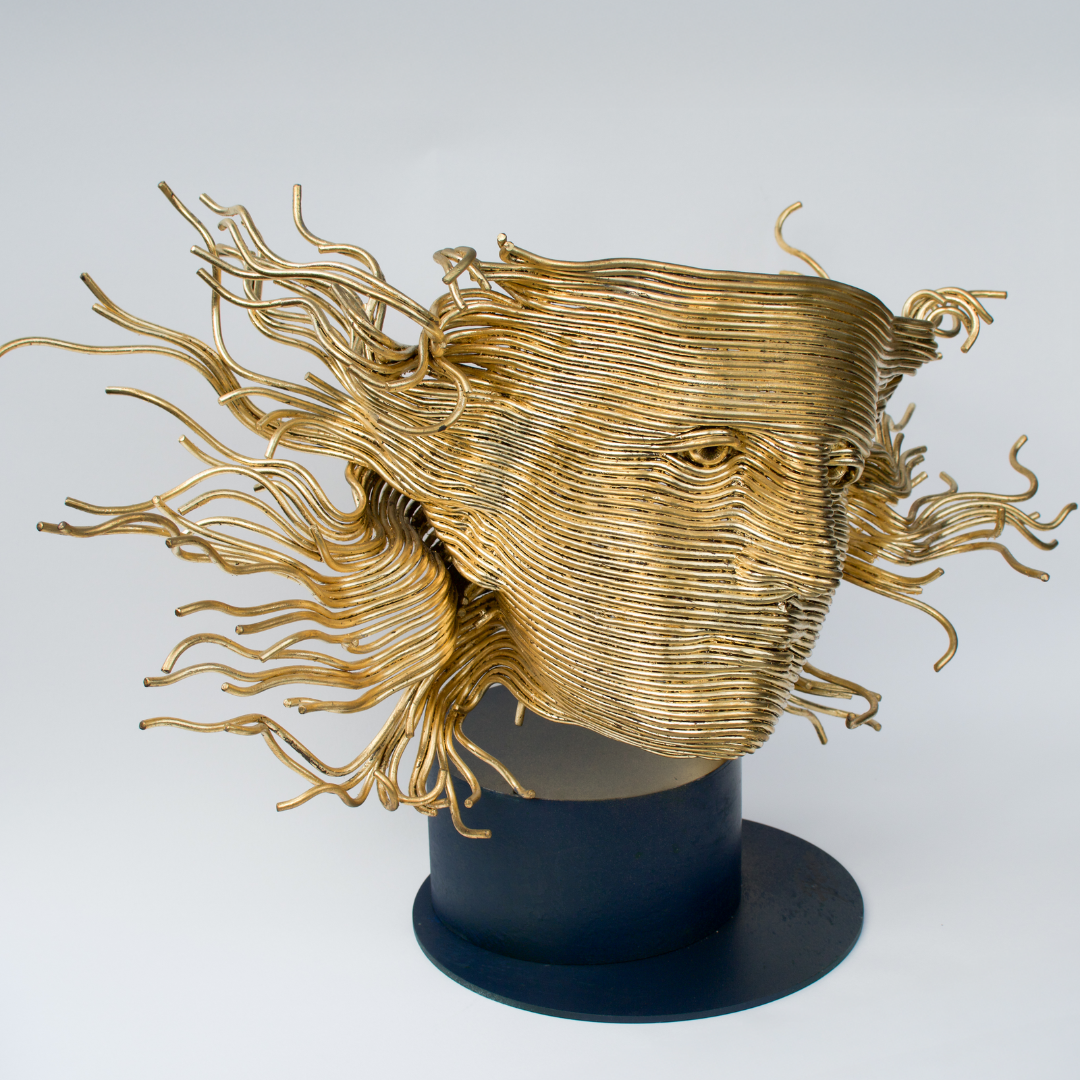
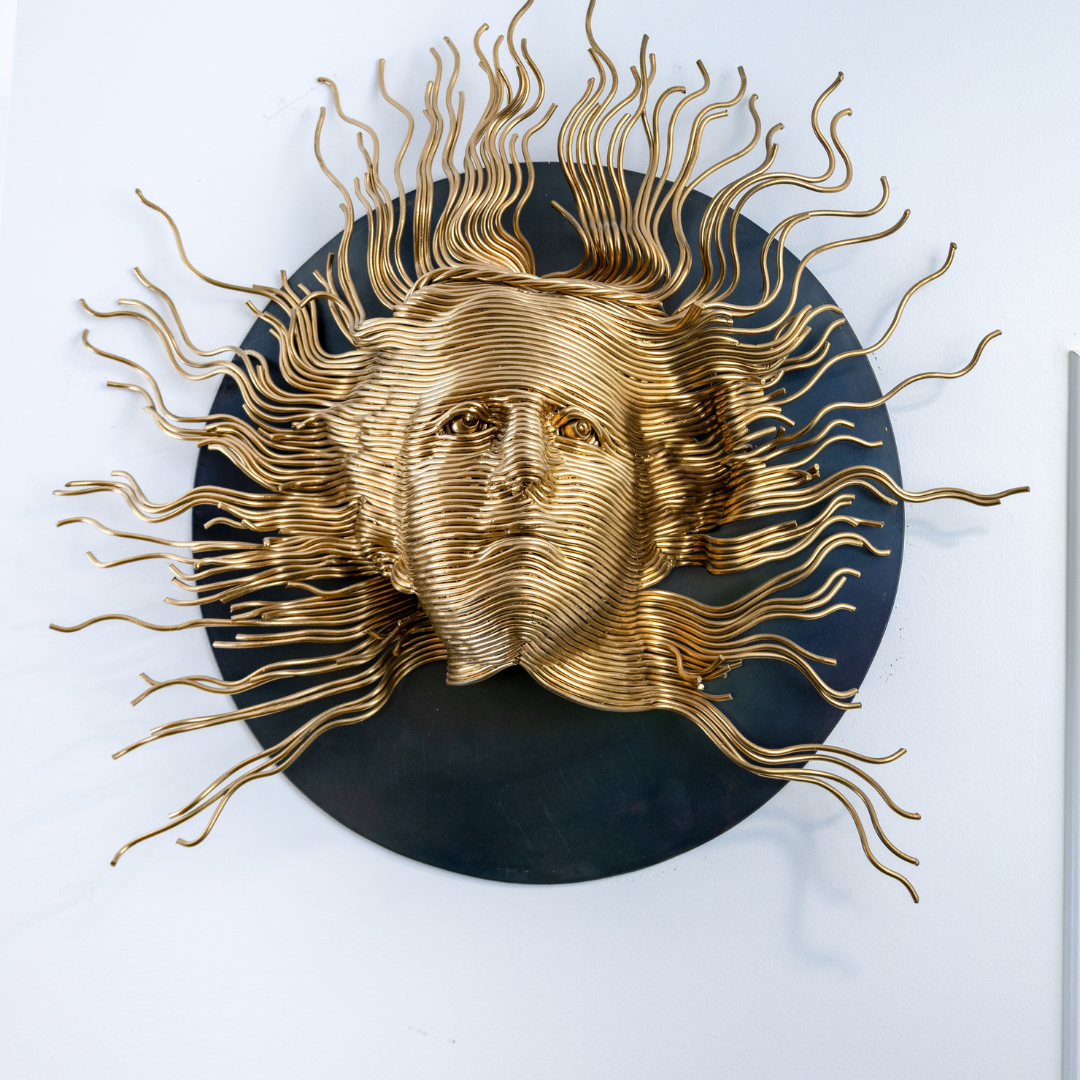
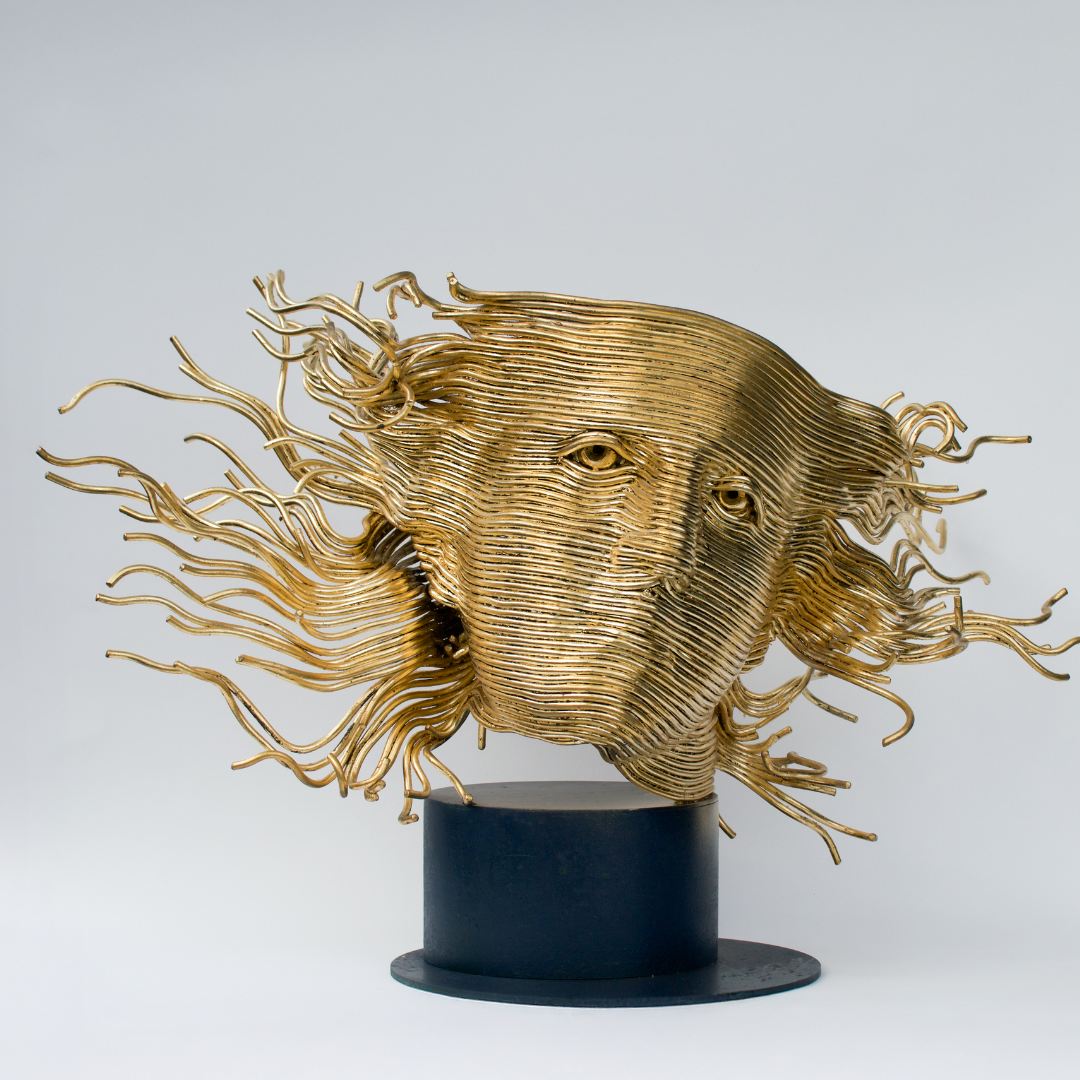
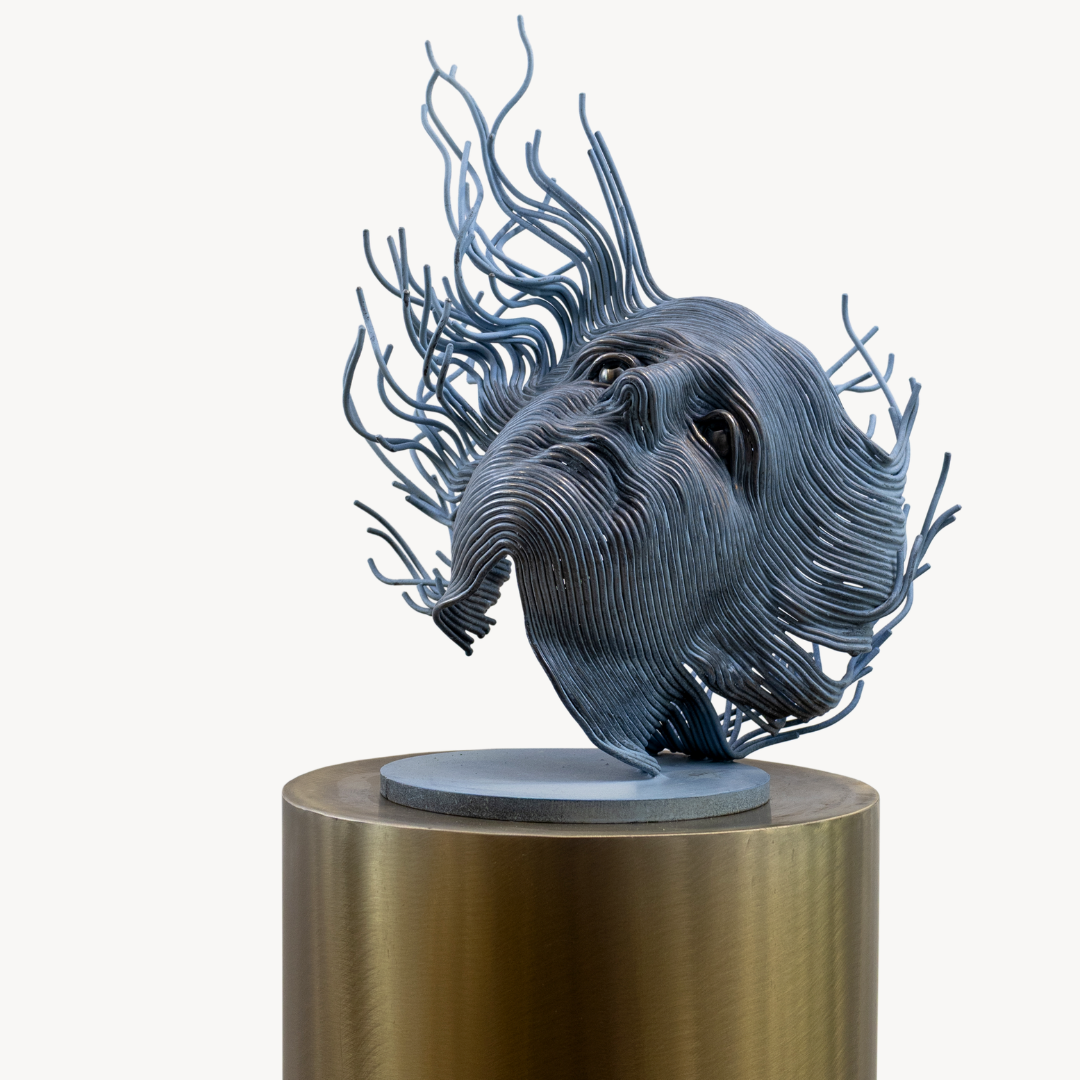
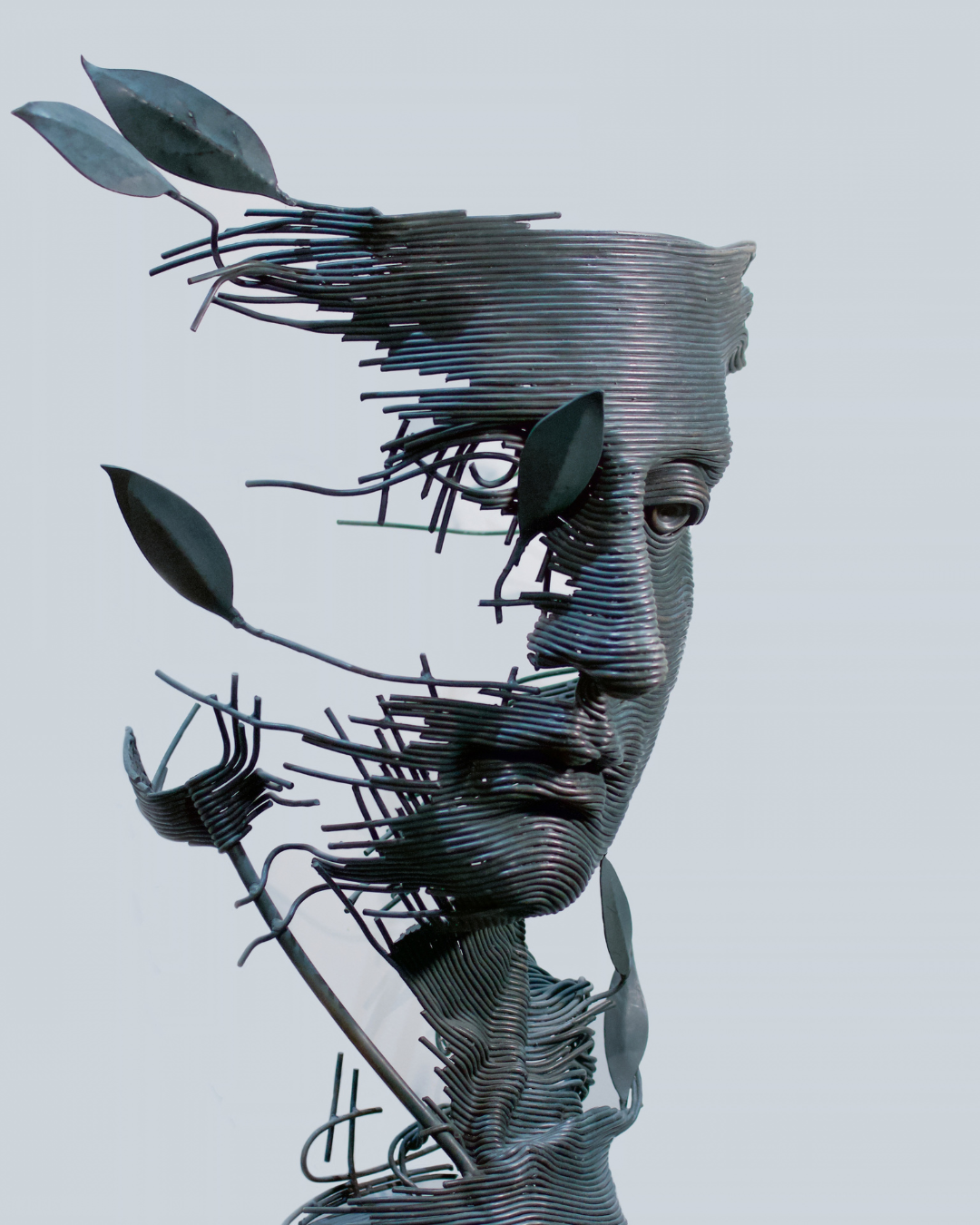
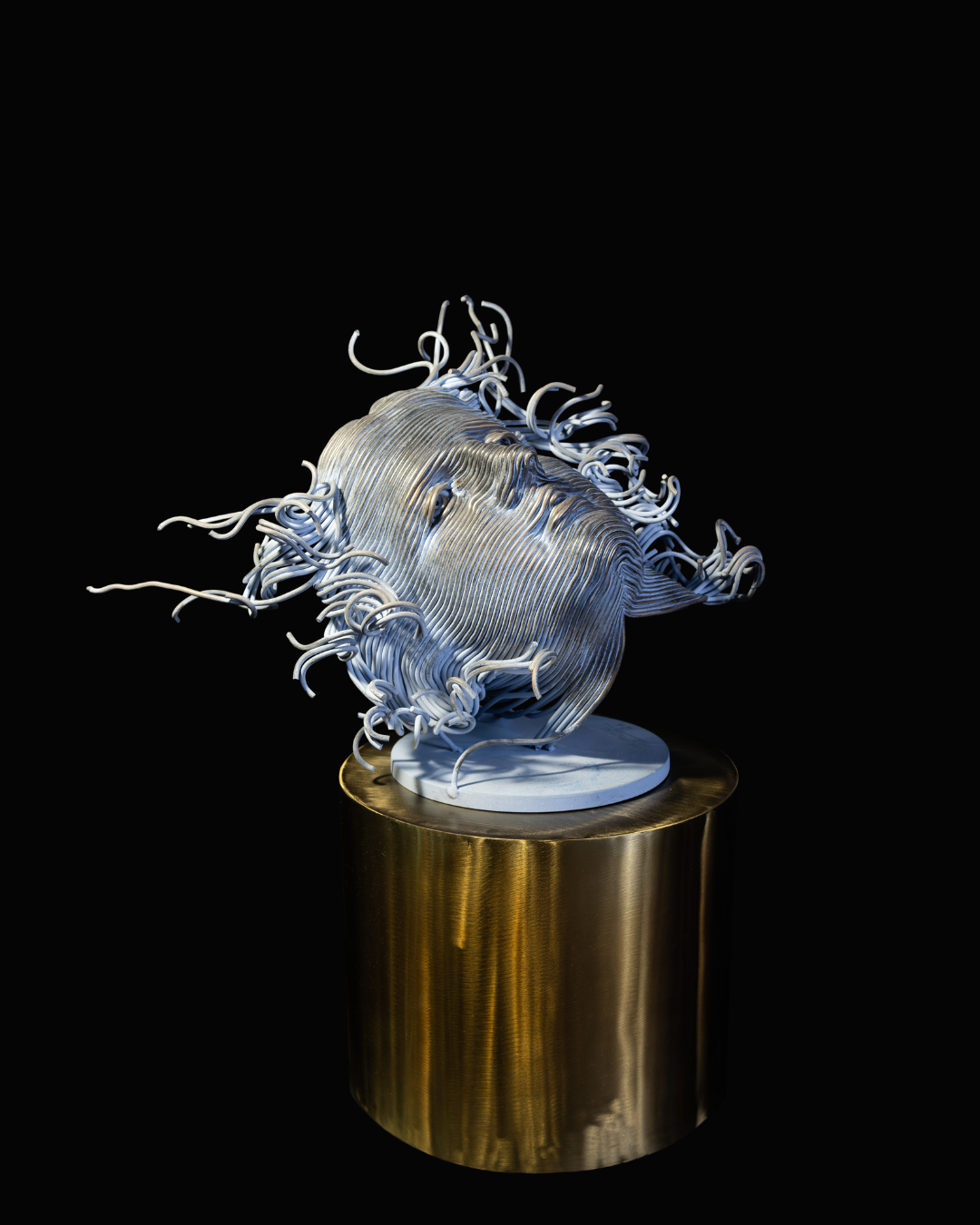
Romanian sculptor Darius Hulea uses metal and welding with craftsmanship akin both to sculpture and to some sort of oxymoronic, coarse embroidery: almost delicate if perceived as three-dimensional drawings, his sculptures nevertheless maintain a rough, metallic, dynamically overwhelming aspect.
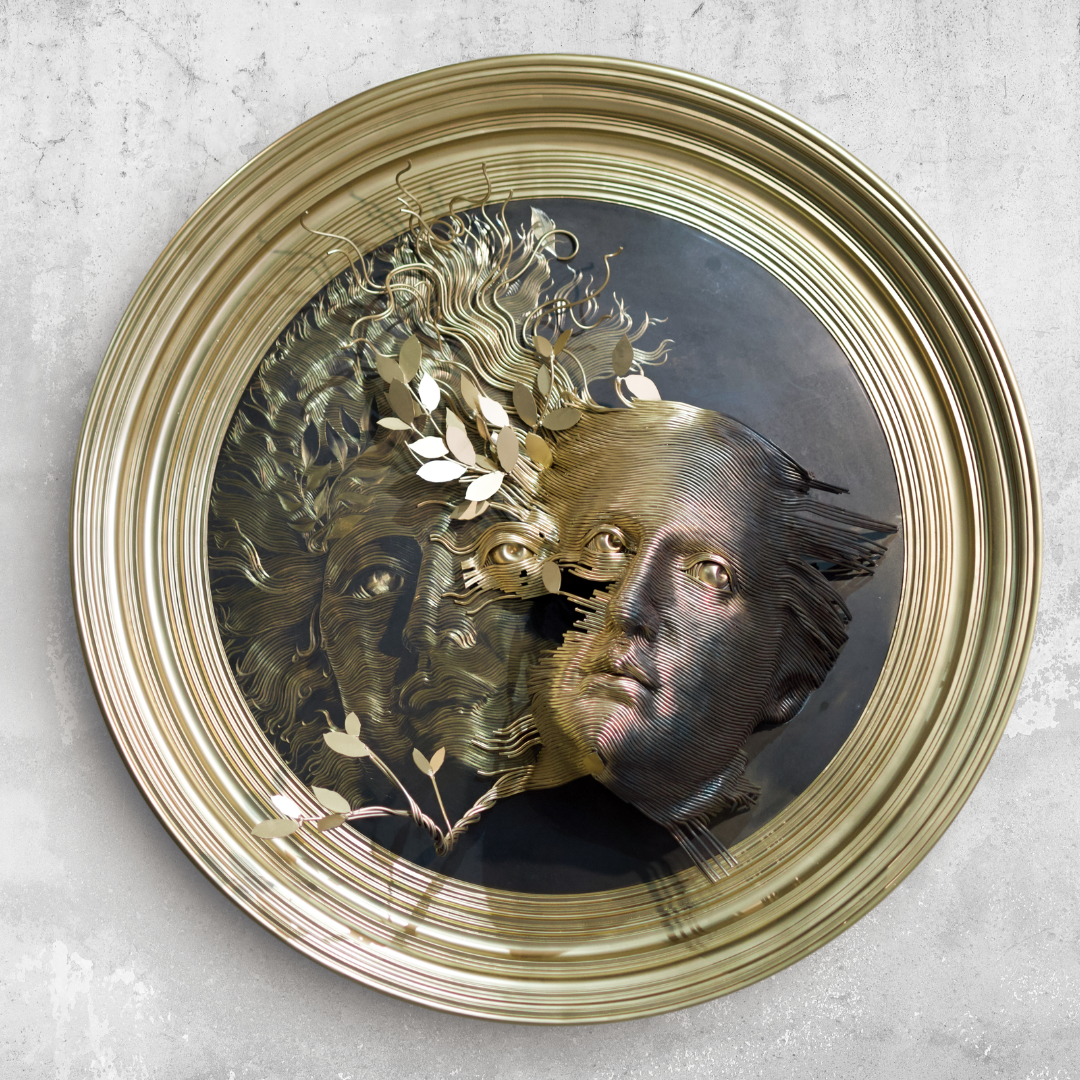
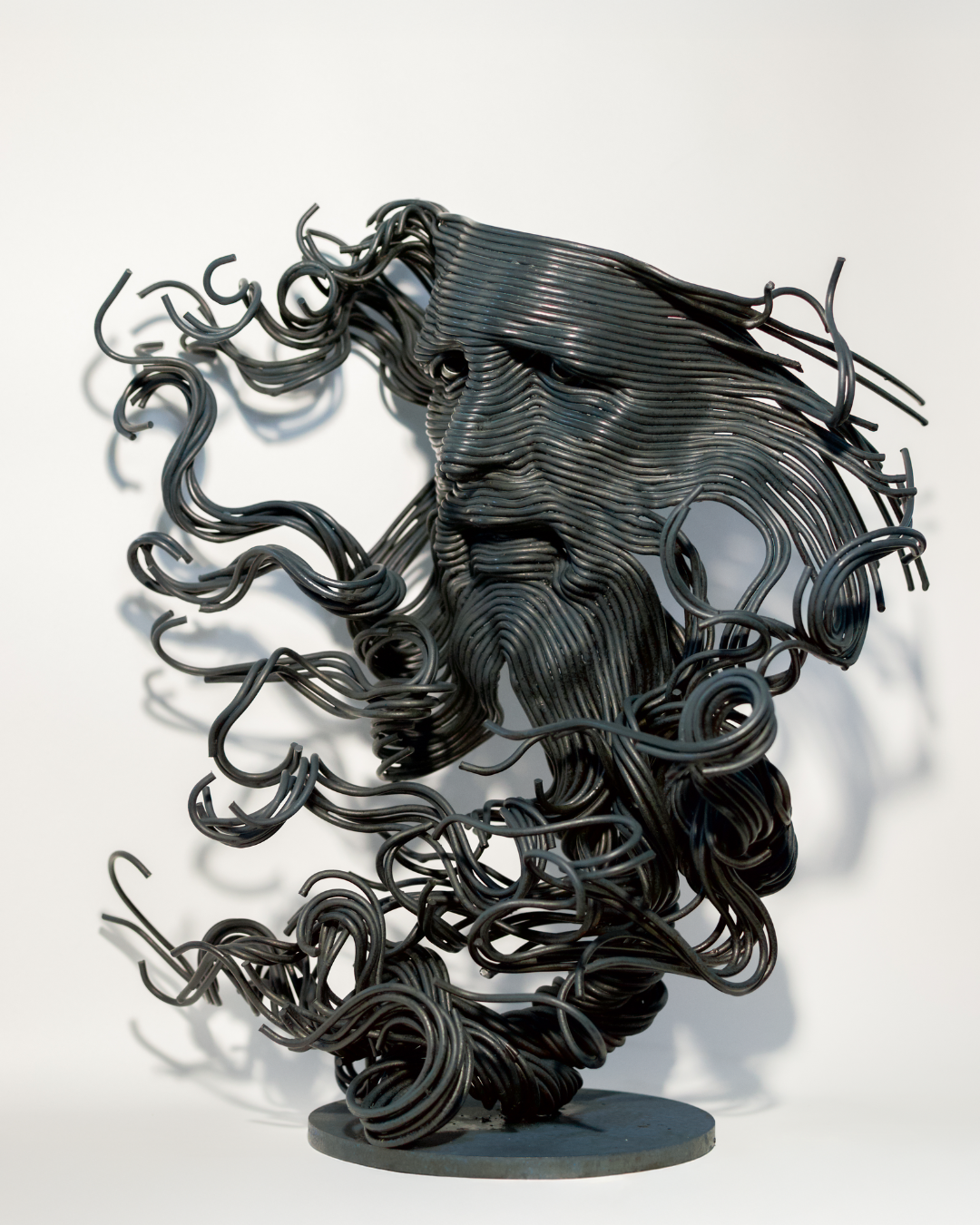
Each of them exudes a particular monumentality -unrestrained, exuberant, baroque in spirit, as their overall forcefulness is actually an emergent property: carefully “woven” pieces of metal coalesce, almost like a visual mosaic, into forming, for example, the overwhelming figure of an ancient Greek god, of another sort of classical character, the spectacular appearance of a horse or the expressive, elegant and haunting shape of an anatomic fragment.
Stylistically, Hulea’s sculpture is at the same time overtly classical and abrasively modern, exuberantly Baroque and daringly “industrial”. He uses some of the most traditional, visual tropes of Western sculpture (Greek mythology, human anatomy), yet approaches them is a decidedly industrial manner. He uses small pieces of metal that are carefully welded together or bended by hand to create the imposing figures of Greek gods, monumental hands or impetuous horses, in a process that is heavily laden with sheer craftsmanship, yet doesn’t deny them elegance. ( Ph.D. in Art History - Bogdan Iacob)
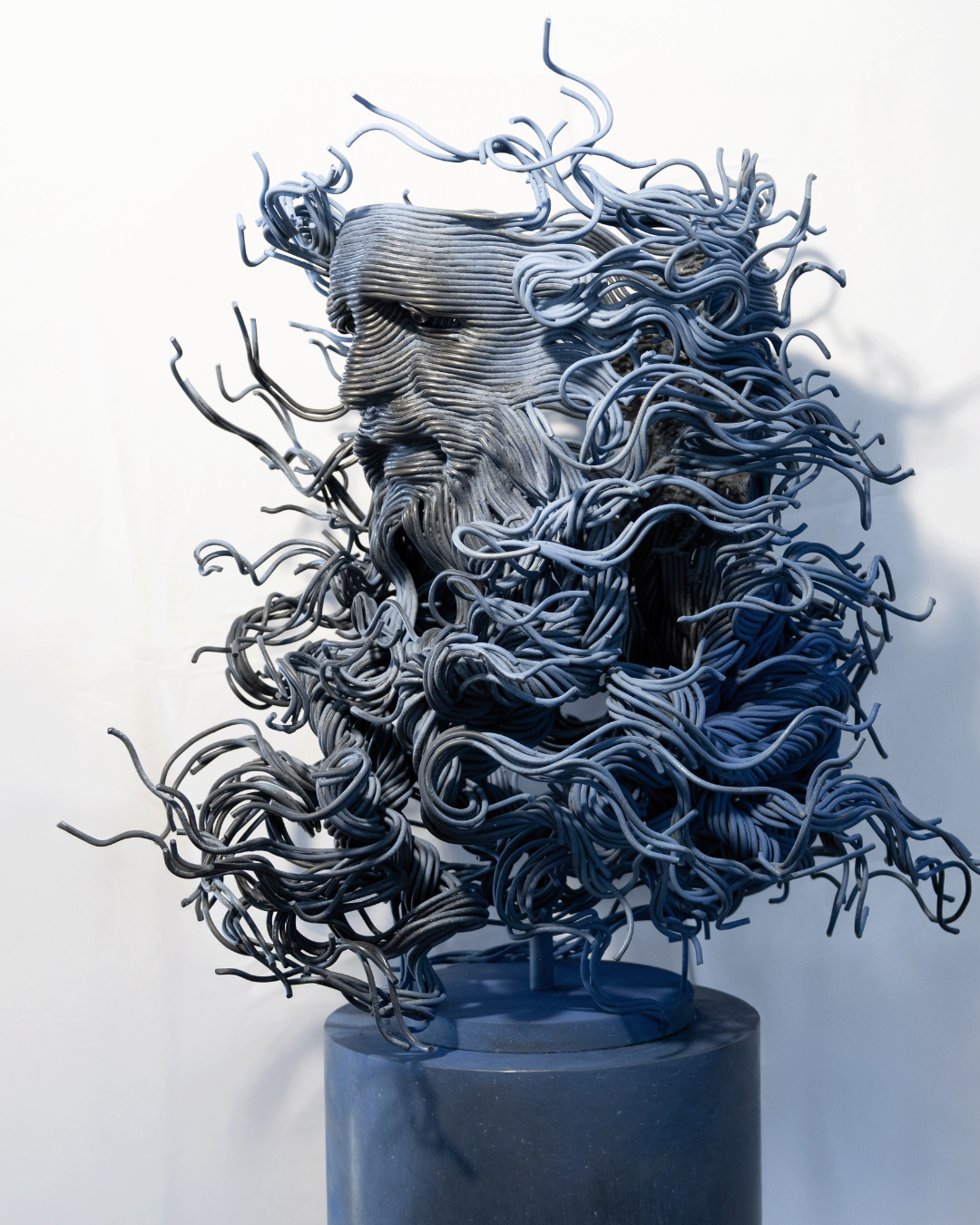
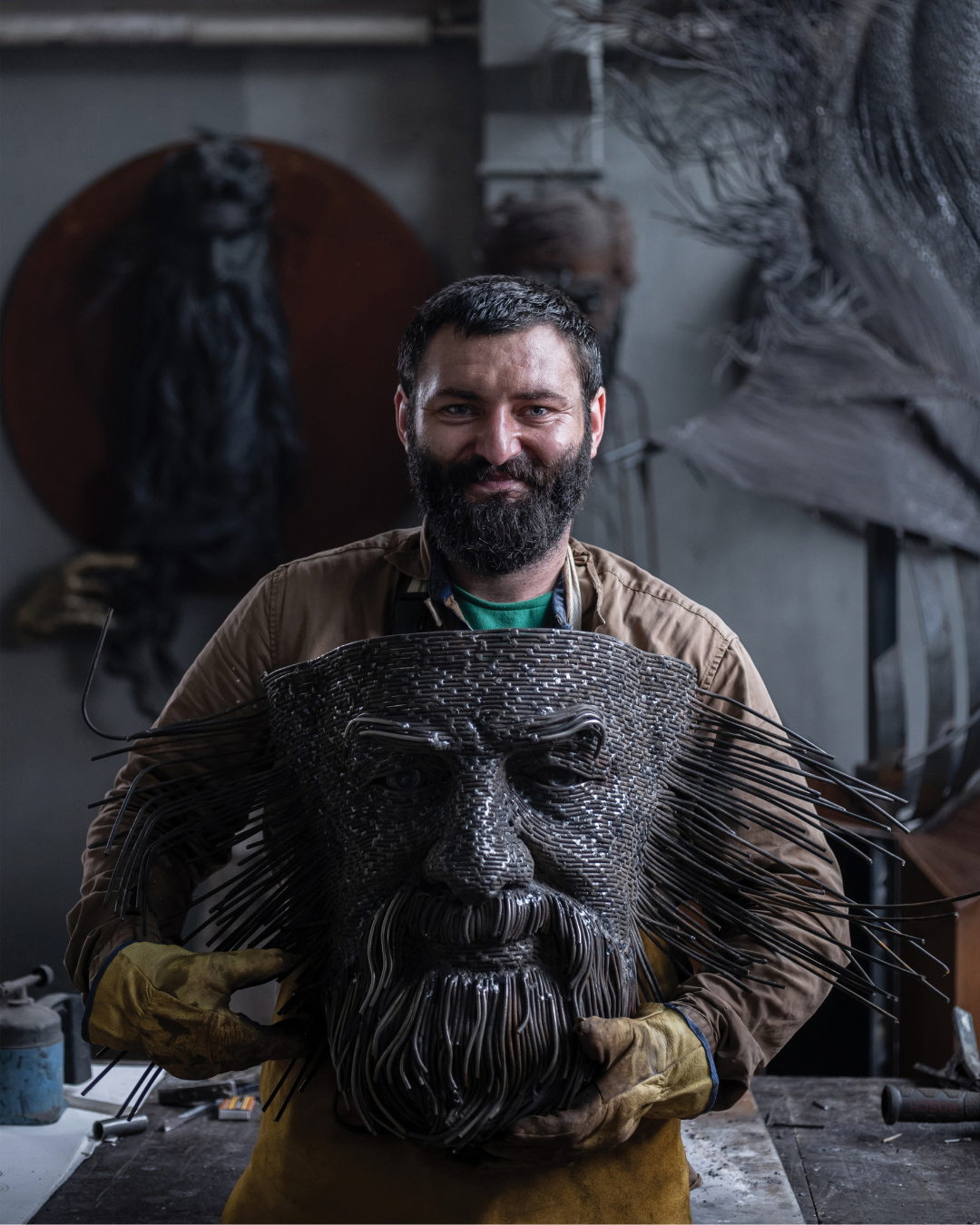
“The whole activity is around a welding machine, a hammer, a pair of pliers and a lot of metal rods of different shapes and sizes. With these simple tools I start bending, knocking, positioning, and pointing thousands of pieces of wire side by side until they clump together to form the impression of a human or animal detail on the space. Analysing all the ideas of the 20th century on the concept of ""Drawing in space"" I came to use the soft metal wire in the development of academic drawing, succeeding in outlining in historical fragments the spontaneous reflection of the contemporary vibe. I draw now 3D parts of the unknown (disappeared) history that awakens the public to anamneses of the past, of the Renaissance, of the academic study of form, in an industrial material that appears lightly shaped to the appearance of a hair.
Now each piece of wire imitates the pencil stroke left on the sheet of paper. The difference is that the paper becomes space and the pencil strokes become the envelope and imprint of the shape through parallel wires, overlapped and twisted in expansion of the form. I have given up compositional sketches on paper in favour of direct iron sketches thus challenging the creative ego to freedom of continuing or re-conceptualizing a fragment begun and abandoned.
The whole work wants to narrate the immediate impression of mythological fragments, re-discovered and reinterpreted, which can bring to the contemporary world the knowledge of the fictional creatures of myths, now restored in a hard material, iron.”