CELESTE TOOTH
CLUSTER CRAFTS : “ANNEAL” EXHIBITOR
2026
ARTWORK FOR PURCHASE AVAILABLE SOON

Celeste Tooth is a non-binary lesbian interdisciplinary artist and activist whose work explores the intricacies of disability. They are currently a year-long resident and fellow at the Steelyard in Rhode Island. Select shows include the 2024 VSA Emerging Artists exhibitions at the Kennedy Center Hall of States and the US Senate Rayburn House, Baltimore Artscape B_24, Opulent Mobility presented by Fractured Atlas, and their first solo show The Body Out of Motion. Upcoming shows include The Politics of Limits: The Myth of the Able Body at Goucher College and Anneal at Cluster Crafts London. Publications include Bed Zine, Beloved Zine, BmoreArt, and Look Deeper Zine. Their work in Drawn Poorly Zine is archived at the Wellcome Collection Museum in London.
Tooth is engaged in disability justice advocacy work in various contexts including being selected as a France-Merrick Fellow working with artists at Make Studio Baltimore, a Transform Mid-Atlantic Civic Fellow, and a Diversity Coordinator at MICA’s Office of Culture and Identity. They received numerous invitations to discuss accessibility in the arts with their senators offices in DC. They recently curated their 3rd exhibition —Thread— centering Disabled artists in Baltimore city. Their commentary on ableism has been featured in magazines such as Hyperallergic, Xtra Magazine, and The Art Newspaper.
They were the first wheelchair user to graduate from the sculpture department at Maryland Institute College of Art since its establishment in 1826. They hold a BFA in interdisciplinary sculpture with a double minor in Gender Studies and Illustration.
Their art practice is supported by a generous grant from the Kennedy Center and Volkswagen of America.


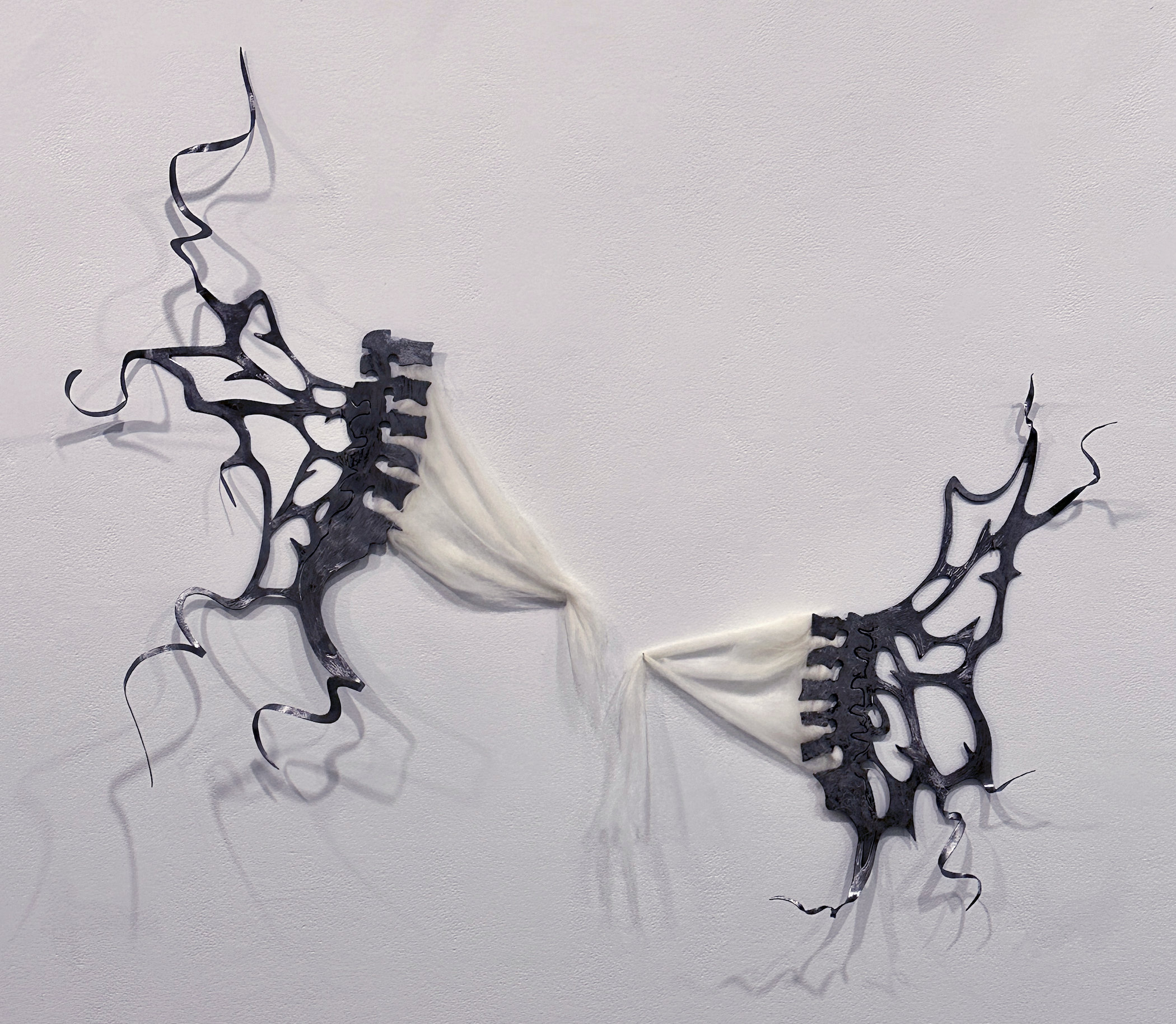
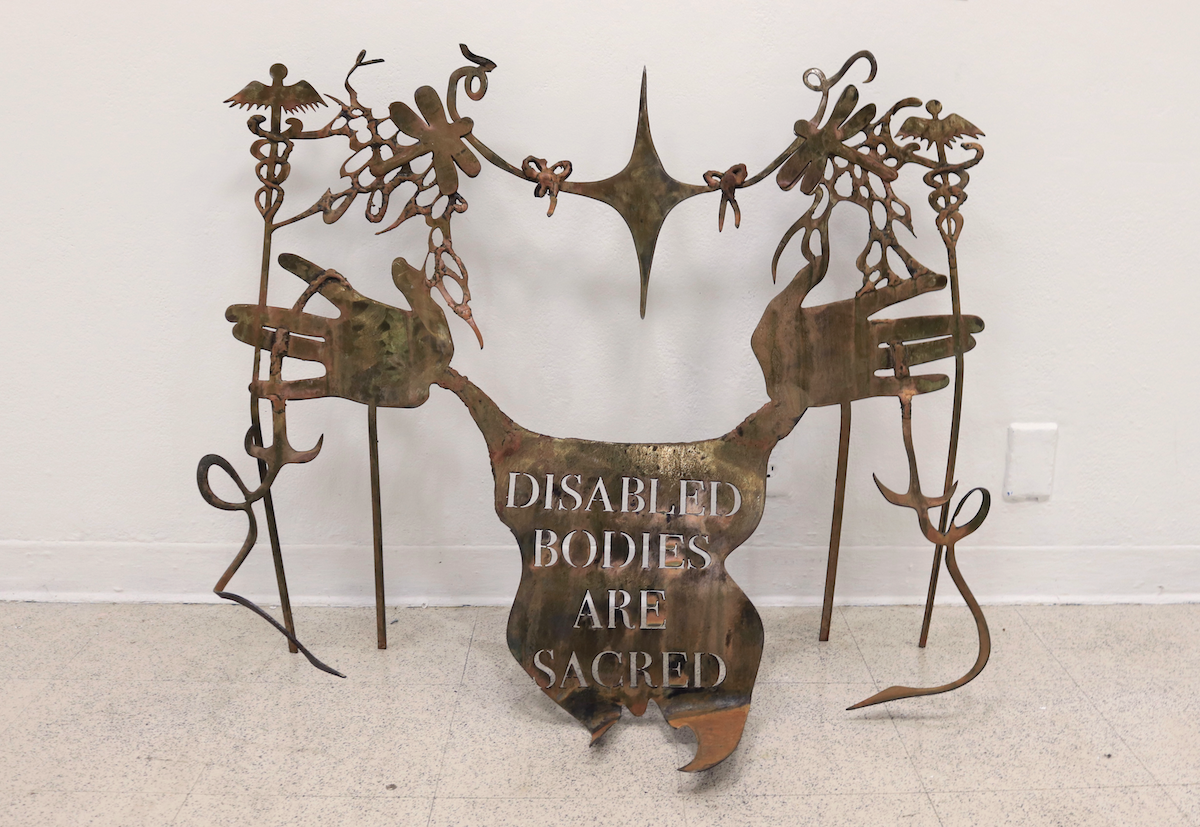
"My current body of work revolves around the inherent subversion in reverencing discarded abject anatomy. The sculptural process begins with an overt labor of love– a retranslation of harm. It chronicles the intersection between disability and queerness through semi-abstract depictions of the systems within the human body. I heavily reference —and in turn become part of-– the longstanding tradition of utilizing art as a means of protest within disability culture. Often drawing attention to the “Ugly Laws” —a historical discriminatory ableist practice in the US— and their lingering impact today, my sculptures are a discussion of the right to belong.
Intricate net-like forms adhere tactile pieces into one decisive whole. A net has the ability to both protect (i.e. safe-fall systems for aerial artists) and ensnare (i.e. fishing traps). Thus these interlaced shapes not only represent connection and safety, but simultaneously allude to being “trapped.” I portray my community as interwoven by delineating the synapses that affix us to one another. The forms tie back to both the body (i.e. blood vessel patterning) and the structures that exist on a microscopic level all around us. In this way I explore how ableism simultaneously ensnares disabled individuals and inherently connects us— and how the disabled community has transformed these circumstances into spaces full of care.
The prominence of metal functions as a cathartic act of reclamation. Metal for “the patient’ outside the confines of its functionality within hospitals as surgical instruments and surfaces for ill bodies. I intermingle soft textures and flesh with the hard planes and sharp edges. In a sense my body itself becomes one with the piece as I am forced to adapt to tools that were never intended to accommodate people like me. There’s a distinct materiality in the refusal to comply with able-normative expectations of what this body can do. "